Artwork
The vagabond crosses a stream with the possessions of the daughter-in-law of the king of Banaras and absconds, from a Tuti-nama (Tales of a Parrot): Sixteenth Night
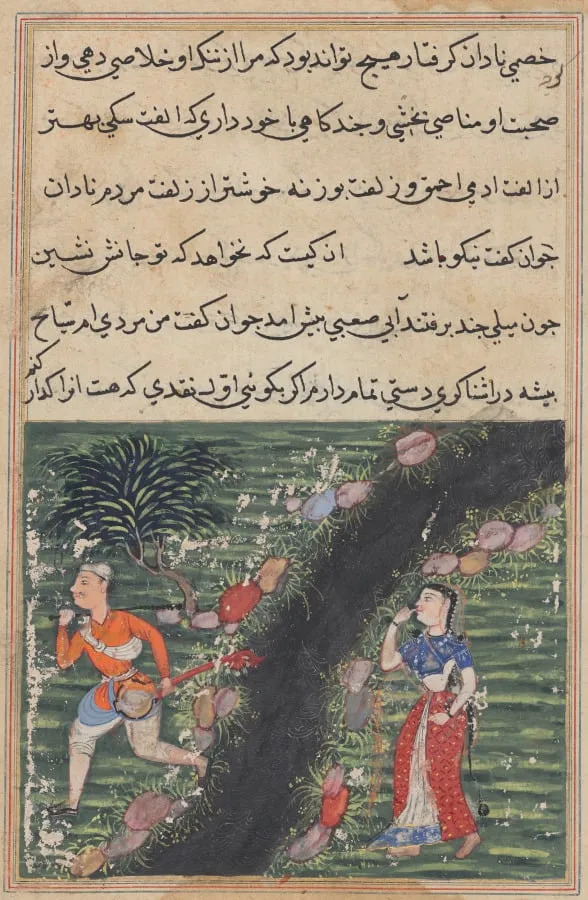
The vagabond crosses a stream with the possessions of the daughter-in-law of the king of Banaras and absconds, from a Tuti-nama (Tales of a Parrot): Sixteenth Night is an unspecified painting by the Mughal Painting artist Unknown. It dates from 1560 and is held in the collection of the Cleveland Museum of Art.
About this work
The artist packed every inch with tiny patterns—water ripples, embroidered sleeves, even the pebbles underfoot—so the emperor could linger over each detail.
You see a man wading through a shallow stream, arms piled with shiny jewelry and fine cloth. On the far bank, a woman stands alone, one finger pressed to her lips in surprise.
This tiny painting once lived inside a book of parrot tales read aloud at the Mughal court. The story warns: love can turn to theft in a heartbeat. The artist packed every inch with tiny patterns—water ripples, embroidered sleeves, even the pebbles underfoot—so the emperor could linger over each detail.
To see more paintings like this, look up Mughal India, court of Akbar (reigned 1556–1605).
Overview
This small painting illustrates a poignant moment from the Tuti-nama (Tales of a Parrot), depicting a vagabond crossing a stream with stolen valuables, leaving behind the daughter-in-law of the king of Banaras in shock.
Subject & Meaning
The scene conveys the bitter end of an ill-fated romance, where a destitute lover absconds with his partner's possessions, highlighting the transience and potential deceit in relationships, as cautioned by the tale.
Technique & Style
Characterized by meticulous detail, the artwork features intricate patterns, including water ripples, embroidered clothing, and pebbles, showcasing the refined craftsmanship typical of Mughal miniature painting, designed to encourage close examination.
History & Provenance
Originally part of a Tuti-nama manuscript intended for recitation at the Mughal court during Akbar's reign (1556–1605), this painting reflects the cultural and artistic patronage of the time.
Context
Created for the Mughal court, the piece is emblematic of the period's literary and artistic fusion, where illustrated stories like the Tuti-nama served both as entertainment and moral guidance for the royal audience.
Artist & collection

 Domestic Scene
 Giacomo and Cardinal Marco, investing Andrea, Abbot of San Zeno, with his Benefice
 The Nymph of Fontainebleau
 Portrait of a Woman
 Madonna and Child with Saints in the Enclosed Garden
 Venus and Minerva
 Family Group of Four on Sofa
 Wall painting from Room H of the Villa of P. Fannius Synistor at Boscoreale
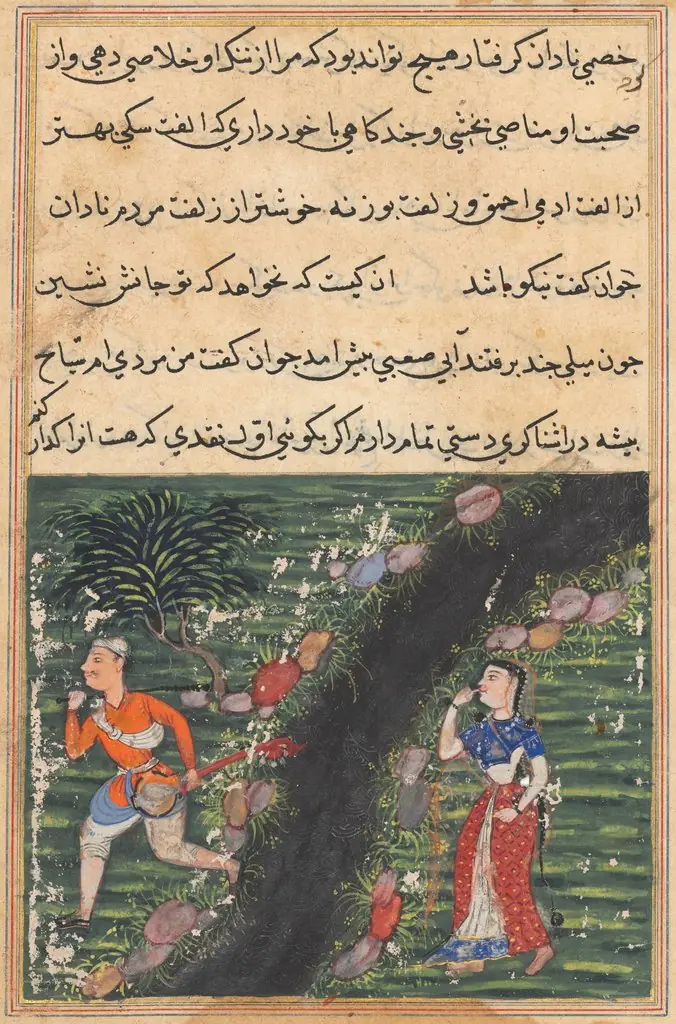 The vagabond crosses a stream with the possessions of the daughter-in-law of the king of Banaras and absconds, from a Tuti-nama (Tales of a Parrot): Sixteenth Night
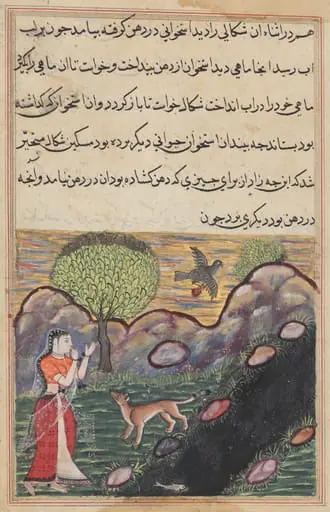 The daughter-in-law of the king of Banaras sees the jackal deprived of its food by a bird, as it unsuccessfully attempts to catch a fish, from a Tuti-nama (Tales of a Parrot): Sixteenth Night
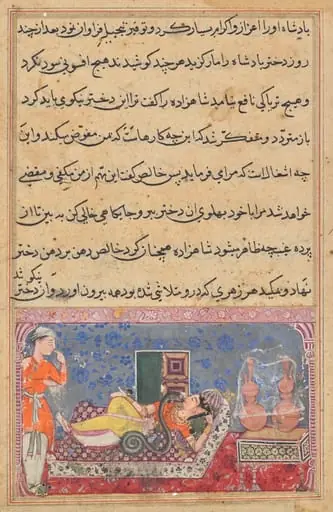 Khalis repays the prince for his kindness by changing into a snake and sucking the poison from the king’s daughter, from a Tuti-nama (Tales of a Parrot): Eighteenth Night
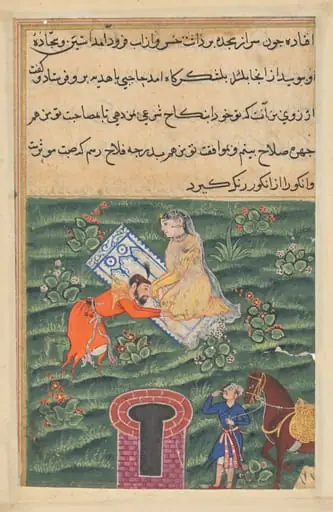 Khusrau, the King of Kings, pays homage to the pious daughter of Khassa, from a Tuti-nama (Tales of a Parrot): Fifty-first Night
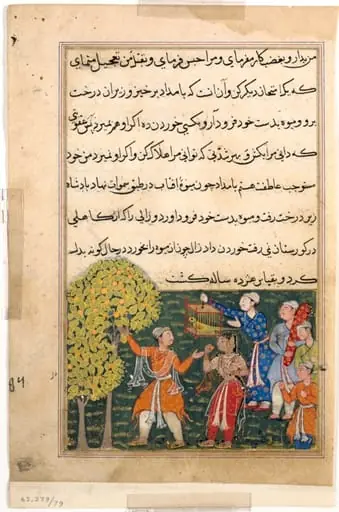 The king plucks fruit from the Tree of Life with his own hands and feeds it to a lady, from a Tuti-nama (Tales of a Parrot): Ninth Night
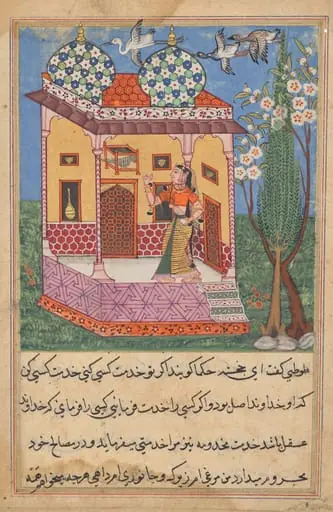 The Parrot Addresses Khujasta at the Beginning of the Twenty-sixth Night, from a Tuti-nama (Tales of a Parrot)
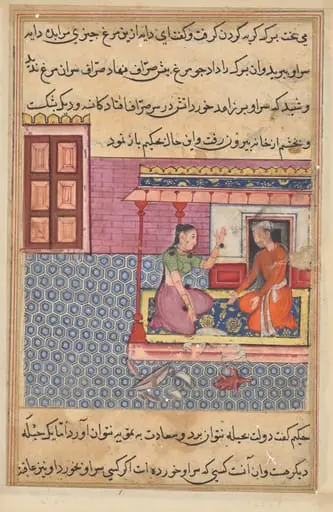 The pious man’s wife offers the seven-colored bird as food to her lover, but not finding its head, he breaks the pot and bowl in anger, from a Tuti-nama (Tales of a Parrot): Fifty-second Night
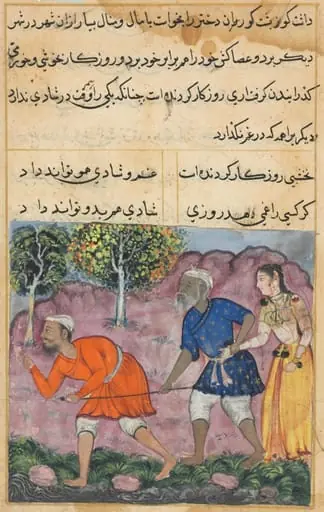 The Raja’s daughter, born with three breasts, accompanies her blind husband and his hunchback guide on a journey, from a Tuti-nama (Tales of a Parrot): Forty-second Night
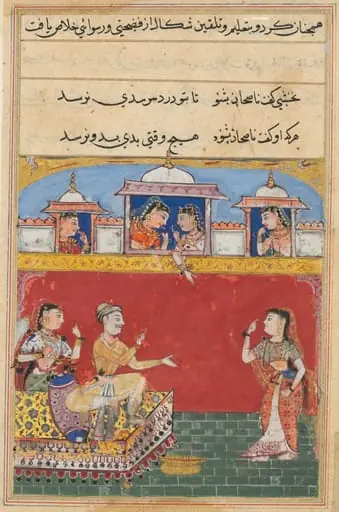 The daughter-in-law returns from her misadventure, feigning insanity, from a Tuti-nama (Tales of a Parrot): Sixteenth Night
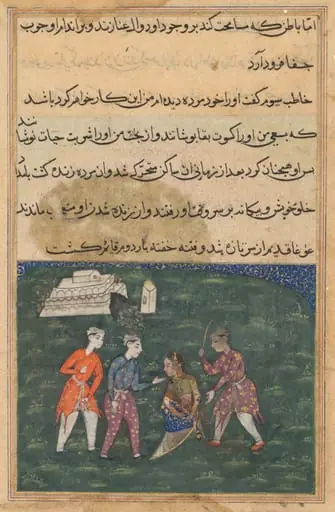 The third suitor strikes the devotee’s daughter and thus restores her to life, from a Tuti-nama (Tales of a Parrot): Twentieth Night