Artwork
The Salting Diptych
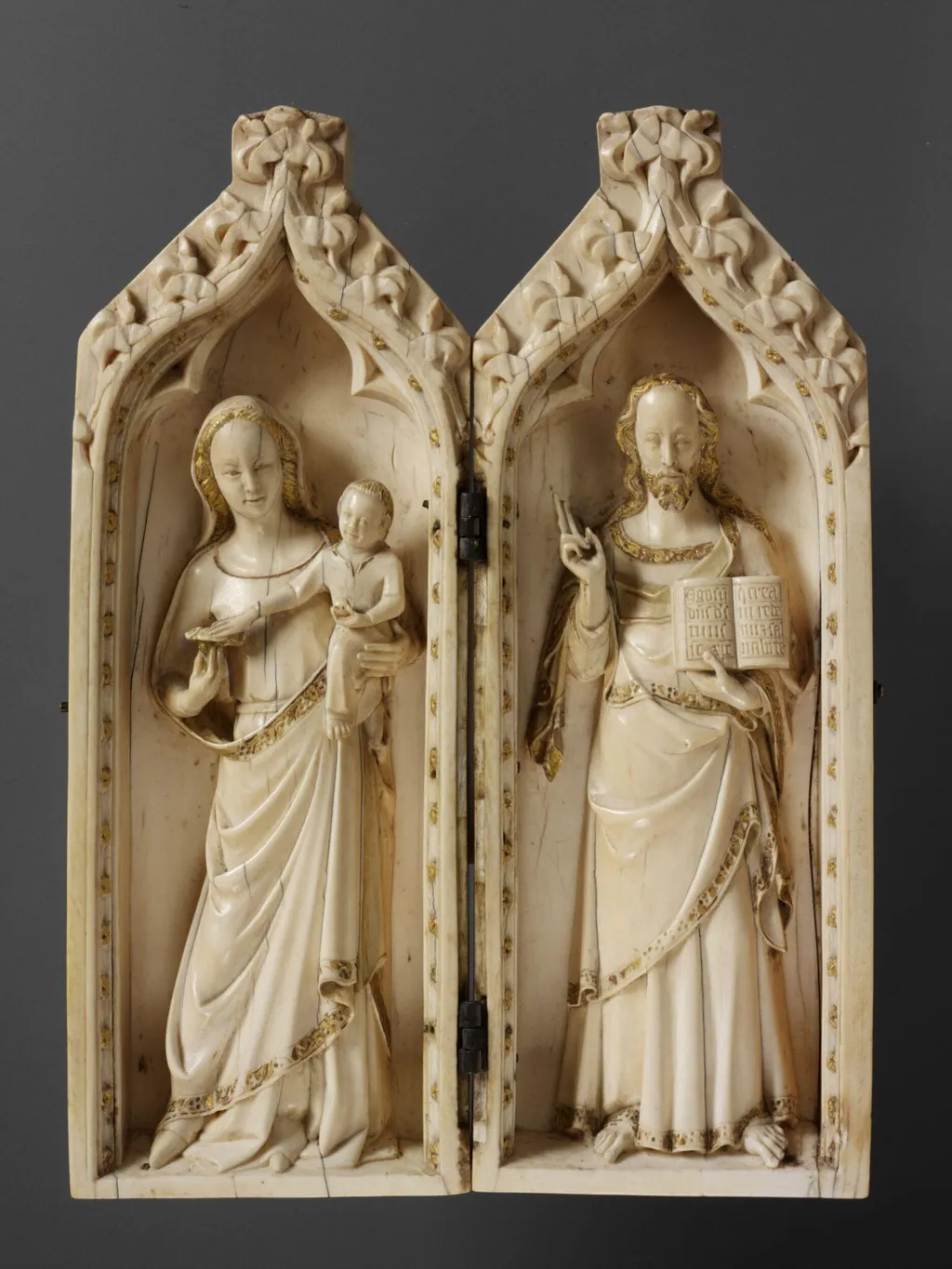
The Salting Diptych is a work on paper by Unknown. It dates from 1315 and is held in the collection of the Victoria and Albert Museum.
About this work
Overview
The Salting Diptych is a Gothic ivory diptych, a two-panelled artwork that can be closed like a book. It is considered one of the finest examples of English Gothic ivory carving to have survived.
Technique & Style
The diptych is notable for its thickness, with each leaf measuring 2.6cm in depth, and its monumental figures, which resemble small free-standing statues. The style is associated with late 13th and early 14th century work at Westminster, and features an ogee arch, a characteristic of English Gothic architecture.
Subject & Meaning
The diptych depicts two scenes, featuring Christ and the Virgin and Child. The figures are rendered in a detailed and intricate style, and are enclosed within niches, giving them a three-dimensional appearance.
History & Provenance
The Salting Diptych was donated to the Museum by George Salting, from whom it takes its name. It has been recognized as a significant example of English Gothic ivory carving since the late 19th century.
Context
The diptych's style is comparable to other artworks from the period, including the Eleanor Crosses and the Percy tomb at Beverley, suggesting a possible connection to a court workshop in England.
Artist & collection

 Domestic Scene
 Giacomo and Cardinal Marco, investing Andrea, Abbot of San Zeno, with his Benefice
 The Nymph of Fontainebleau
 Portrait of a Woman
 Madonna and Child with Saints in the Enclosed Garden
 Venus and Minerva
 Family Group of Four on Sofa
 Wall painting from Room H of the Villa of P. Fannius Synistor at Boscoreale
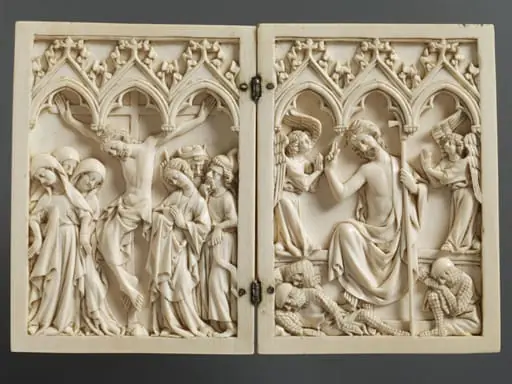 Diptych
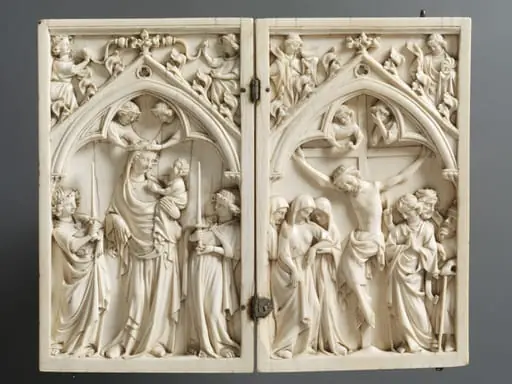 The Virgin and Child and the Crucifixion
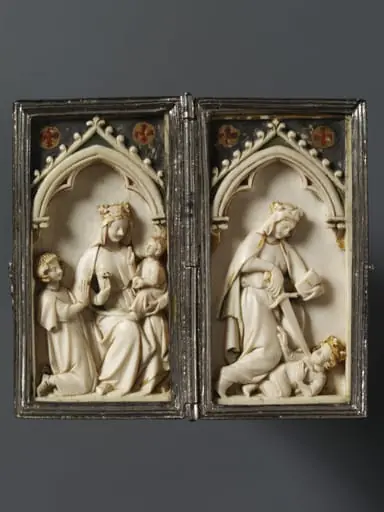 The Virgin and Child and St Catherine with the Emperor Maxentius
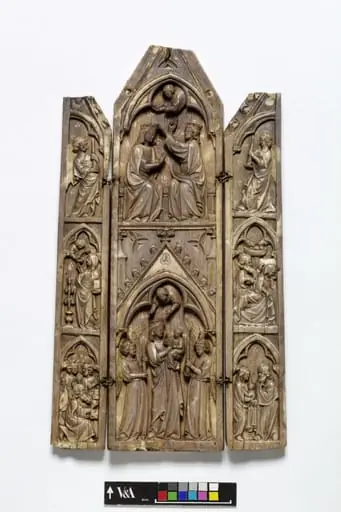 Virgin and Child, the Coronation of the Virgin and scenes from the Nativity
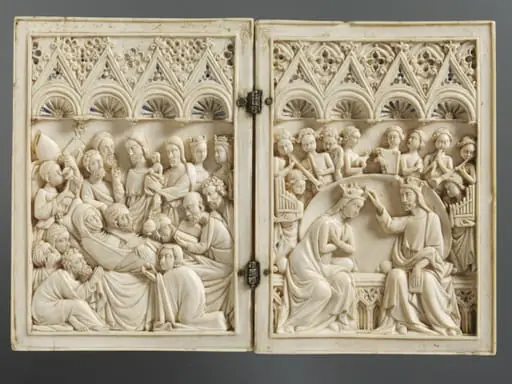 Death and the Coronation of the Virgin
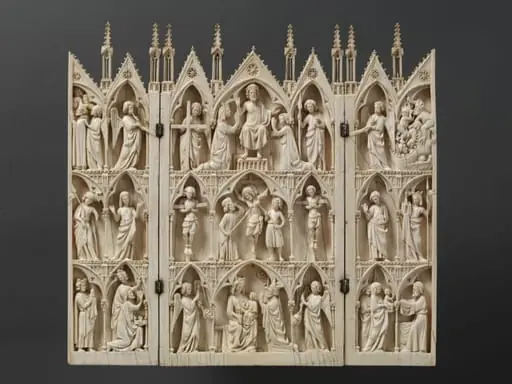 The Virgin and Child, the Crucifixion and the Last Judgement
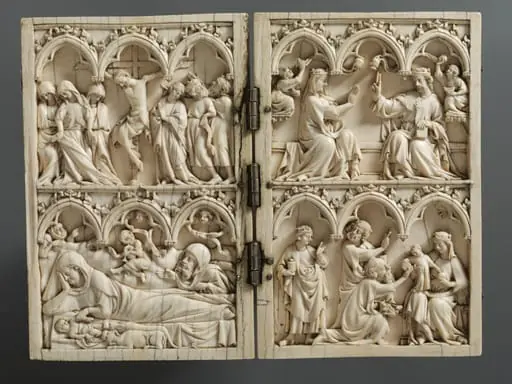 The Nativity, the Adoration of the Magi, the Crucifixion and the Coronation of the Virgin
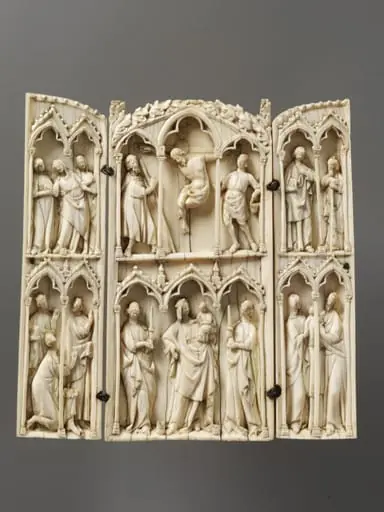 The Crucifixion, the Virgin and Child and Scenes from the Life of Christ
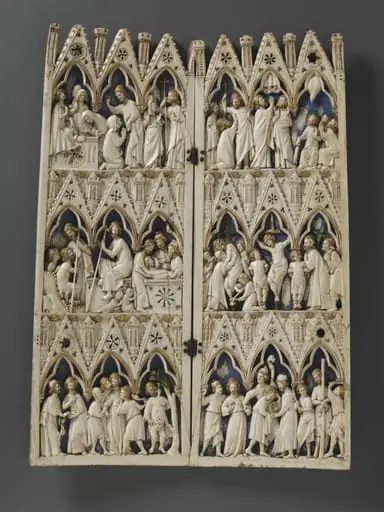 The Soissons Diptych
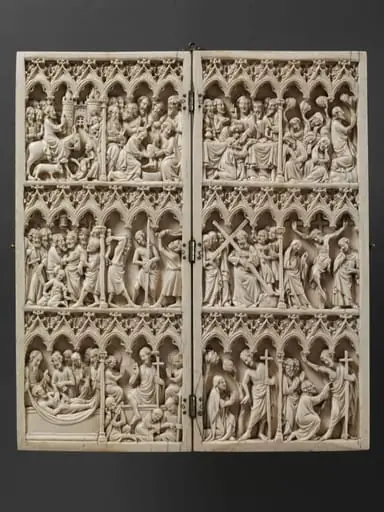 Scenes from the Passion of Christ
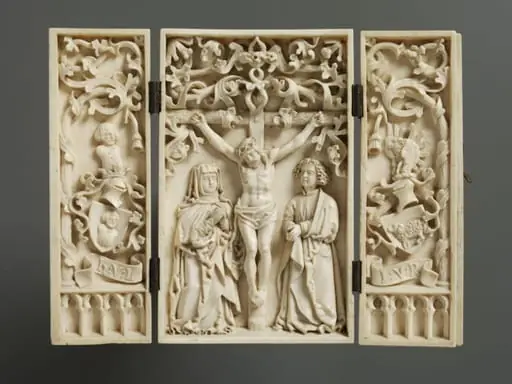 The Crucifixion
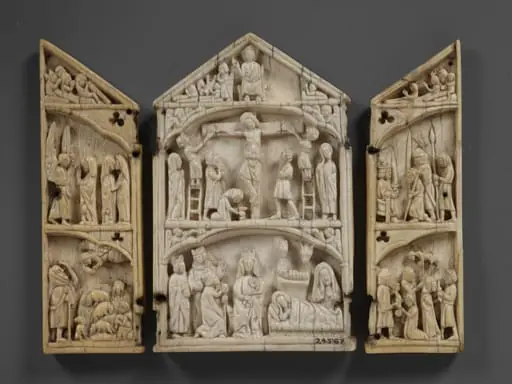 The Nativity with the Adoration of the Magi, the Crucifixion and the Last Judgement