Artwork
The sentinel in the employ of the Shah of Tabaristan prepares to sacrifice his son to the ghost of the Shah’s soul, from a Tuti-nama (Tales of a Parrot): Second Night
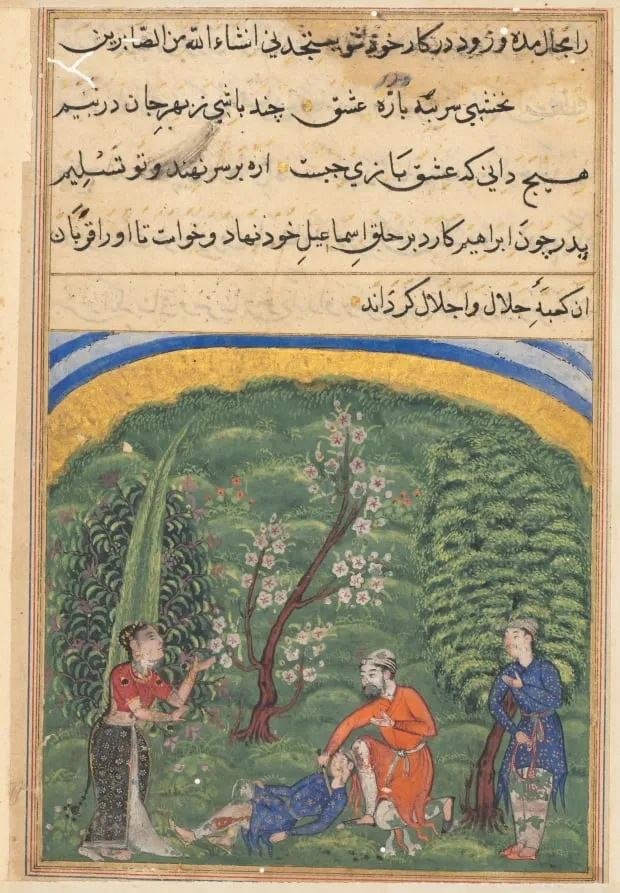
The sentinel in the employ of the Shah of Tabaristan prepares to sacrifice his son to the ghost of the Shah’s soul, from a Tuti-nama (Tales of a Parrot): Second Night is an unspecified painting by the Mughal Painting artist Unknown. It dates from 1560 and is held in the collection of the Cleveland Museum of Art. The miniature illustrates a dramatic episode from a Tuti‑nama, a collection of parrot‑told stories compiled for Emperor Akbar’s court.
About this work
The story is dark: a guard must kill his son to save his ruler, but the ruler’s spirit stops the sacrifice at the last moment.
A man in orange presses a knife to his son’s neck while a ghostly figure floats above, arms outstretched. A king watches from behind a tree, his face half-hidden. The scene is crowded with bright colors and tiny details—flowers, birds, and patterned robes.
This painting comes from a book of parrot tales made for Emperor Akbar’s court. The story is dark: a guard must kill his son to save his ruler, but the ruler’s spirit stops the sacrifice at the last moment. The artist packed the scene with life, even in a moment of horror.
Look up more paintings from Mughal India, court of Akbar (reigned 1556–1605) to see how artists told stories like this.
Overview
The miniature illustrates a dramatic episode from a Tuti‑nama, a collection of parrot‑told stories compiled for Emperor Akbar’s court. A sentinel dressed in orange presses a knife to his son’s throat, while a translucent female figure—representing the king’s soul—hovers above, arms outstretched. The Shah watches from behind a tree on the right, his face partly concealed, and the composition is filled with vivid flora, birds and intricate patterned garments.
Subject & Meaning
The narrative portrays a loyal guard faced with the impossible choice of sacrificing his child to preserve the life of a dying monarch. At the last moment the king’s spiritual double intervenes, sparing both the boy and the ruler. The scene underscores themes of duty, filial devotion, and the belief in a protective royal soul that can transcend mortal peril.
Technique & Style
Executed in the Mughal miniature tradition, the work combines fine brushwork with a rich palette of saturated reds, oranges and blues. Delicate lines define the figures, while gold leaf accents highlight the ornamental robes and foliage. The crowded composition, with miniature details such as blossoms, birds and patterned textiles, reflects the court’s taste for narrative density and visual opulence.
History & Provenance
The painting originates from a Tuti‑nama manuscript produced in the late 16th‑early 17th century for the imperial atelier of Akbar (r. 1556‑1605). Such illustrated books were commissioned to entertain and educate the court, blending Persian literary models with Indian artistic conventions. The miniature has remained in the manuscript collection, passing through various museum and private holdings before its current location.
Context
Mughal court art under Akbar frequently visualized moral and allegorical stories, employing a sophisticated blend of Persian, Central Asian and indigenous Indian elements. This episode reflects the era’s preoccupation with the ruler’s absolute authority and the moral responsibilities of his servants, while the inclusion of a parrot narrator highlights the period’s fondness for framed storytelling within illuminated codices.
Artist & collection

 Domestic Scene
 Giacomo and Cardinal Marco, investing Andrea, Abbot of San Zeno, with his Benefice
 The Nymph of Fontainebleau
 Portrait of a Woman
 Madonna and Child with Saints in the Enclosed Garden
 Venus and Minerva
 Family Group of Four on Sofa
 Wall painting from Room H of the Villa of P. Fannius Synistor at Boscoreale
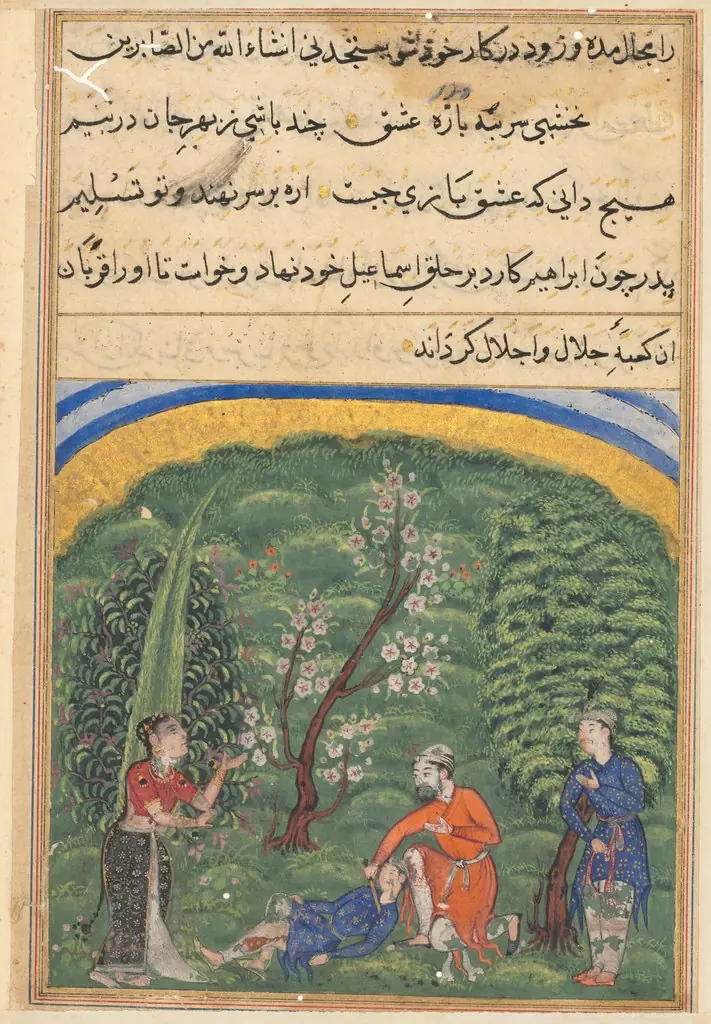 The sentinel in the employ of the Shah of Tabaristan prepares to sacrifice his son to the ghost of the Shah’s soul, from a Tuti-nama (Tales of a Parrot): Second Night
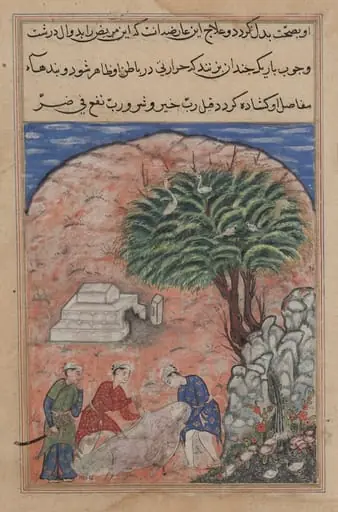 The suitors take the devotee’s daughter out of her tomb after breaking it open, when the physician discovers she is still alive, from a Tuti-nama (Tales of a Parrot): Twentieth Night
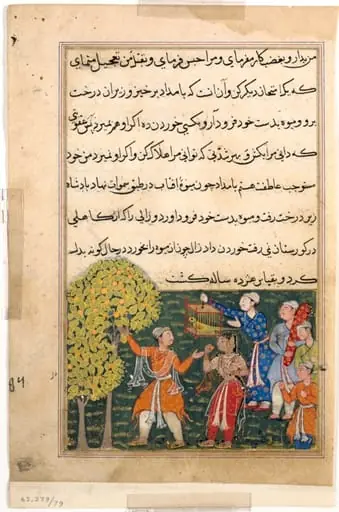 The king plucks fruit from the Tree of Life with his own hands and feeds it to a lady, from a Tuti-nama (Tales of a Parrot): Ninth Night
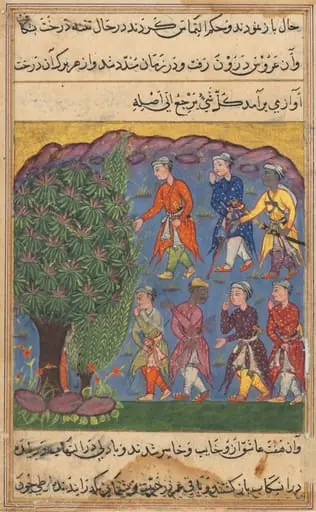 Seven men disputing possession of a woman bring her before the Tree of Justice into which she is absorbed, from a Tuti-nama (Tales of a Parrot): Sixth Night
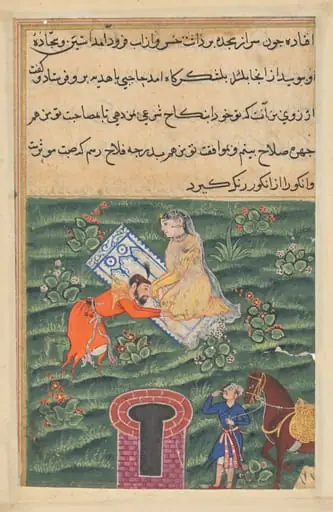 Khusrau, the King of Kings, pays homage to the pious daughter of Khassa, from a Tuti-nama (Tales of a Parrot): Fifty-first Night
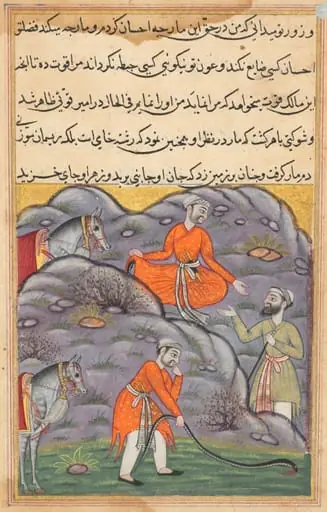 The emir slays the snake after giving it shelter, from a Tuti-nama (Tales of a Parrot): Forty-fifth Night