Artwork
The king plucks fruit from the Tree of Life with his own hands and feeds it to a lady, from a Tuti-nama (Tales of a Parrot): Ninth Night
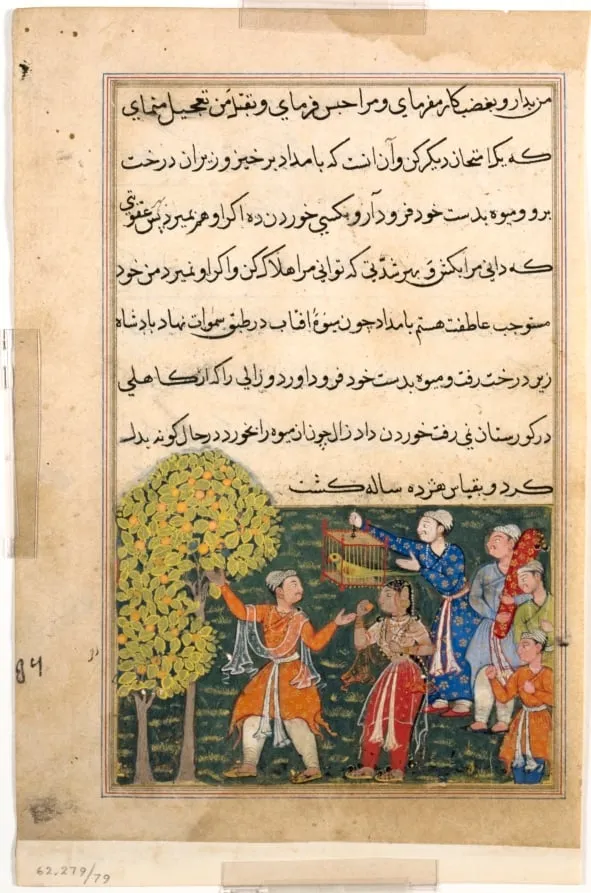
The king plucks fruit from the Tree of Life with his own hands and feeds it to a lady, from a Tuti-nama (Tales of a Parrot): Ninth Night is an unspecified painting by the Mughal Painting artist Suraju. It dates from 1560 and is held in the collection of the Cleveland Museum of Art. The miniature depicts a regal figure in a gold‑embroidered robe reaching for luminous fruit on a stylised Tree of Life.
About this work
Look up *mughal india, court of akbar (reigned 1556–1605)* to see more of these rich, detailed scenes.
A king in a golden robe reaches up to pick fruit from a glowing tree. He hands it to a lady in a red dress while a parrot watches from a cage. The court gathers around, some kneeling, others standing in bright clothes.
This painting comes from a book of parrot tales told to delay a queen’s secret meeting. The fruit here isn’t just food—it’s magic, meant to prove the parrot’s honesty and save his life. The king tests it first, showing trust in the bird’s warning.
Look up *mughal india, court of akbar (reigned 1556–1605)* to see more of these rich, detailed scenes.
Overview
The miniature depicts a regal figure in a gold‑embroidered robe reaching for luminous fruit on a stylised Tree of Life. He offers the glowing produce to a woman dressed in red while a parrot observes from a cage, surrounded by courtiers in bright attire who stand or kneel in a ceremonial gathering.
Subject & Meaning
The scene illustrates a narrative from a Tuti‑nama, a collection of parrot tales, in which a loyal parrot must demonstrate that the tree’s fruit is harmless to save itself from execution. The king’s act of tasting the fruit before the lady underscores his trust in the bird’s testimony and the fruit’s restorative, magical qualities.
Technique & Style
Executed in the Mughal miniature tradition of the late 16th century, the work combines fine brushwork with intricate detailing of textiles and foliage. Gold leaf accents highlight the king’s robe, while the luminous fruit is rendered with delicate washes that suggest an inner light, characteristic of courtly paintings that blend Persian influence with Indian realism.
History & Provenance
The painting originates from a manuscript of the Tuti‑nama, compiled during the reign of Emperor Akbar (1556–1605). Such illustrated books were produced for elite patrons in the Mughal court, serving both literary and decorative purposes. The manuscript later entered private collections before being acquired by a museum specializing in South Asian art.
Context
Mughal court culture under Akbar emphasized elaborate pageantry and the patronage of illustrated texts that conveyed moral and allegorical lessons. The inclusion of a parrot—a symbol of truth and loyalty—reflects contemporary storytelling conventions, while the depiction of a royal audience mirrors the emperor’s own interest in governance, justice, and the supernatural.
Artist & collection

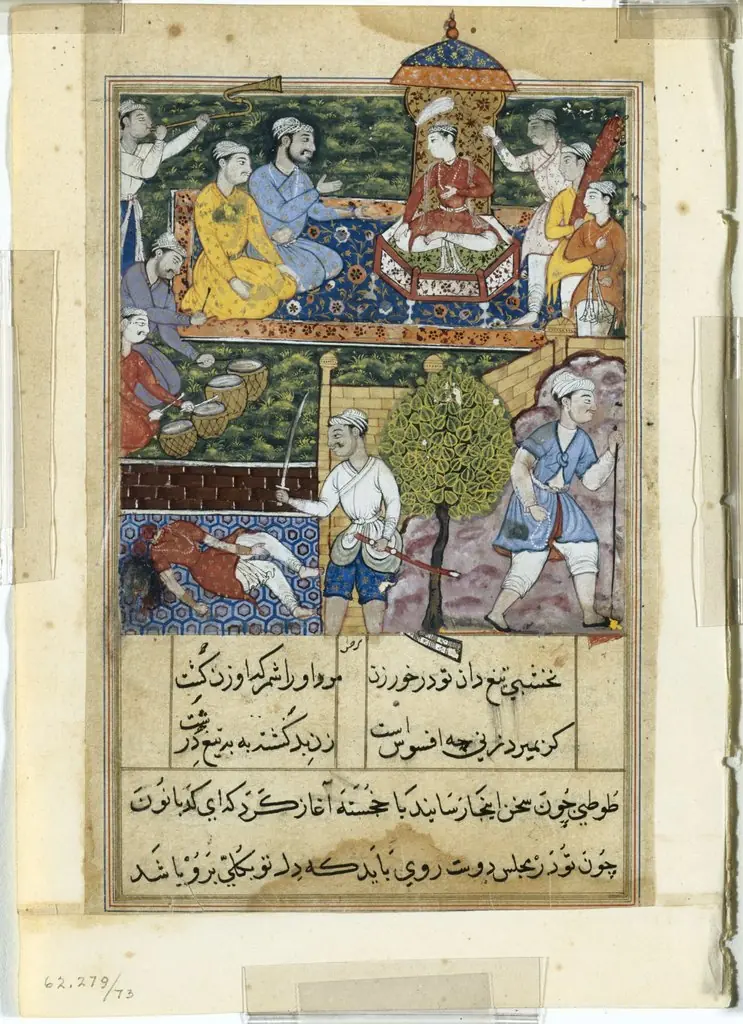 The young prince is crowned and the wicked handmaiden is executed, from a Tuti-nama (Tales of a Parrot): Eighth Night
 The young prince is crowned and the wicked handmaiden is executed, from a Tuti-nama (Tales of a Parrot): Eighth Night
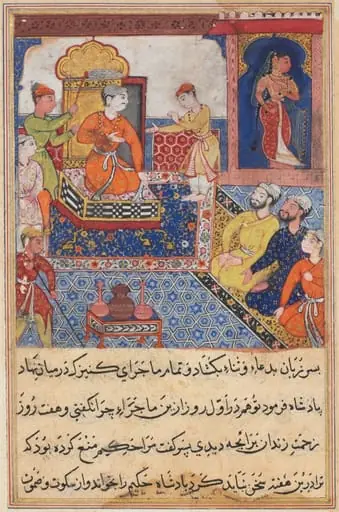 The young prince recounts his experiences to his father, the king, from a Tuti-nama (Tales of a Parrot): Eighth Night
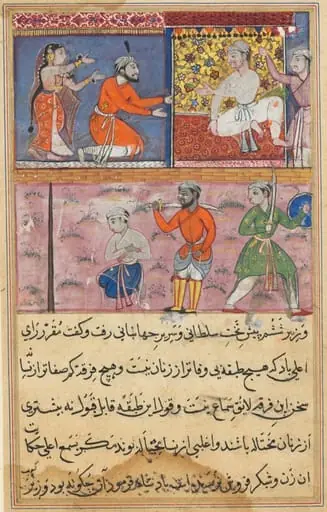 The prince sent back to the place of execution for the sixth time, from a Tuti-nama (Tales of a Parrot): Eighth Night
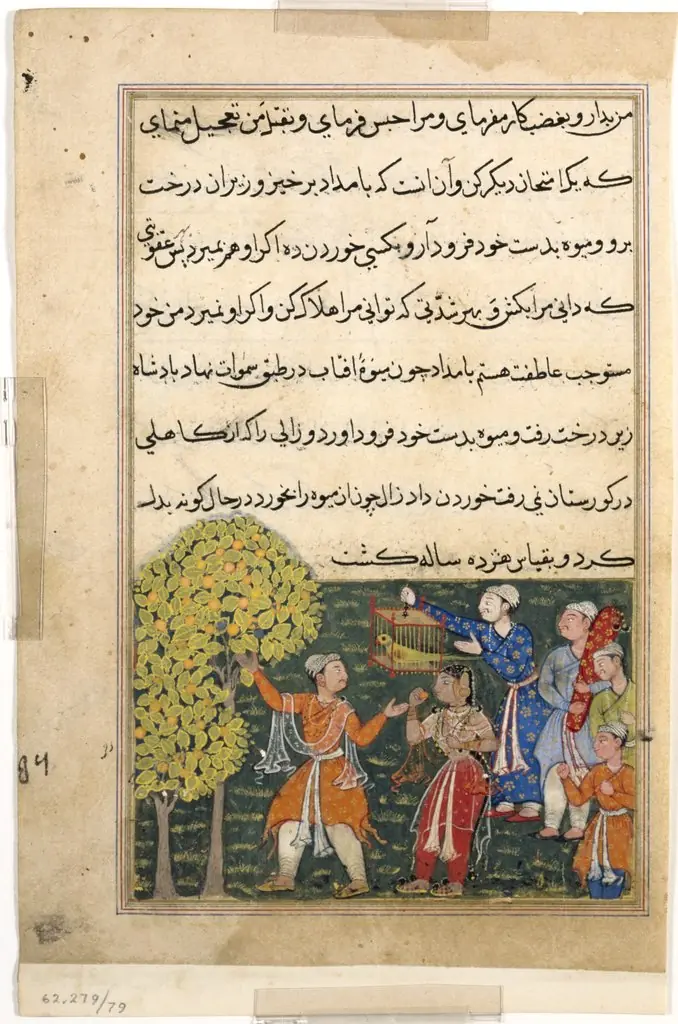 The king plucks fruit from the Tree of Life with his own hands and feeds it to a lady, from a Tuti-nama (Tales of a Parrot): Ninth Night
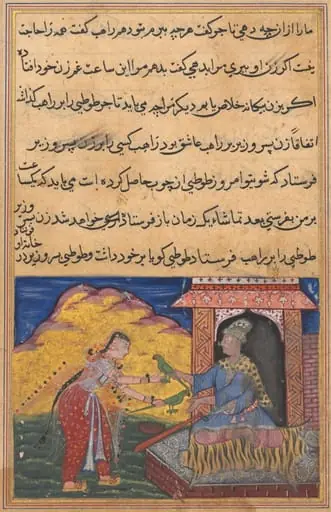 The wife of the son of the vizier brings the magic wooden parrot to her lover, the monk, who exchanges it for the replica, from a Tuti-nama (Tales of a Parrot): Tenth Night
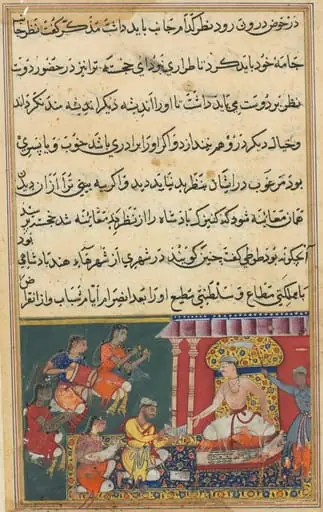 The astrologer predicts a calamity for the newly born prince in his thirteenth year, but one which he would be able to overcome, from a Tuti-nama (Tales of a Parrot): Eighth Night
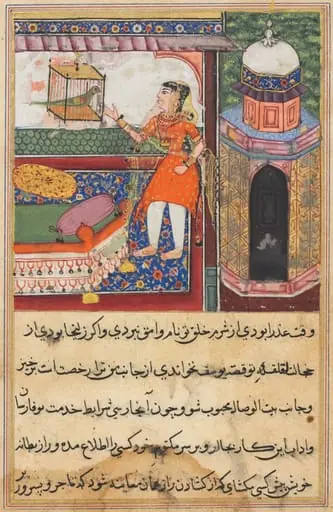 The Parrot Addresses Khujasta at the Beginning of the Tenth Night, from a Tuti-nama (Tales of a Parrot)
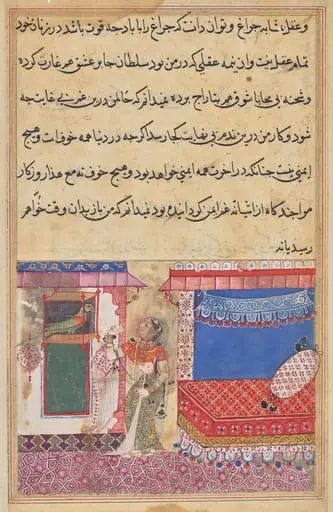 The Parrot Addresses Khujasta at the Beginning of the Eighteenth Night, from a Tuti-nama (Tales of a Parrot)
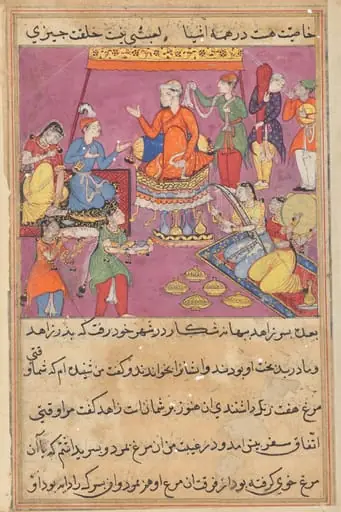 The king gives his daughter in marriage to the pious man’s son, from a Tuti-nama (Tales of a Parrot): Fifty-second Night
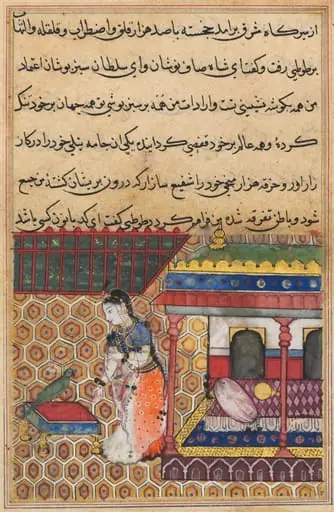 The parrot addresses Khujasta at the beginning of the thirty-eighth night, from a Tuti-nama (Tales of a Parrot)
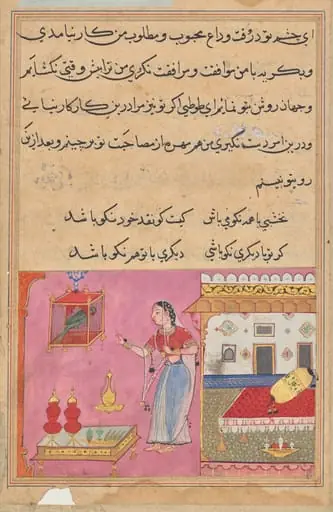 The Parrot Addresses Khujasta at the Beginning of the Twentieth Night, from a Tuti-nama (Tales of a Parrot)