Artwork
Seven men disputing possession of a woman bring her before the Tree of Justice into which she is absorbed, from a Tuti-nama (Tales of a Parrot): Sixth Night
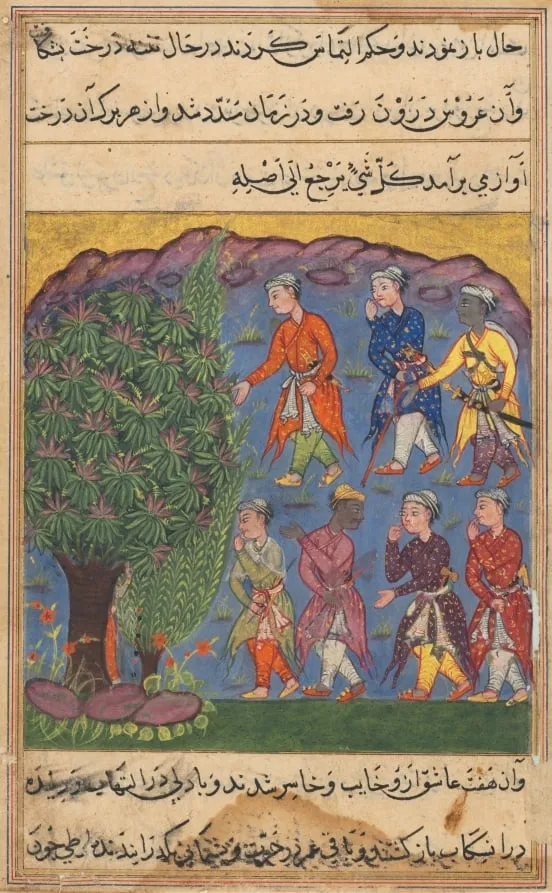
Seven men disputing possession of a woman bring her before the Tree of Justice into which she is absorbed, from a Tuti-nama (Tales of a Parrot): Sixth Night is an unspecified painting by the Mughal Painting artist Unknown. It dates from 1560 and is held in the collection of the Cleveland Museum of Art. This painting illustrates a scene from the Tuti-nama, a collection of tales told by a parrot, created in Mughal India.
About this work
You see seven men arguing over a woman, dragging her toward a tree that’s starting to swallow her.
You see seven men arguing over a woman, dragging her toward a tree that’s starting to swallow her. A carpenter in red and a holy man in green watch from the edges.
This painting comes from a book of parrot tales told in Mughal India. The tree isn’t just scenery—it’s the judge. When the woman vanishes into its trunk, the tree speaks, ending the fight. The story was meant to teach lessons about justice and fate.
Look up *Mughal India, court of Akbar (reigned 1556–1605)* to see more of these illustrated tales.
Overview
This painting illustrates a scene from the Tuti-nama, a collection of tales told by a parrot, created in Mughal India. It depicts a woman being absorbed into the Tree of Justice, resolving a dispute among seven men.
Subject & Meaning
The scene shows seven men arguing over a woman brought to life by a holy man from a wooden statue carved by a carpenter. The Tree of Justice intervenes, absorbing the woman and proclaiming that everything reverts to its origin, thus settling the dispute.
Technique & Style
The painting features vivid characters, including the carpenter in red and the holy man in green, set against a central action scene where the woman is being swallowed by the tree.
Context
The Tuti-nama was produced during the reign of Akbar (1556–1605) in Mughal India, a period known for its richly illustrated manuscripts that conveyed moral lessons and stories.
Artist & collection

 Domestic Scene
 Giacomo and Cardinal Marco, investing Andrea, Abbot of San Zeno, with his Benefice
 The Nymph of Fontainebleau
 Portrait of a Woman
 Madonna and Child with Saints in the Enclosed Garden
 Venus and Minerva
 Family Group of Four on Sofa
 Wall painting from Room H of the Villa of P. Fannius Synistor at Boscoreale
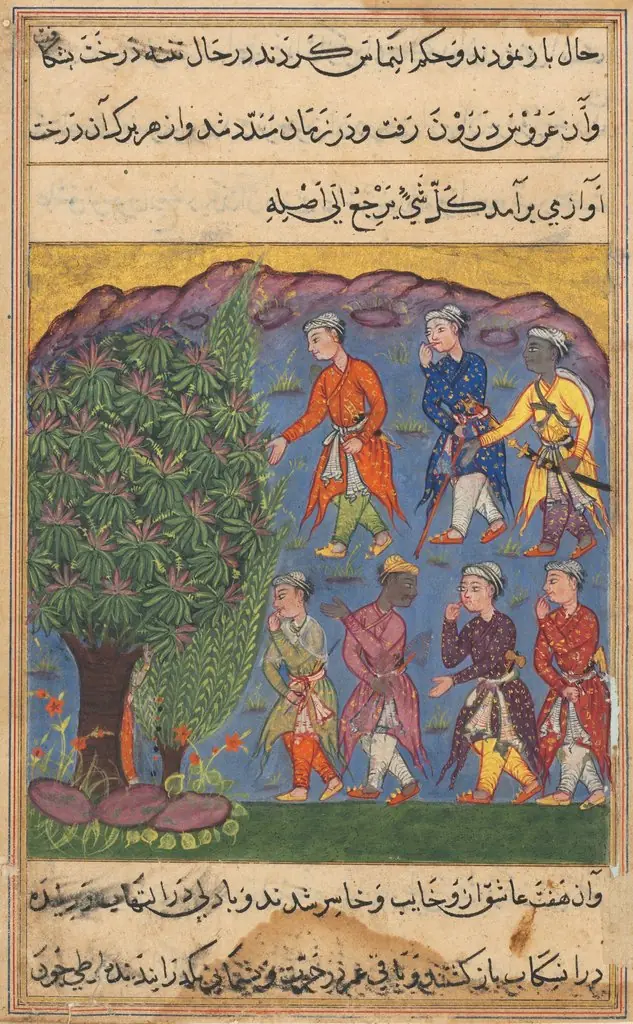 Seven men disputing possession of a woman bring her before the Tree of Justice into which she is absorbed, from a Tuti-nama (Tales of a Parrot): Sixth Night
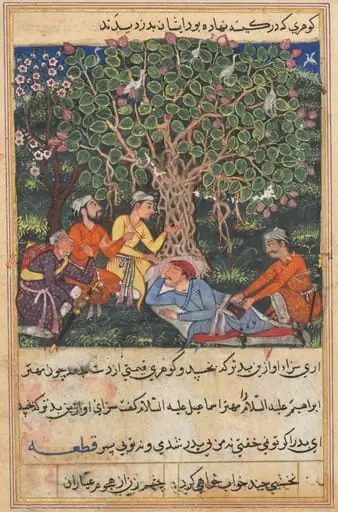 The street cleaner, on his way to meet King Bhojaraja, sleeps under a tree where four thieves disguised as fellow travelers deprive him of a priceless pearl, from a Tuti-nama (Tales of a Parrot): Twelfth Night
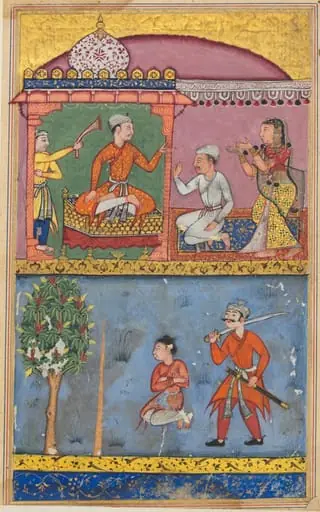 The handmaiden appeals for justice and the prince is taken to the execution site for the fourth time, from a Tuti-nama (Tales of a Parrot): Eighth Night
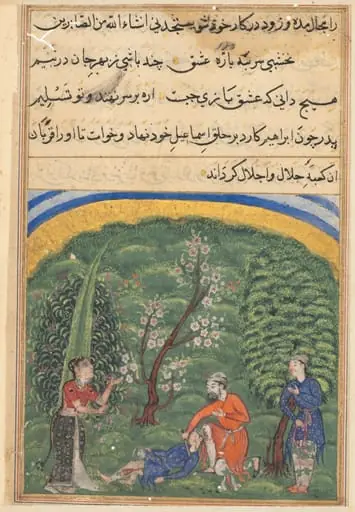 The sentinel in the employ of the Shah of Tabaristan prepares to sacrifice his son to the ghost of the Shah’s soul, from a Tuti-nama (Tales of a Parrot): Second Night
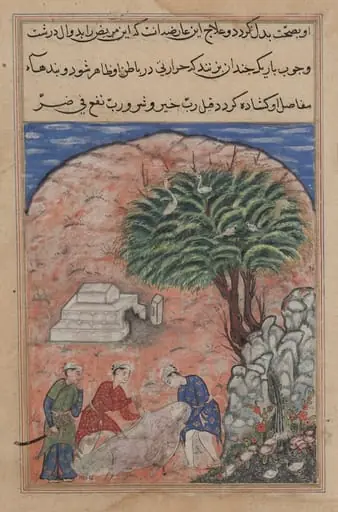 The suitors take the devotee’s daughter out of her tomb after breaking it open, when the physician discovers she is still alive, from a Tuti-nama (Tales of a Parrot): Twentieth Night
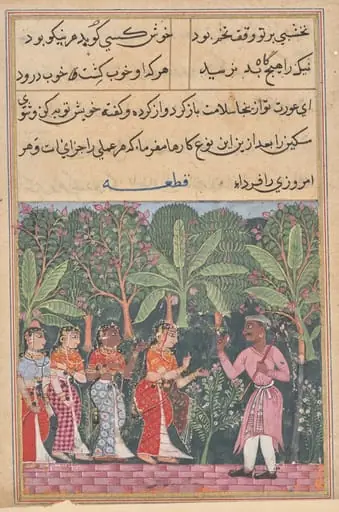 The merchant’s daughter meets the gardener, from a Tuti-nama (Tales of a Parrot): Twelfth Night
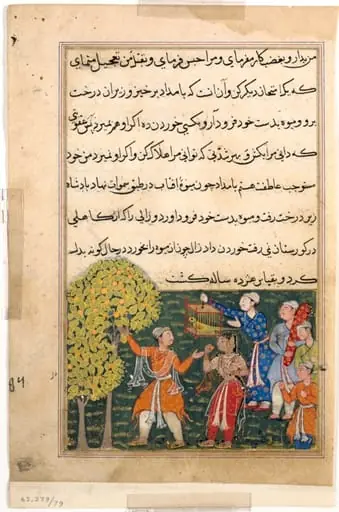 The king plucks fruit from the Tree of Life with his own hands and feeds it to a lady, from a Tuti-nama (Tales of a Parrot): Ninth Night
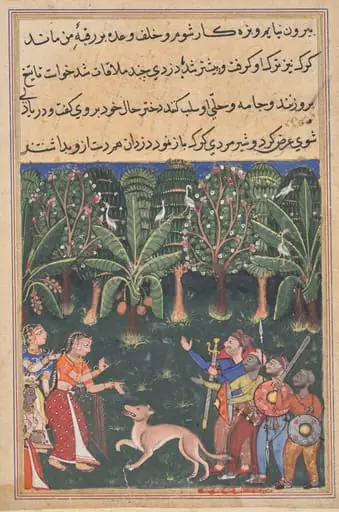 The merchant’s daughter encounters a wolf and bandits on her way to meet the gardener in order to keep her promise, from a Tuti-nama (Tales of a Parrot): Twelfth Night
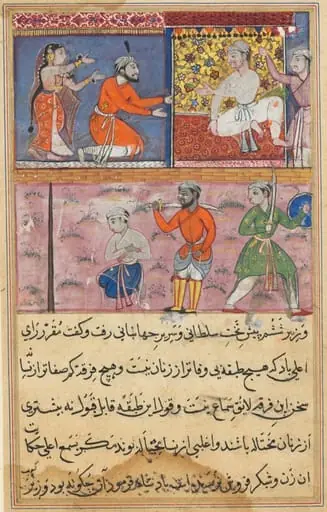 The prince sent back to the place of execution for the sixth time, from a Tuti-nama (Tales of a Parrot): Eighth Night
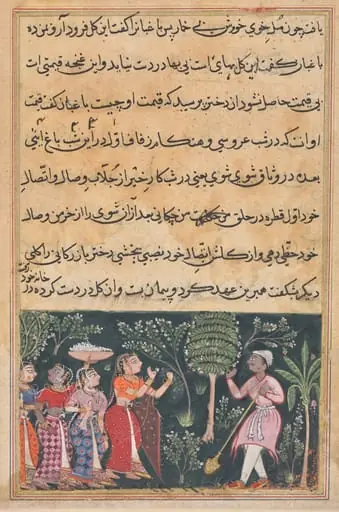 The daughter of the merchant of Mazanderan asks the gardener for the rose, from a Tuti-nama (Tales of a Parrot): Twelfth Night
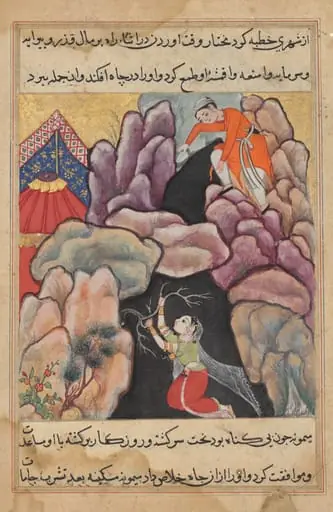 Mukhtar throws his wife Maimuna into the pit, but she saves herself, from a Tuti-nama (Tales of a Parrot): Twenty-fifth Night
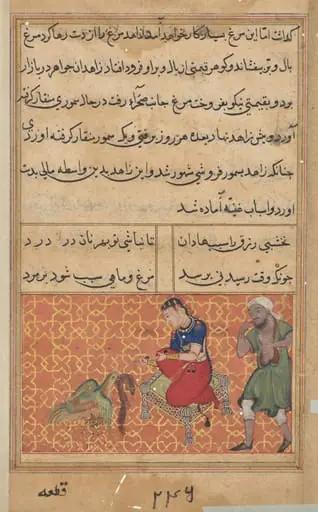 The bird of seven colors brings a sable to the pious man, from a Tuti-nama (Tales of a Parrot): Fifty-second Night