Artwork
The third suitor, who is an archer, shoots the wicked fairy who has imprisoned Zuhra. He rides on a magic horse prepared by the second suitor and is led to the spot by the divining prowess of the first, from a Tuti-nama (Tales of a Parrot): Thirty-fourth Night
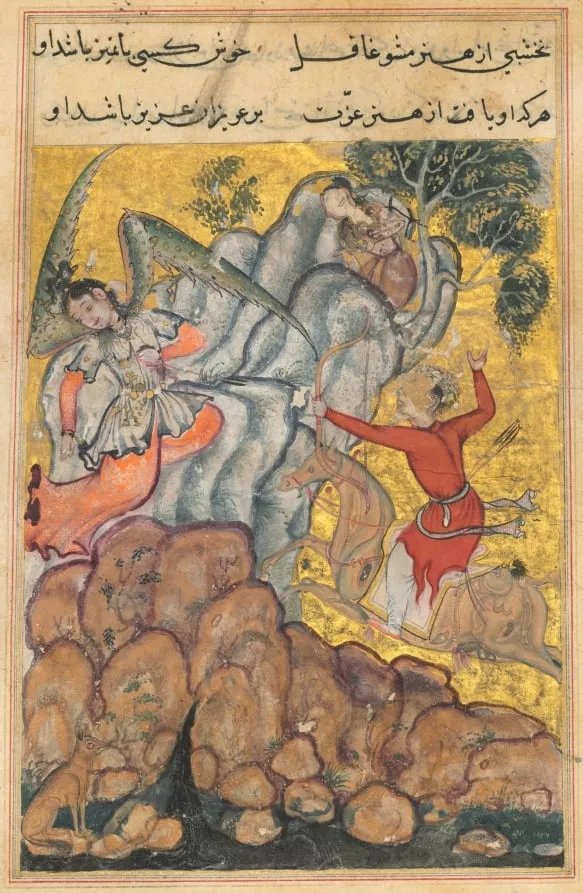
The third suitor, who is an archer, shoots the wicked fairy who has imprisoned Zuhra. He rides on a magic horse prepared by the second suitor and is led to the spot by the divining prowess of the first, from a Tuti-nama (Tales of a Parrot): Thirty-fourth Night is an unspecified painting by the Mughal Painting artist Unknown. It dates from 1560 and is held in the collection of the Cleveland Museum of Art. This painting illustrates a pivotal moment from the Thirty-fourth Night of the *Tuti-nama* (Tales of a Parrot), a collection of stories.
About this work
The bright colors and busy scene show how tales of magic and heroism were illustrated in Mughal India.
You see a man on a flying horse shooting an arrow at a fairy who’s tumbling off a cliff. Above them, a woman named Zuhra watches from a rocky prison.
This painting comes from a book called *Tuti-nama*, a collection of stories told by a parrot. It was made for Emperor Akbar’s court, where artists blended Persian and Indian styles. The bright colors and busy scene show how tales of magic and heroism were illustrated in Mughal India.
To see more like this, look up Mughal India, court of Akbar (reigned 1556–1605).
Overview
This painting illustrates a pivotal moment from the Thirty-fourth Night of the *Tuti-nama* (Tales of a Parrot), a collection of stories. It depicts the rescue of Zuhra by her three suitors, who combine their unique skills to defeat the evil fairy holding her captive.
Subject & Meaning
The scene shows the third suitor, an archer, shooting the wicked fairy as she falls from a mountain, freeing Zuhra from her imprisonment atop a rocky outcrop. The collaboration of the suitors highlights their individual worth, with the archer proving most worthy of Zuhra's love.
Technique & Style
The painting blends Persian and Indian artistic influences, characteristic of Mughal India during Emperor Akbar's reign. Vibrant colors and a dynamic, detailed composition reflect the illustrative style of magical and heroic tales from this period.
History & Provenance
Created for Emperor Akbar's court (reigned 1556–1605), this work is part of the *Tuti-nama* manuscript, indicating its production within the imperial patronage of Mughal art.
Context
The *Tuti-nama* was a literary project of Akbar's court, where parrot-told stories were illustrated with vivid scenes like this, catering to the emperor's interest in diverse cultural narratives.
Legacy
This painting represents the flourishing of Mughal art under Akbar, influencing subsequent illustrations of mythic and heroic themes in Indian and Persian art traditions.
Artist & collection

 Domestic Scene
 Giacomo and Cardinal Marco, investing Andrea, Abbot of San Zeno, with his Benefice
 The Nymph of Fontainebleau
 Portrait of a Woman
 Madonna and Child with Saints in the Enclosed Garden
 Venus and Minerva
 Family Group of Four on Sofa
 Wall painting from Room H of the Villa of P. Fannius Synistor at Boscoreale
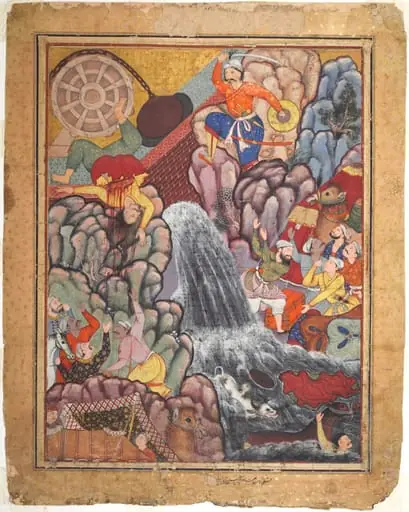 Alamshah cleaving asunder the chain of the wheel, from volume 11 of a Hamza-nama (Adventures of Hamza)
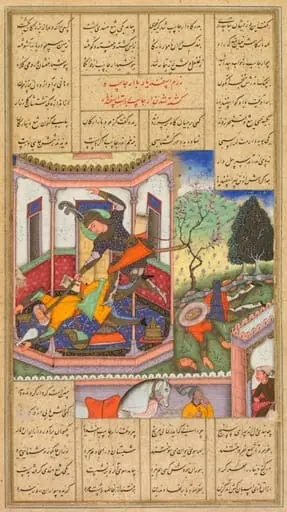 Isfandiyar slays Arjasp, the king of Turan, from a Shah-nama (Book of Kings) of Firdausi (Persian, about 934–1020)
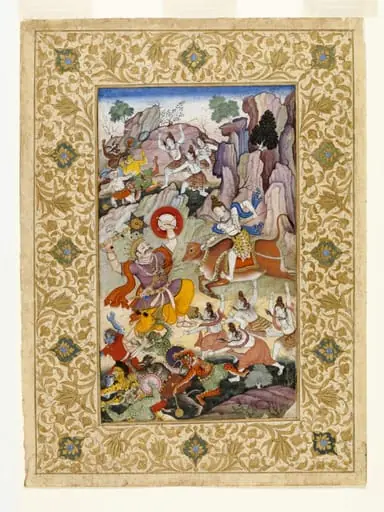 Shiva and Andhaka
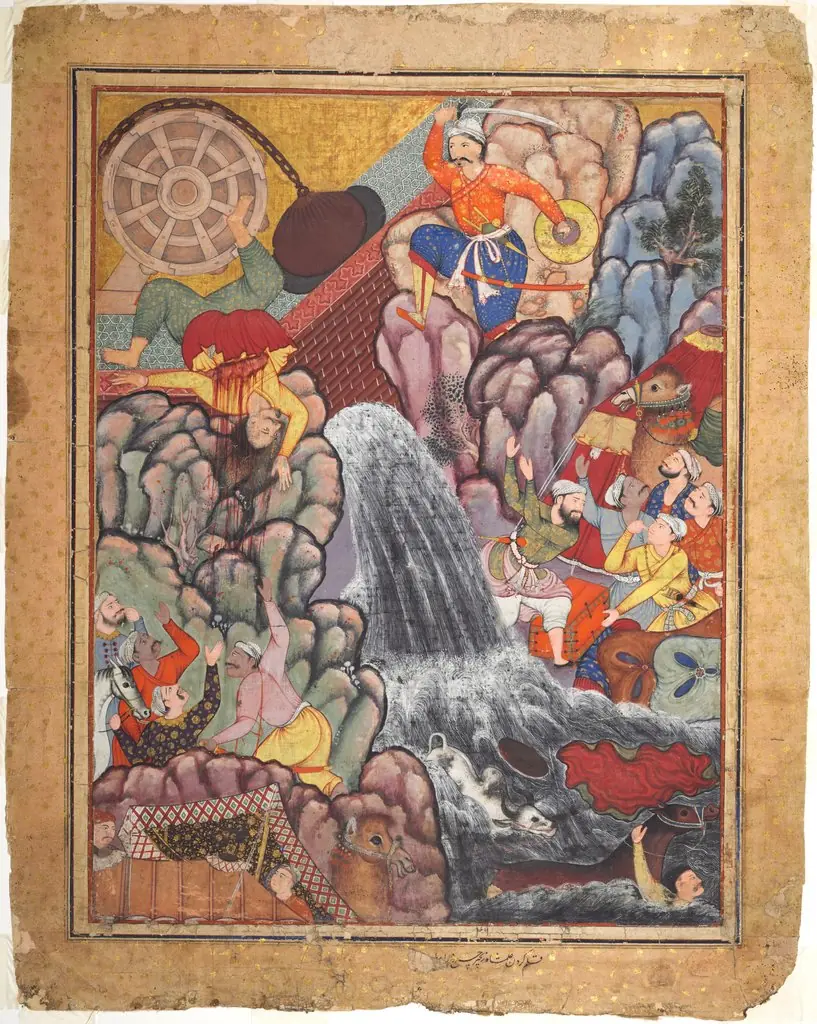 Alamshah cleaving asunder the chain of the wheel, from volume 11 of a Hamza-nama (Adventures of Hamza)
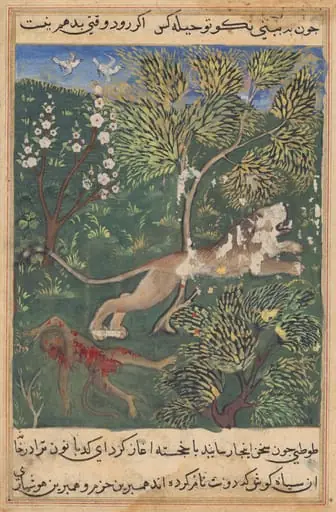 The lion, suspecting treachery on the part of the monkey, slays him and flees, from a Tuti-nama (Tales of a Parrot): Twenty-ninth Night
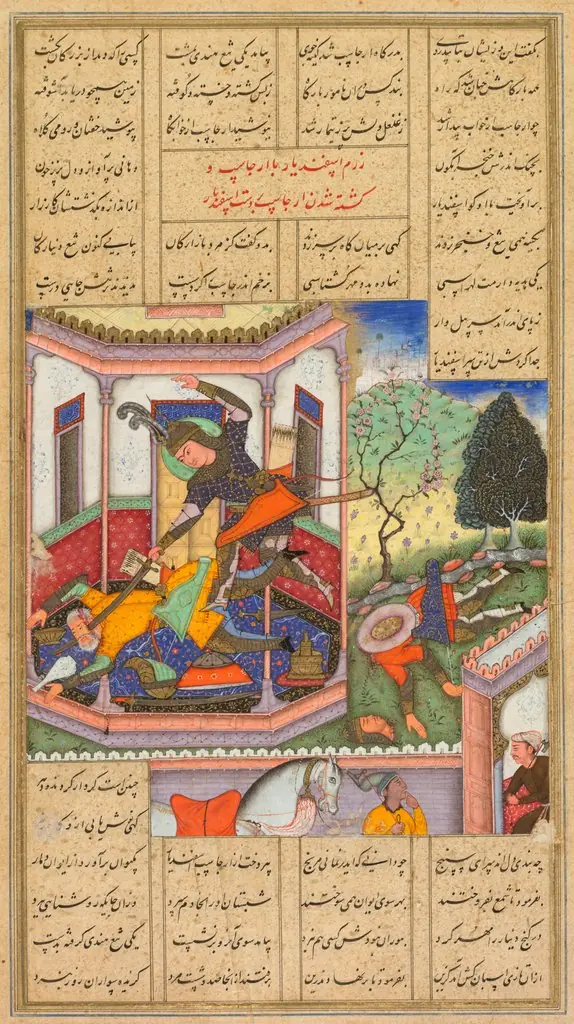 Isfandiyar slays Arjasp, the king of Turan, from a Shah-nama (Book of Kings) of Firdausi (Persian, about 934–1020)
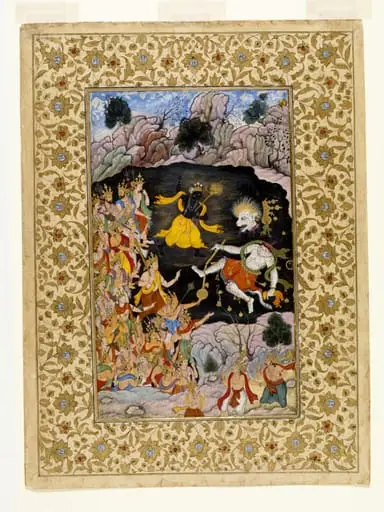 Krishna and Nikumba