Artwork
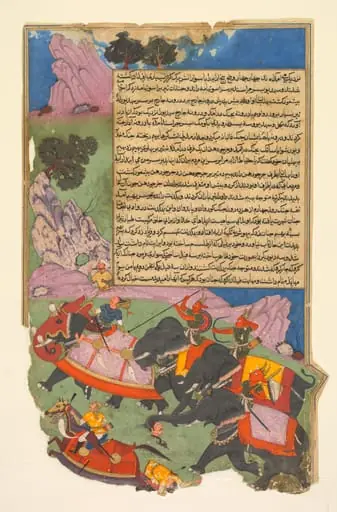
Isfandiyar slays Arjasp, the king of Turan, from a Shah-nama (Book of Kings) of Firdausi (Persian, about 934–1020)
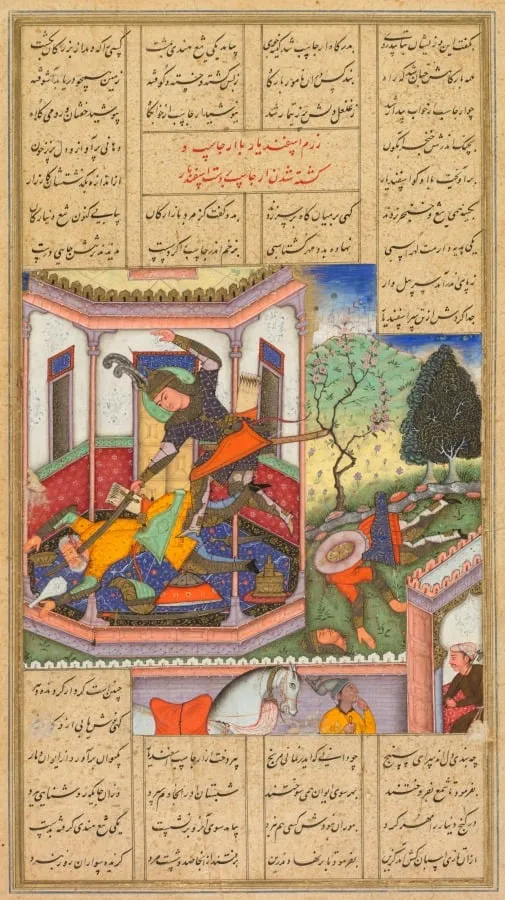
Isfandiyar slays Arjasp, the king of Turan, from a Shah-nama (Book of Kings) of Firdausi (Persian, about 934–1020) is an unspecified painting by the Baroque artist Haidar Kashmiri. It is held in the collection of the Cleveland Museum of Art. This painting depicts a pivotal scene from Firdausi's Shah-nama, where Isfandiyar avenges his family by slaying Arjasp, king of Turan.
About this work
Overview
This painting depicts a pivotal scene from Firdausi's Shah-nama, where Isfandiyar avenges his family by slaying Arjasp, king of Turan. The artwork combines gruesome combat with intricate, serene surroundings.
Subject & Meaning
The scene illustrates Isfandiyar's vengeance against Arjasp, who had defeated Isfandiyar's father and captured his sisters. Isfandiyar, disguised as a merchant, infiltrates Arjasp's fort and defeats him, symbolizing the pursuit of justice in the face of tyranny.
Technique & Style
Executed in the Mughal style, the painting blends Persian narrative traditions with Indian artistic sensibilities. Delicate details, such as floral patterns on robes and architectural elements, contrast with the violent action, showcasing the artist's mastery of juxtaposing beauty and brutality.
History & Provenance
Although based on a 10th-century Persian epic, the painting was created in India, reflecting the cultural exchange and artistic fusion characteristic of the Mughal period.
Context
This work is part of a larger illustrated Shah-nama, a Persian literary masterpiece. Its creation in India highlights the widespread influence of Persian literature across the region and the Mughal court's appreciation for such narratives.
Legacy
The painting exemplifies the enduring legacy of Mughal art's synthesis of Persian and Indian aesthetics, influencing subsequent artistic productions in the region.
Artist & collection

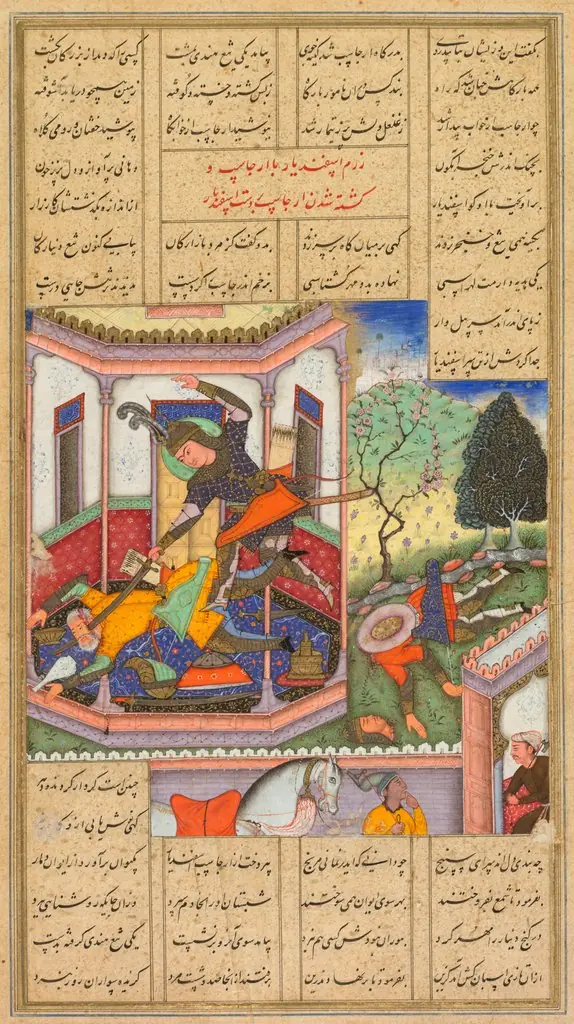 Isfandiyar slays Arjasp, the king of Turan, from a Shah-nama (Book of Kings) of Firdausi (Persian, about 934–1020)
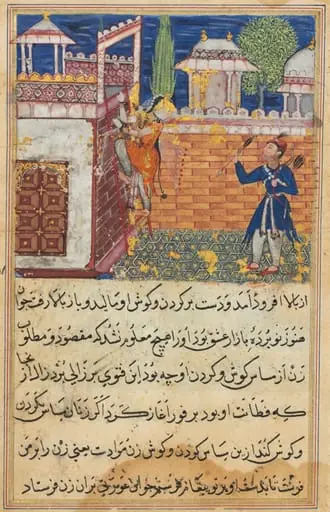 The deceitful wife returns to her terrace after caressing her lover, from a Tuti-nama (Tales of a Parrot): Eighth Night
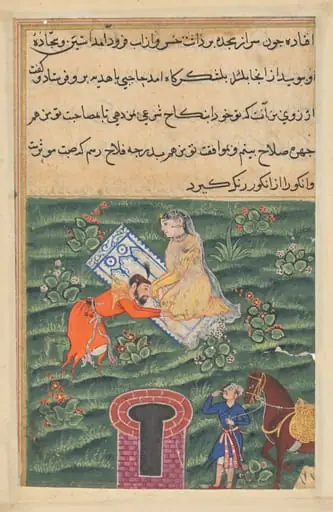 Khusrau, the King of Kings, pays homage to the pious daughter of Khassa, from a Tuti-nama (Tales of a Parrot): Fifty-first Night
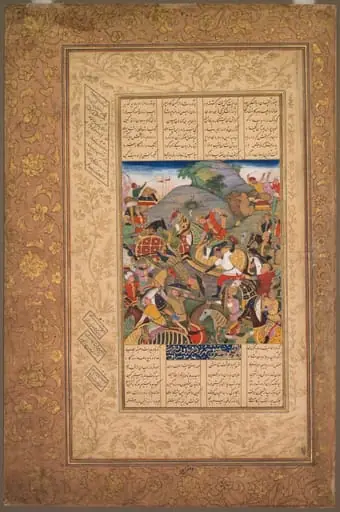 Battle between Manuchihr and Tur, from a Shah-nama (Book of Kings) of Firdausi (Persian, c. 934–1020)
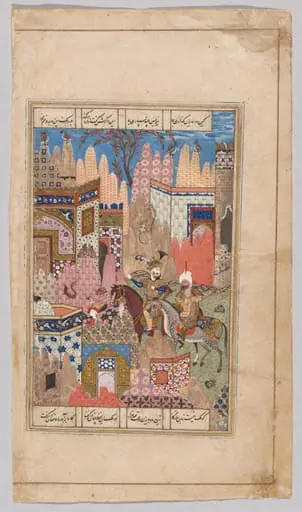 King Anushirwan and the Owls, from the Khamsa of Nizami
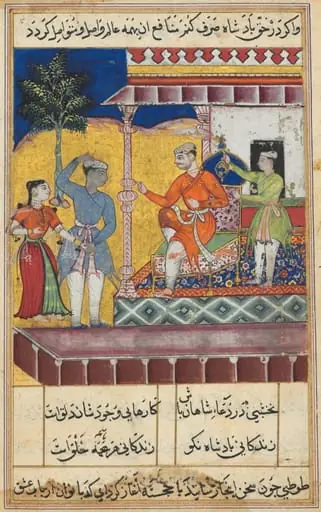 The rejuvenated old man and the daughter of the king of the jinns take leave of the King of Kings, from a Tuti-nama (Tales of a Parrot): Seventh Night
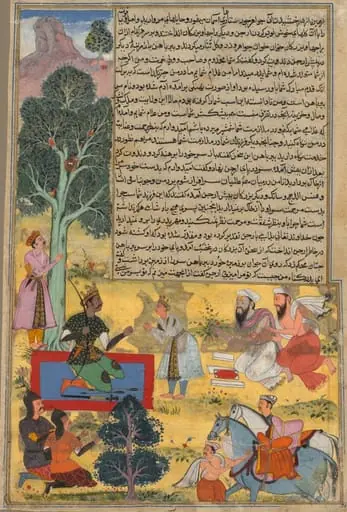 Vabhruvahana Approaches Arjuna, page from the Khan Khanan's Razm-nama
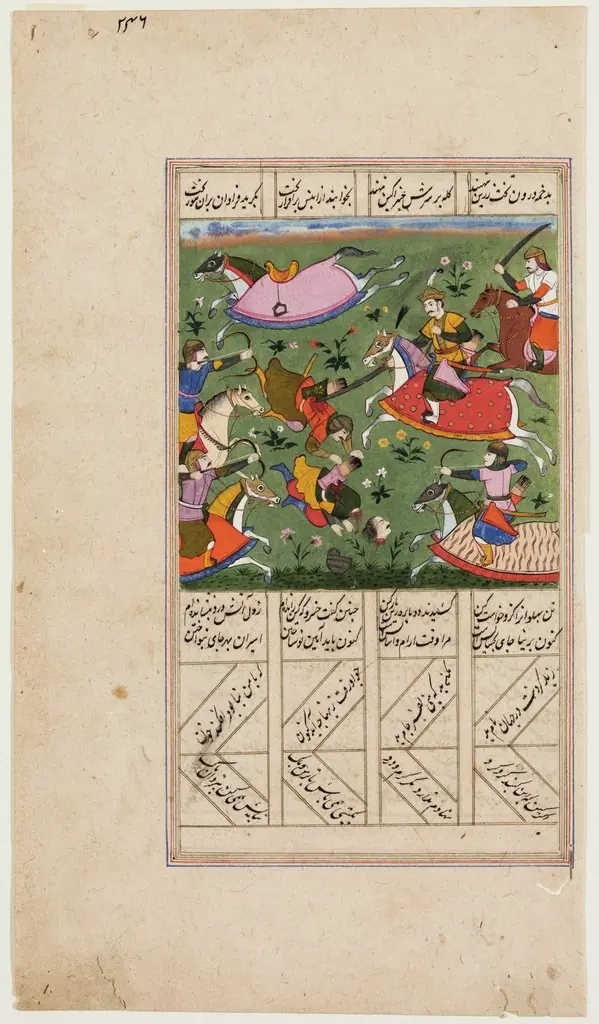 Cavalry Battle with Beheaded Warrior
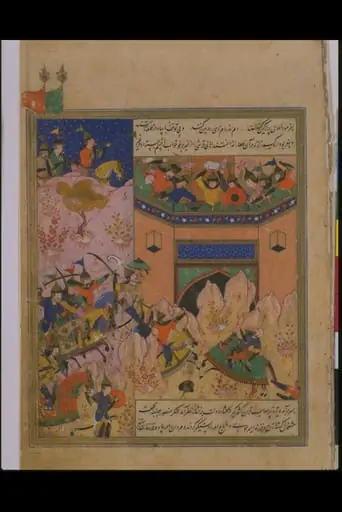 Attack on a walled city
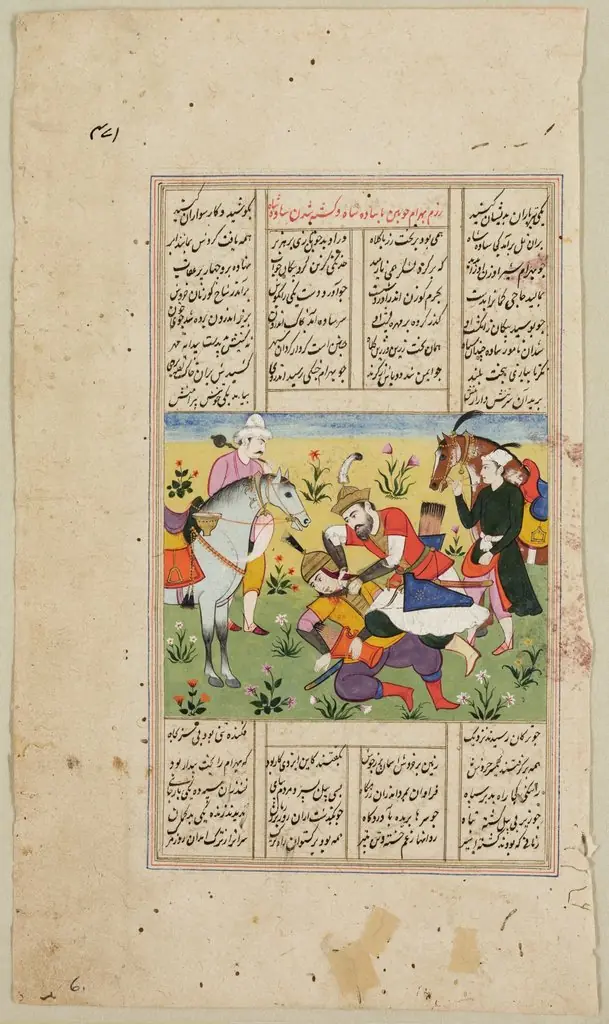 King Beheading Enemy
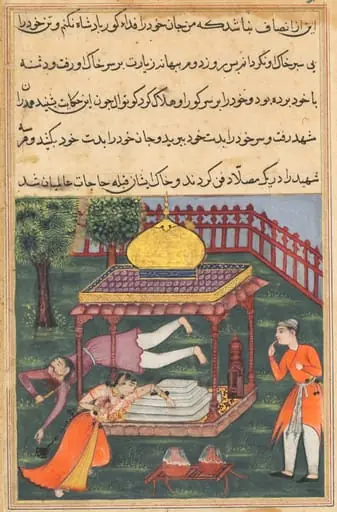 Mahrusa kills herself at the tomb of the king of Zabul, and her husband does likewise, from a Tuti-nama (Tales of a Parrot): Thirty-sixth Night
 Ghatotkacha and three demons in his company chase Bhagadatta, from Bhishma-parva (volume six) of a Razm-nama (Book of Wars) adapted from the Sanskrit Mahabharata and translated into Persian by Mir Ghiyath al-Din Ali Qazvini, known as Naqib Khan (Persian, d. 1614)