Artwork
The Virgin of the Immaculate Conception (Tota Pulchra); with St John the Baptist, St Francis of Assisi, St John the Evangelist and St Anthony of Padua
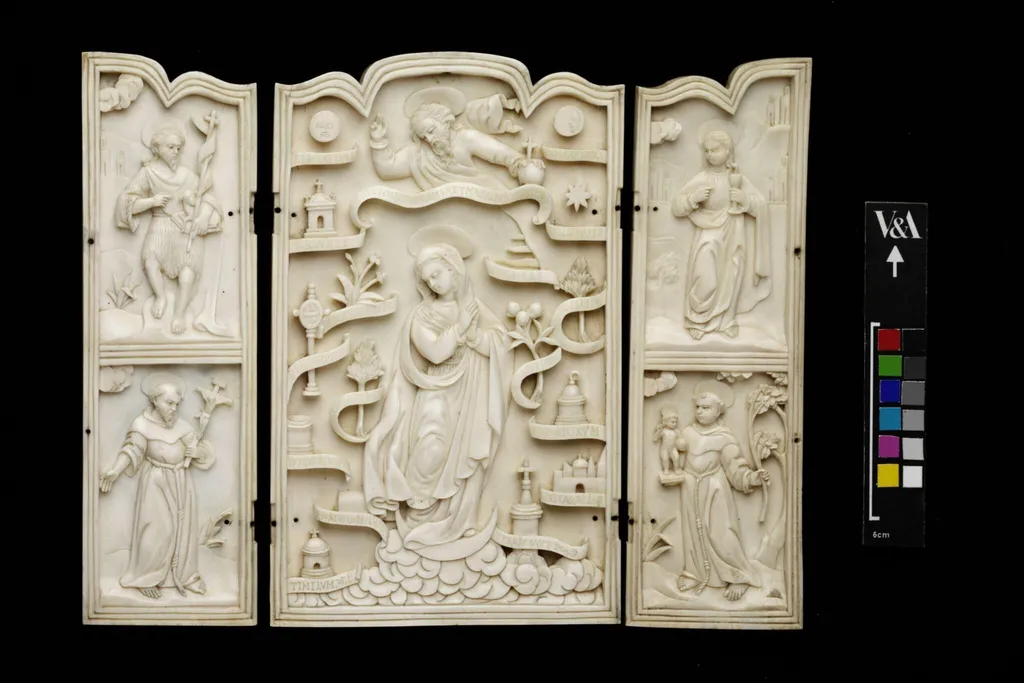
The Virgin of the Immaculate Conception (Tota Pulchra); with St John the Baptist, St Francis of Assisi, St John the Evangelist and St Anthony of Padua is a work on paper by the Baroque artist Unknown. It dates from 1600 and is held in the collection of the Victoria and Albert Museum.
About this work
Overview
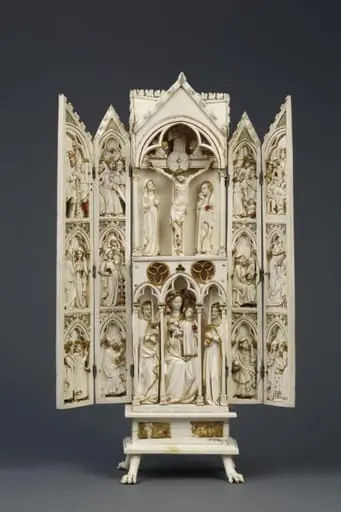
This small ivory triptych, titled *The Virgin of the Immaculate Conception (Tota Pulchra)*, presents a central relief of the Virgin Mary flanked by two hinged wings. The work is portable, designed for private devotion, and incorporates a distinctive Chinese frame that encloses the delicate carvings.
Subject & Meaning
The central panel depicts the Virgin standing on a crescent moon, a traditional iconography of the Immaculate Conception known as “Tota Pulchra.” The surrounding saints—John the Baptist and John the Evangelist on the upper wing, Francis of Assisi and Anthony of Padua on the lower—reinforce the devotional focus on purity and intercession.
Technique & Style
Carved from ivory, the relief showcases the fine, intricate modeling characteristic of German and Netherlandish ivory work, while the framing reflects Chinese craftsmanship typical of Cantonese and Philippine workshops that supplied the Spanish market in the early modern period.
History & Provenance
Ivory devotional objects were widely exported from Spanish and Portuguese colonies such as the Philippines, Mexico, and Goa during the 17th–18th centuries. Comparable “Tota Pulchra” panels were found aboard the Manila galleon *Santa Margarita* (wrecked 1601), indicating that this format was in production around the turn of the 17th century, which helps date the present piece.
Context
Portable altars like this triptych were intended for personal prayer in homes or chapels, the hinged wings allowing the reliefs to be protected when not in use. Their small size and elaborate detail made them suitable for travel or display on a wall.
Artist & collection

 Domestic Scene
 Giacomo and Cardinal Marco, investing Andrea, Abbot of San Zeno, with his Benefice
 The Nymph of Fontainebleau
 Portrait of a Woman
 Madonna and Child with Saints in the Enclosed Garden
 Venus and Minerva
 Family Group of Four on Sofa
 Wall painting from Room H of the Villa of P. Fannius Synistor at Boscoreale
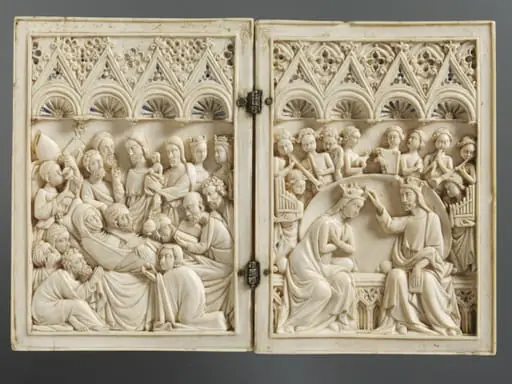 Death and the Coronation of the Virgin
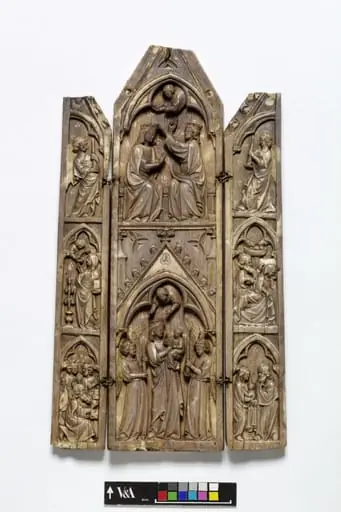 Virgin and Child, the Coronation of the Virgin and scenes from the Nativity
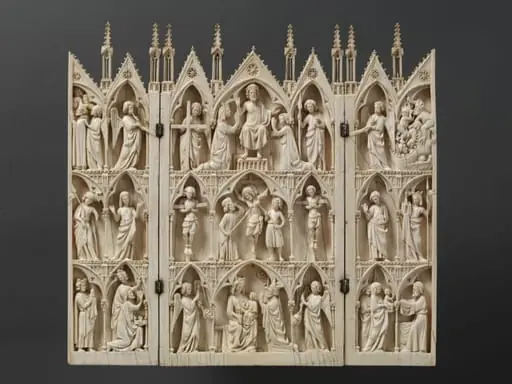 The Virgin and Child, the Crucifixion and the Last Judgement
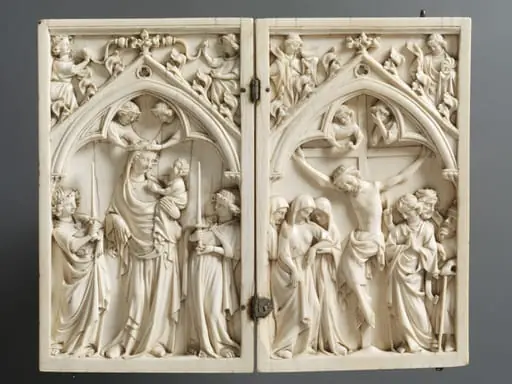 The Virgin and Child and the Crucifixion
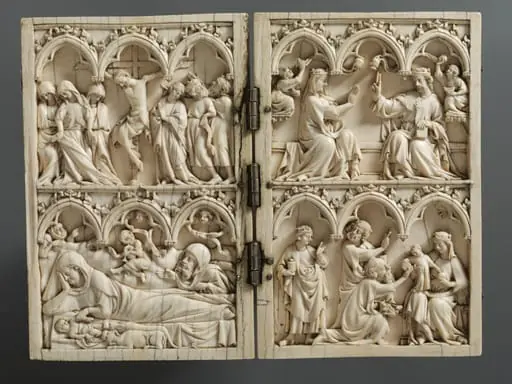 The Nativity, the Adoration of the Magi, the Crucifixion and the Coronation of the Virgin
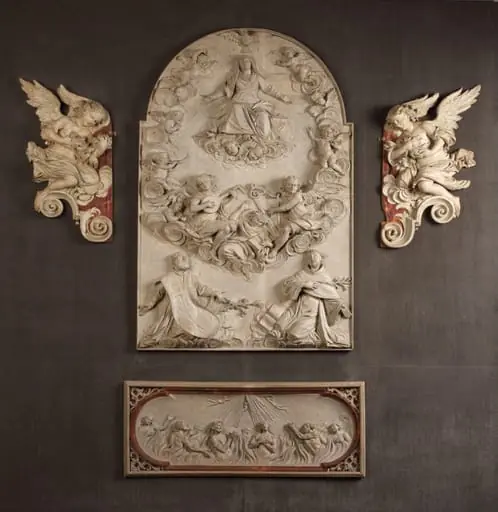 The Assumption of the Virgin with saints and angels
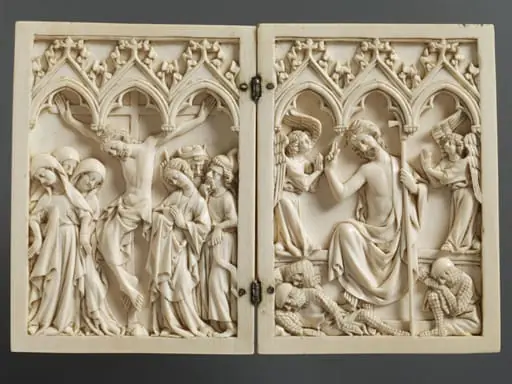 Diptych
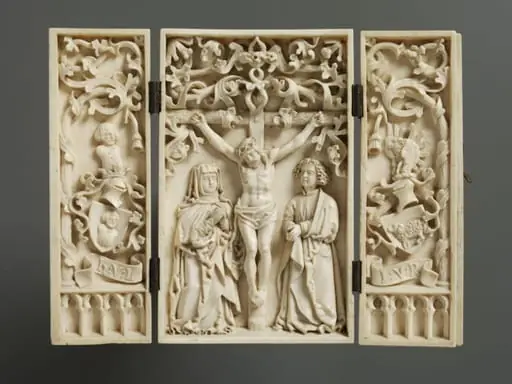 The Crucifixion
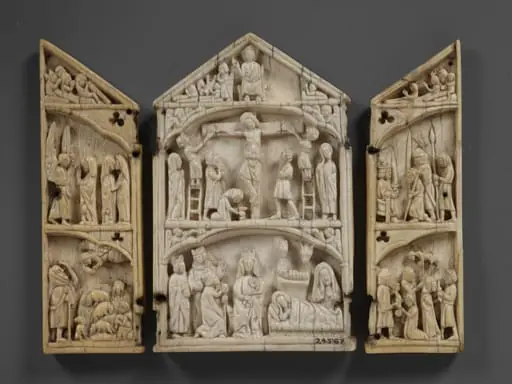 The Nativity with the Adoration of the Magi, the Crucifixion and the Last Judgement
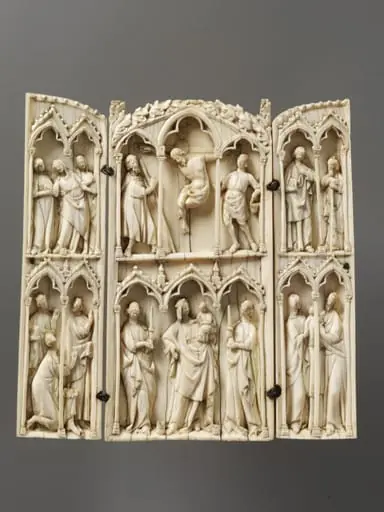 The Crucifixion, the Virgin and Child and Scenes from the Life of Christ
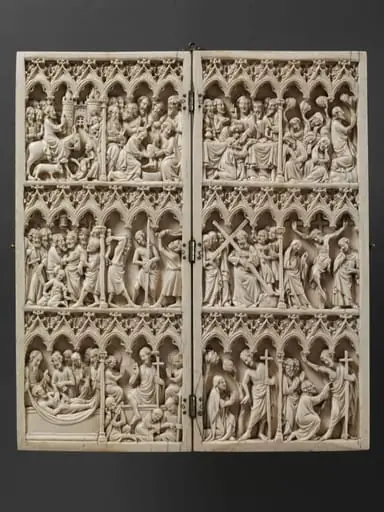 Scenes from the Passion of Christ
 Virgin and Child, the Crucifixion and Scenes from the Life of Christ