Artwork
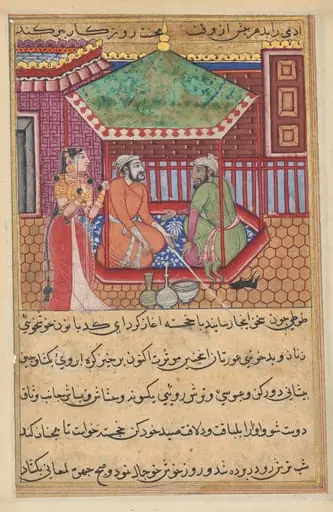
The young prince is presented to the king, his father, by his teacher, but refuses to speak, from a Tuti-nama (Tales of a Parrot): Eighth Night
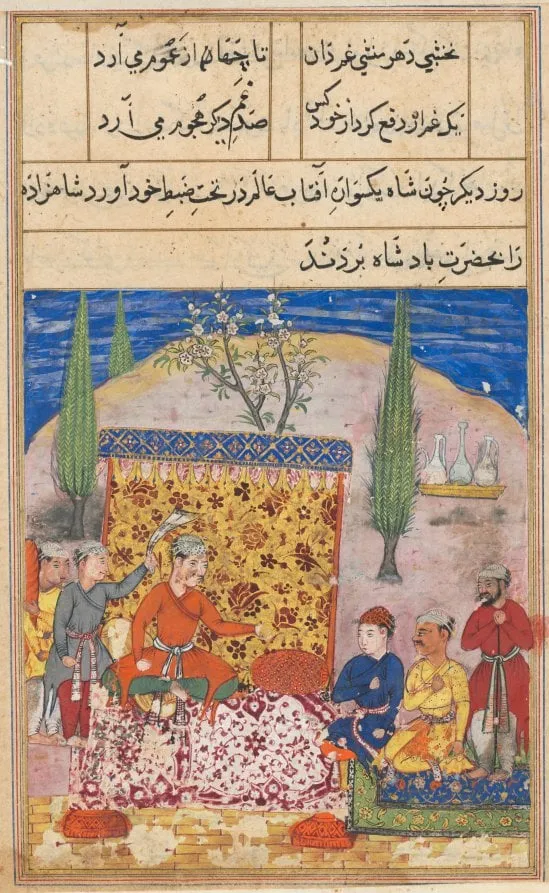
The young prince is presented to the king, his father, by his teacher, but refuses to speak, from a Tuti-nama (Tales of a Parrot): Eighth Night is an unspecified painting by the Mughal Painting artist Unknown. It dates from 1560 and is held in the collection of the Cleveland Museum of Art. This painting is one of many miniatures from the Tuti-nama, a manuscript commissioned by the Mughal emperor Akbar.
About this work
The scene shows the moment just before the prince proves he’s ready to rule—except he’s about to stay silent again, this time on purpose.
You see a young prince standing stiffly before his father, the king, while his teacher gestures toward him.
This painting comes from a book of parrot tales made for Emperor Akbar. The story behind it is unusual: the prince couldn’t speak for years, but his teacher used pictures and stories to help him learn. The scene shows the moment just before the prince proves he’s ready to rule—except he’s about to stay silent again, this time on purpose.
Look up *mughal india, court of akbar (reigned 1556–1605)* to see more of these vivid miniatures.
Overview
This painting is one of many miniatures from the Tuti-nama, a manuscript commissioned by the Mughal emperor Akbar. It illustrates a moment from the eighth night of a parrot’s storytelling cycle, depicting a prince’s silent confrontation with his father. The scene captures tension between expectation and restraint, as the prince, though educated, chooses silence at a critical moment of royal evaluation.
Subject & Meaning
The prince, raised in silence by his teacher’s unconventional methods, stands before the king not in defiance but in deliberate composure. His refusal to speak is not failure but the culmination of a disciplined education—his silence, now intentional, signals mastery over speech and self. The teacher’s gesture implies trust in the prince’s readiness, even as the king awaits words that will never come.
Technique & Style
Rendered in the Mughal miniature tradition, the scene uses fine brushwork, flat planes of color, and intricate patterns to define figures and space. The prince’s blue robe and the teacher’s yellow garment create visual contrast against the muted background. Figures are arranged hierarchically, with the king elevated slightly, while the prince’s rigid posture and direct gaze convey inner resolve rather than submission.
History & Provenance
Commissioned in the 1560s under Akbar’s patronage, the Tuti-nama was among the earliest illustrated manuscripts produced in the imperial atelier. It combined Persian literary sources with Indian artistic sensibilities, reflecting Akbar’s interest in cross-cultural synthesis. The manuscript was likely used for courtly entertainment and moral instruction, circulating among nobles and scholars.
Context
Akbar’s court fostered a vibrant culture of illustrated manuscripts that blended storytelling with political allegory. The Tuti-nama’s parrot tales, framed as moral lessons, subtly reinforced ideals of wisdom, patience, and non-verbal intelligence—values aligned with Akbar’s own governance style. This scene, in particular, challenges the assumption that speech equals competence, a theme resonant in a court that valued observation and counsel.
Legacy
The Tuti-nama set a precedent for later Mughal illustrated manuscripts, influencing the development of courtly painting in India. Its emphasis on psychological nuance and narrative subtlety marked a shift from purely decorative illustration toward storytelling with emotional depth. Though the manuscript is now dispersed, its surviving folios remain key to understanding early Mughal artistic innovation.
Artist & collection

 Domestic Scene
 Giacomo and Cardinal Marco, investing Andrea, Abbot of San Zeno, with his Benefice
 The Nymph of Fontainebleau
 Portrait of a Woman
 Madonna and Child with Saints in the Enclosed Garden
 Venus and Minerva
 Family Group of Four on Sofa
 Wall painting from Room H of the Villa of P. Fannius Synistor at Boscoreale
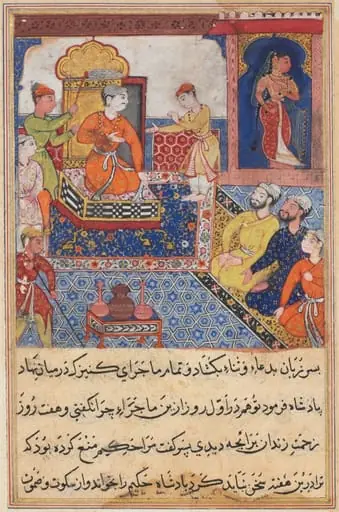 The young prince recounts his experiences to his father, the king, from a Tuti-nama (Tales of a Parrot): Eighth Night
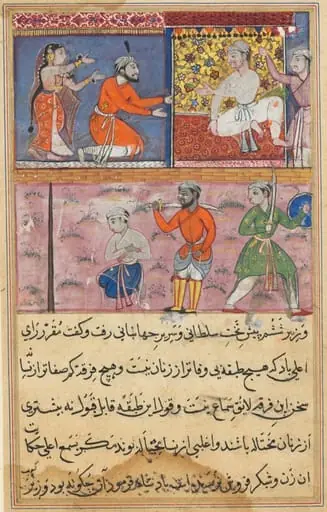 The prince sent back to the place of execution for the sixth time, from a Tuti-nama (Tales of a Parrot): Eighth Night
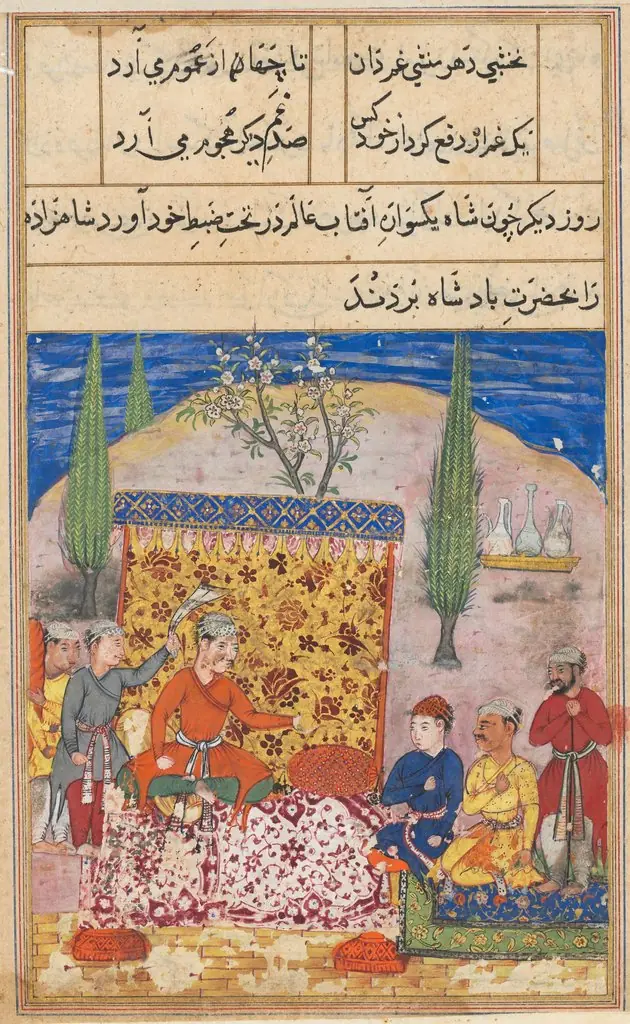 The young prince is presented to the king, his father, by his teacher, but refuses to speak, from a Tuti-nama (Tales of a Parrot): Eighth Night
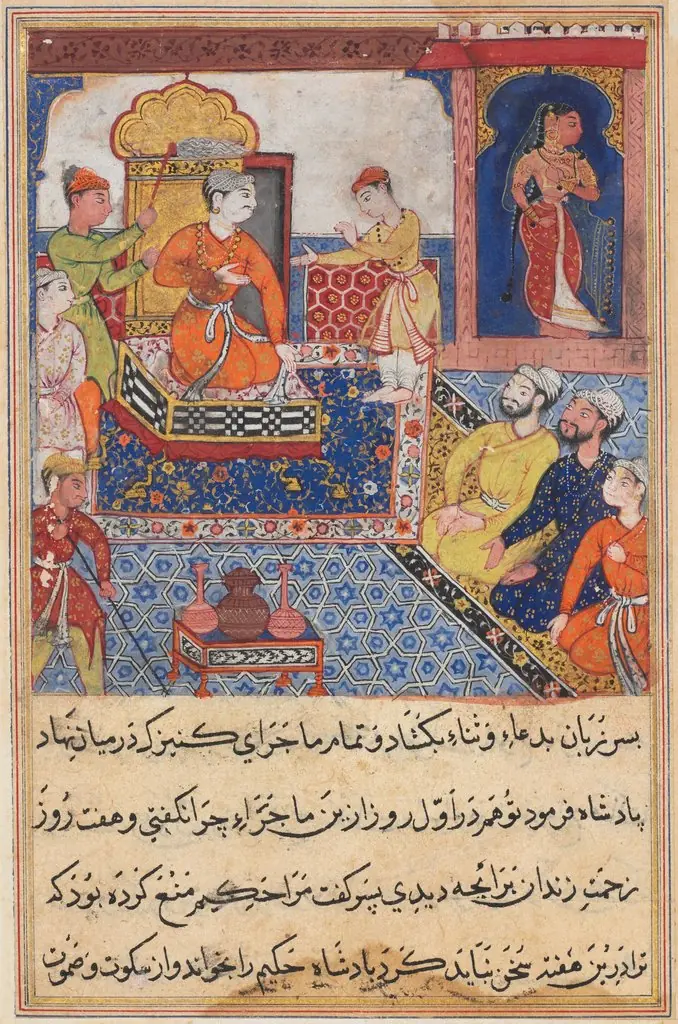 The young prince recounts his experiences to his father, the king, from a Tuti-nama (Tales of a Parrot): Eighth Night
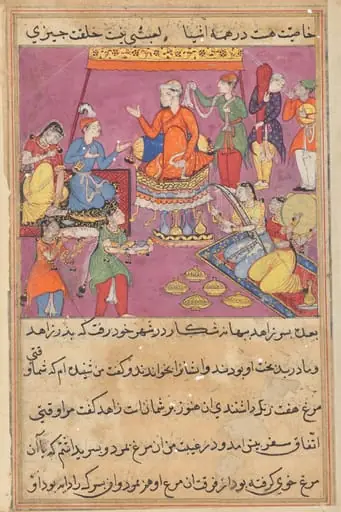 The king gives his daughter in marriage to the pious man’s son, from a Tuti-nama (Tales of a Parrot): Fifty-second Night
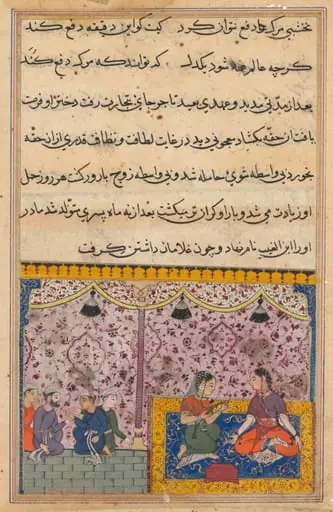 The merchant’s daughter gives birth to a son as a result of eating out of the box. The clever child recognizes the false gems from true, from a Tuti-nama (Tales of a Parrot): Twenty-third Night
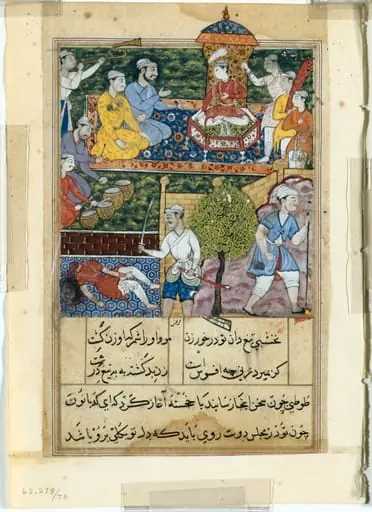 The young prince is crowned and the wicked handmaiden is executed, from a Tuti-nama (Tales of a Parrot): Eighth Night
 The eldest brother explains the reason for his youthful appearance, from a Tuti-nama (Tales of a Parrot): Forty-ninth Night
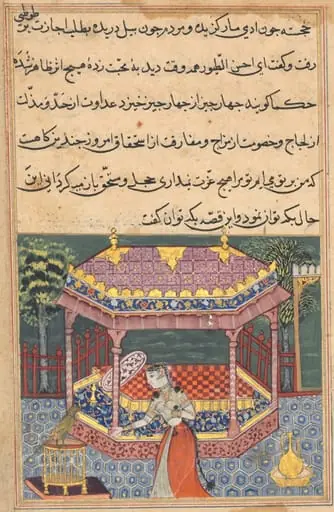 The parrot addresses Khujasta at the beginning of the thirty-seventh night, from a Tuti-nama (Tales of a Parrot)