Artwork
Three Demons Holding a Knight (verso)
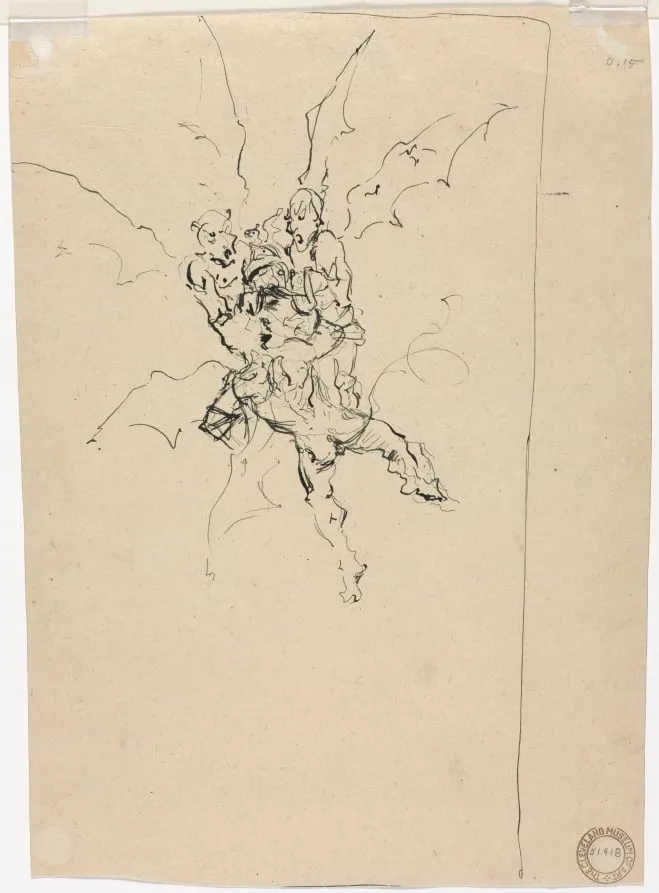
Three Demons Holding a Knight (verso) is a drawing by Unknown. It dates from 1904 and is held in the collection of the Cleveland Museum of Art. This ink drawing on paper depicts three elongated, contorted figures entwined around a partially obscured knight.
About this work
Overview
The lack of polished detail suggests it was made as a preparatory study, capturing an idea in motion rather than a resolved image.
This ink drawing on paper depicts three elongated, contorted figures entwined around a partially obscured knight. Executed with rapid, unrefined strokes, the composition conveys movement and tension without finish. The lack of polished detail suggests it was made as a preparatory study, capturing an idea in motion rather than a resolved image. The artist prioritized energy over precision, leaving the surface visibly spontaneous.
Subject & Meaning
The figures appear demonic or spectral, their limbs merging in a chaotic embrace around the armored knight, who is rendered as a static, almost passive form. The contrast between the writhing entities and the rigid armor implies a struggle—perhaps spiritual, psychological, or symbolic. The knight’s diminished presence suggests vulnerability or subjugation, though no clear narrative is defined, leaving interpretation open.
Technique & Style
The drawing employs loose, fluid ink lines with minimal shading, emphasizing gesture over form. Pressure varies across the strokes, creating a sense of urgency. Contours are overlapping and unresolved, with no attempt to erase or refine. The technique reflects a working method focused on capturing motion and composition quickly, typical of preparatory sketches rather than finished works.
History & Provenance
The drawing is held in the collection of the Cleveland Museum of Art, where it is cataloged as a study from the Renaissance period. Its attribution remains tentative, though stylistic traits align with Northern European draftsmen active in the early 16th century. It entered the museum’s holdings through a documented acquisition, with no known earlier provenance beyond its presence in a private collection prior to the 20th century.
Context
During the early Renaissance, artists frequently produced rapid ink sketches to explore dynamic compositions before committing to larger works. This drawing fits within that tradition, likely serving as a visual experiment in grouping figures or conveying motion. Similar studies survive from artists working in Germany and the Low Countries, where expressive draftsmanship was valued as a tool for conceptual development.
Legacy
Though not a finished piece, the drawing offers insight into the artist’s process and the visual language of preparatory work in Renaissance studios. Its raw quality has drawn scholarly attention for its emotional intensity and economy of line. It contributes to broader understanding of how artists translated abstract ideas into visual form, influencing later studies of gesture and expression in drawing.
Artist & collection

 Domestic Scene
 Giacomo and Cardinal Marco, investing Andrea, Abbot of San Zeno, with his Benefice
 The Nymph of Fontainebleau
 Portrait of a Woman
 Madonna and Child with Saints in the Enclosed Garden
 Venus and Minerva
 Family Group of Four on Sofa
 Wall painting from Room H of the Villa of P. Fannius Synistor at Boscoreale
![Sheet of Studies [recto and verso], by John Flaxman](https://artifactworldgallery.com/img/john-flaxman--sheet-of-studies-recto-and-verso--5d19d38e20f446c0-w320.webp) Sheet of Studies [recto and verso]
Sheet of Studies [recto and verso] Figure Studies
 Untitled
 Figures eating at a food stall
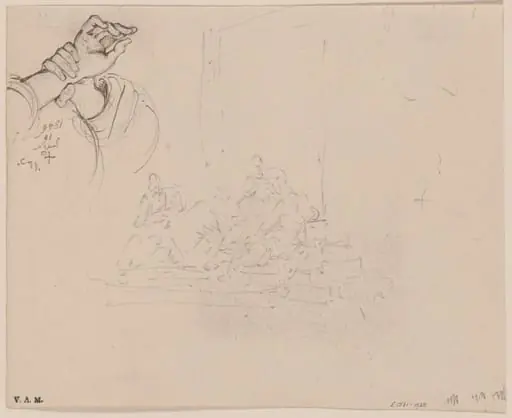 Clasped hands, and a sketch of Chinese figures
![Study for "Shoeing Calvary Horses at the Front" [verso], by John Singer Sargent](https://artifactworldgallery.com/img/john-singer-sargent--study-for-shoeing-calvary-horses-at-the-front-verso--6f6d1a163e84e9ab-w320.webp) Study for "Shoeing Calvary Horses at the Front" [verso]
Study for "Shoeing Calvary Horses at the Front" [verso]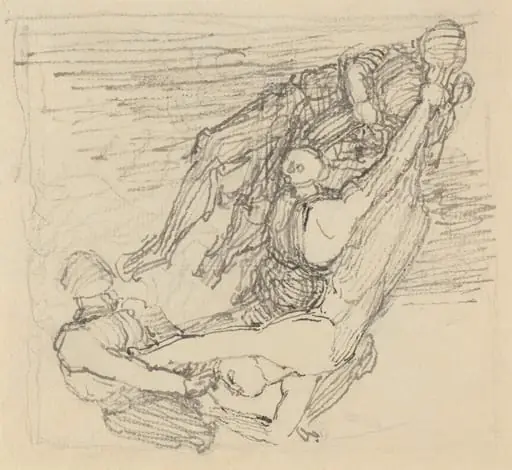 Figure Being Transported through the Air
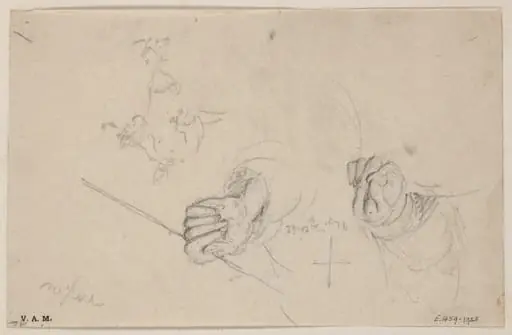 The hands of a Chinese figure holding a line or pipe
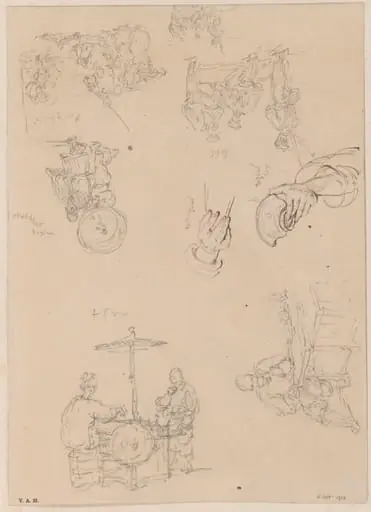 Chinese figures, soldiers, and details of hands
 Sheet of Studies
![Sheet of Studies [recto and verso], by John Flaxman](https://artifactworldgallery.com/img/john-flaxman--sheet-of-studies-recto-and-verso--7cd3e8a27787ed92-w320.webp) Sheet of Studies [recto and verso]
Sheet of Studies [recto and verso]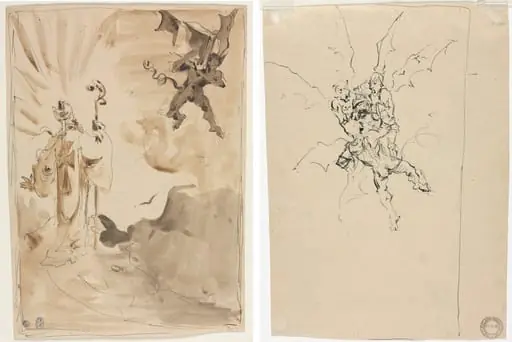 The Bishop and the Demon (recto); Three Demons Holding a Knight (verso)