Artwork
Umar searches for Hamza
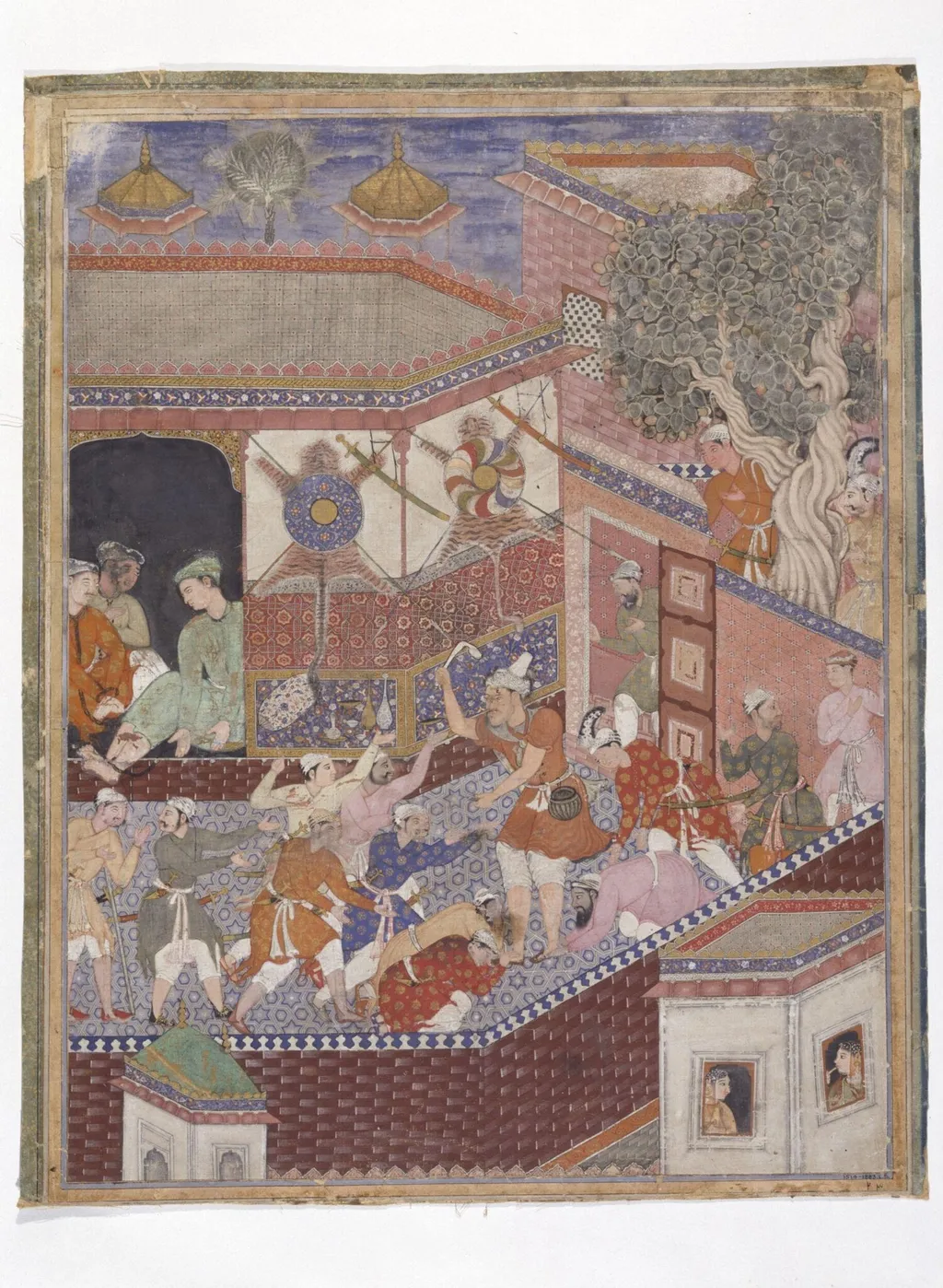
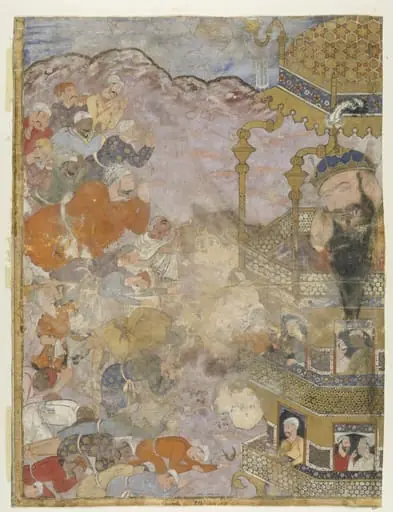
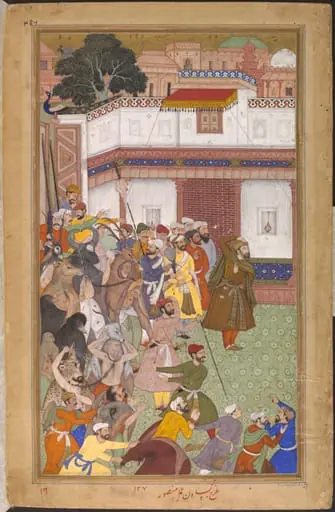
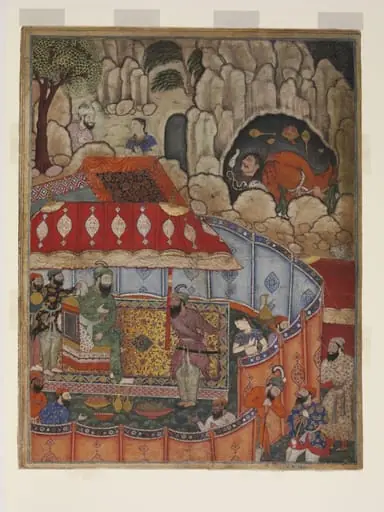
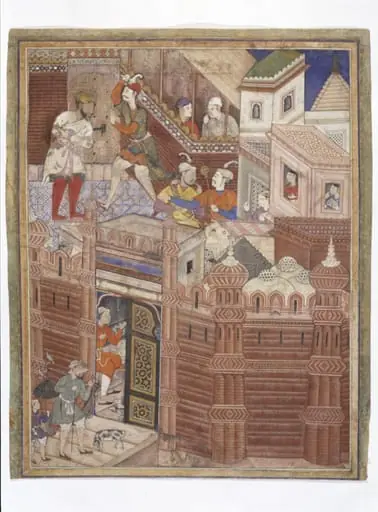
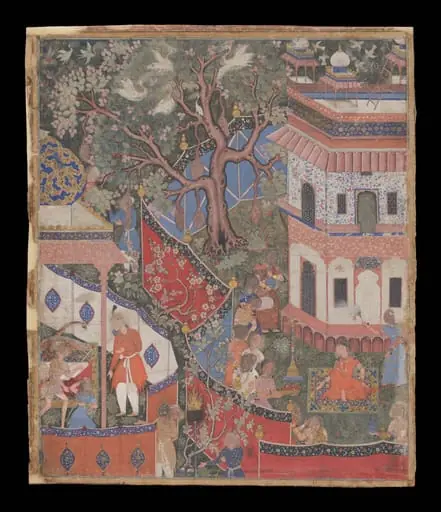
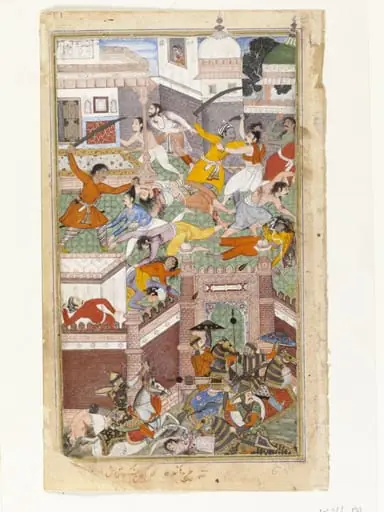
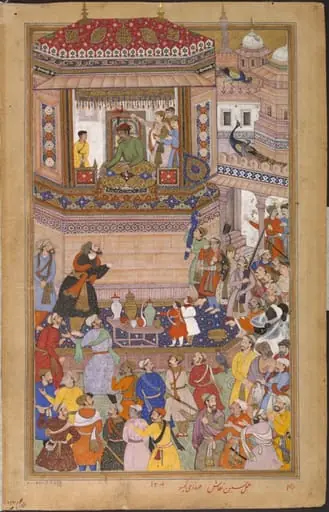
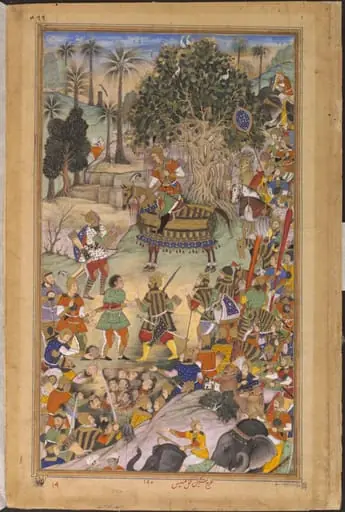
Umar searches for Hamza is a paint painting by the Mughal Painting artist Unknown. It dates from 1570 and is held in the collection of the Victoria and Albert Museum. This painting illustrates a moment from the Hamzanama, a 16th‑century illustrated manuscript commissioned by Mughal emperor Akbar.
About this work
Overview
This painting illustrates a moment from the Hamzanama, a 16th‑century illustrated manuscript commissioned by Mughal emperor Akbar. The scene depicts Umar, a devoted servant, searching for the missing hero Hamza and discovering a house where Hamza and his companions are held captive.
Subject & Meaning
In the narrative, Umar adopts the disguise of a beggar, overcomes the guards with a donkey’s leg, and frees the imprisoned warriors. The episode highlights themes of loyalty, cunning, and the triumph of the heroic band over their foes.
Technique & Style
The work employs the subtle tonal transitions characteristic of sfumato, creating a softened atmospheric effect that unifies figures and background. The composition balances detailed figural action with a richly patterned setting, reflecting the Persian court aesthetic of the period.
History & Provenance
The Hamzanama was produced between roughly 1562 and 1577, originally containing about 1,400 miniatures; fewer than 200 survive today. The manuscript was written in Persian, the language of Akbar’s court, and the surviving illustrations are the principal visual record of this extensive epic.
Context
The stories derive from an older oral tradition about Hamza, the uncle of the Prophet Muhammad, though the surviving text is fragmentary, often limited to captions on the reverse of each folio. The illustrated cycles served both as entertainment and as a display of imperial patronage of the arts.
Artist & collection

 Domestic Scene
 Giacomo and Cardinal Marco, investing Andrea, Abbot of San Zeno, with his Benefice
 The Nymph of Fontainebleau
 Portrait of a Woman
 Madonna and Child with Saints in the Enclosed Garden
 Venus and Minerva
 Family Group of Four on Sofa
 Wall painting from Room H of the Villa of P. Fannius Synistor at Boscoreale