Artwork
Shah Abu'l Ma'ali
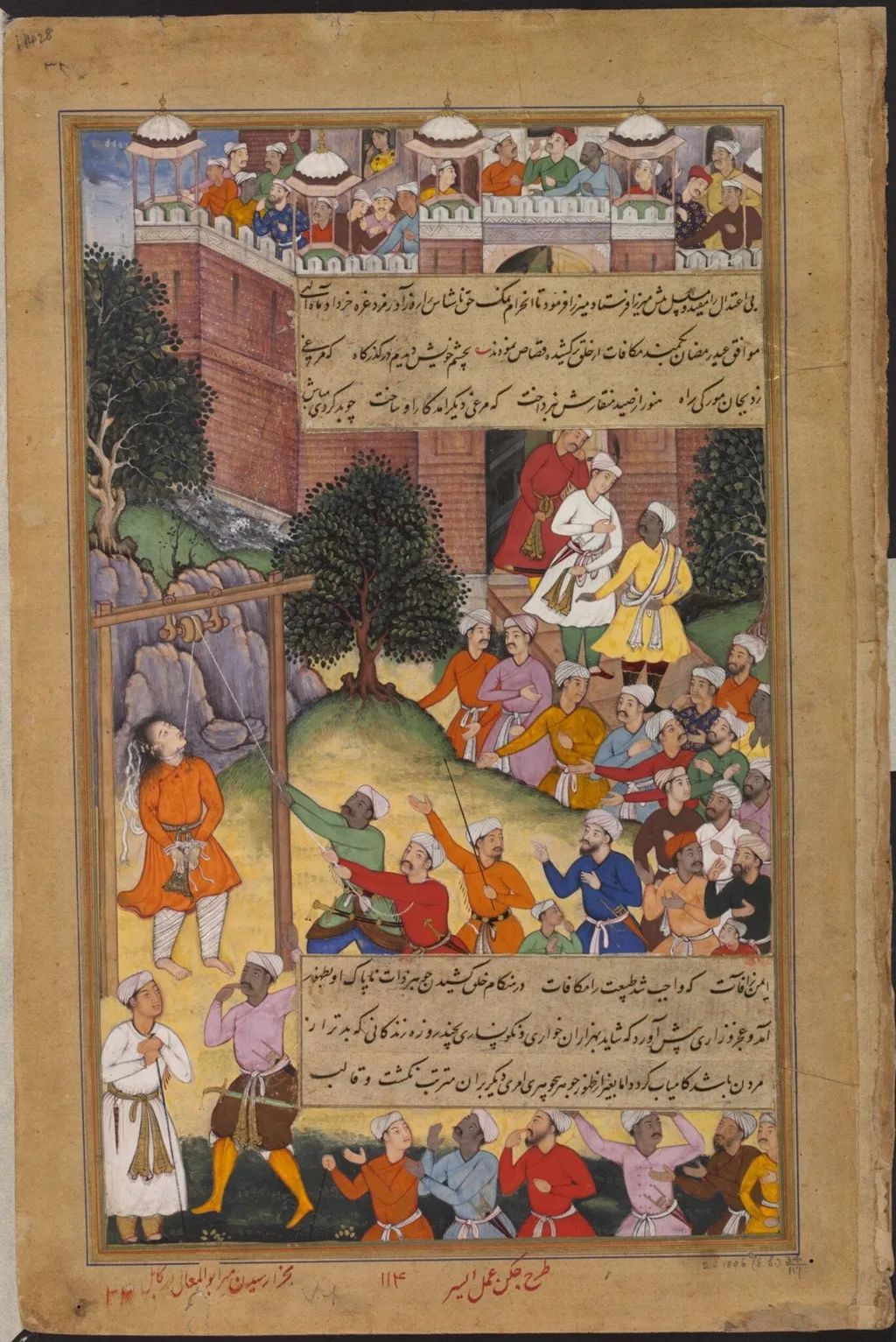
Shah Abu'l Ma'ali is a paint painting by the Mughal Painting artist Jagan. It dates from 1592 and is held in the collection of the Victoria and Albert Museum.
About this work
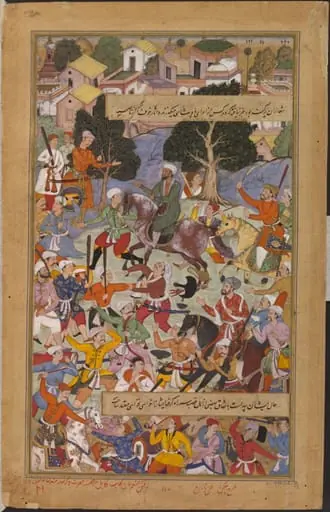
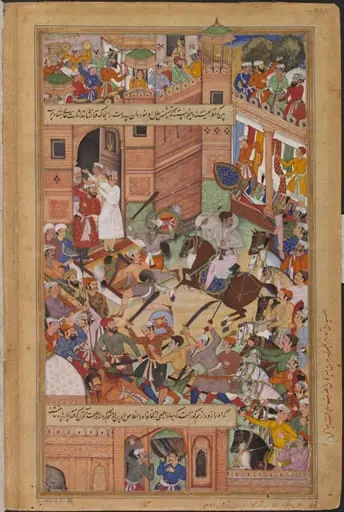
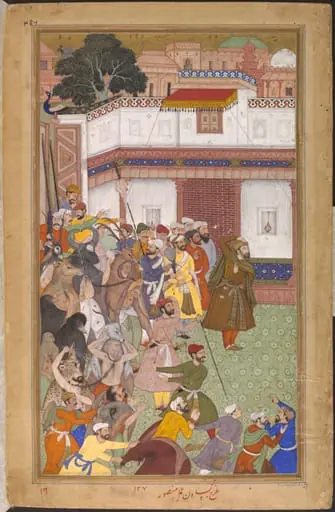
This painting shows a man kneeling on the ground. Two men stand over him, one with a raised sword. A crowd watches in the background.
Akbar ordered this image for the Akbarnama, a book about his reign. Shah Abu'l Ma'ali had worked for Akbar’s father but turned against him. The scene shows his 1564 execution in Kabul.
See this for yourself at the Victoria and Albert Museum.
Overview
This painting illustrates the execution of Shah Abu'l Ma'ali, a historical figure who rebelled against the Mughal emperor Akbar. Created as part of the Akbarnama, the official chronicle of Akbar's reign, it depicts a pivotal moment in the tumultuous life of its subject.
Subject & Meaning
Shah Abu'l Ma'ali had served Akbar's father, Humayun, but his rebellious tendencies led to his downfall. After being sent on pilgrimage to Mecca and later escaping to Kabul, he was eventually executed for murdering his mother-in-law and other family members.
Technique & Style
The painting, designed by Jagan and executed by Asir, showcases the artistic style of the Mughal court. It features a kneeling figure about to be beheaded, with onlookers in the background, demonstrating the detailed and narrative qualities characteristic of Mughal art.
History & Provenance
Commissioned in 1589 by Akbar, the painting is part of the Akbarnama, a chronicle of his reign. The artwork is now held at the Victoria and Albert Museum, providing a visual record of a significant historical event.
Artist & collection
Artist
In the late 1500s, Jagan painted vibrant Mughal miniatures that put emperors and nobles on paper.