Artwork
Untitled
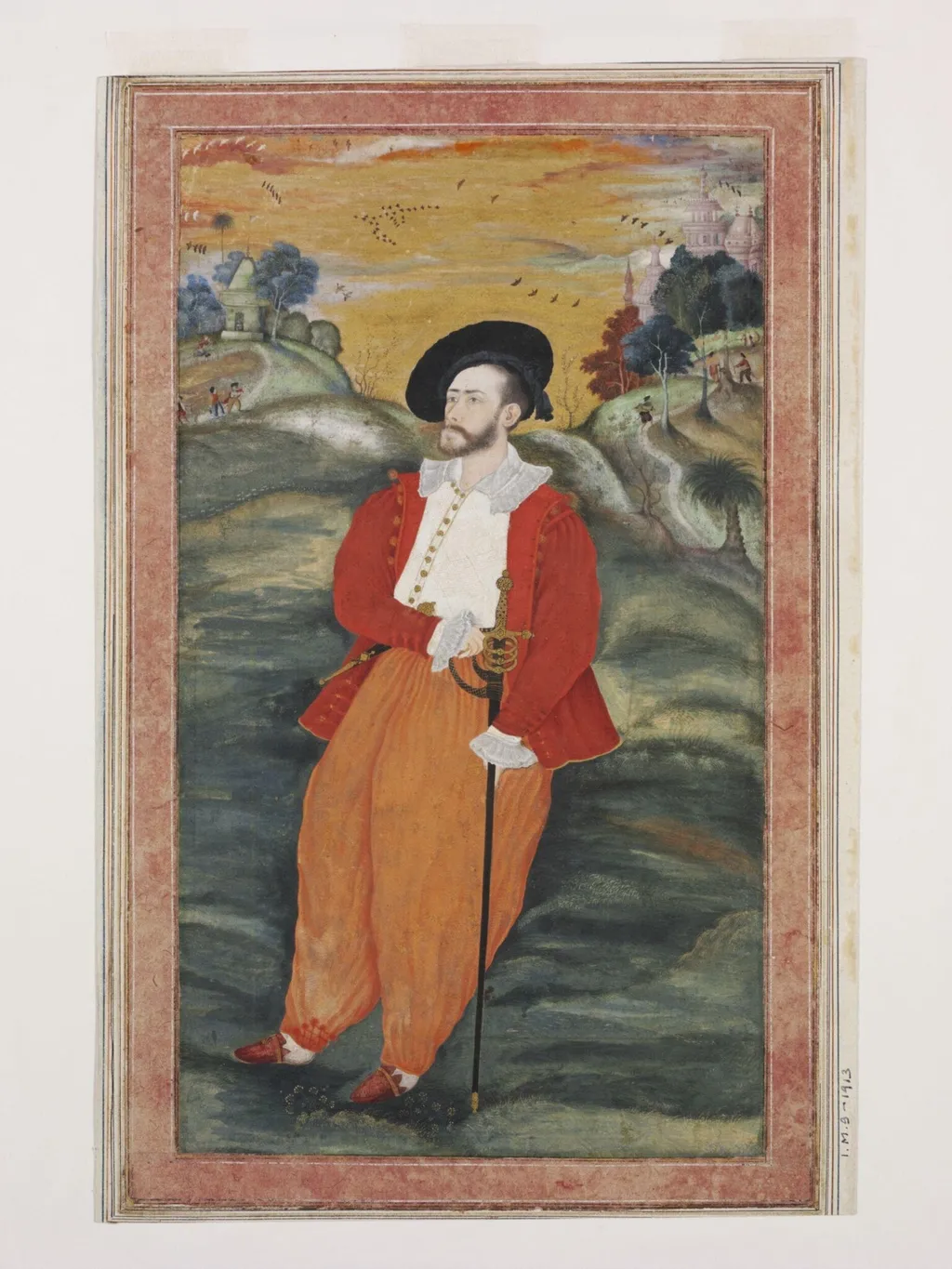
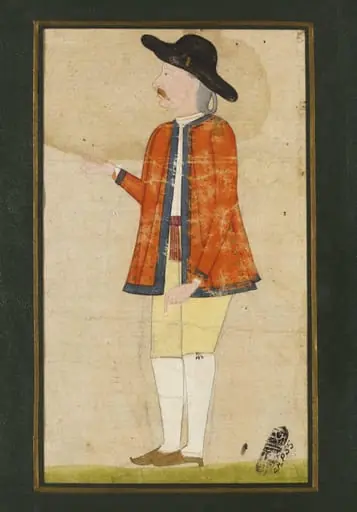
Untitled is a paint painting by the Baroque artist Unknown. It dates from 1610 and is held in the collection of the Victoria and Albert Museum. This Mughal-era painting depicts an unidentified European man, likely created between 1605 and 1627 during Jahangir’s reign.
About this work
Overview
Though the figure’s attire and sword suggest late 16th-century European fashion, the loose trousers reflect adaptation to India’s climate.
This Mughal-era painting depicts an unidentified European man, likely created between 1605 and 1627 during Jahangir’s reign. Though the figure’s attire and sword suggest late 16th-century European fashion, the loose trousers reflect adaptation to India’s climate. The artist appears to have worked from a Western source but reinterpreted it through local visual conventions, blending foreign motifs with regional sensibilities.
Subject & Meaning
The identity of the subject remains uncertain. Though once thought to be Sir Thomas Roe, the first English ambassador to the Mughal court, the portrait’s features do not match known Western depictions of him. The figure’s poised stance and elaborate clothing suggest status, possibly a merchant, diplomat, or traveler whose presence at court was notable enough to warrant a painted record.
Technique & Style
The painting employs fine brushwork and layered pigments typical of Mughal portraiture, with attention to textile textures and subtle gradations in skin tone. While Western influences are evident in facial modeling and costume detail, the composition lacks linear perspective, retaining a flattened, decorative space. The handling of fabric and light suggests familiarity with imported European prints, yet the execution remains distinctly Indian in rhythm and emphasis.
History & Provenance
The painting entered the collection in 1913 after being acquired from Arthur Churchill, who attributed it to Sir Thomas Roe. This identification has since been dismissed due to stylistic and facial discrepancies with authenticated portraits of Roe. Its earlier provenance is undocumented, but its quality indicates it was likely commissioned by a Mughal noble or court official with access to foreign visitors.
Context
During Jahangir’s reign, the Mughal court maintained active contact with European traders and envoys. Artists frequently observed and recorded these figures, translating their appearance into the court’s established aesthetic. This work reflects a broader trend of cultural observation, where foreign subjects were rendered not as exact likenesses but as hybrid figures—part European, part Indian—filtered through indigenous artistic priorities.
Legacy
The painting stands as an example of cross-cultural visual exchange in early 17th-century India. It illustrates how Mughal artists engaged with foreign imagery without adopting Western naturalism wholesale. Rather than replicating, they transformed, embedding European elements into a local visual language. Such works remain key to understanding how global encounters were visually mediated in pre-colonial South Asia.
Artist & collection

 Domestic Scene
 Giacomo and Cardinal Marco, investing Andrea, Abbot of San Zeno, with his Benefice
 The Nymph of Fontainebleau
 Portrait of a Woman
 Madonna and Child with Saints in the Enclosed Garden
 Venus and Minerva
 Family Group of Four on Sofa
 Wall painting from Room H of the Villa of P. Fannius Synistor at Boscoreale