Artwork
Untitled
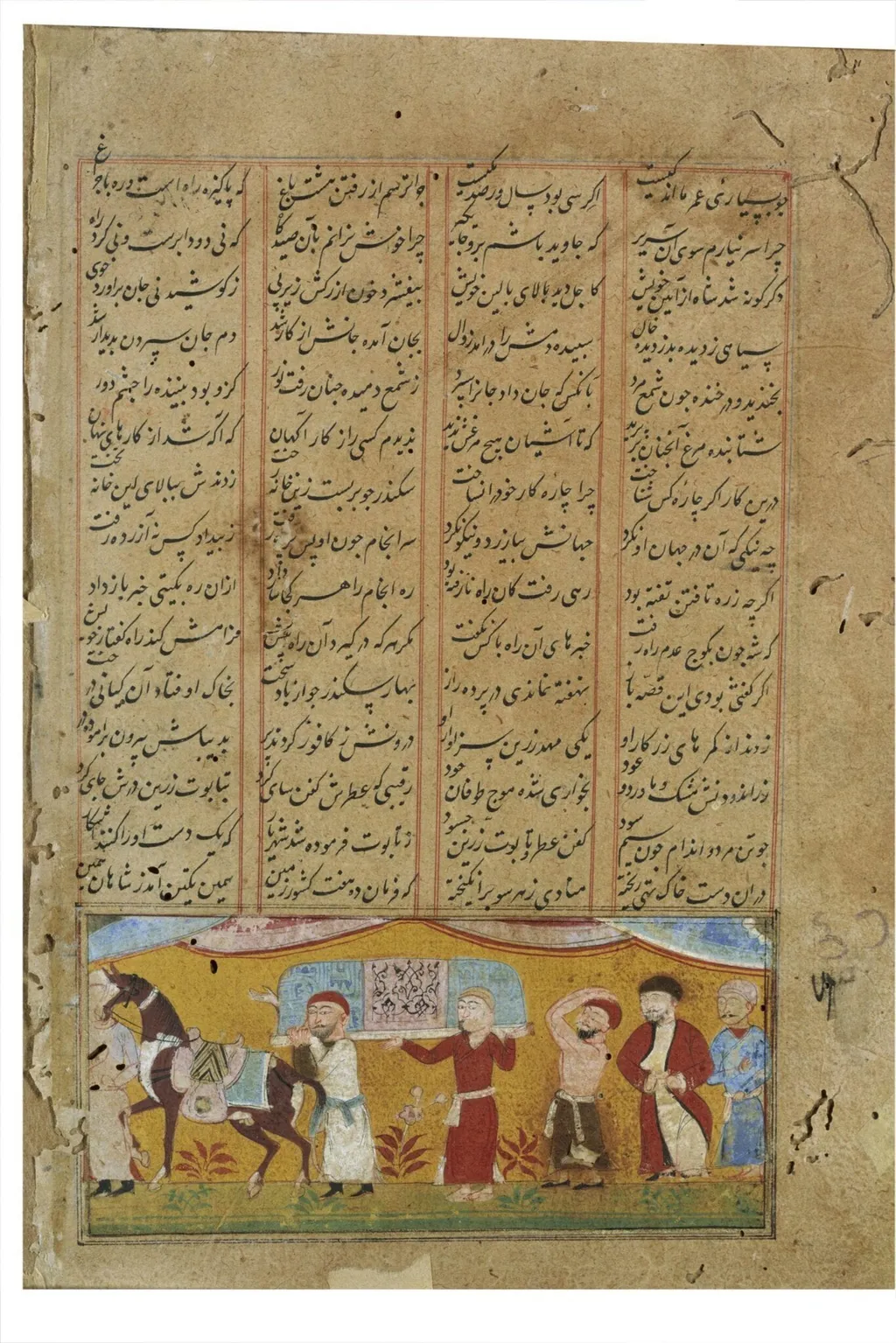
Untitled is a paint painting by the Renaissance artist Unknown. It dates from 1500 and is held in the collection of the Victoria and Albert Museum. This page comes from a manuscript of Nizami’s *Iskandarnama*, composed in opaque watercolor and gold on paper.
About this work
Overview
The work reflects the tradition of Persian book illumination, where text and image function as interdependent elements of storytelling.
This page comes from a manuscript of Nizami’s *Iskandarnama*, composed in opaque watercolor and gold on paper. It pairs dense nasta'liq script across four vertical columns with a small illustrative scene below. The text occupies the upper portion, framed in red, while the lower register holds a narrative image. The work reflects the tradition of Persian book illumination, where text and image function as interdependent elements of storytelling.
Subject & Meaning
The illustration depicts a funeral procession moving leftward, led by a rider on horseback and followed by mourners. A draped bier is carried by two figures, with a hand visible beneath the cloth. Three additional men accompany the procession, one gesturing emphatically, another gazing downward. The scene likely represents a moment from Nizami’s epic, possibly the death of a key figure, rendered with symbolic restraint rather than dramatic intensity.
Technique & Style
The image employs flat, stylized forms against a pale yellow ground, with plants rendered in abstract red and pink strokes. Figures are outlined in fine ink and filled with muted pigments—faded blues, reds, and gold leaf—that once had greater luminosity. The composition lacks perspective; space is suggested by overlapping figures and a horizontal band of greenish earth. The brushwork is precise, consistent with the disciplined aesthetics of courtly manuscript production.
History & Provenance
This page was produced in a royal atelier, likely in the 16th century, during a period when illustrated manuscripts of Nizami’s poetry were highly prized. It was once part of a larger codex, now dispersed across collections. The Victoria and Albert Museum holds related folios, suggesting this page was likely created in the same workshop and may have been bound with others in a deluxe volume commissioned by a noble patron.
Context
Illustrated manuscripts of Nizami’s works were central to Persian literary culture, blending poetry with visual narrative to elevate both. The *Iskandarnama*, recounting Alexander the Great’s exploits, was especially popular among courts seeking to link rulership with legendary heroism. This page’s integration of text and image reflects a broader tradition where reading was an immersive, multisensory experience, guided by calligraphy and miniature painting.
Legacy
Though individual pages like this were once bound within volumes, many were later separated and sold as standalone works. Their survival in museum collections underscores their value as artifacts of artistic craftsmanship and literary heritage. They continue to inform studies of Persian visual culture, offering insight into how narrative, religion, and power were visually encoded in early modern Islamic societies.
Artist & collection

 Domestic Scene
 Giacomo and Cardinal Marco, investing Andrea, Abbot of San Zeno, with his Benefice
 The Nymph of Fontainebleau
 Portrait of a Woman
 Madonna and Child with Saints in the Enclosed Garden
 Venus and Minerva
 Family Group of Four on Sofa
 Wall painting from Room H of the Villa of P. Fannius Synistor at Boscoreale
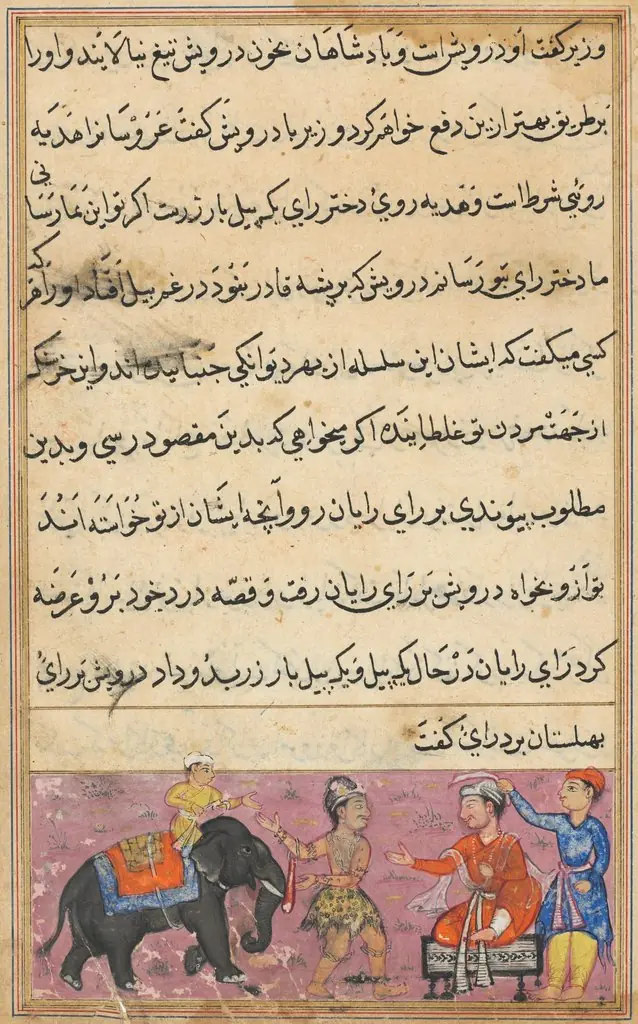 The dervish brings in as dowry an elephant laden with gold, from a Tuti-nama (Tales of a Parrot): Seventh Night
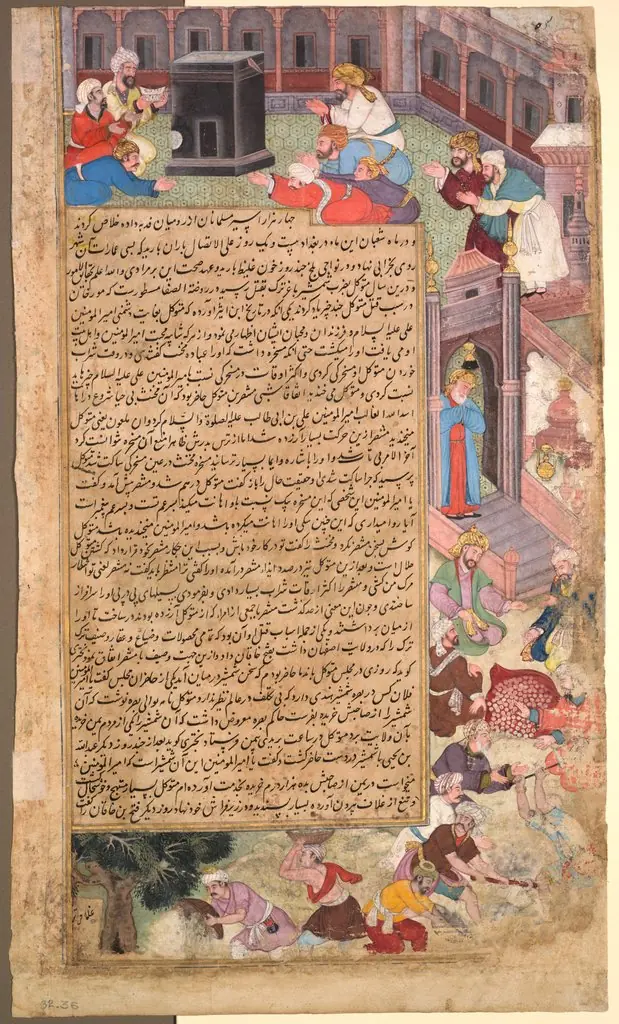 Page of disasters, from the Tarikh-i Alfi (History of a Thousand Years)
 Page of disasters, from the Tarikh-i Alfi (History of a Thousand Years)
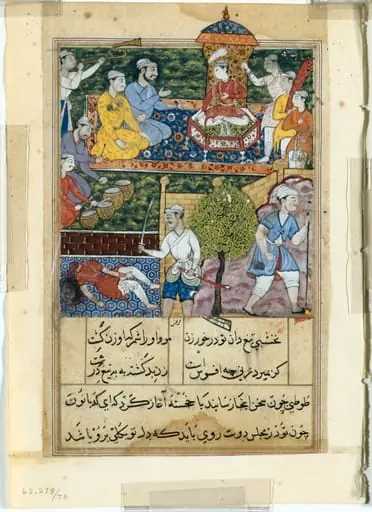 The young prince is crowned and the wicked handmaiden is executed, from a Tuti-nama (Tales of a Parrot): Eighth Night
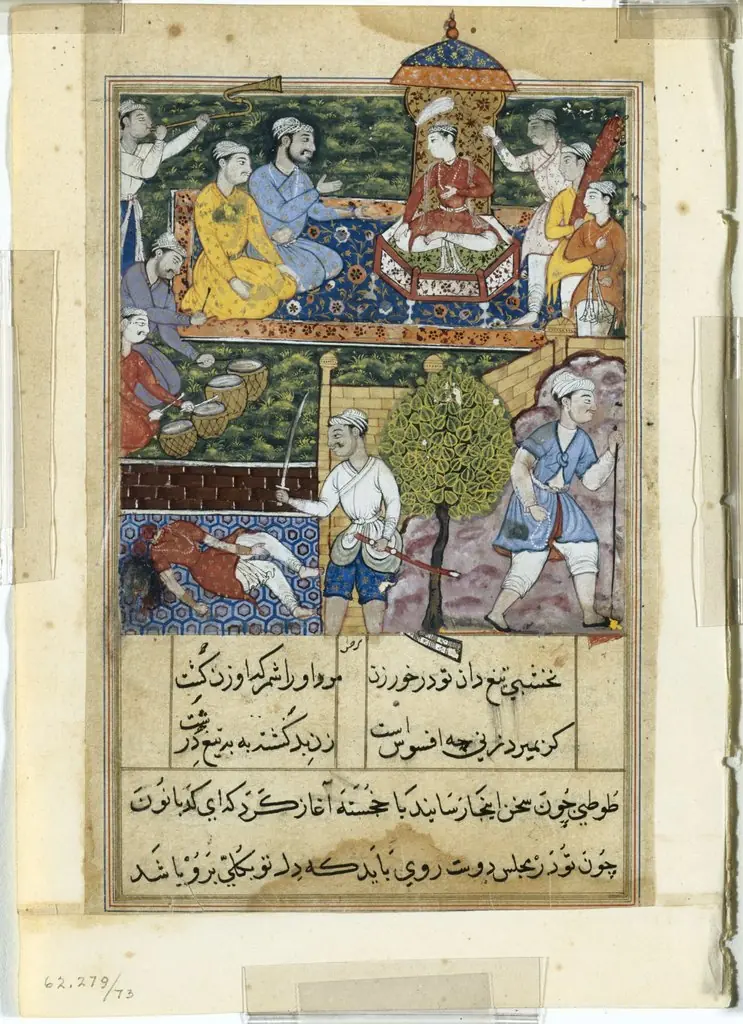 The young prince is crowned and the wicked handmaiden is executed, from a Tuti-nama (Tales of a Parrot): Eighth Night
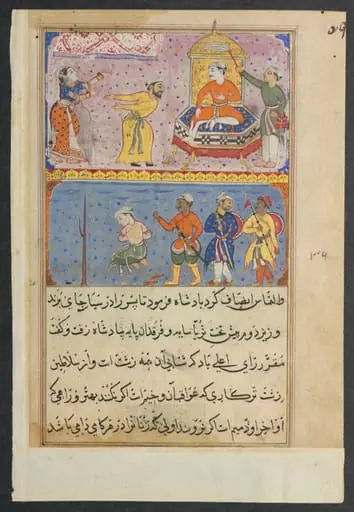 The prince, once reprieved, is returned to the palace of execution a second time on the plea of the king’s handmaiden, from a Tuti-nama (Tales of a Parrot): Eighth Night
 Page from Tales of a Parrot (Tuti-nama): text page
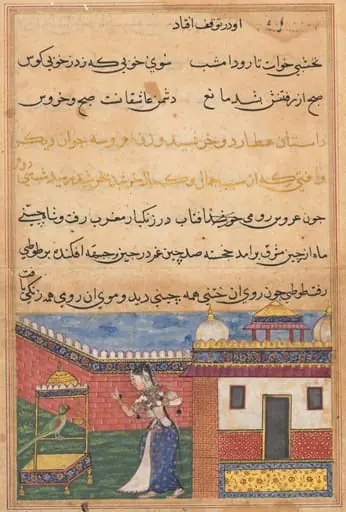 The parrot addresses Khujasta at the beginning of the thirty-second night, from a Tuti-nama (Tales of a Parrot)
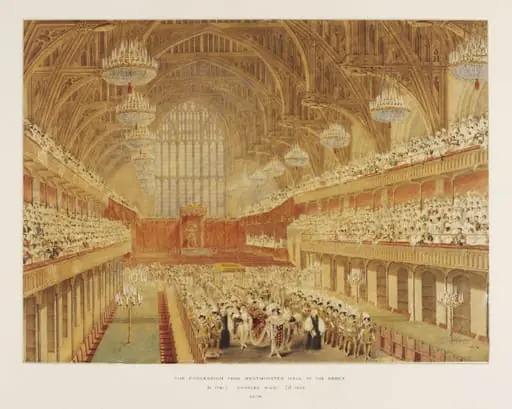 Untitled
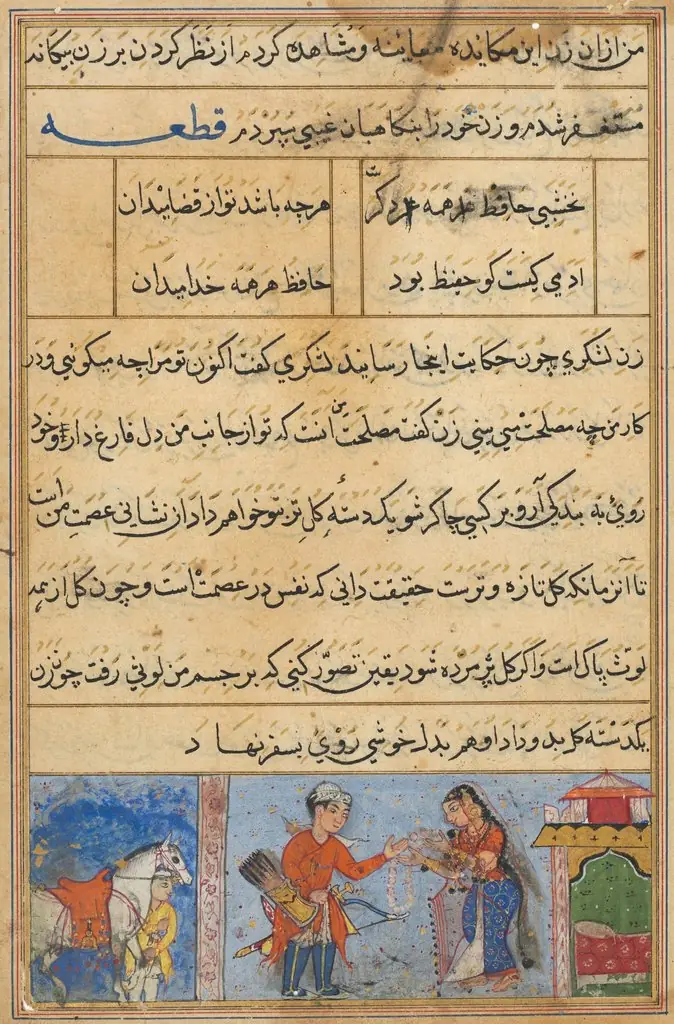 The soldier receives a garland of roses from his wife which will remain fresh as long as she is faithful, from a Tuti-nama (Tales of a Parrot): Fourth Night
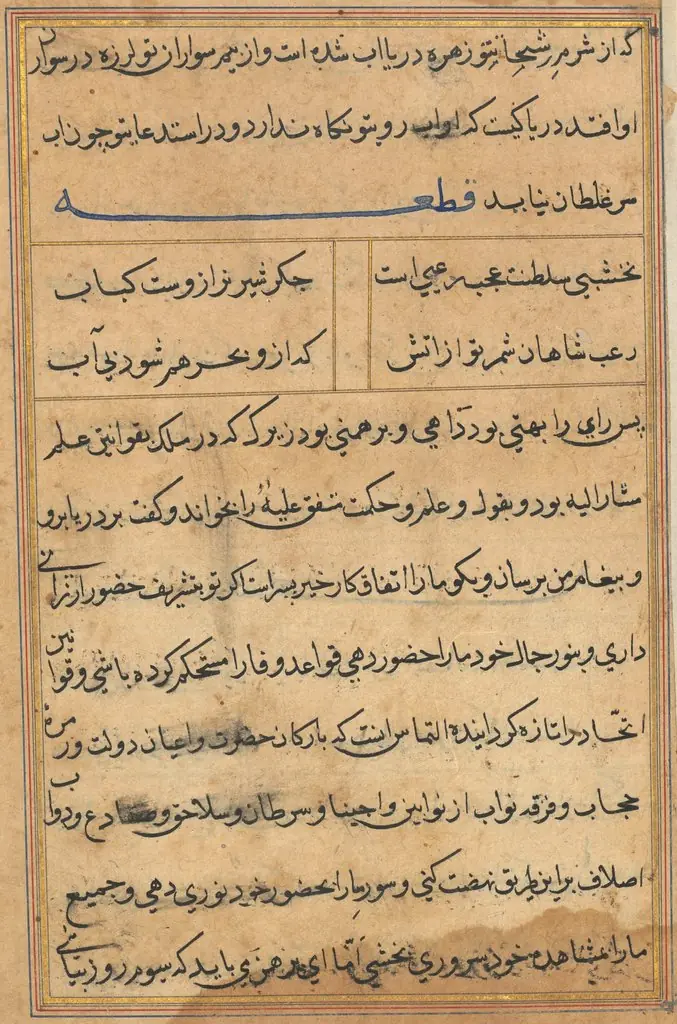 Page from Tales of a Parrot (Tuti-nama): text page
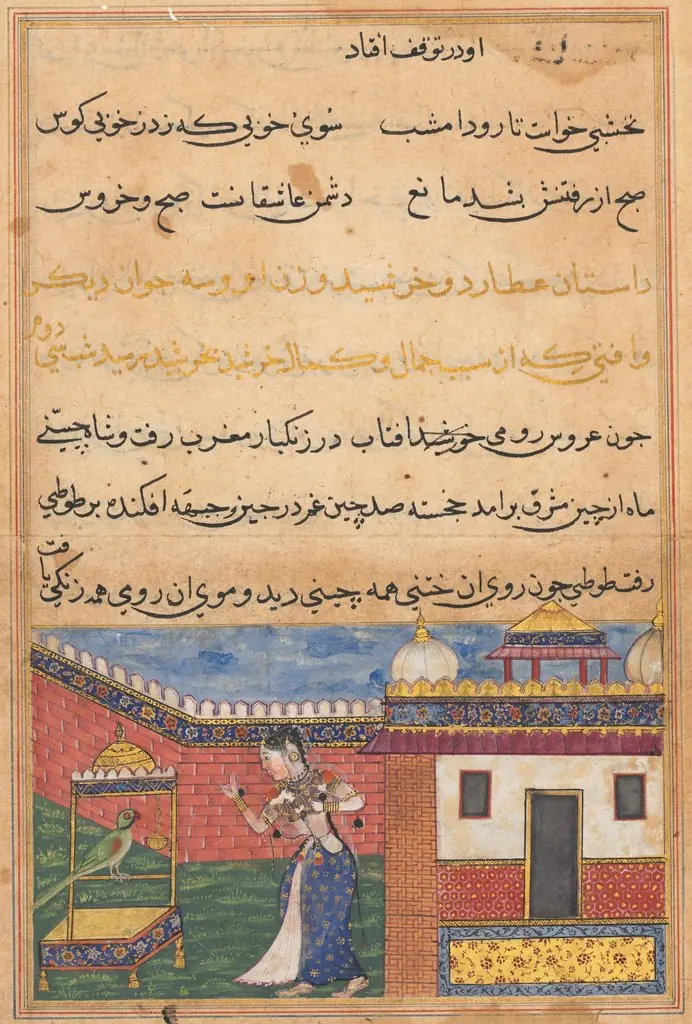 The parrot addresses Khujasta at the beginning of the thirty-second night, from a Tuti-nama (Tales of a Parrot)