Artwork
Varaha and Hiranyaksha
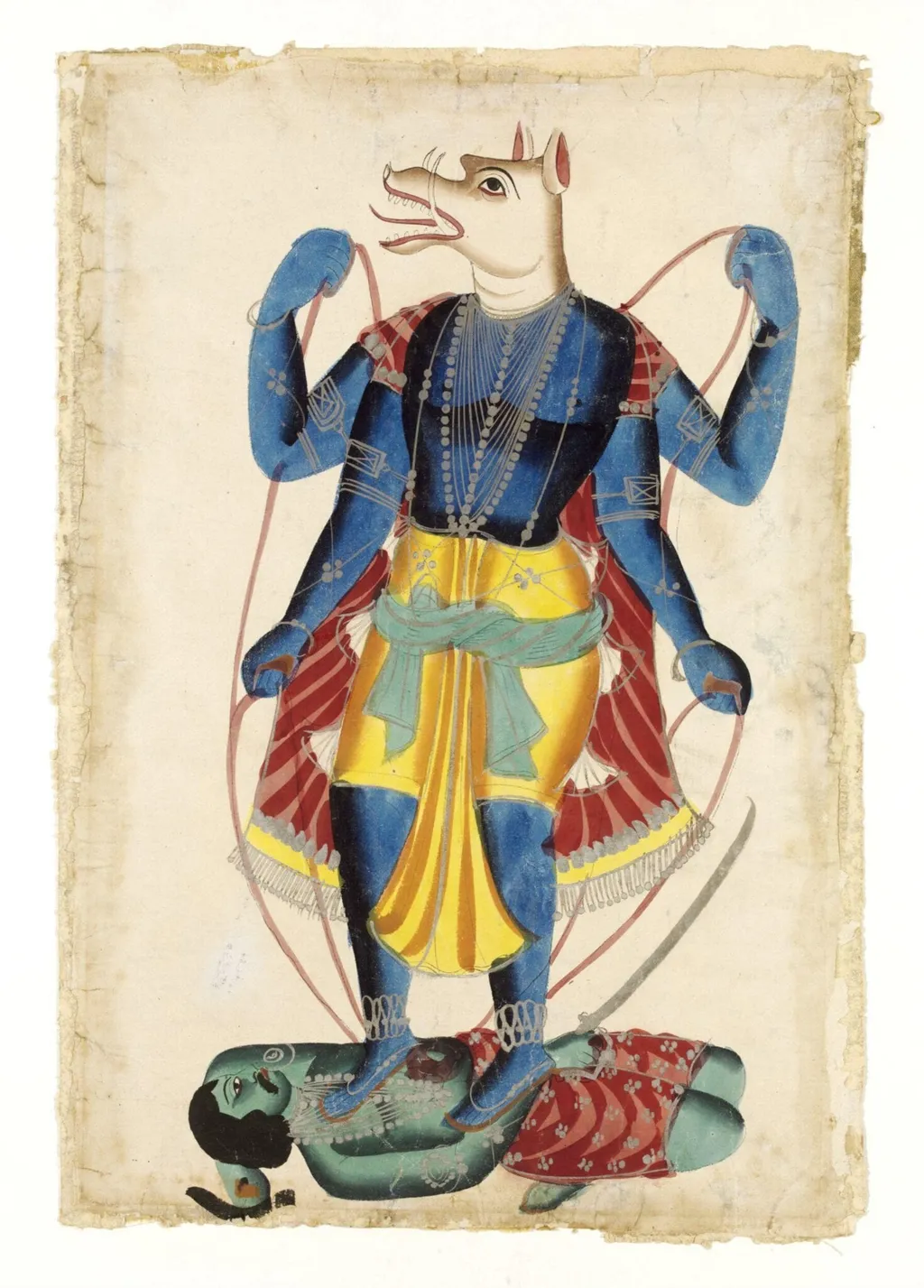
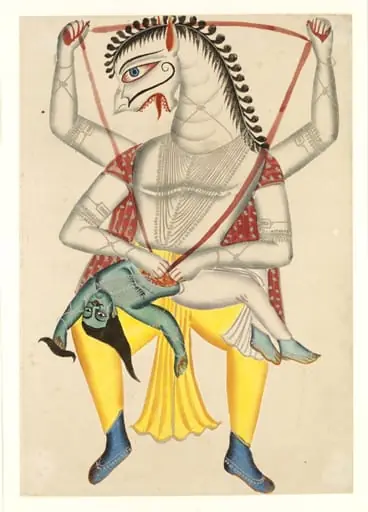
Varaha and Hiranyaksha is a paint painting by the Patna School of Painting artist Unknown. It dates from 1835 and is held in the collection of the Victoria and Albert Museum.
About this work
Overview
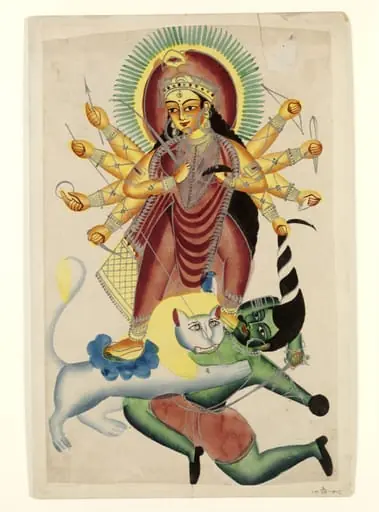
The work is a water‑colour painting on paper dated 1835, portraying the Hindu deity Varaha in his boar form standing victorious over the slain demon Hiranyaksha. The composition combines lithographed line work with applied silver‑coloured tin alloy accents and areas of black wash, creating a vivid, graphic image characteristic of early nineteenth‑century Bengali art.
Subject & Meaning
Varaha, an avatar of Vishnu, is shown triumphing over Hiranyaksha, the asura who threatened both mortals and gods. The scene alludes to the mythic episode in which Varaha rescues the Earth goddess Prithvi, symbolising the restoration of cosmic order and the defeat of chaos through divine intervention.
Technique & Style
The painting follows the Kalighat tradition of Bengal, noted for brisk brush strokes, simplified forms and bold colour contrasts. Lithographic outlines define the figures, while silver‑tin alloy highlights the deity’s attire and sword. Black shading adds depth, and the overall execution reflects a rapid, almost spontaneous hand typical of the genre.
History & Provenance
Created in 1835, the piece originates from the flourishing Kalighat school that catered to a growing urban market in Calcutta. It likely passed through local patronage before entering a private collection, where it was documented in early twentieth‑century catalogues of South Asian art.
Context
The artwork exemplifies the intersection of traditional Hindu iconography with the visual language of early modern printmaking. Its vivid narrative and accessible style contributed to the popularisation of mythological subjects among a broader audience, influencing later Bengali painters who continued to merge devotional themes with contemporary artistic techniques.
Artist & collection

 Domestic Scene
 Giacomo and Cardinal Marco, investing Andrea, Abbot of San Zeno, with his Benefice
 The Nymph of Fontainebleau
 Portrait of a Woman
 Madonna and Child with Saints in the Enclosed Garden
 Venus and Minerva
 Family Group of Four on Sofa
 Wall painting from Room H of the Villa of P. Fannius Synistor at Boscoreale