Artwork
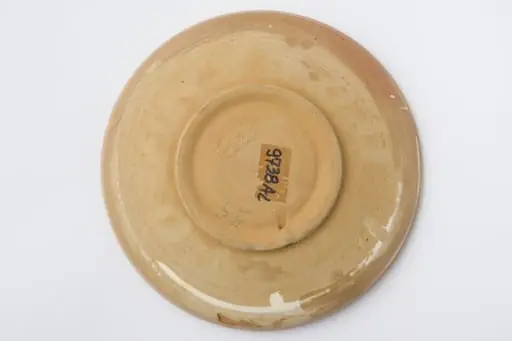
Vas ceramic smălțuit, de formă circulară cu profil tronconic, având pereții ușor evazați, baza plată și buza circulară. Decorat cu motive vegetal-florale și cordiforme pe fundul vasului (două rânduri de frunze, o lalea și o inimă), pictate cu pensula. Fundul vasului este delimitat de pereți printr-o linie subțire, circulară. Gura este pictată în alb și la exterior.Pe fundul vasului găsim marca Granitul No 8 și două cercuri concentrice, incizate. Cromatică: fond alb interior, cărămiziu și alb exterior; motive: albastru, cărămiziu, verde, maro.
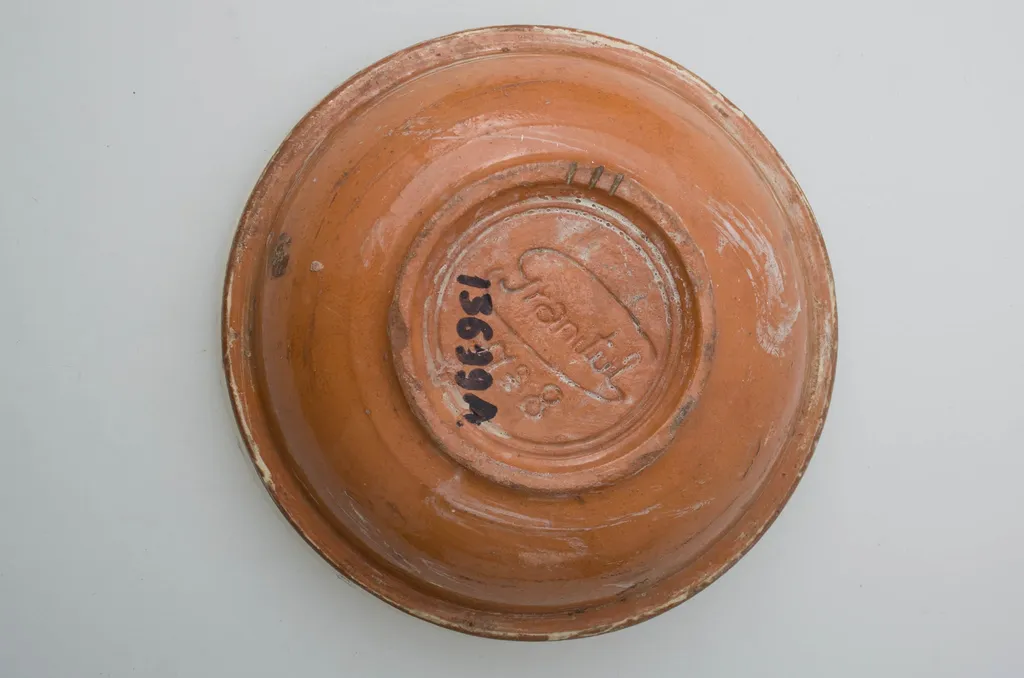
Vas ceramic smălțuit, de formă circulară cu profil tronconic, având pereții ușor evazați, baza plată și buza circulară. Decorat cu motive vegetal-florale și cordiforme pe fundul vasului (două rânduri de frunze, o lalea și o inimă), pictate cu pensula. Fundul vasului este delimitat de pereți printr-o linie subțire, circulară. Gura este pictată în alb și la exterior.Pe fundul vasului găsim marca Granitul No 8 și două cercuri concentrice, incizate. Cromatică: fond alb interior, cărămiziu și alb exterior; motive: albastru, cărămiziu, verde, maro. is a print by Unknown. It dates from 1850 and is held in the collection of the ASTRA National Museum Complex. This ceramic vessel is circular in plan, with a truncated conical profile and gently flared walls.
About this work
Overview
Decorative elements are applied to the interior base, not the outer surface, distinguishing it from typical ornamental pottery.
This ceramic vessel is circular in plan, with a truncated conical profile and gently flared walls. It rests on a flat base and features a rounded lip. The interior surface is glazed white, while the exterior combines reddish-brown and white tones. Decorative elements are applied to the interior base, not the outer surface, distinguishing it from typical ornamental pottery. The piece bears a maker’s mark and subtle incised markings, suggesting industrial production with artisanal detailing.
Subject & Meaning
The decoration consists of stylized vegetal and heart-shaped motifs—leaf patterns, a tulip, and a cordiform form—painted in blue, brown, green, and reddish-brown. These symbols, arranged in two concentric bands, suggest a decorative intent rooted in natural forms rather than narrative or symbolic meaning. The inclusion of a heart may reflect early 20th-century trends in domestic ceramics that blended folk motifs with modernist simplification, emphasizing ornament over allegory.
Technique & Style
The design was applied with a brush directly onto the glazed surface before firing, using a limited palette of mineral pigments. The motifs are rendered with loose, fluid lines, indicating hand-painted execution despite the vessel’s industrial context. A fine circular line separates the decorated base from the vertical walls, creating a defined compositional zone. Two concentric incisions beneath the mark 'Granitul No 8' suggest a production stamp or quality control identifier.
History & Provenance
The mark 'Granitul No 8' links the vessel to a Romanian ceramic workshop active in the early 20th century, likely associated with the Granitul factory in Ploiești. Similar pieces from this period were produced for domestic use, often as decorative tableware. The incised circles and stamped mark indicate standardized manufacturing practices, common in state-supported ceramic industries during Romania’s interwar modernization efforts.
Context
This vase reflects the broader trend in Eastern European ceramics of the 1920s–30s, where folk-inspired motifs were adapted for mass-produced household goods. The use of simplified natural forms, restrained color, and glazed surfaces aligns with contemporary design movements that sought to merge traditional aesthetics with industrial efficiency. Unlike fine art ceramics, this piece was intended for everyday use, elevating domestic space through modest ornamentation.
Legacy
As a representative of Romania’s interwar ceramic industry, this vessel contributes to the understanding of how regional craft traditions were integrated into modern manufacturing. Though not signed by an individual artist, its design and markings offer insight into the institutional frameworks that shaped everyday material culture. Surviving examples like this one are now studied as artifacts of social and industrial history rather than artistic singularities.
Artist & collection

 Domestic Scene
 Giacomo and Cardinal Marco, investing Andrea, Abbot of San Zeno, with his Benefice
 The Nymph of Fontainebleau
 Portrait of a Woman
 Madonna and Child with Saints in the Enclosed Garden
 Venus and Minerva
 Family Group of Four on Sofa
 Wall painting from Room H of the Villa of P. Fannius Synistor at Boscoreale
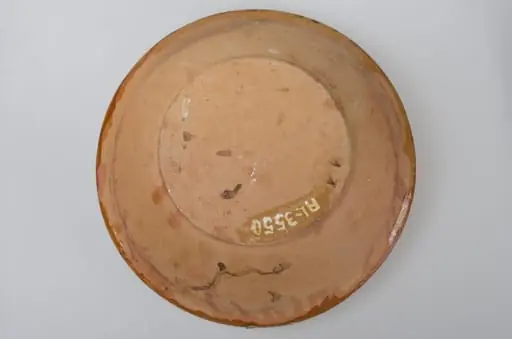 Vas de formă tronconică cu buza dreapta. Decorul este amplasat pe toată suprafața interioară și parțial în exterior, pe buză. Acesta este compus din motive geometrice (val); motive fitomorfe, plasate pe fund (frunza) și motive florale, tot pe fund (pansea). Blidul este smălțuit la interior și pe zona exterioară a buzei. Cromatică: fond: maron; motive: alb, verde.
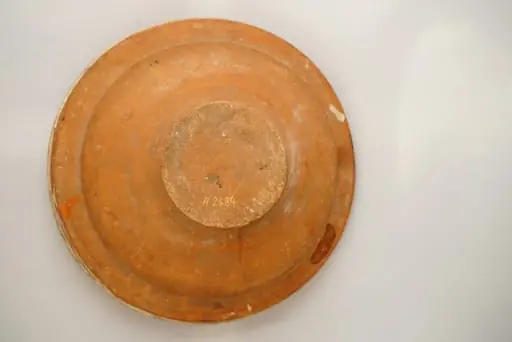 Farfurie mare, adâncă, de tip castron, cu corp tronconic, buza evazată și muchia buzei verticală; suprafața interioară a piesei este acoperită cu un strat de angobă albă, peste care este pictat cu cornul decorul monocromatic format din motive geometrice, florale și vegetale stilizate: centrul farfuriei este decorat cu un cerc format din mai multe linii subțiri maro, cerc ce conține în interior o tulpină cu o floare albastră rotundă și mai multe frunze realizate din linii subțiri; acestui decor floral i se adaugă patru grupuri de linii paralele crescătoare și descrescătoare ca mărime, dispuse sub formă de triunghi. Peretele farfuriei este decorat cu două tipuri de motive florale, cîte două din fiecare motiv și dispuse diametral opus: o tulpină cu două flori de lalea și frunze, și o tulpină cu două flori rotunde și centrul format din linii hașurate intersectat. Buza farfuriei este decorată cu un șir de motive vegetale formate din două linii sub formă de zigzag, dispuse circular, care se intersectează rezultând niște romburi, intersecția acestor linii fiind marcată cu două linii mici în formă de cruciuliță. Muchia buzei este decorată cu linii mici ondulate. Suprafața ornamentată a farfuriei este acoperită cu un strat de smalț transparent. Cromatica: alb, albastru.
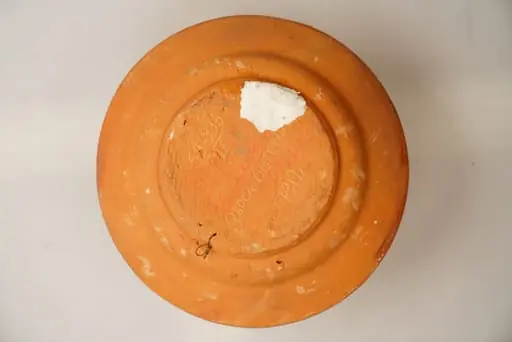 Farfurie semi-adâncă, cu buza dreaptă evazată; decorul este realizat prin pictare cu cornul cu motive geometrice dispuse astfel: centrul farfuriei este decorat cu un cerc umplut cu linii hașurate intersectat, rezultând mici carouri albe cu puncte de culoare maro în interior; acest motiv este încadrat într-un cerc mai mare format din trei linii, două de culoare albă, una de culoare maro, având pe exterior opt grupuri de motive în formă de semicerc de culoare albă, decorate cu puncte maro și cu o linie centrală de culoare verde. Buza farfuriei conține opt motive de formă ovală, formate din linii albe, maro și puncte verzi, motive încadrate între două linii circulare de culoare albă. Muchia buzei este marcată de două linii circulare, una simplă de culoare albă și una ondulată mărunt, de culoare verde. Suprafața ornamentată a farfuriei este acoperită cu un strat de smalț transparent. Cromatica: alb, verde, maro, pe fondul roșu al lutului ars.
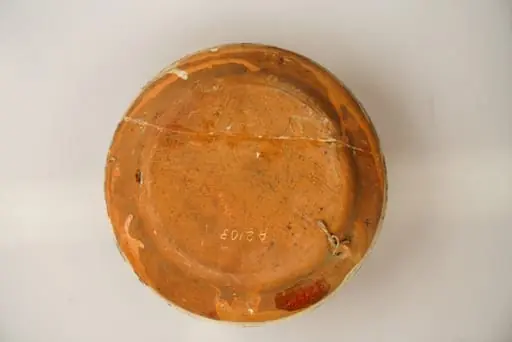 Farfurie de formă aplatizată, cu buza evazată și ușor concavă spre interior; este angobată pe suprafața interioară cu un strat de humă albă peste care este pictat cu pensula și cu cornul decorul format din motive geometrice, dispuse pe întreaga suprafață a piesei: linii groase verzi sub formă de semicerc, cu contur maro; grupuri de linii paralele crescătoare și descrescătoare dispuse pe buză sub formă de triunghi cu vârful orientat spre interior; linii circulare simple și ondulate; linii drepte groase de culoare verde cu contur maro; elemente vegetale geometrizate (frunze?) verzi sau cu linii mici maro în interior; motive sugerând mici flori cu petale rotunde. Suprafața ornamentată a farfuriei este acoperită cu un strat de smalț transparent. Cromatica: alb, albastru.
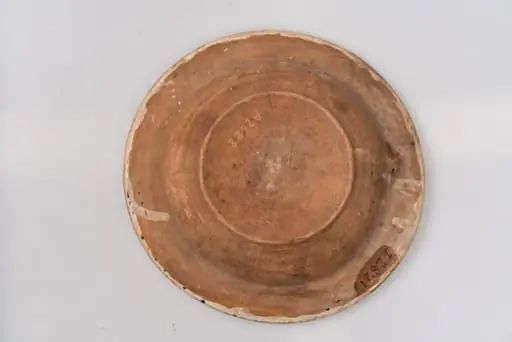 Farfurie adâncă cu buză evazată; este acoperită pe suprafața interioară cu un strat de angobă albă peste care este pictat cu cornul și cu pensula decorul monocromatic format din motive florale și vegetale stilizate: registrul central de pe fundul farfuriei conține un buchet format dintr-o floare de crin și două flori rotunde cu petale formate din linii drepte și patru grupuri de puncte sugerând niște flori mici. De o parte și de alta a florii de crin apare înscris anul fabricării piesei, 1794. Registrul decorativ de pe buza farfuriei, încadrat între două linii circulare, se compune dintr-un șir continuu format din opt flori mici de lalea cu tije în formă de S și frunze, sugerate prin linii paralele și puncte. Muchia buzei este decorată cu mici linii paralele. Suprafața ornamentată a farfuriei este acoperită cu un strat de smalț transparent. Cromatica: alb, albastru.
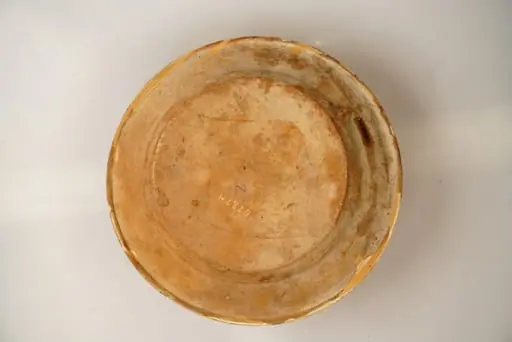 Farfurie semi-adâncă cu buza dreaptă evazată și cu muchia buzei răsfrântă spre exterior. Suprafața interioară a farfuriei este acoperită cu un strat de angobă albă peste care este realizat, prin sgrafitare în stratul de angobă și prin pictare cu pensula și cu cornul, decorul format din motive florale, vegetale și geometrice dispuse astfel: centrul farfuriei conține o tulpină cu două flori albastre rotunde, o floare cu petale alungite, de culoare verde, și frunze și elemente vegetale de culoare verde și maro. Conturul decorului din zona centrală este realizat cu o linie fină sgrafitată. Registrul decorativ marginal de pe buza farfuriei conține patru motive vegetale stilizate (boboci albaștri cu două frunze verzi), dispuse diametral opus în formă de cruce și intercalate cu patru grupuri de linii hașurate intersectat, de culoare maro. Decorul din zona buzei este încadrat între două linii circulare albastre. Suprafața ornamentată a farfuriei este acoperită cu un strat de smalț transparent. Cromatica: alb, verde, galben, maro.
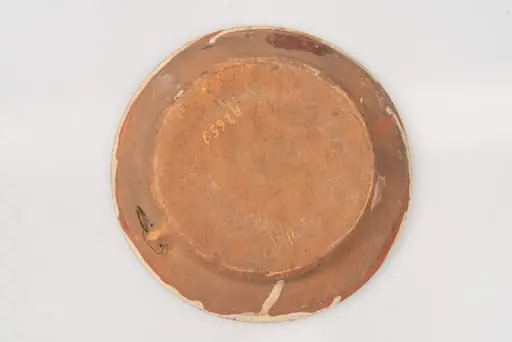 Farfurie de formă aplatizată, angobată cu humă albă pe suprafața interioară și decorată prin pictare cu cornul, cu motive geometrice și vegetale geometrizate, ce acoperă întreaga suprafață a piesei: registrul central de pe fundul farfuriei este decorat cu motivul brăduțului, flori de crin geometrizate și elemente vegetale (vrejuri), iar buza farfuriei cu două linii circulare în formă de zig-zag, intersectate, completate cu puncte albastre mari. Bordura interioară a farfuriei și muchia buzei sunt decorate cu linii circulare simple și linii circulare ondulate. Cromatica: alb, albastru. Suprafața ornamentată a farfuriei este acoperită cu un strat de smalț transparent.
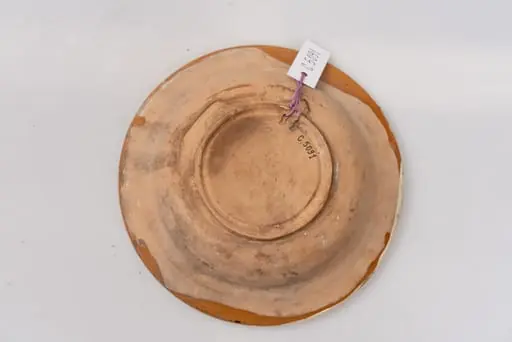
 Farfurie de mici dimensiuni, cu fundul îngust, pereții puțin înalți, dar puternic evazați. Centrul farfuriei îl formează o spirală. Restul câmpului este ornamentat în registre succesive separate prin linii de culoare maro realizate cu pensula. Tot cu pensula, peste jirăvire a fost pictată o cunună cu frunze, încadrată în arce cu baza pe un inel cărămiziu, pe ultimul din registru. Spre buză o linie dispusă circular cu buline în alternanță cromatică înscrise în arce. Este prevăzută cu o gaură, pe partea posterioară, la baza inelară, pentru prindere. Dorsal incizată inscripția ”Stelian Ogrezeanu Hurez Vîlcea România''. Cromatică: fond: alb; motive: verde; cărămiziu; negru.
 Farfurie adâncă, angobată pe fața interioară cu un strat de angobă albă și decorată prin pictare cu pensula și cu cornul cu motive florale, fitomorfe și geometrice: central pe fundul farfuriei este reprezentat, în manieră naturalistă, un buchet format din două flori cu câte trei petale de culoare maro-deschis și albastru, cu frunze verzi și elemente vegetale de culoare maro-închis. Buza este ornamentată cu un șir continuu format din romburi cu contur maro-închis, umplute cu linii hașurate verzi și separate de câte trei puncte de culoare albastră și maro. Acest registru decorativ este înscris între două linii circulare de culoare maro-închis. Cromatica: alb, verde, maro-deschis, maro-închis, albastru. Suprafața ornamentată a farfuriei este acoperită cu un strat de smalț transparent.