Artwork
Warrior
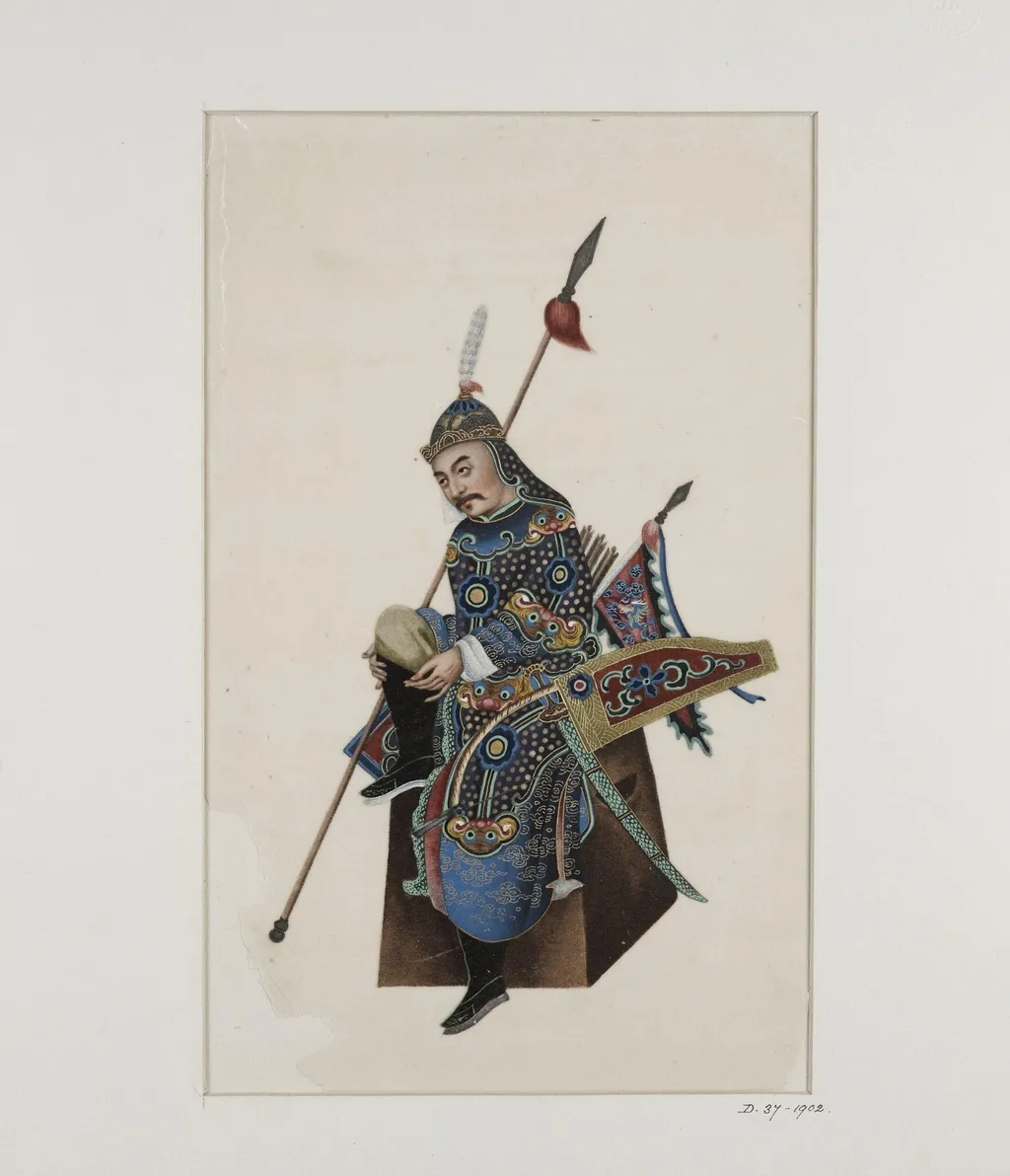
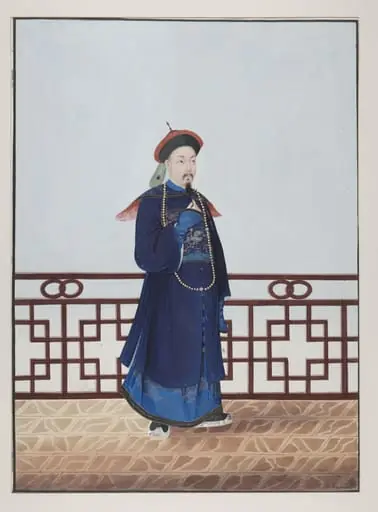
Warrior is a paint painting by the Impressionist artist Unknown. It dates from 1870 and is held in the collection of the Victoria and Albert Museum.
About this work
Overview
This 1870 watercolor portrays a warrior in ceremonial dress, part of a larger series of twelve portraits. The work was acquired by the collection in 1902 from Carl Langweil. Only ten pieces from the original set survive. The painting is rendered in delicate washes on paper, emphasizing form and detail through subtle tonal shifts rather than bold brushwork.
Subject & Meaning
The figure is depicted in full regalia: a blue-and-gold robe, feathered helmet, and quiver of arrows. He holds a spear in one hand and a drum in the other, suggesting a role bridging ritual and warfare. His composed expression conveys vigilance, possibly representing a leader or ceremonial guardian within a structured social or spiritual order.
Technique & Style
Executed in watercolor, the painting employs layered glazes to achieve depth in fabric patterns and metallic accents. The background is left in a pale, neutral tone to isolate the figure. Details in embroidery and armor are rendered with fine linework, reflecting a precisionist approach more aligned with documentary portraiture than Impressionist spontaneity.
History & Provenance
The painting originated in a series commissioned or collected as ethnographic portraits, likely documenting figures of cultural significance. Carl Langweil, a 19th-century collector, held the set before its 1902 accession. The series’ partial survival suggests selective preservation, possibly due to shifting scholarly or institutional interests in the early 20th century.
Context
Created during a period of heightened European interest in non-Western cultures, the portrait reflects a trend of cataloging indigenous or regional elites through visual documentation. While not part of a formal ethnographic survey, its style and subject align with contemporary efforts to record ceremonial attire and social roles outside Western norms.
Legacy
As one of ten surviving works from the original series, it contributes to a rare visual archive of ceremonial dress and iconography. Its preservation offers insight into how such figures were visually codified in the 19th century, serving as both cultural record and artifact of collecting practices rather than artistic innovation.
Artist & collection

 Domestic Scene
 Giacomo and Cardinal Marco, investing Andrea, Abbot of San Zeno, with his Benefice
 The Nymph of Fontainebleau
 Portrait of a Woman
 Madonna and Child with Saints in the Enclosed Garden
 Venus and Minerva
 Family Group of Four on Sofa
 Wall painting from Room H of the Villa of P. Fannius Synistor at Boscoreale
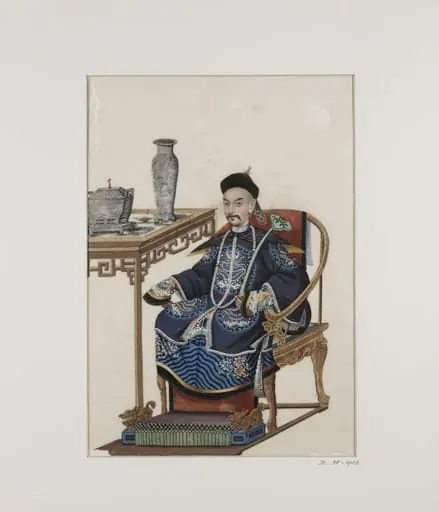 Official
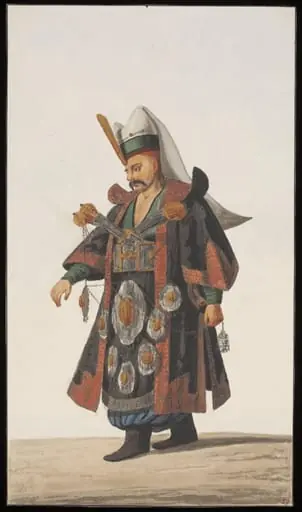 Ascibasi, or Commander of the Janisseries in ceremonial dress
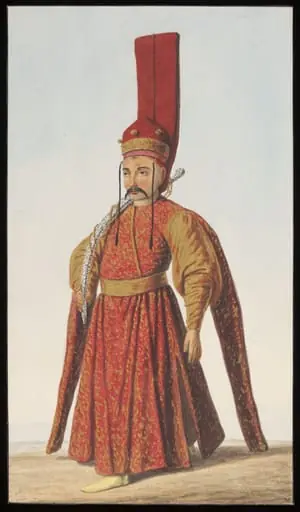 Silâhdar Aga, or sword bearer to the Sultan
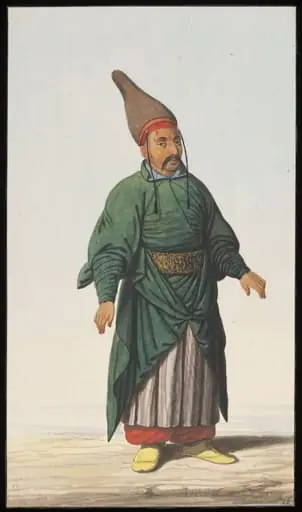 Sipahi Içoglani
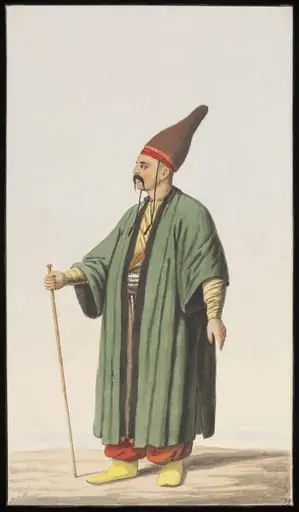 Zülüflü Baltaci, or Page to the Sultan
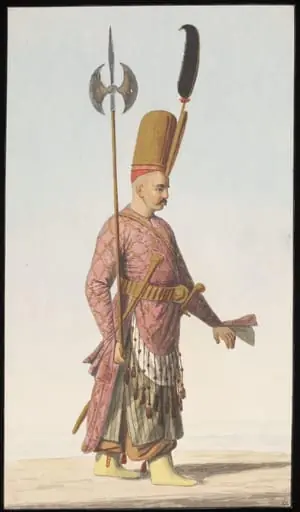 An official of the Sultan
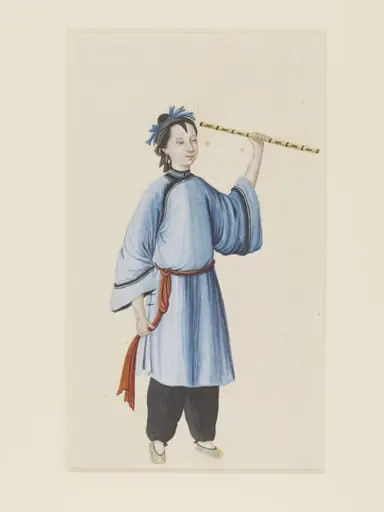 Woman from Fengyang
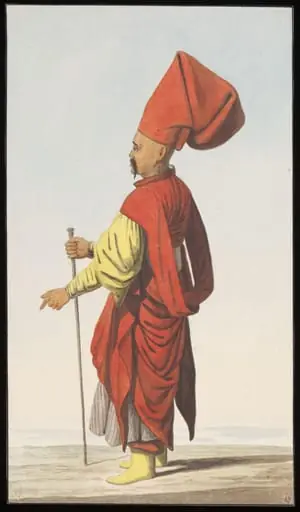 Rikaphasekisi, or stirrup-holder to the Sultan
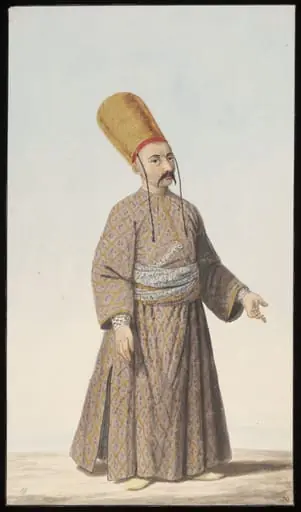 Zülüflü Baltaci, or Page of the first rank to the Sultan
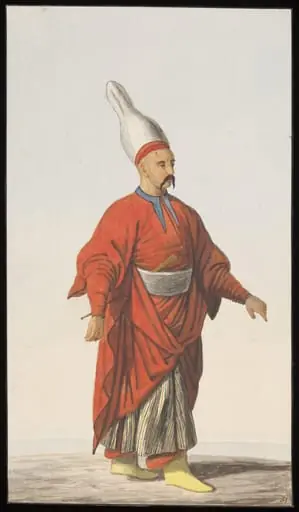 Kozbekçisi, or Steward of the Sultan's Wardrobe
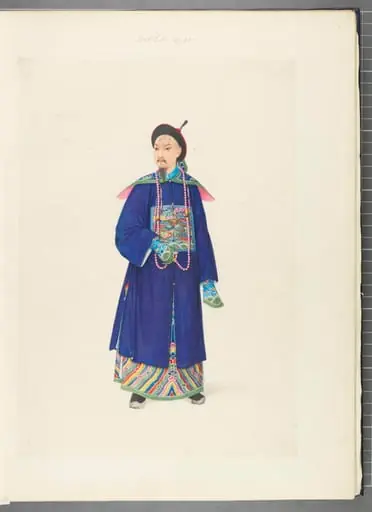 Official
 Untitled