Artwork
Gok'koku jimbutsu gyo...no zu|Picture of a Parade of the Five Nations
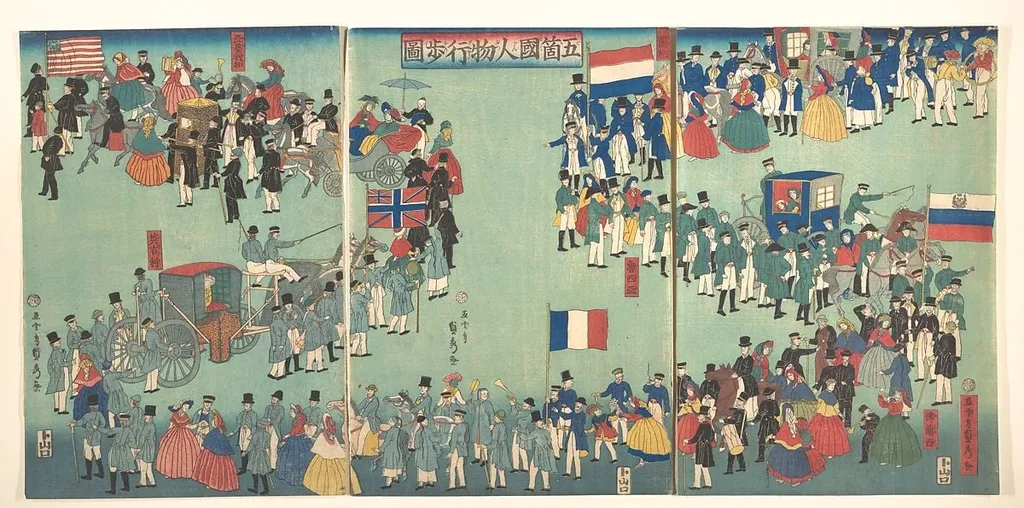
Gok'koku jimbutsu gyo...no zu|Picture of a Parade of the Five Nations is an ink print by the Impressionist artist Utagawa (Gountei) Sadahide. It dates from 3 and is held in the collection of the Metropolitan Museum of Art.
About this work
Overview
Gok’koku jimbutsu gyo…no zu, or “Picture of a Parade of the Five Nations,” is a three‑panel woodblock print executed by the Edo‑period artist Utagawa Sadahide. Produced in the mid‑19th century, the work measures roughly a single sheet per panel and is composed of ink and color on paper. The Metropolitan Museum of Art currently holds the complete triptych in its collection.
Subject & Meaning
The print captures a bustling street procession in which participants from five foreign powers—America, the Netherlands, Norway, France and Russia—march side by side. Flags bearing each nation’s emblem flutter above the crowd, while carriages, musicians, soldiers and onlookers populate the scene, suggesting a celebratory diplomatic display or international exposition.
Technique & Style
Sadahide employs the traditional ukiyo‑e woodblock method, carving separate blocks for line work and each hue. The composition is dense, with minute facial features and intricate costume details rendered in bold outlines and vivid pigments. The triptych format allows a panoramic view, and the artist’s use of bright colors and dynamic line conveys a sense of movement across the three panels.
History & Provenance
Created in the 1860s, the print reflects Japan’s increasing exposure to foreign nations during the late Tokugawa and early Meiji periods. It entered the Metropolitan Museum of Art’s collection through a 20th‑century acquisition of Japanese prints, where it has been catalogued as an example of cross‑cultural representation in ukiyo‑e.
Context
The work belongs to a broader genre of Japanese prints that documented international events and foreign presence in Japan after the country’s forced opening to trade. Sadahide, known for his detailed depictions of contemporary life, frequently illustrated such public spectacles, providing a visual record of Japan’s early encounters with Western powers.
Artist & collection

Artist
Utagawa Sadahide , also known as Gountei Sadahide, was a Japanese artist best known for his prints in the ukiyo-e style as a member of the Utagawa school.

 Untitled
 Untitled
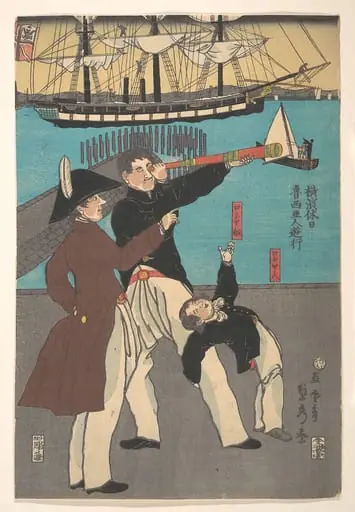 歌川五雲亭貞秀画 『横浜休日 魯西亜人遊行』|Russians Enjoying a Holiday in Yokohama (Yokohama kyūjitsu Roshiajin yūkō)
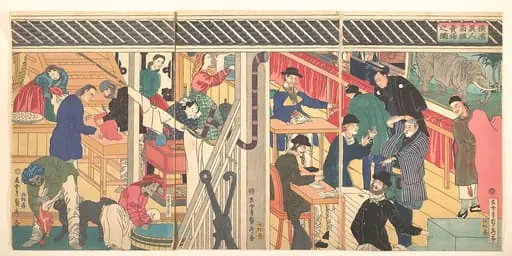 「横浜異人商館買場之圖」|Foreign Business Establishment in Yokohama (Yokohama ijin shōkan uriba no zu)
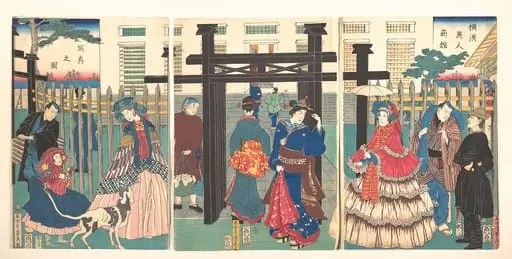 歌川五雲亭貞秀画 『横浜異人商館 写真之図』|Foreign Business Establishment in Yokohama (Yokohama ijin shōkan shashin no zu)
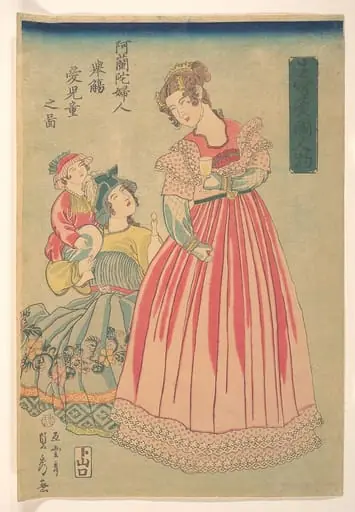 歌川五雲亭貞秀画 『生写異国人物 阿蘭陀婦人舉觴 愛児童之図』|Dutch Woman and Child (Seisha ikoku jinbutsu Oranda fujin aijidō no zu)
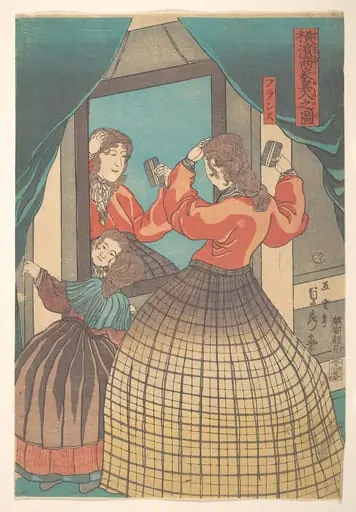 歌川五雲亭貞秀画 『横浜商家異人之図』|French Woman and Girl, from the series Foreign Merchants in Yokohama (Yokohama shōka ijin no zu)
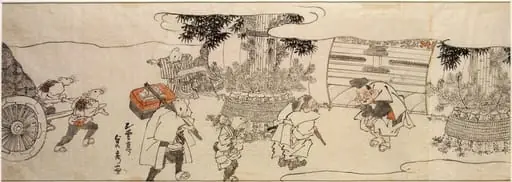 Daikoku and rats bringing rice bales to Ebisu
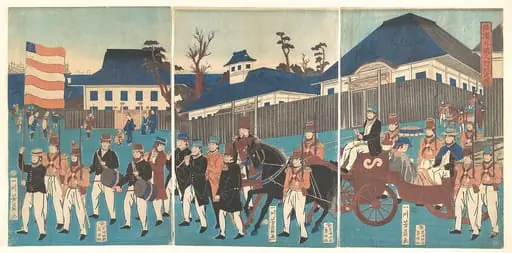 Yokohama Gankirō gaikokujin gyōretsu no zu|Picture of a Procession of Foreigners at Yokohama
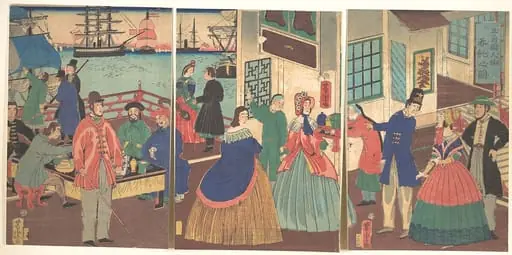 歌川芳虎画 『五箇国人物 呑飥之図』|People of the Five Nations Drinking and Eating (Gokakoku jinbutsu dontaku no zu)
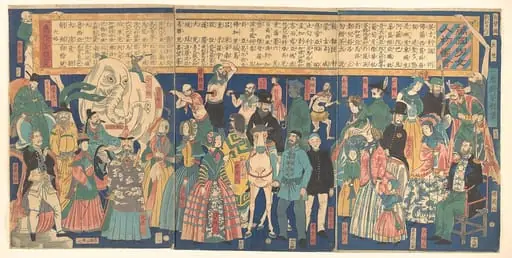 Bankoku danjō jimbutsu zue|Picture of Men and Women from all nations (Bankoku danjo jinbutsu zue)
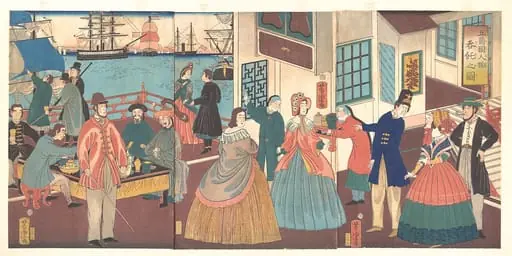 五箇国人物呑託之図|People of the Five Nations
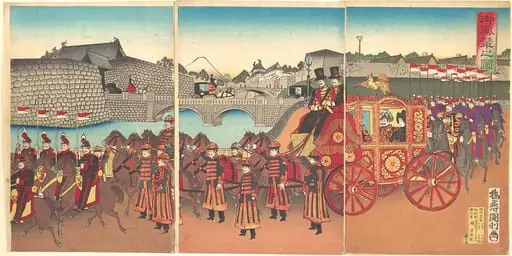 御鳳輦之図|Illustration of the Imperial Carriage (Gohōren no zu)
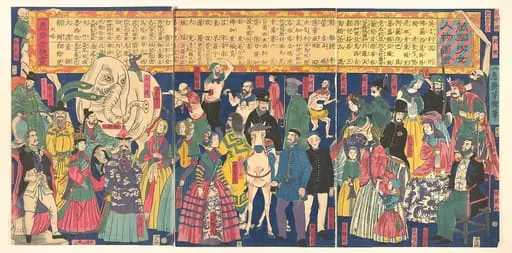 万国男女人物図絵|Picture of Men and Women from all Nations (Bankoku danjo jinbutsu zue)
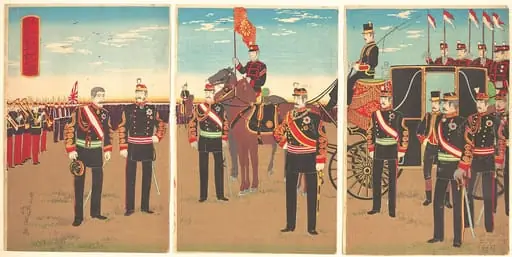 青上練兵場観兵式之図|Illustration of Emperor's Military Review of a Parade Ground at Aoyama (Aoyama renpeijō kanpeishiki no zu)