Artwork
Untitled
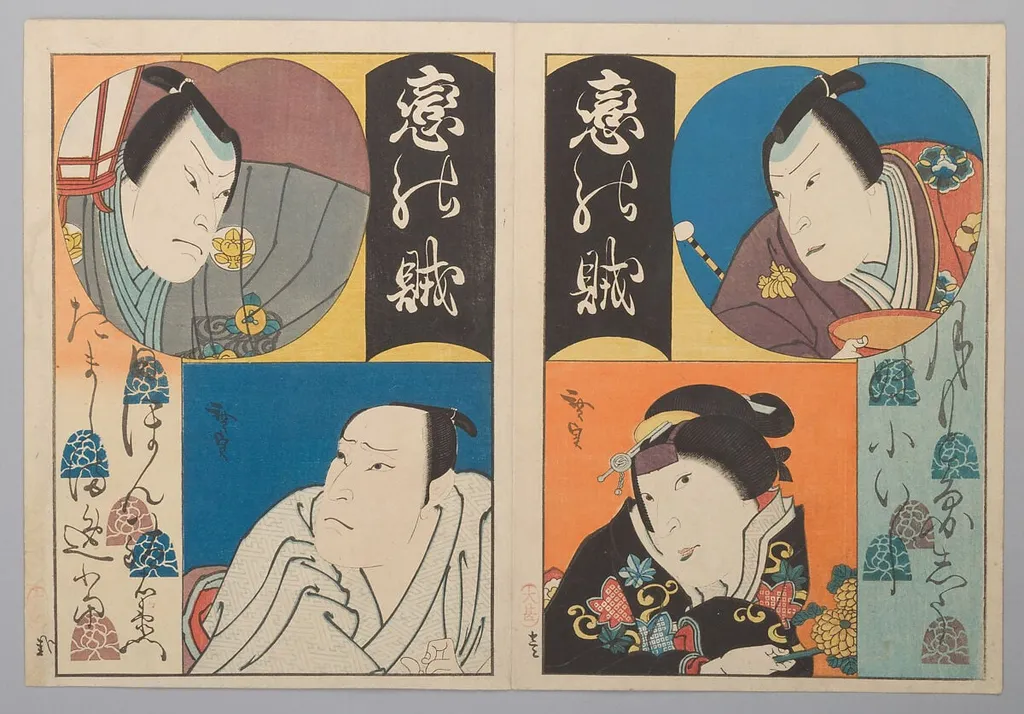
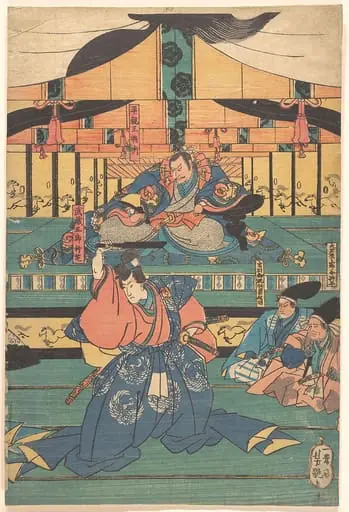
Untitled is an ink print by the Romanticist artist Utagawa Hirosada. It dates from 1852 and is held in the collection of the Metropolitan Museum of Art.
About this work
Overview
Nine woodblock prints by Utagawa Hirosada, dated around 1852, form a unified series titled Untitled. Each sheet depicts a kabuki actor in a static, frontal pose, arranged in paired groupings that suggest a structured visual sequence. The works are held in the collection of The Metropolitan Museum of Art, where they represent a focused example of mid-19th century actor portraiture in ukiyo-e.
Subject & Meaning
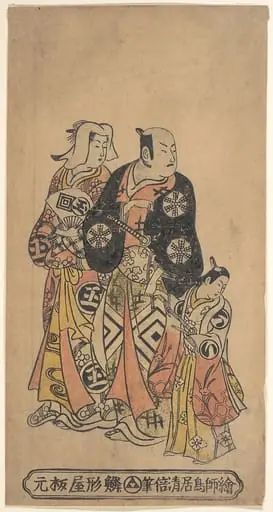
The prints portray kabuki performers in character, their identities signaled through costume and gesture rather than name. One holds a fan, another leans on one, and all wear stylized robes typical of theatrical roles. Their expressions are restrained, contrasting with the exaggerated makeup, suggesting a deliberate stillness meant to evoke inner character rather than dramatic action.
Technique & Style
Hirosada employed bold, flat areas of color with strong outlines, typical of Osaka-style woodblock printing. Facial features are rendered with rounded forms and vivid hair, while backgrounds consist of unmodulated color fields and Japanese script, likely actor names or play references. The composition avoids depth, emphasizing graphic clarity and the symbolic presence of each figure.
History & Provenance
Created during the peak of Osaka’s actor print culture, these works reflect the popularity of theatrical portraiture in the 1850s. They entered The Metropolitan Museum of Art’s collection through documented acquisitions, though their original exhibition context remains unclear. Their survival as a complete set is uncommon, as individual prints were often separated or discarded.
Context
Hirosada worked primarily in Osaka, where actor prints were produced for a local audience with deep familiarity with kabuki roles. Unlike Edo’s more varied ukiyo-e subjects, Osaka prints often focused intensely on performers, serving as both memorabilia and cultural markers. This series aligns with a trend of grouping actors in multiples to highlight ensemble casts or thematic pairings.
Legacy
The series exemplifies the formal discipline of Osaka’s actor print tradition, distinguishing itself from Edo’s more experimental styles. While not widely reproduced in modern scholarship, these prints remain important for understanding regional variations in ukiyo-e and the role of visual repetition in conveying theatrical identity.
Artist & collection

 Untitled
 Untitled
 Untitled
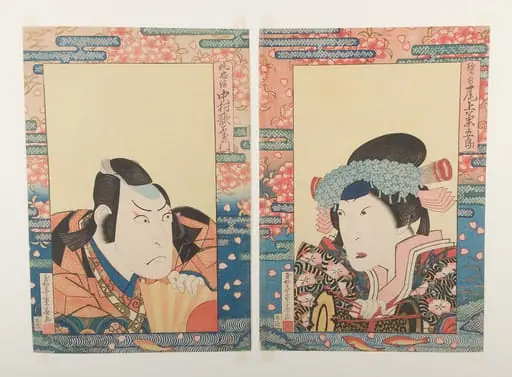 玉柳亭重春画 三代目尾上菊五郎・三代目中村歌右衛門 『義経千本桜』|Kabuki Actors Onoe Kikugorō III as Shizuka Gozen and Nakamura Utaemon III as Kitsune Tadanobu, in the play Yoshitsune senbon zakura (The Thousand Cherry Trees of Yoshitsune)
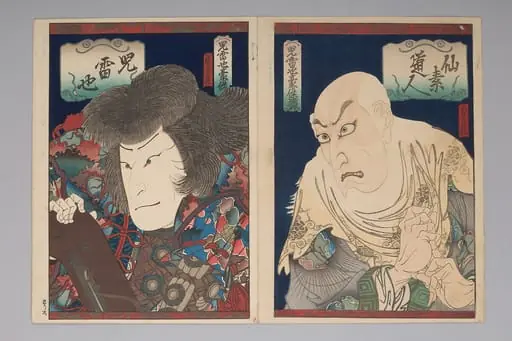 「仙素道人」五代目市川海老蔵 「児雷也」初代実川延三郎|Ichikawa Ebizō V as Senso Dōjin (right); Jitsukawa Ensaburō as Jiraiya (left)
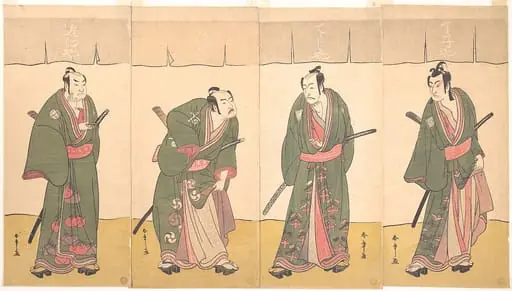 Untitled
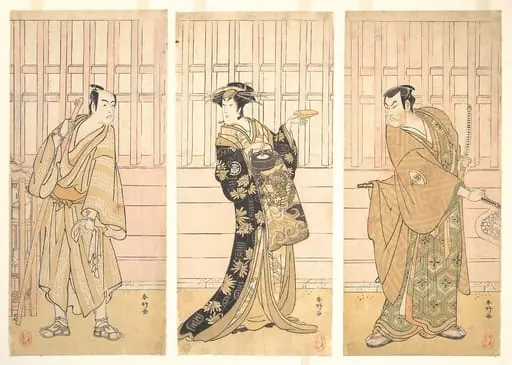 Untitled
 Untitled
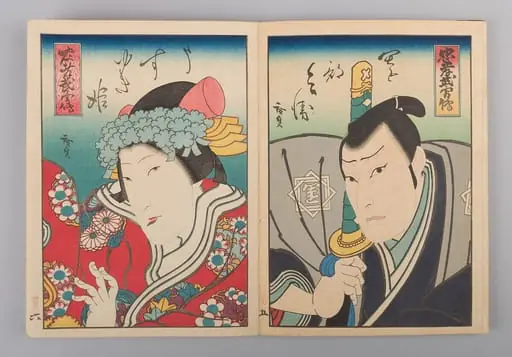
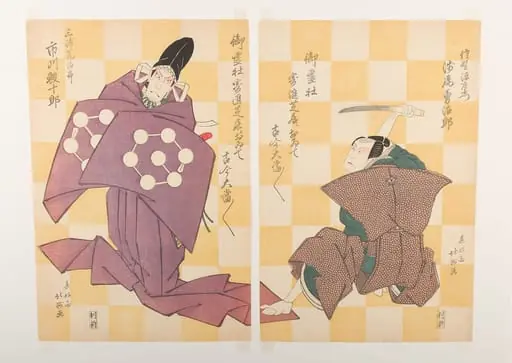 春好斎北洲画 初代浅尾勇次郎・初代市川鰕十郎 『傾城佐野の船橋』|Kabuki Actors Asao Yūjirō as Sano Genzaemon and Ichikawa Ebijūrō I as Miura Arajirō, in the play Keisei Sano no Funabashi
 Untitled
 Untitled
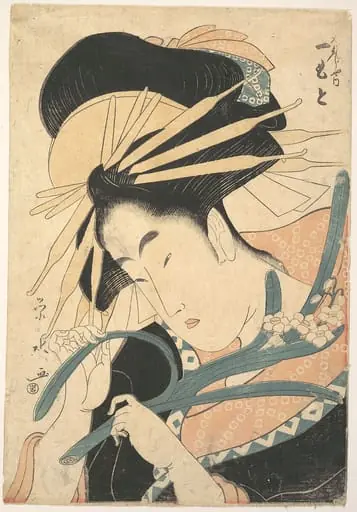
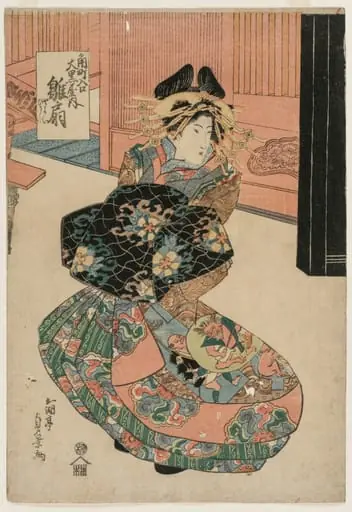 The Courtesan Hinaogi of the Daikokuya at the Entrance of Kadomachi