Artwork
玉柳亭重春画 三代目尾上菊五郎・三代目中村歌右衛門 『義経千本桜』|Kabuki Actors Onoe Kikugorō III as Shizuka Gozen and Nakamura Utaemon III as Kitsune Tadanobu, in the play Yoshitsune senbon zakura (The Thousand Cherry Trees of Yoshitsune)
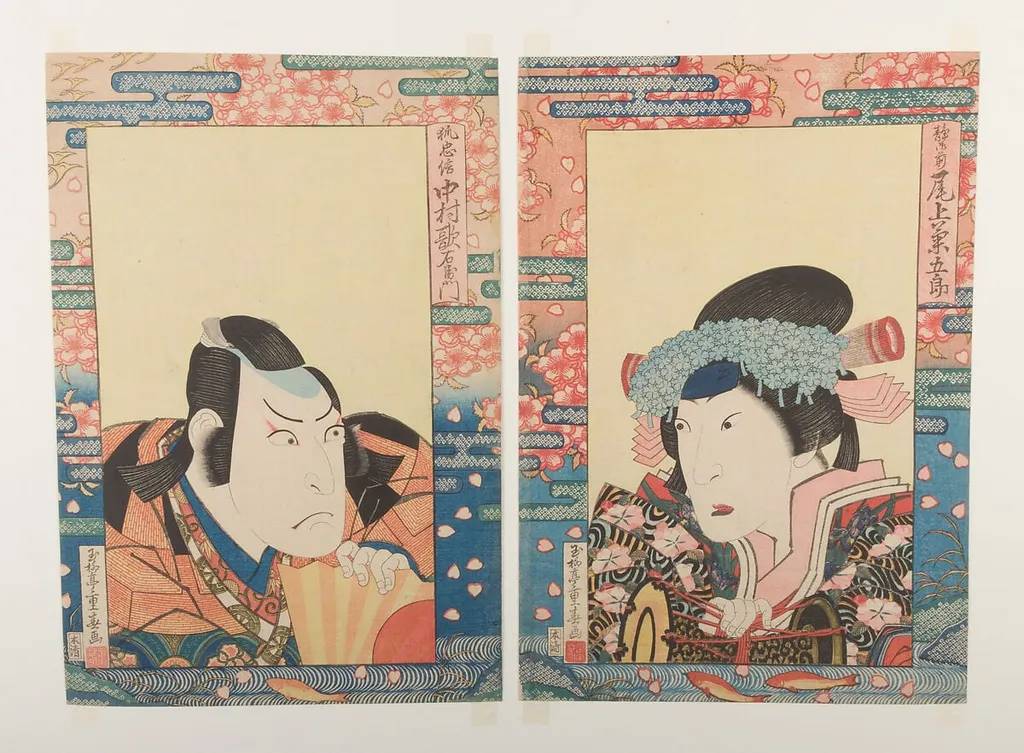
玉柳亭重春画 三代目尾上菊五郎・三代目中村歌右衛門 『義経千本桜』|Kabuki Actors Onoe Kikugorō III as Shizuka Gozen and Nakamura Utaemon III as Kitsune Tadanobu, in the play Yoshitsune senbon zakura (The Thousand Cherry Trees of Yoshitsune) is an ink print by the Romanticist artist Gyokuryūtei (Ryūsai) Shigeharu. It dates from 1830 and is held in the collection of the Metropolitan Museum of Art. This diptych of woodblock prints depicts two Kabuki actors in character, created by Gyokuryūtei Shigeharu in 1830.
About this work
Overview
This diptych of woodblock prints depicts two Kabuki actors in character, created by Gyokuryūtei Shigeharu in 1830. The Metropolitan Museum of Art holds the work.
Subject & Meaning
The print shows Onoe Kikugorō III as Shizuka Gozen and Nakamura Utaemon III as Kitsune Tadanobu from the play Yoshitsune senbon zakura. The actors' contrasting expressions and attire convey their characters' distinct emotions and roles.
Technique & Style
Vibrant colors and bold lines emphasize the actors against patterned backgrounds. The use of distinctive face paint, costumes, and accessories like fans and flowers helps to convey the characters' personalities and traits, characteristic of Kabuki theater.
Artist & collection
Artist
Gyokuryūtei (Ryūsai) Shigeharu
Gyokuryūtei Shigeharu spent most of his life in Osaka, where he carved woodblock prints of city life—street scenes, actors, and courtesans—just as the port town was getting louder and busier.

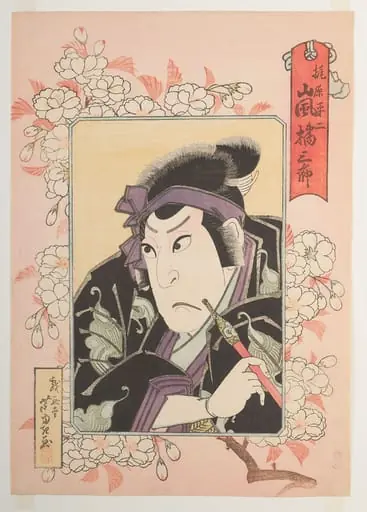 戯画堂芦幸画 二代目嵐橘三郎 「ひらかな盛衰記」|Kabuki Actor Arashi Kitsusaburō II as Kajiwara Heiji, in the play Hiragana seisuiki (Records of the Battles between the Minamoto and Taira Clans in the Japanese Syllabary)
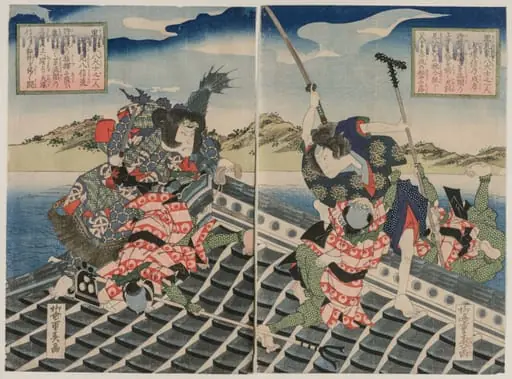
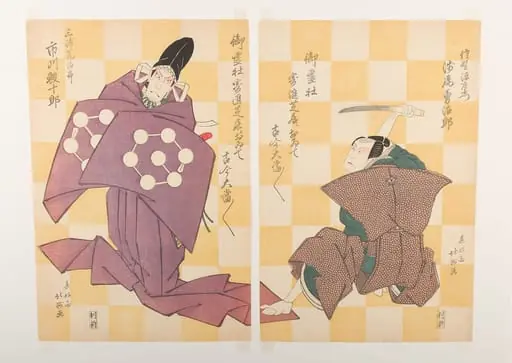 春好斎北洲画 初代浅尾勇次郎・初代市川鰕十郎 『傾城佐野の船橋』|Kabuki Actors Asao Yūjirō as Sano Genzaemon and Ichikawa Ebijūrō I as Miura Arajirō, in the play Keisei Sano no Funabashi
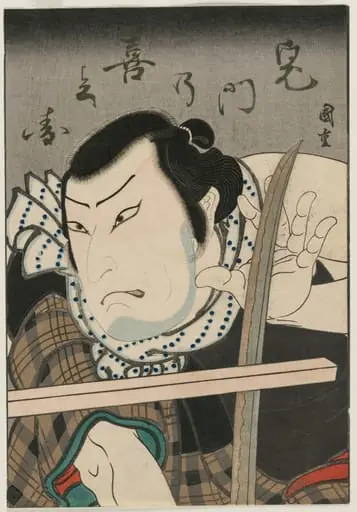
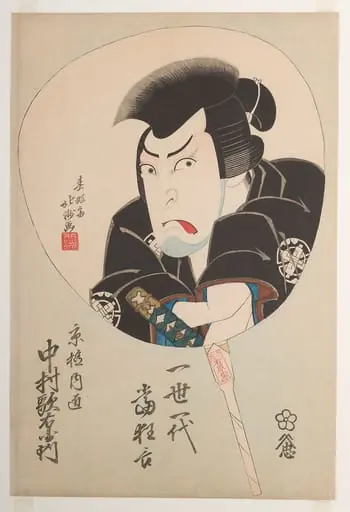 春好斎北洲画 三代目中村歌右衛門 『一世一代当狂言』|Kabuki Actor Nakamura Utaemon III as the Sword Master Kyōgoku Takumi, from the series Issei ichidai atari Kyōgen (Hits of a Lifetime of Kyōgen)
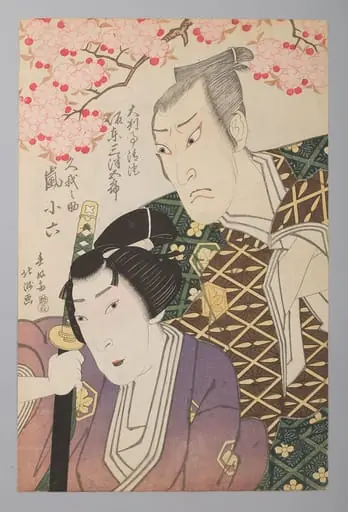 「大判事清澄 坂東三津五郎」(三代)・「久我之助 嵐小六」(四代)|Bandō Mitsugorō III as Daihanji Kiyozumi and Arashi Koroku IV as Koganosuke
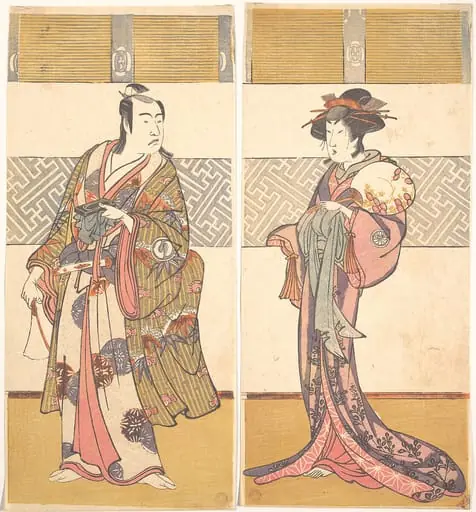 勝川春章画 三代目澤村宗十郎と三代目瀬川菊之丞|Kabuki Actors Sawamura Sōjūrō III and Segawa Kikunojō III
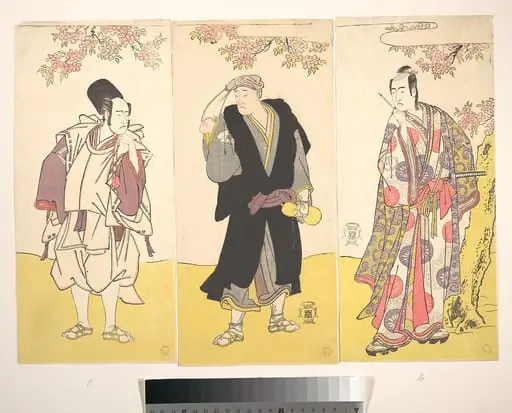 三代目市川八百藏・初代目尾上松助・三代目澤村宗十郎|Kabuki Actors Ichikawa Yaozō III, Onoe Matsusuke I, and Sawamura Sōjūrō III
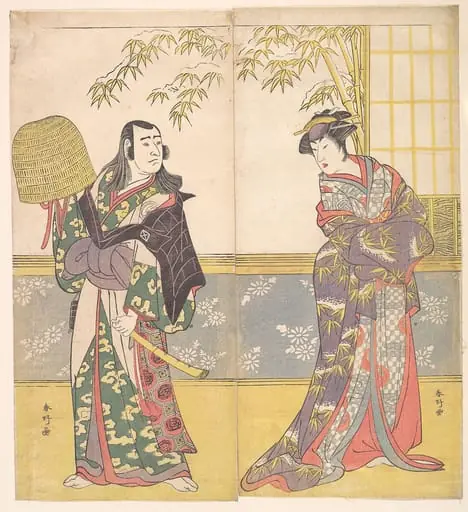 勝川春好画 三代目澤村宗十郎 三代目佐野川市松 |Kabuki Actors Sawamura Sōjūrō III and Sanogawa Ichimatsu III in "A Courtesan’s Mirror for the Eastern Provinces" (Keisei Azuma kagami)
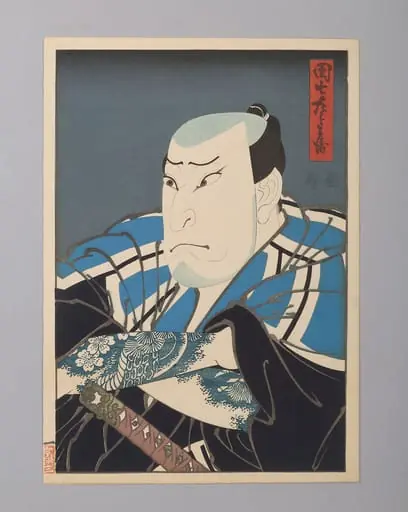 「団七九郎兵衛」|Nakamura Utaemon IV as Danshichi Kurobei
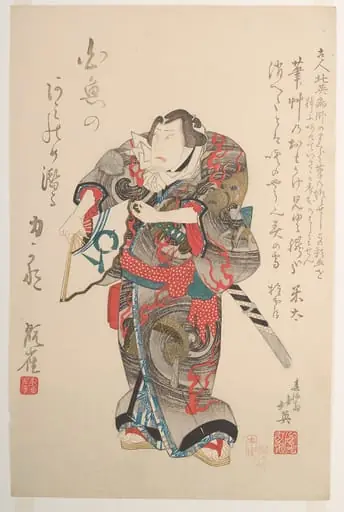 四代目中村歌右衛門 「関取千両幟」|The Actor Nakamura Utaemon IV as the Wrestler Iwakawa Jirokichi
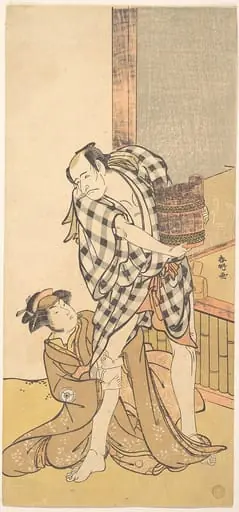 五代目市川団十郎|Scene from the Play Yoshitsune and the Thousand Cherry Trees (Yoshitsune senbon zakura)