Artwork
Untitled
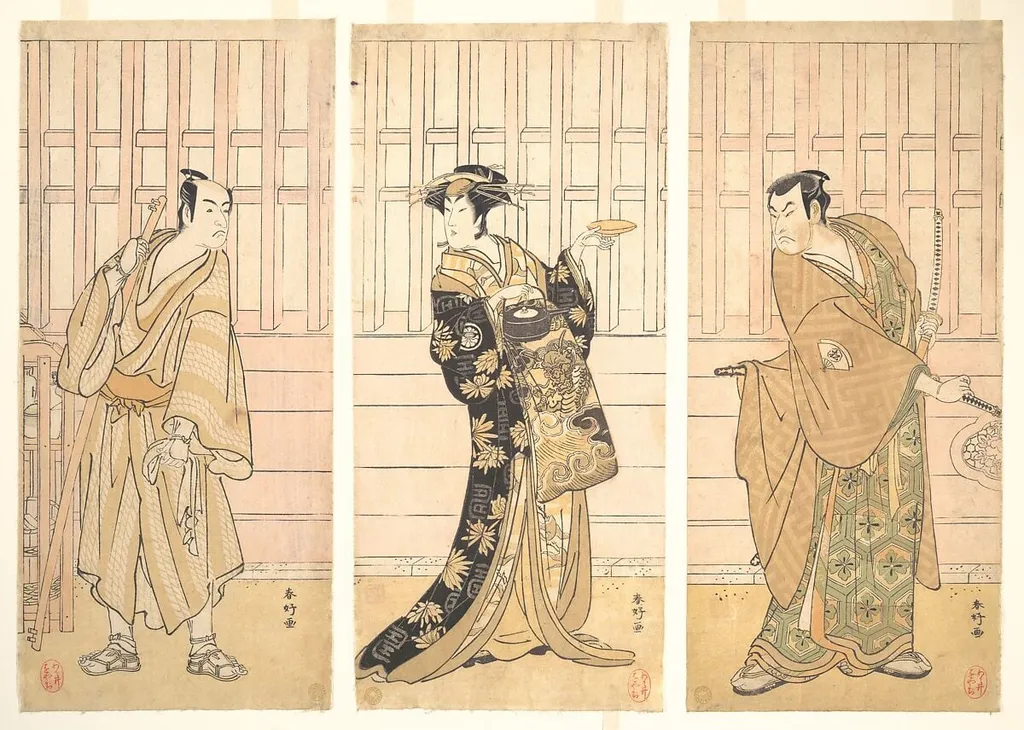
Untitled is an ink print by the Romanticist artist Katsukawa Shunkō. It dates from 1788 and is held in the collection of the Metropolitan Museum of Art.
About this work
Overview
The composition emphasizes stillness and formal posture, with no narrative action or environmental detail beyond the minimal backdrop.
Created around 1788, this triptych by Katsukawa Shunkō consists of three woodblock prints on paper, rendered in ink and color. Each panel depicts a single figure standing before a plain wooden screen. The composition emphasizes stillness and formal posture, with no narrative action or environmental detail beyond the minimal backdrop. The work exemplifies the ukiyo-e tradition’s focus on portraiture and refined aesthetic restraint.
Subject & Meaning
The three figures appear to be individuals of refined status, possibly actors or courtly figures, identified by their attire and composed demeanor. Their unified stance and matching hair styling suggest a deliberate grouping, perhaps representing a thematic trio or a staged performance. The absence of context invites contemplation of identity and presence rather than storytelling, aligning with contemporary tastes for elegant, anonymous portraiture.
Technique & Style
Shunkō employed flat areas of color bounded by precise, unbroken outlines, a hallmark of ukiyo-e printmaking. The kimono of the central figure features a bold black-and-white floral pattern, contrasting sharply with the muted tones of the other garments. Facial features are rendered with smooth, confident lines, avoiding texture or shading. The lack of cross-hatching or gradation reinforces the graphic clarity and decorative intent of the design.
History & Provenance
The triptych entered the collection of The Metropolitan Museum of Art, where it remains part of its holdings of Edo-period Japanese prints. While specific early ownership records are not documented, its preservation suggests it was valued within collector circles by the late 19th or early 20th century. Its survival in good condition reflects careful handling and the durability of woodblock printing techniques of the era.
Context
Produced during the late 18th century, this work emerged in a period when ukiyo-e artists increasingly turned to portraits of actors and beauties, often commissioned for private collections. Shunkō, active in Edo, was known for his refined line work and restrained compositions. Unlike dramatic scenes of battle or romance, this triptych reflects a quieter, more introspective strand of the genre, favored by connoisseurs seeking subtlety over spectacle.
Legacy
This triptych contributes to the understanding of Katsukawa Shunkō’s role in refining portraiture within ukiyo-e. Its emphasis on form, pattern, and stillness influenced later artists who sought to elevate the genre beyond theatricality. Though not widely reproduced, its presence in major collections underscores its significance as a quiet yet accomplished example of Edo-period printmaking aesthetics.
Artist & collection

Artist
Katsukawa Shunkō spent his life in Edo, where crowded theaters and teahouses buzzed around him.

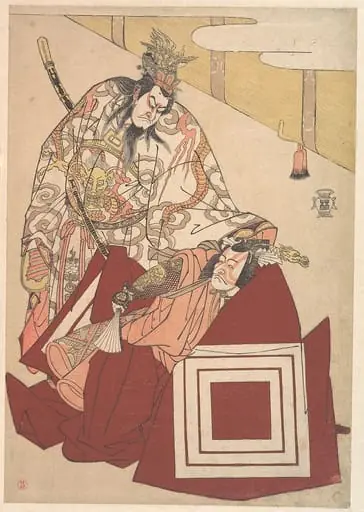 Untitled
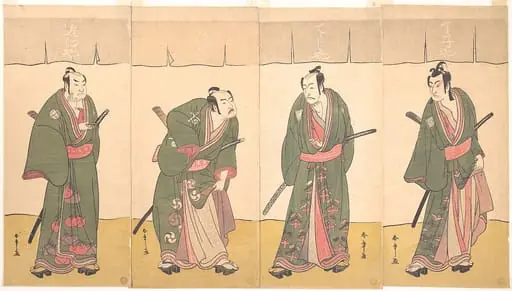
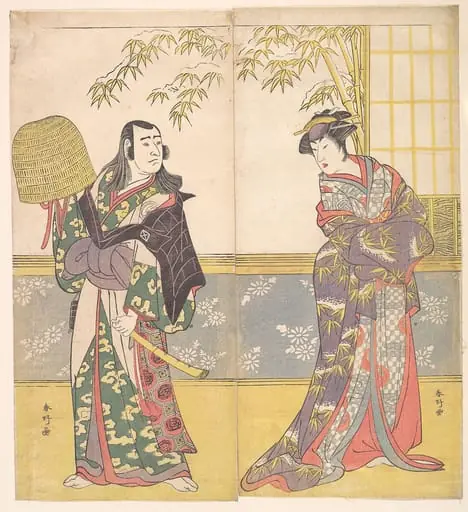 勝川春好画 三代目澤村宗十郎 三代目佐野川市松 |Kabuki Actors Sawamura Sōjūrō III and Sanogawa Ichimatsu III in "A Courtesan’s Mirror for the Eastern Provinces" (Keisei Azuma kagami)
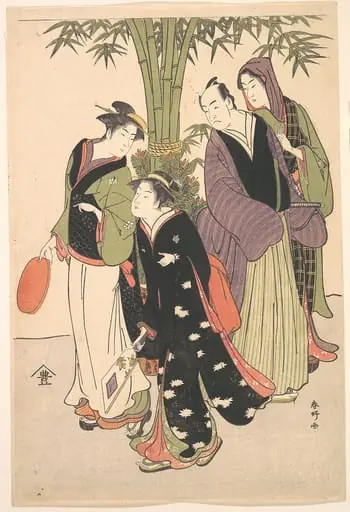 勝川春好画 三代目瀬川菊之丞・二代目市川門之助|Kabuki Actors Segawa Kikunojō III and Ichikawa Monnosuke II and Two Courtesans Celebrating the New Year
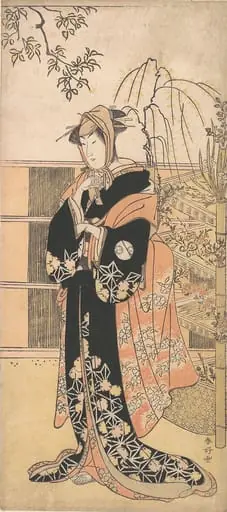 勝川春好画 三代目瀬川菊之丞|Kabuki Actor Segawa Kikunojō III in a Woman’s Role
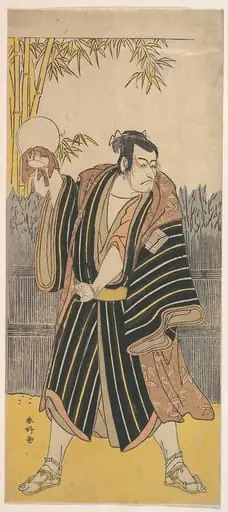 勝川春好画 七代目片岡仁左衛門 五代目市川團十郎|Kabuki Actor Ichikawa Danjūrō V
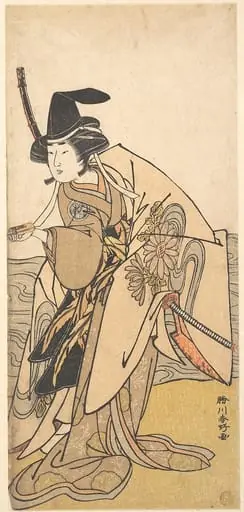 Untitled
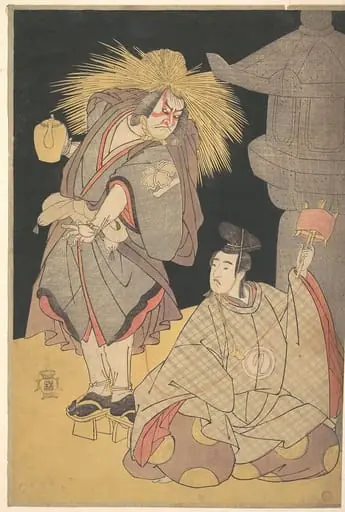 Untitled
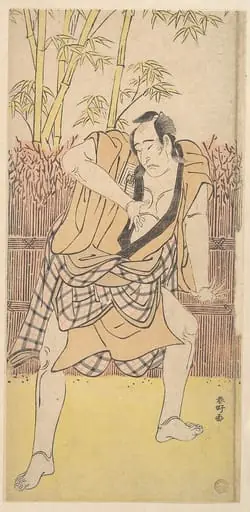 Untitled
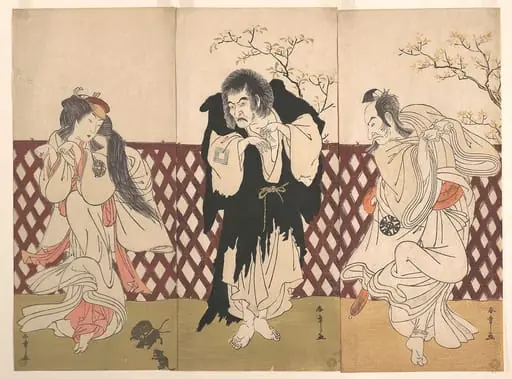 Untitled
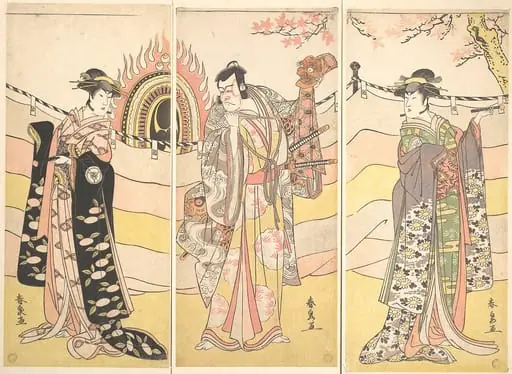 Untitled
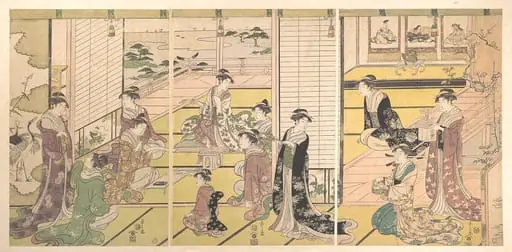 鳥文斎栄之画 和歌三神図|Honoring the Three Gods of Poetry: Women Composing Poems
 Untitled
 Untitled
 Untitled
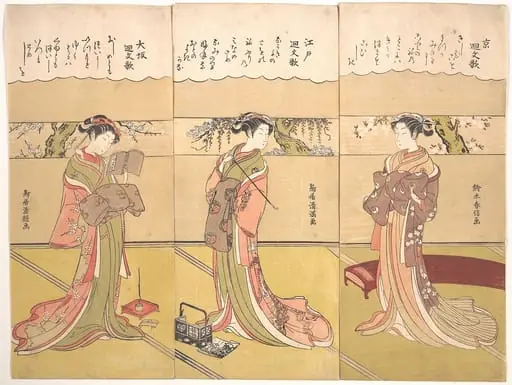 回文歌 京 大阪 江戸|Palindromic Poems (Kaibunka): Kyo
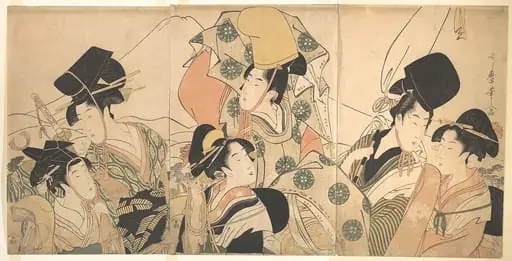 Untitled
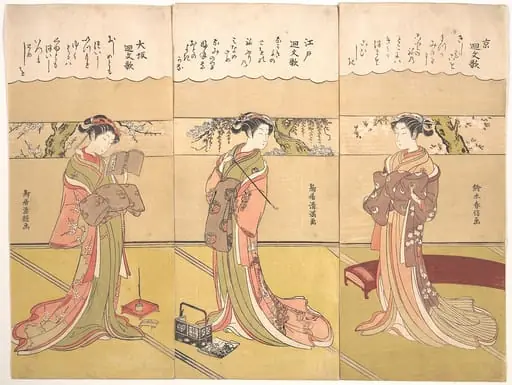 Untitled
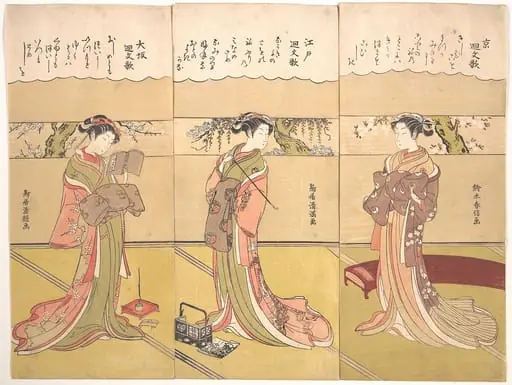 Untitled
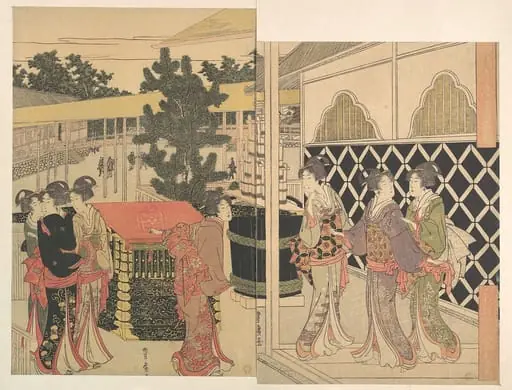 Horinouchi Myōhōji Eho Mairi no Zu|Pilgrimage to Myōhōji in Horinouchi, Edo
![南四季 夏景|The Four Seasons in Southern Edo: A Summer Scene (Minami shiki; Natsu [no] kei), by Utagawa Toyokuni I](https://artifactworldgallery.com/img/utagawa-toyokuni-i--the-four-seasons-in-southern-edo-a-summer-scene-minami-shiki--de8110e8ab2ddcb5-w320.webp) 南四季 夏景|The Four Seasons in Southern Edo: A Summer Scene (Minami shiki; Natsu [no] kei)
南四季 夏景|The Four Seasons in Southern Edo: A Summer Scene (Minami shiki; Natsu [no] kei)