Artwork
東都名所 浅草金龍山年の市|Asakusa Kinryusan Toshi no Ichi
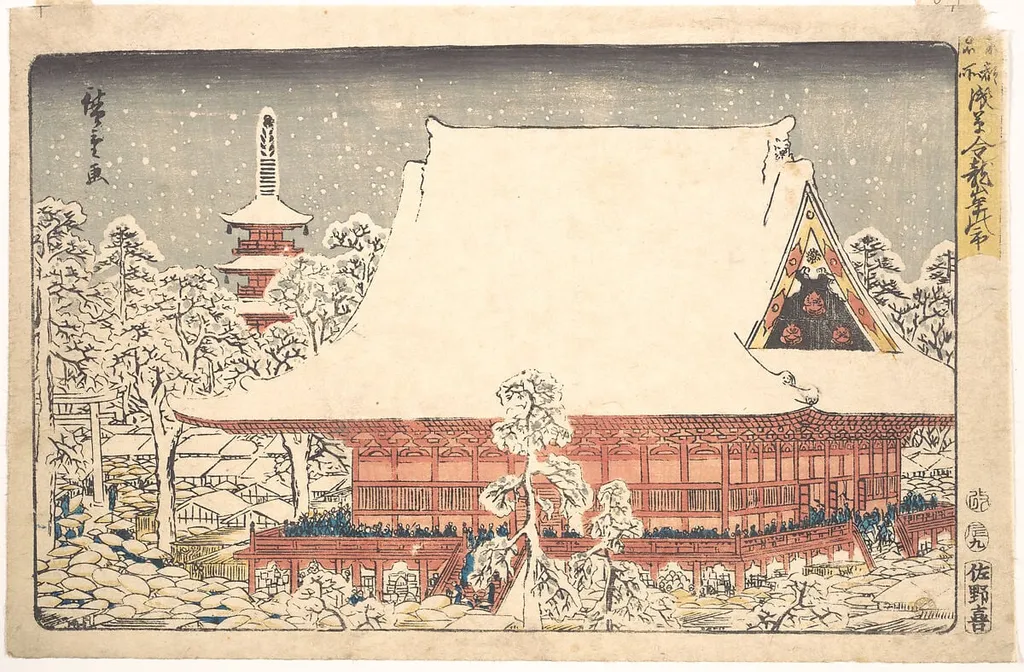
東都名所 浅草金龍山年の市|Asakusa Kinryusan Toshi no Ichi is an ink print by the Romanticist artist Utagawa Hiroshige. It dates from 1838 and is held in the collection of the Metropolitan Museum of Art.
About this work
Overview
Unlike many ukiyo-e artists who focused on courtesans or actors, Hiroshige turned his attention to seasonal landscapes and public gatherings.
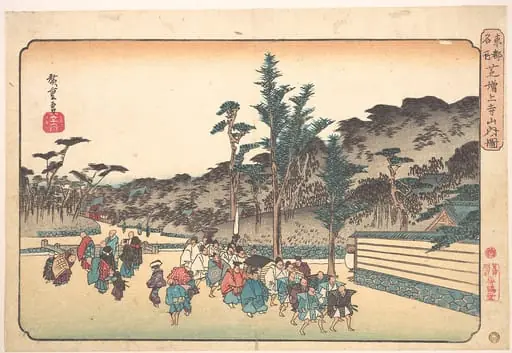
Created around 1838 by Utagawa Hiroshige, this woodblock print belongs to a series depicting famous sites in Edo. Unlike many ukiyo-e artists who focused on courtesans or actors, Hiroshige turned his attention to seasonal landscapes and public gatherings. The scene captures the annual winter market at Kinryūzan Temple in Asakusa, framed by snow-laden trees and architectural elements that anchor the composition in a recognizable urban setting.
Subject & Meaning
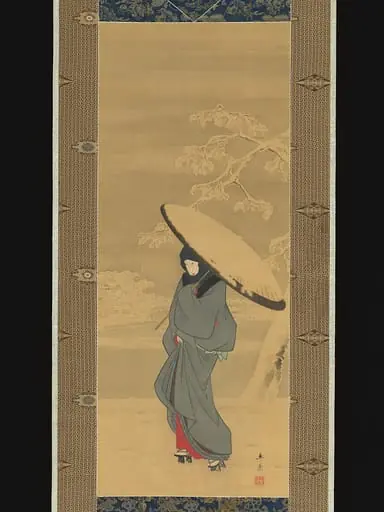
The print illustrates the annual festival held at the temple, a time when merchants and pilgrims gathered despite the cold. The central pagoda rises above the snowy landscape, symbolizing spiritual continuity amid seasonal change. Figures in dark robes move along the riverbank path, suggesting quiet ritual and commerce. The inset lantern, delicately rendered, hints at the temporary decorations used during the fair, linking the scene to transient cultural observances.
Technique & Style
Hiroshige employed fine, controlled lines to suggest texture—snow on branches, folds in clothing, and the grain of wooden railings—without relying on shading. Color was applied in flat, layered washes, typical of ukiyo-e printing. The use of cross-hatching and delicate contouring creates depth and detail, particularly in the snow-dusted foliage and the temple’s tiled roof. The composition balances verticality with horizontal movement, guiding the eye from the pagoda down to the river and figures below.
History & Provenance
The print was produced during Hiroshige’s early mature period, when he was refining his landscape series. It was likely part of a commercial print run distributed to Edo’s growing middle class, who collected such images as souvenirs or decorative items. Surviving impressions are held in major museum collections, including the Museum of Fine Arts, Boston, and the British Museum, indicating its early circulation and enduring preservation.
Context
Asakusa’s Kinryūzan Temple was one of Edo’s most visited religious sites, especially during winter festivals. The market reflected both spiritual devotion and commercial activity, drawing people from across the city. Hiroshige’s choice to depict this scene, rather than the more common pleasure quarters, aligns with a broader trend in the 1830s toward documenting public life and seasonal rituals in everyday settings.
Legacy
This print contributes to Hiroshige’s reputation for transforming ordinary urban scenes into poetic compositions. Its emphasis on atmosphere, seasonal change, and quiet human activity influenced later Japanese artists and, through export, European printmakers like Monet and Van Gogh. The work remains a quiet testament to the cultural rhythms of Edo, valued for its restraint and observational clarity.
Artist & collection
Artist
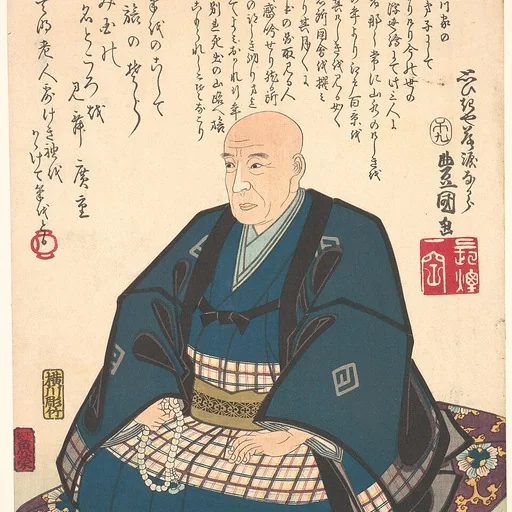
Utagawa Hiroshige (歌川 広重) or Andō Hiroshige (安藤 広重), born Andō Tokutarō (安藤 徳太郎; 1797 – 12 October 1858), was a Japanese ukiyo-e artist, considered the last great master of that tradition.

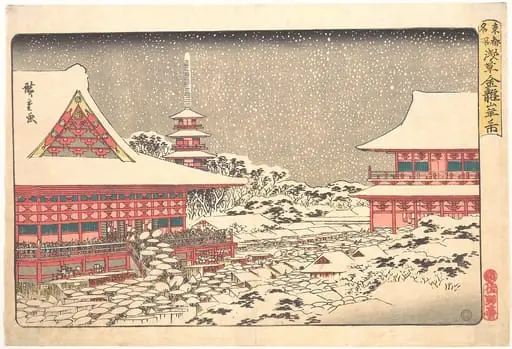 東都名所 浅草金龍山年の市|Year End Fair at Kinryuzan Temple
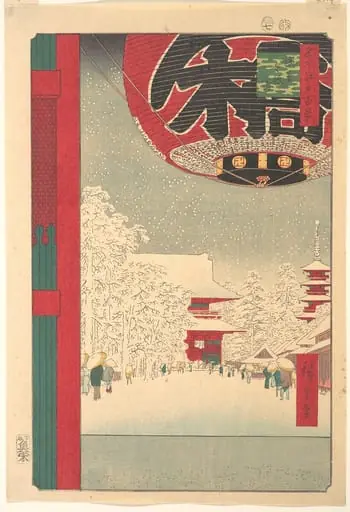 名所江戸百景 浅草金龍山|Kinryūsan Temple at Asakusa, from the series "One Hundred Famous Views of Edo"
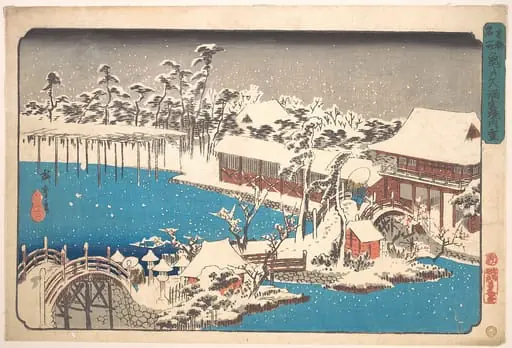 東都名所 亀戸天満宮境内雪|Kameido Tenmangu Keidai no Yuki
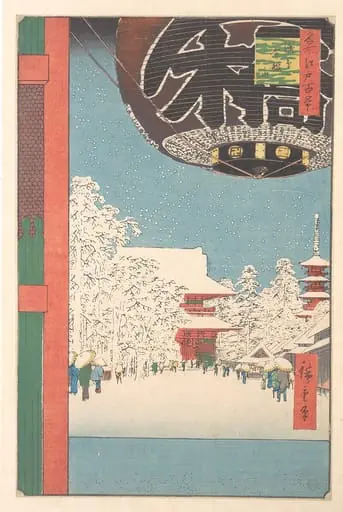 名所江戸百景 浅草 金龍山|The Kinryusan Temple at Asakusa
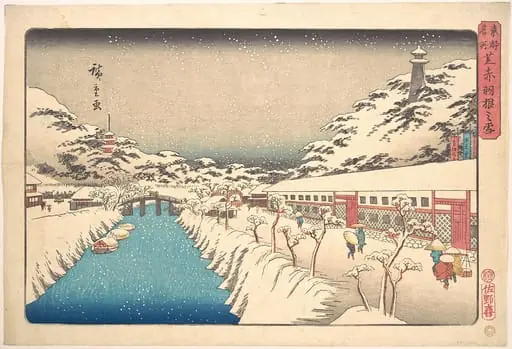 東都名所 芝赤羽根之雪|Shiba, Akabane no Yuki
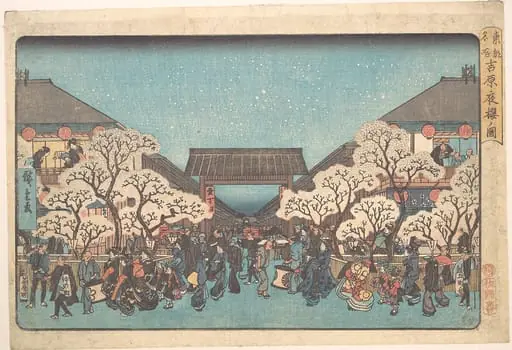 東都名所 吉原夜桜の図|Yoshiwara Yo Zakura no Zu
 東都名所 芝増上寺山内の図|Shiba Zōjōji Sannai no Zu