Artwork
名所江戸百景 浅草 金龍山|The Kinryusan Temple at Asakusa
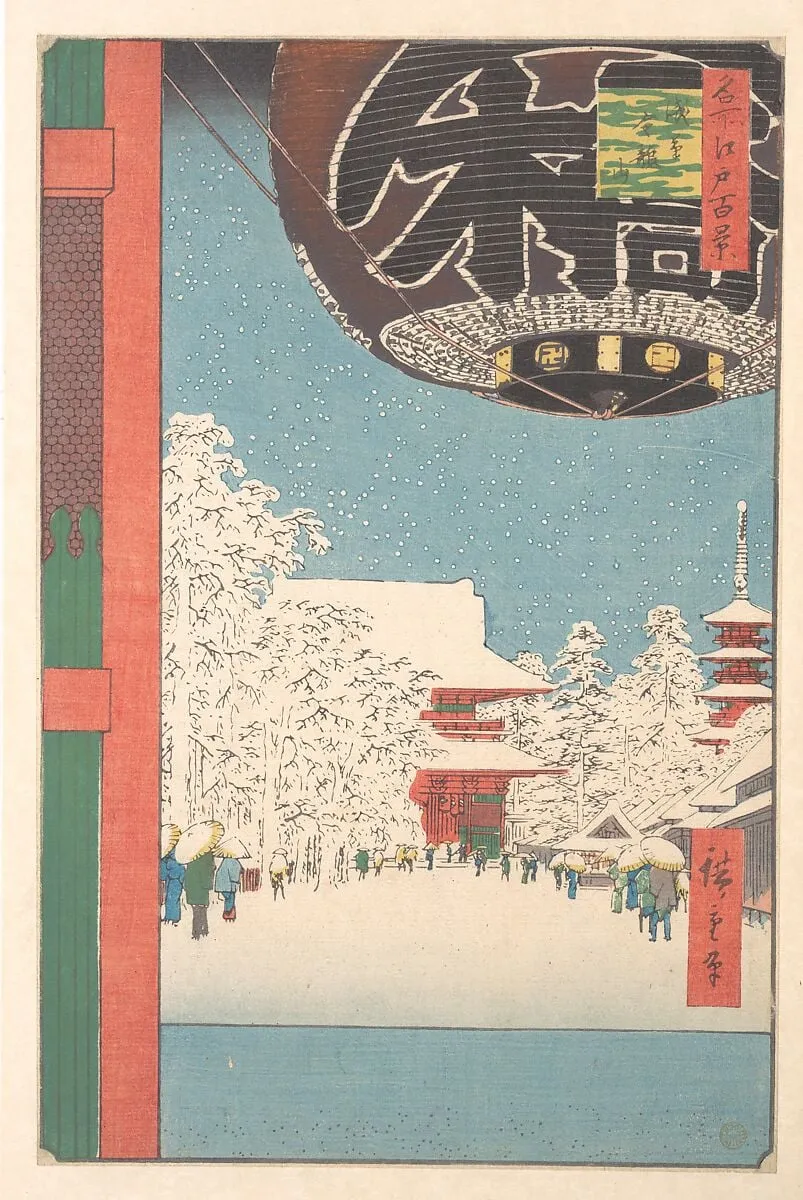
名所江戸百景 浅草 金龍山|The Kinryusan Temple at Asakusa is an ink print by the Impressionist artist Utagawa Hiroshige. It dates from 1856 and is held in the collection of the Metropolitan Museum of Art.
About this work
Overview
Created in 1856 by Utagawa Hiroshige, this woodblock print is part of the series *One Hundred Famous Views of Edo*. It depicts the Kinryusan Temple in Asakusa under a light snowfall, capturing a quiet winter moment in the city. Unlike many ukiyo-e works focused on theater or pleasure quarters, Hiroshige turned his attention to sacred and civic landmarks, emphasizing atmosphere over spectacle.
Subject & Meaning
The print centers on the temple complex, marked by its towering pagoda and large gate, framed by snow-laden trees and distant buildings.
The print centers on the temple complex, marked by its towering pagoda and large gate, framed by snow-laden trees and distant buildings. A suspended lantern with white calligraphy and a red banner draws the eye upward, suggesting ritual or seasonal observance. The figures below, bundled against the cold and moving with quiet purpose, convey a sense of daily life unfolding within a sacred space, reinforcing harmony between human activity and spiritual architecture.
Technique & Style
Hiroshige employed fine woodblock carving and layered color printing to achieve subtle gradations in the sky and snowfall. Delicate lines define the temple’s architecture, while the snow is rendered through sparse, uneven white pigment, suggesting accumulation without heavy detail. The use of atmospheric perspective and muted tones creates depth, with the blue sky contrasting softly against the dark lantern and shadowed structures.
History & Provenance
The print was produced during Hiroshige’s mature period, when he was refining his landscape compositions for a growing urban audience. It entered the collection of The Metropolitan Museum of Art in the 20th century, following broader Western interest in Japanese prints after the Meiji Restoration. Its preservation reflects its status as a representative example of Edo-period printmaking and Hiroshige’s contribution to the genre.
Context
In mid-19th century Edo, Asakusa was a popular pilgrimage site centered on the Kinryusan Temple, home to the Kannon statue. Winter scenes were uncommon in ukiyo-e, making this print notable for its focus on seasonal change and quiet reverence. The depiction of ordinary people navigating snow aligns with Hiroshige’s broader interest in the rhythms of city life beyond entertainment districts.
Legacy
This print exemplifies Hiroshige’s influence on later artists, both in Japan and abroad, through his sensitive handling of nature and urban space. Its calm composition and attention to weather conditions helped redefine landscape printing, moving beyond decorative motifs toward poetic realism. It remains a key reference in studies of Edo-period visual culture and the evolution of Japanese printmaking.
Artist & collection
Artist
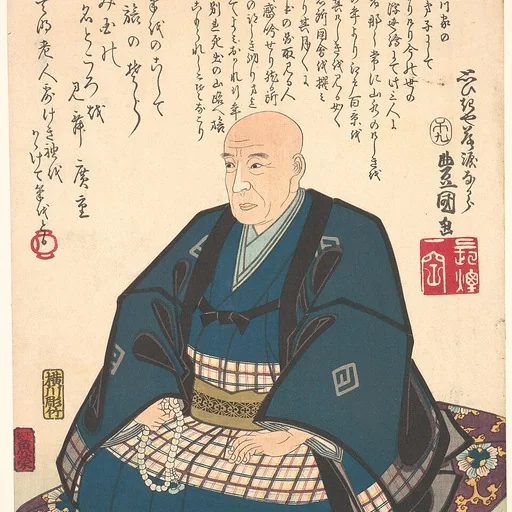
Utagawa Hiroshige (歌川 広重) or Andō Hiroshige (安藤 広重), born Andō Tokutarō (安藤 徳太郎; 1797 – 12 October 1858), was a Japanese ukiyo-e artist, considered the last great master of that tradition.

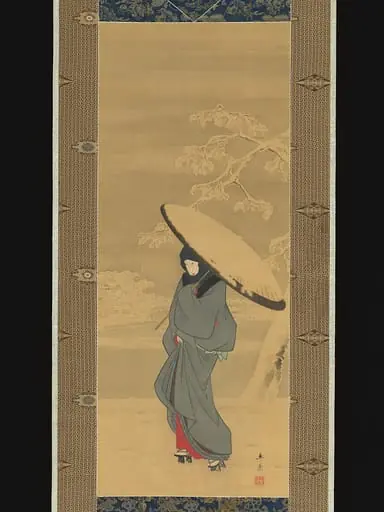
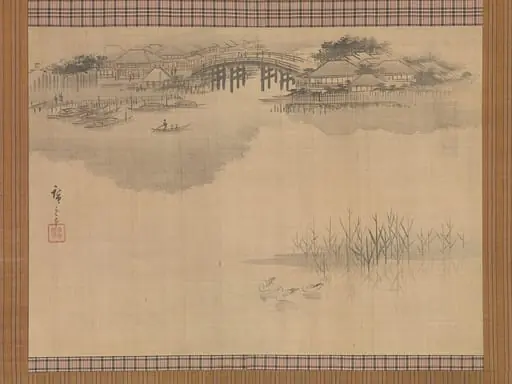
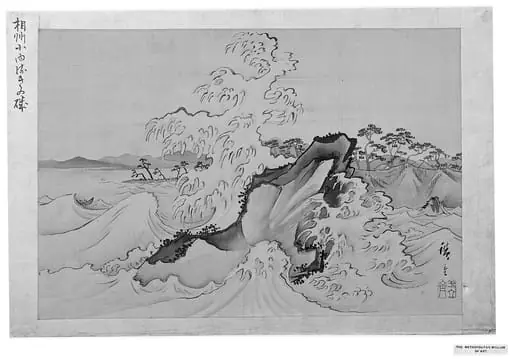
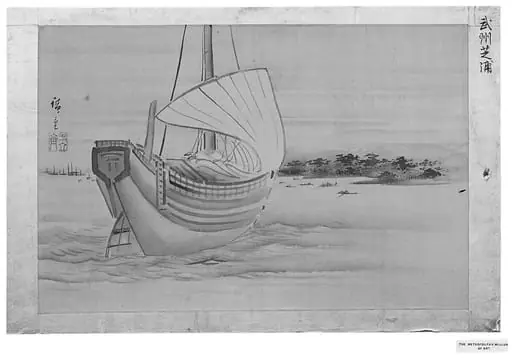
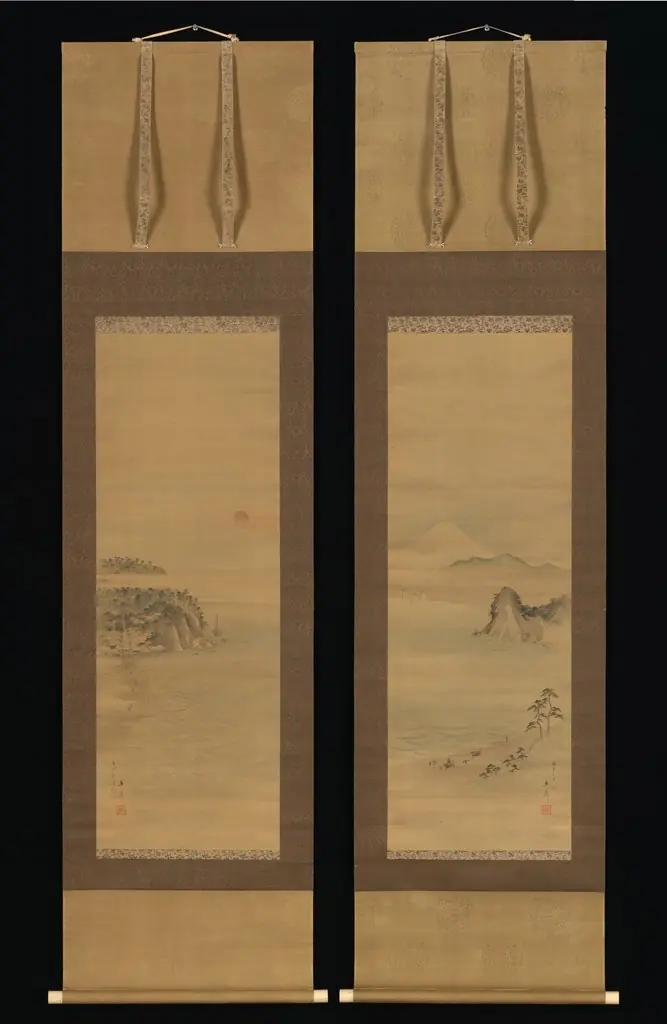
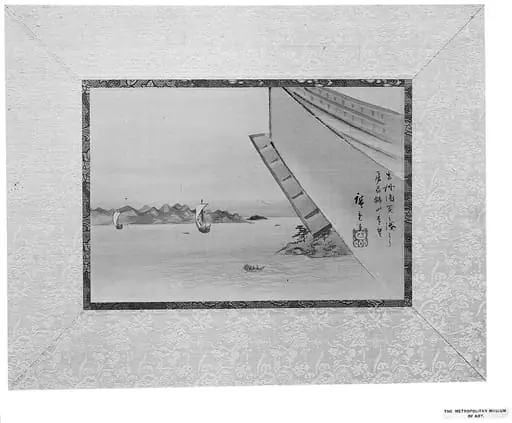
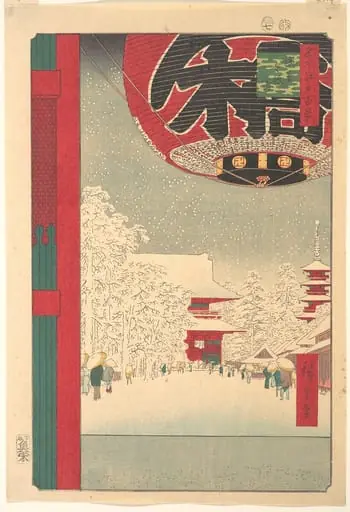 名所江戸百景 浅草金龍山|Kinryūsan Temple at Asakusa, from the series "One Hundred Famous Views of Edo"
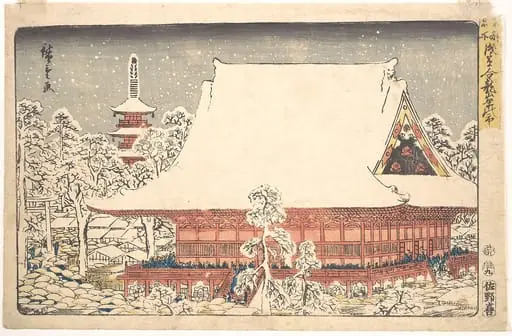 東都名所 浅草金龍山年の市|Asakusa Kinryusan Toshi no Ichi
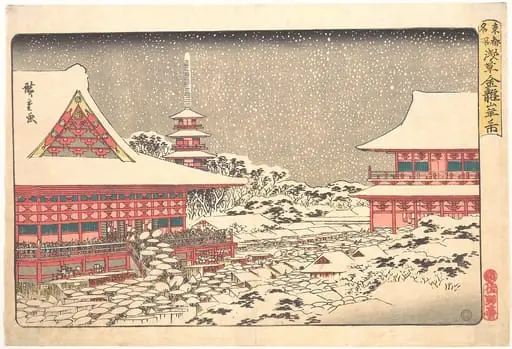 東都名所 浅草金龍山年の市|Year End Fair at Kinryuzan Temple
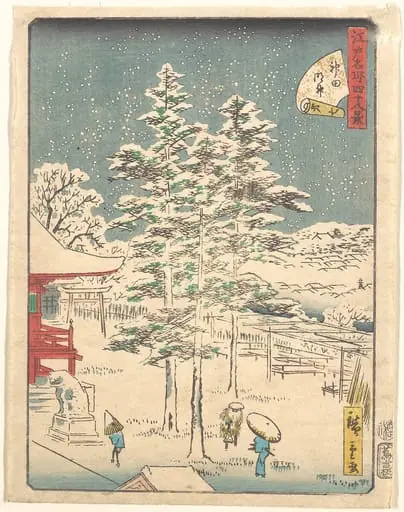 江戸名所四十八景 神田明神|Kanda Temple Snow
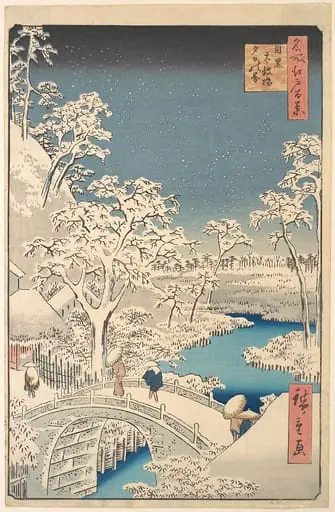 名所江戸百景 目黒太鼓橋夕日の岡|The Taiko (Drum) Bridge and the Yuhi Mound at Meguro
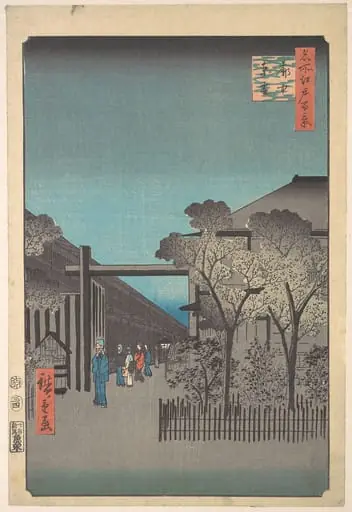 名所江戸百景 廓中東雲|Kakuchu Shinonome