Artwork
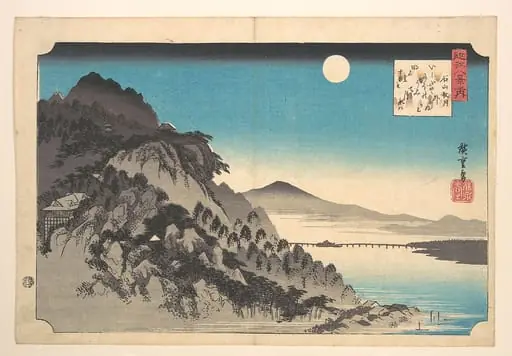
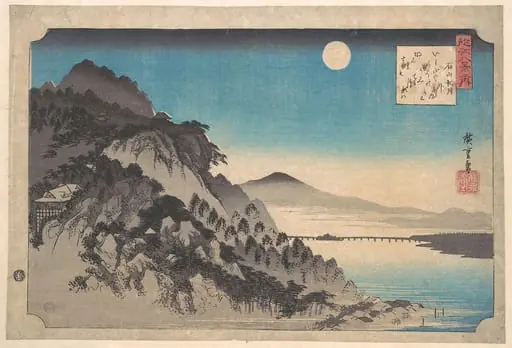
歌川広重画 近江八景之内 石山秋月|Autumn Full Moon at Ishiyama Temple (Ishiyama shūgetsu), from the series Eight Views of Ōmi Province (Ōmi hakkei)
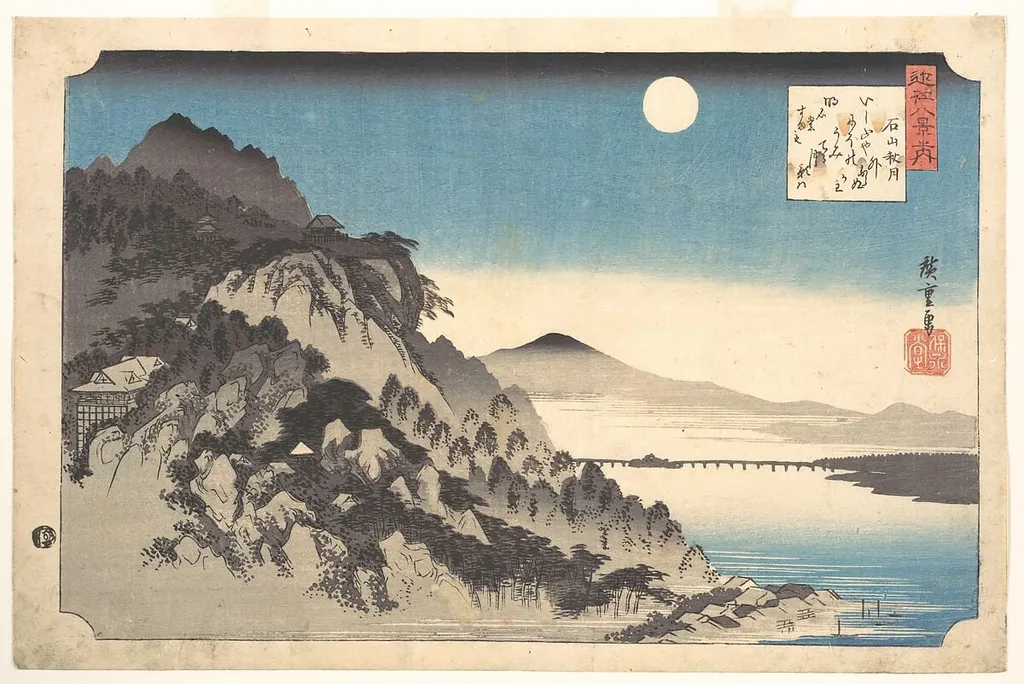
歌川広重画 近江八景之内 石山秋月|Autumn Full Moon at Ishiyama Temple (Ishiyama shūgetsu), from the series Eight Views of Ōmi Province (Ōmi hakkei) is an ink print by the Romanticist artist Utagawa Hiroshige. It dates from 1834 and is held in the collection of the Metropolitan Museum of Art.
About this work
Overview
The print exemplifies his mastery in transforming ordinary views into meditative compositions.
Created in 1834 by Utagawa Hiroshige, this woodblock print is part of the series Eight Views of Ōmi Province, a set of landscapes inspired by classical Chinese poetic traditions adapted to Japanese scenery. Unlike many ukiyo-e works centered on urban life, Hiroshige turned his focus to tranquil natural settings, capturing quiet moments in the countryside near Lake Biwa. The print exemplifies his mastery in transforming ordinary views into meditative compositions.
Subject & Meaning
The scene portrays Ishiyama Temple at night under a full autumn moon, a subject tied to a long-standing poetic motif in East Asian culture. The temple, nestled among dark, wooded hills, is rendered subtly, not as a dominant structure but as a quiet presence within the landscape. The still water, distant bridge, and sparse buildings suggest solitude and contemplation, evoking the transient beauty associated with autumn in Japanese aesthetics.
Technique & Style
Hiroshige employed delicate ink lines and graded washes to create subtle tonal contrasts, enhancing the moon’s luminosity against the deep shadows of the mountains. The pale blue sky and restrained color palette emphasize serenity. By minimizing detail in the background and focusing on light and shadow, he guided the viewer’s gaze toward the central glow, using a form of chiaroscuro adapted to the woodblock medium to evoke mood rather than realism.
History & Provenance
The print was produced during Hiroshige’s early period of landscape series, shortly before his more famous Tōkaidō prints. It was published by the Kyoto-based firm Iseya Rihei, who specialized in regional views. Original impressions were distributed widely in the Kansai region, and surviving examples are held in major collections, including the British Museum and the Museum of Fine Arts, Boston, reflecting its early recognition among collectors.
Context
The Eight Views of Ōmi Province drew from a Chinese poetic tradition adapted in Japan during the medieval period, where specific scenic spots were celebrated in verse and painting. Hiroshige’s series responded to growing interest in domestic travel and regional identity during the Edo period. His approach shifted ukiyo-e from entertainment-focused imagery toward introspective landscape art, aligning with broader cultural trends valuing nature and quiet reflection.
Legacy
This print helped establish Hiroshige as a leading landscape artist and influenced later generations of Japanese and Western printmakers. Its emphasis on atmosphere over narrative, and its restrained use of color and form, prefigured modernist sensibilities in art. The series remains a touchstone in the study of Japanese printmaking, valued for its poetic economy and emotional resonance.
Artist & collection
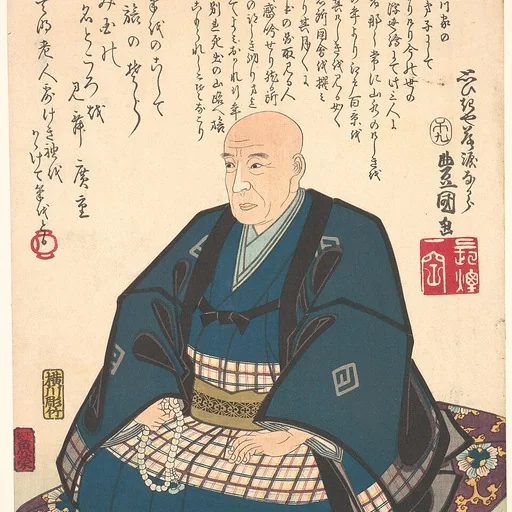
Artist
Utagawa Hiroshige (歌川 広重) or Andō Hiroshige (安藤 広重), born Andō Tokutarō (安藤 徳太郎; 1797 – 12 October 1858), was a Japanese ukiyo-e artist, considered the last great master of that tradition.

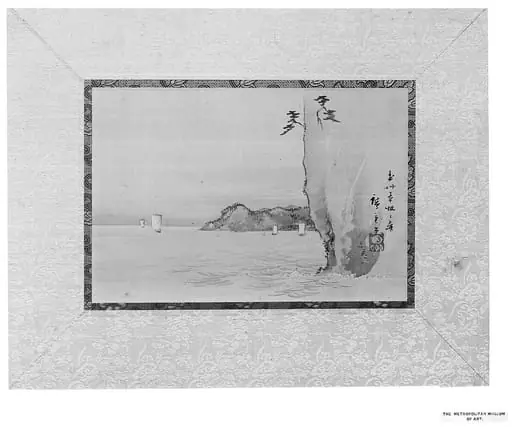
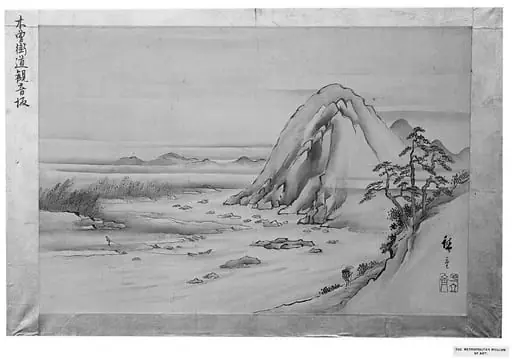
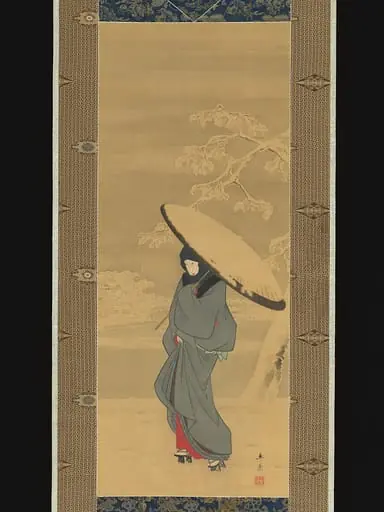
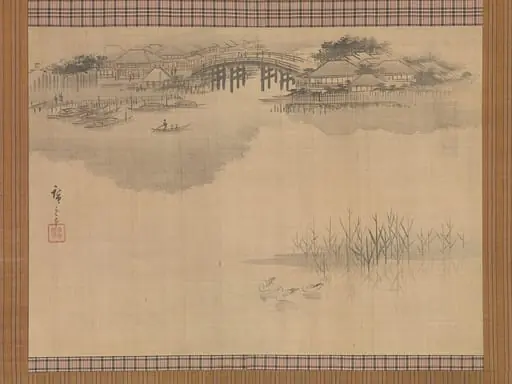
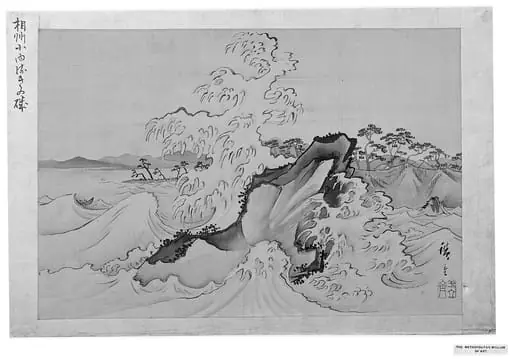
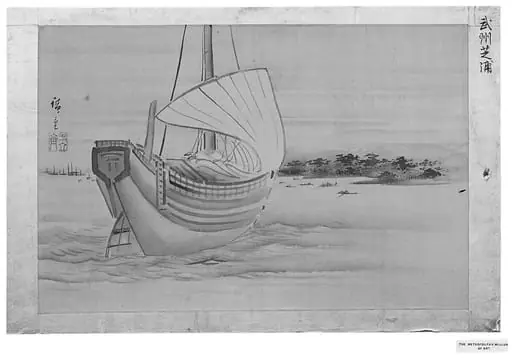
 近江八景之内 石山秋月|The Autumn Full Moon at Ishiyama
 近江八景之内 石山秋月|The Autumn Moon at Ishiyama on Lake Biwa
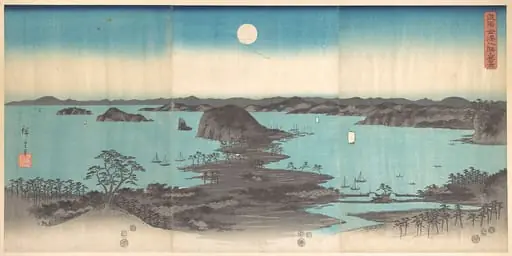 雪月花 武陽金沢八勝夜景|Panorama of the Eight Views of Kanasawa under a Full Moon
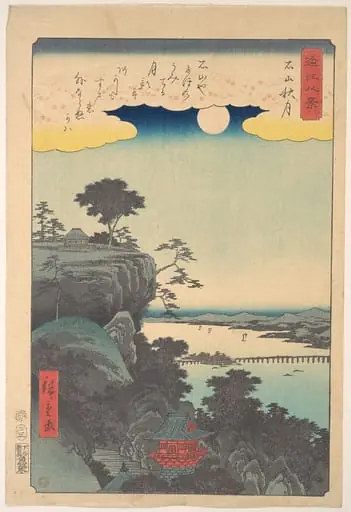 近江八景 石山秋月|The Autumn Moon on Ishiyama
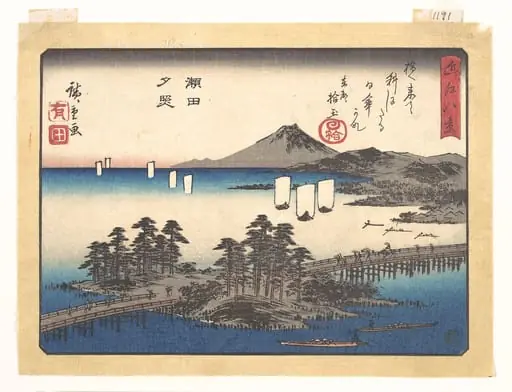 歌川広重画 「近江八景 瀬田夕照」|Sunset Glow at Seta, from the series Eight Views of Ōmi (Ōmi hakkei)
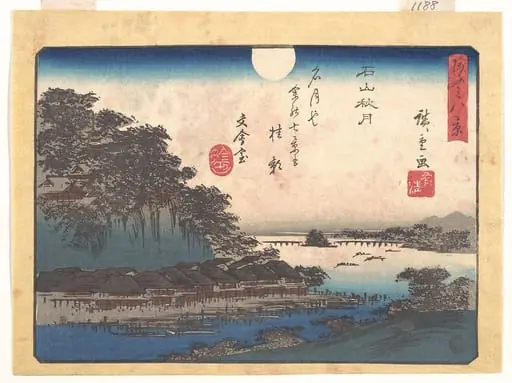 歌川広重画 「あふみ八景 石山秋月」|Autumn Moon at Ishiyama, from the series Eight Views of Ōmi (Ōmi hakkei)
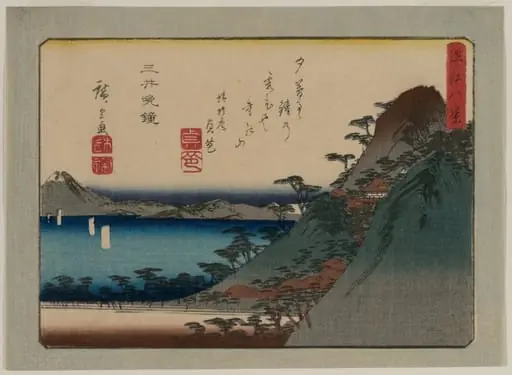 Evening Bell at Mii Temple, from the series Eight Views of Omi Province
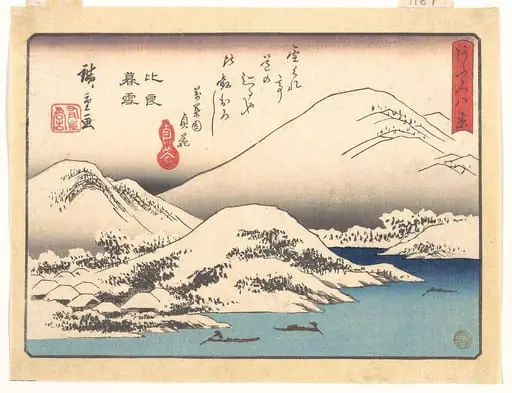 歌川広重画 「あふみ八景 比良暮雪」|Evening Snow at Mount Hira, from the series Eight Views of Ōmi (Ōmi hakkei)
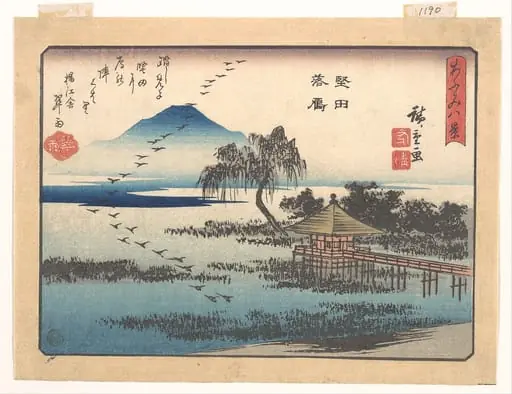 歌川広重画 「あふみ八景 堅田落雁」|Descending Geese at Katada, from the series Eight Views of Ōmi (Ōmi hakkei)
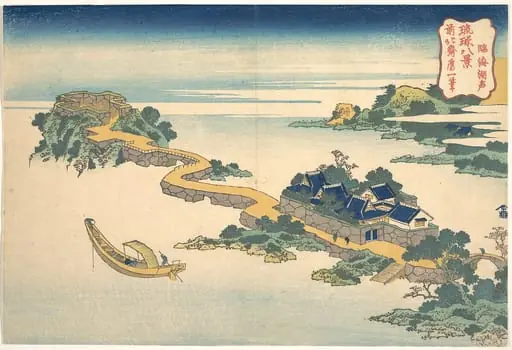 琉球八景 臨海潮(湖)聲|Sound of the Lake at Rinkai (Rinkai kosei), from the series Eight Views of the Ryūkyū Islands (Ryūkyū hakkei)