Artwork
名所江戸百景 京橋竹がし|Bamboo Market at Capital Bridge
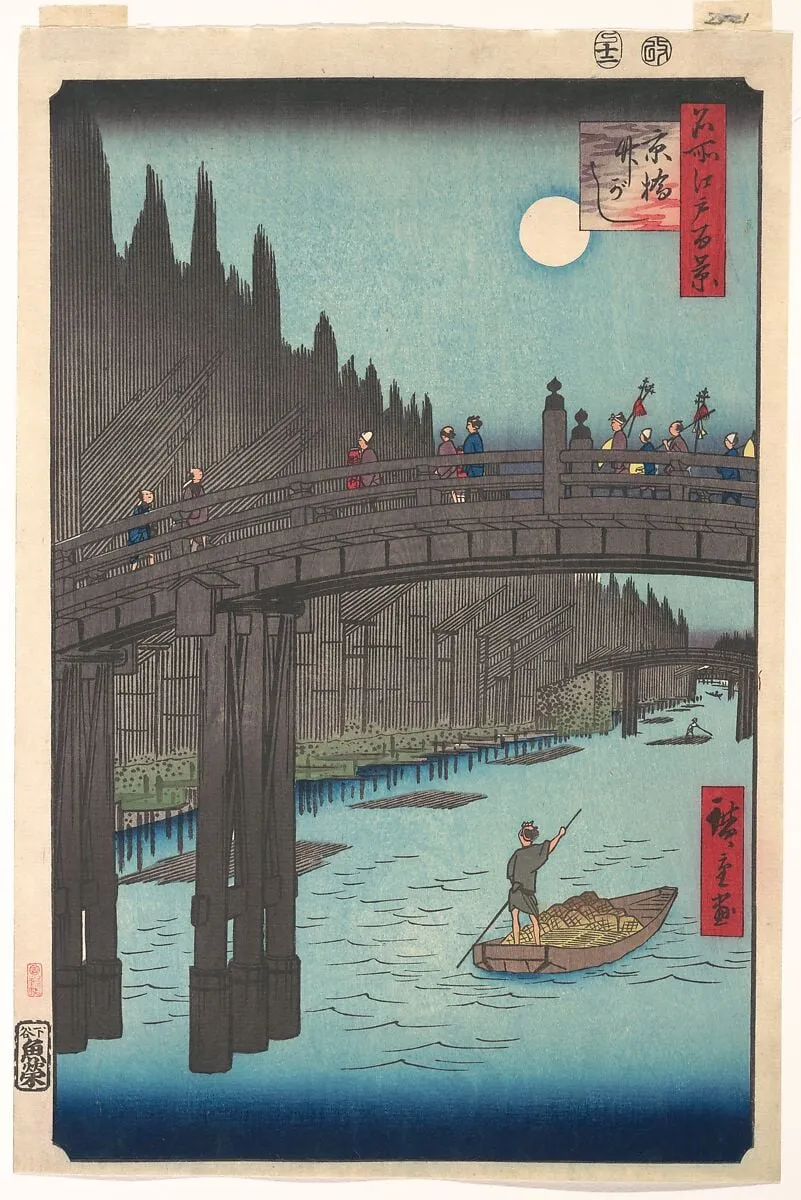
名所江戸百景 京橋竹がし|Bamboo Market at Capital Bridge is an ink print by the Impressionist artist Utagawa Hiroshige. It dates from 1857 and is held in the collection of the Metropolitan Museum of Art.
About this work
Overview
Unlike earlier ukiyo-e works centered on actors and courtesans, this series turned attention to ordinary urban and natural settings.
Created in 1857 by Utagawa Hiroshige, this woodblock print is part of the series *One Hundred Famous Views of Edo*, a collection that redefined Japanese landscape imagery. Unlike earlier ukiyo-e works centered on actors and courtesans, this series turned attention to ordinary urban and natural settings. The print depicts a quiet riverside scene at京橋 (Kyo-bashi), capturing a moment of nocturnal stillness with careful attention to light, space, and seasonal atmosphere.
Subject & Meaning
The scene centers on a bridge at night, where pedestrians move quietly along its length, and a lone boatman polices a small vessel beneath. A bamboo market, implied by the title, is not visually dominant but suggested by the setting’s association with local commerce. The full moon casts a calm glow, transforming the bridge and water into a meditative space. The image reflects Edo’s daily rhythms, emphasizing quietude over spectacle, and the harmony between human activity and the natural night.
Technique & Style
Hiroshige employed fine woodblock carving and layered color printing to achieve subtle tonal gradations. The dark, angular lines of the bridge contrast with the soft, blue wash of the water, creating depth and spatial recession. The moon’s glow is rendered through careful omission of ink, allowing the paper’s white to suggest light. Details like the boatman’s posture and the bridge’s railings are minimized yet precise, embodying Hiroshige’s mature style: restrained, atmospheric, and emotionally understated.
History & Provenance
Produced during the final years of Hiroshige’s life, the print was published by Uoya Eikichi, a prominent Edo-era publisher known for high-quality prints. The *One Hundred Famous Views of Edo* series was widely distributed and became one of the most popular landscape collections of its time. Surviving impressions are held in major museum collections, including the Museum of Fine Arts, Boston, and the British Museum, attesting to its enduring presence in global print collections.
Context
This work emerged during a period of social and economic change in Edo, as urban life expanded and middle-class citizens sought cultural artifacts reflecting their environment. Hiroshige’s focus on everyday locations—bridges, markets, rivers—aligned with a growing public interest in local identity and seasonal beauty. The print’s nocturnal setting also reflects the Edo-period fascination with *yūgen*, a Japanese aesthetic of profound, quiet mystery, often evoked through night scenes and minimal human presence.
Legacy
Hiroshige’s *Bamboo Market at Capital Bridge* influenced Western artists such as Vincent van Gogh and James McNeill Whistler, who admired its compositional clarity and emotional restraint. The print helped establish ukiyo-e as a serious artistic form beyond Japan, contributing to Japonisme in 19th-century Europe. Its quiet dignity and attention to transient moments continue to inform contemporary landscape representation in both East and West.
Artist & collection
Artist
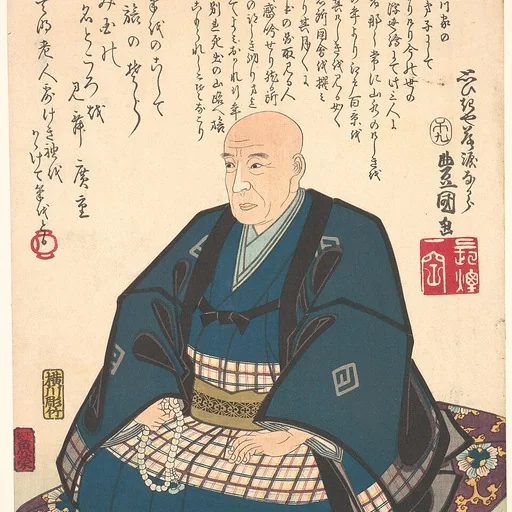
Utagawa Hiroshige (歌川 広重) or Andō Hiroshige (安藤 広重), born Andō Tokutarō (安藤 徳太郎; 1797 – 12 October 1858), was a Japanese ukiyo-e artist, considered the last great master of that tradition.


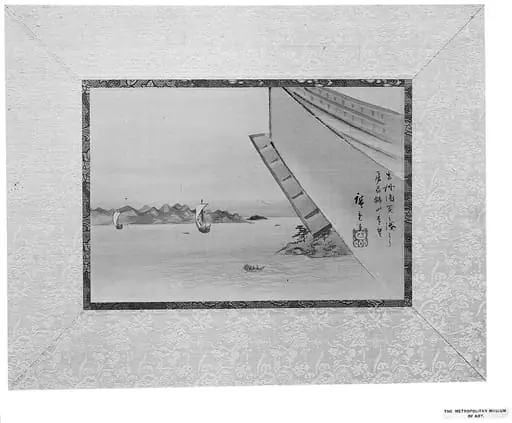
 Untitled
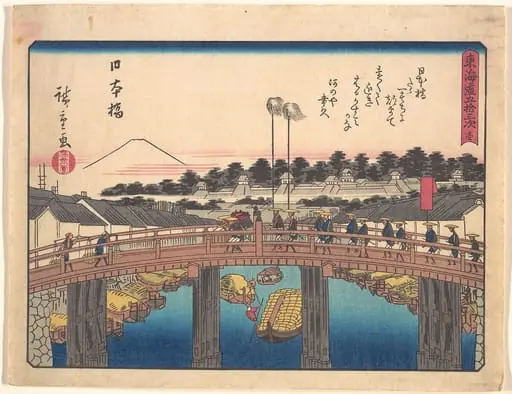
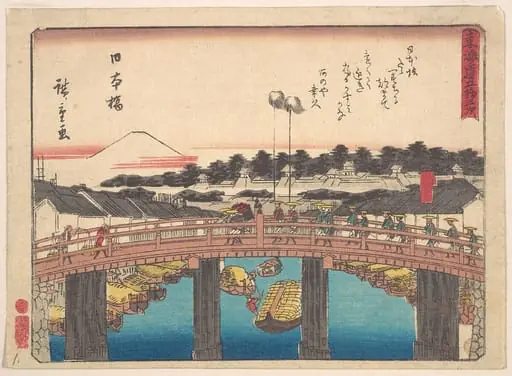 東海道五十三次 日本橋|Nihon Bashi
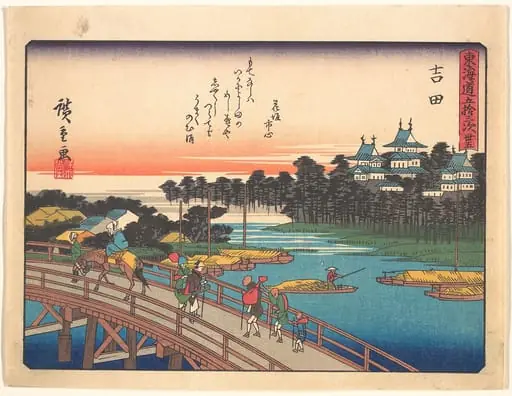 東海道五十三次 吉田|Yoshida, from the series The Fifty-three Stations of the Tōkaidō Road
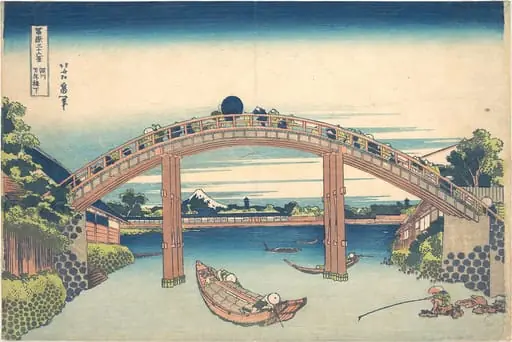 葛飾北斎画 冨嶽三十六景 深川万年橋下|Under the Mannen Bridge at Fukagawa (Fukagawa Mannenbashi shita), from the series Thirty-six Views of Mount Fuji (Fugaku sanjūrokkei)
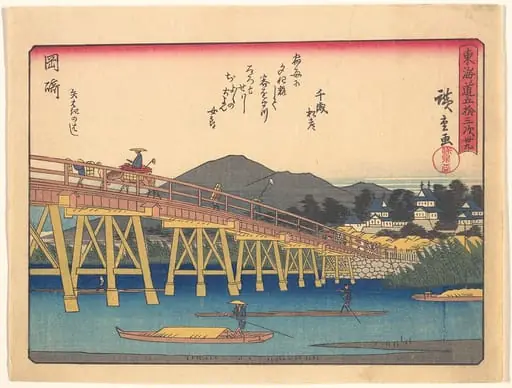 東海道五十三次 岡崎|Okazaki, from the series The Fifty-three Stations of the Tōkaidō Road
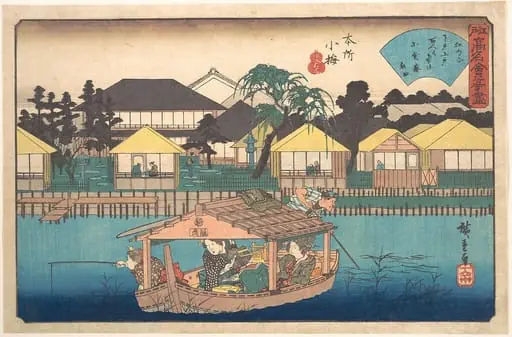 江戸高名会亭尽 本所小梅 小倉庵|Honjo Komme (Ogura-an)
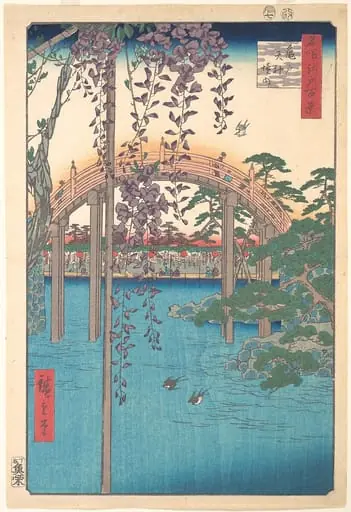 名所江戸百景 亀戸天神境内|In the Kameido Tenjin Shrine Compound
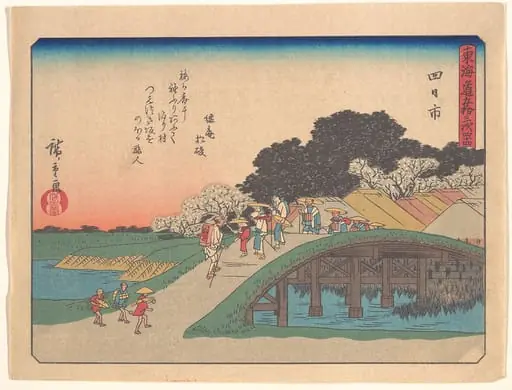 東海道五十三次 四日市|Yokkaichi, from the series The Fifty-three Stations of the Tōkaidō Road
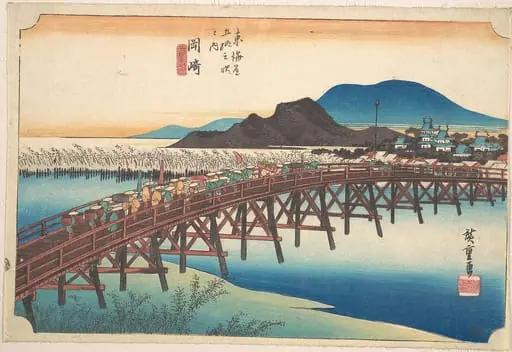 東海道五十三次之内 岡崎 矢矧の橋|Okazaki, Tenshin no Hashi
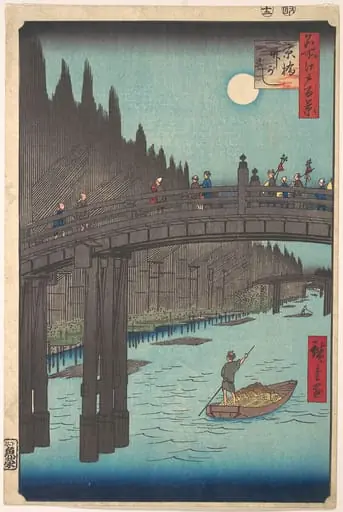 名所江戸百景 京橋竹がし|Full Moon Over Canal, with Bridge and Huge Stacks of Bamboo along the Bank