Artwork
月二拾八景之内 弓張月|Bow Moon
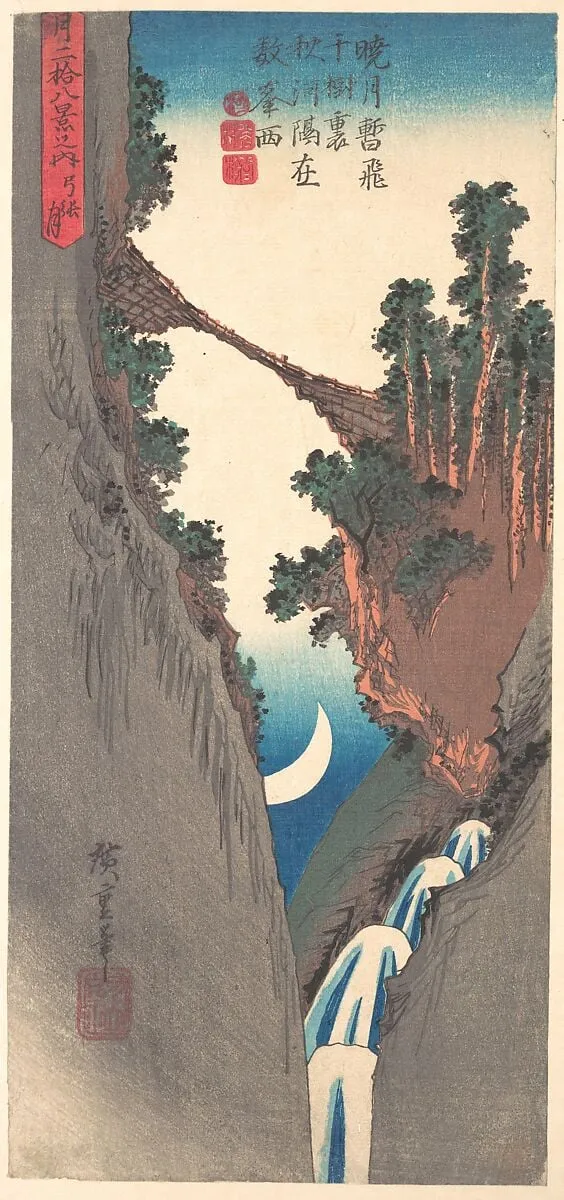
月二拾八景之内 弓張月|Bow Moon is an ink print by the Romanticist artist Utagawa Hiroshige. It dates from 1832 and is held in the collection of the Metropolitan Museum of Art.
About this work
Overview
Bow Moon (1832) is a woodblock print from Utagawa Hiroshige's *Moon of a Hundred and Twenty Views* series, characteristic of the artist's emphasis on landscapes within the ukiyo-e genre.
Subject & Meaning
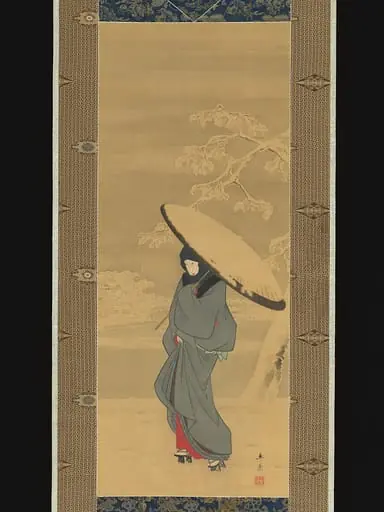
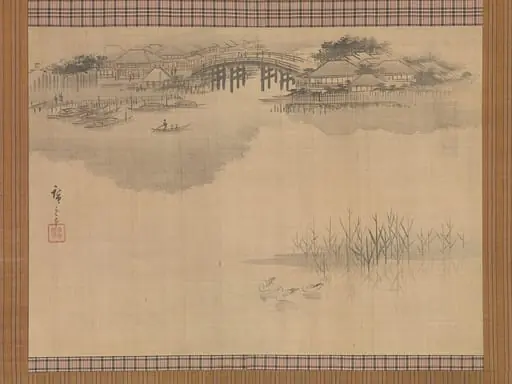
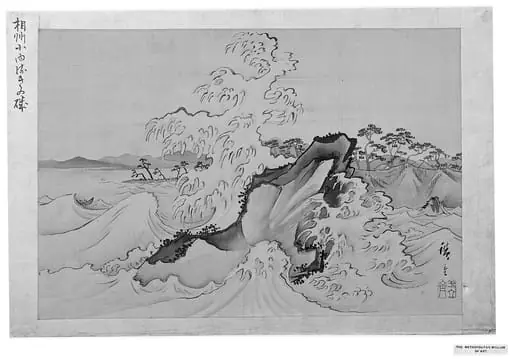
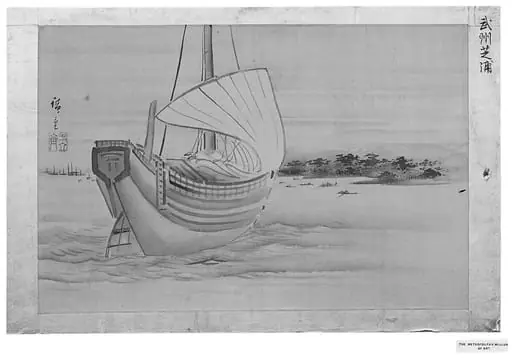
The print depicts a serene, moonlit landscape with a crescent moon resembling a drawn bow. A figure in a pale blue robe stands near a waterfall on a steep cliffside, alongside a winding path and a wooden bridge spanning a deep valley.
Technique & Style
Hiroshige employed a combination of bold outlines and subtle shading in ink and color on paper to achieve depth. The scene is rendered in warm, muted tones, with the moon's reflection in the waterfall adding a soft, quiet glow.
History & Provenance
Created in 1832 by Utagawa Hiroshige, a prominent Edo period ukiyo-e artist, as part of a larger series focusing on moon-themed landscapes, diverging from the genre's typical urban focus.
Context
Part of *Moon of a Hundred and Twenty Views*, this work reflects Hiroshige's innovation in ukiyo-e by prioritizing natural, nocturnal landscapes over traditional subjects.
Legacy
*Bow Moon* contributes to Hiroshige's reputation for serene, moonlit landscapes, influencing the broader perception of ukiyo-e and Japanese aesthetics internationally.
Artist & collection
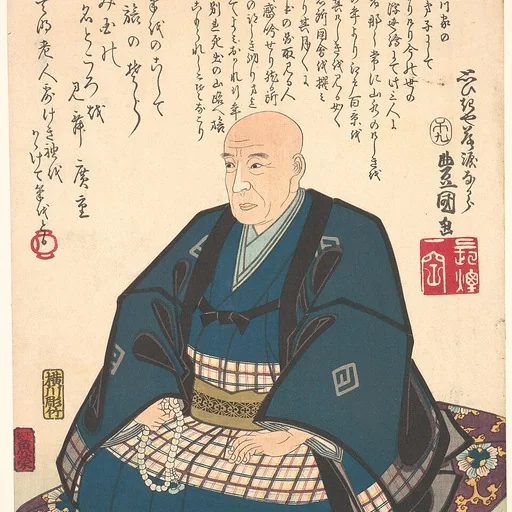
Artist
Utagawa Hiroshige (歌川 広重) or Andō Hiroshige (安藤 広重), born Andō Tokutarō (安藤 徳太郎; 1797 – 12 October 1858), was a Japanese ukiyo-e artist, considered the last great master of that tradition.

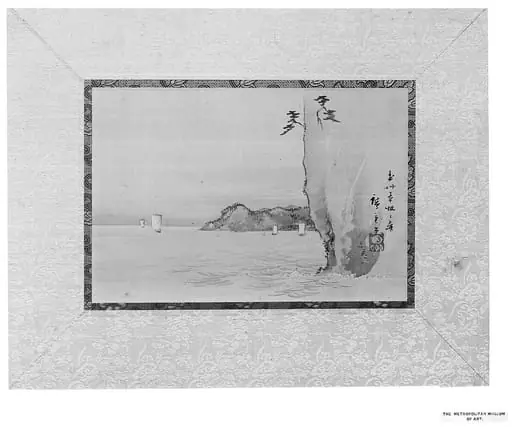
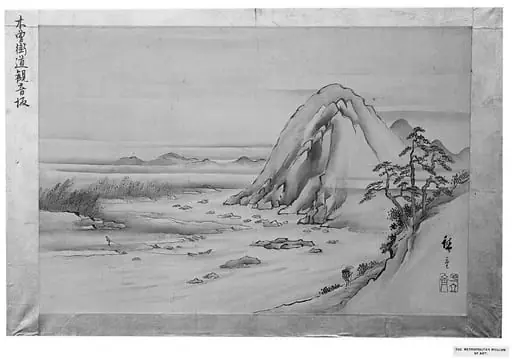
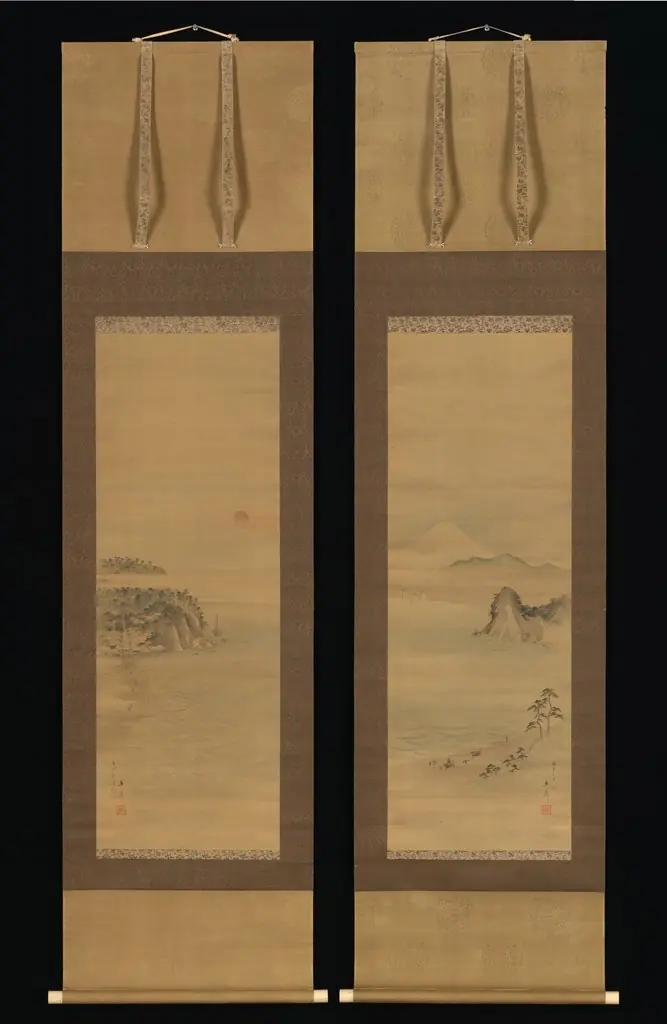
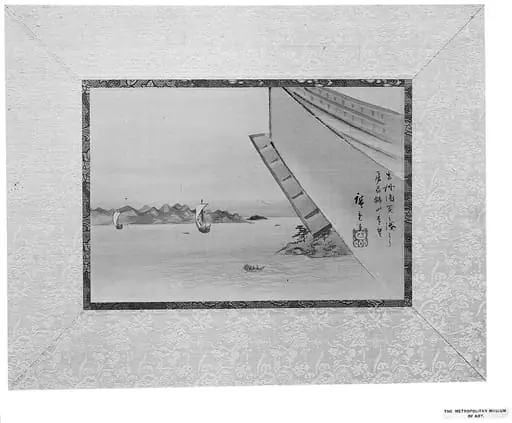
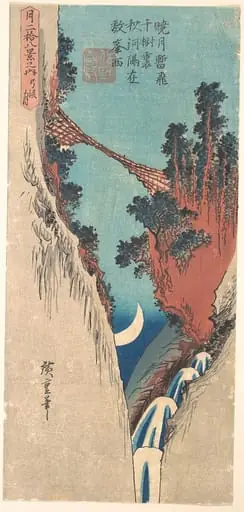 Zumihari Zuki|月二拾八景之内 弓張月|Bow Moon
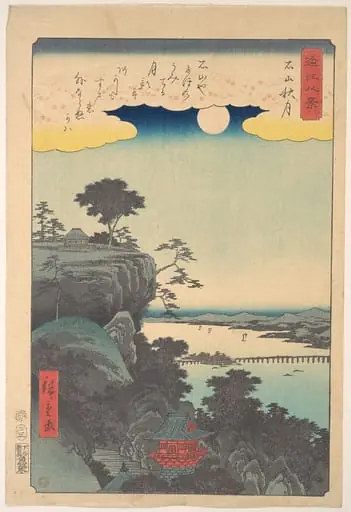 近江八景 石山秋月|The Autumn Moon on Ishiyama
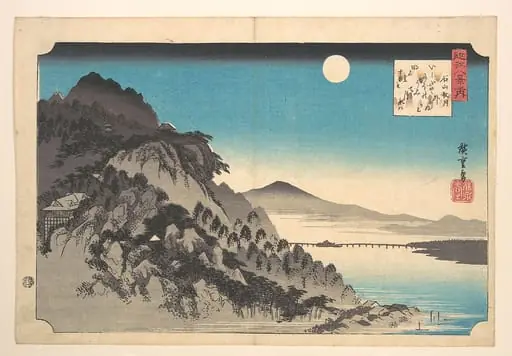 近江八景之内 石山秋月|The Autumn Full Moon at Ishiyama
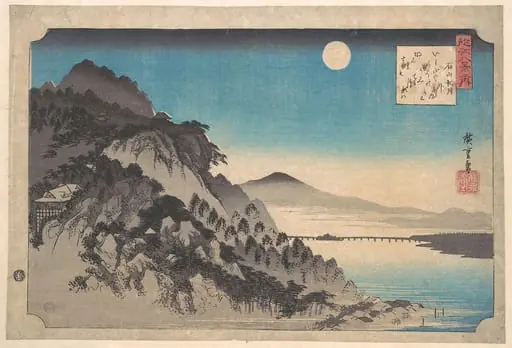 近江八景之内 石山秋月|The Autumn Moon at Ishiyama on Lake Biwa
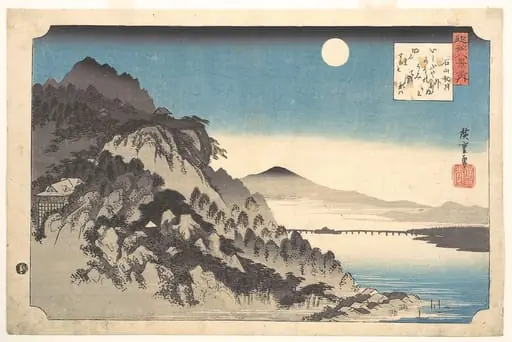 歌川広重画 近江八景之内 石山秋月|Autumn Full Moon at Ishiyama Temple (Ishiyama shūgetsu), from the series Eight Views of Ōmi Province (Ōmi hakkei)
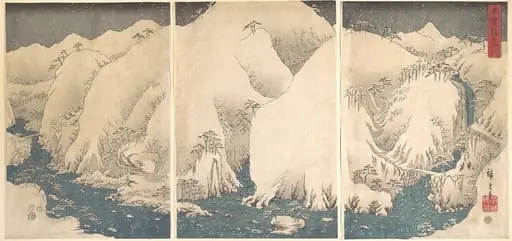 雪月花 木曽路之山川|Kiso Gorge in the Snow
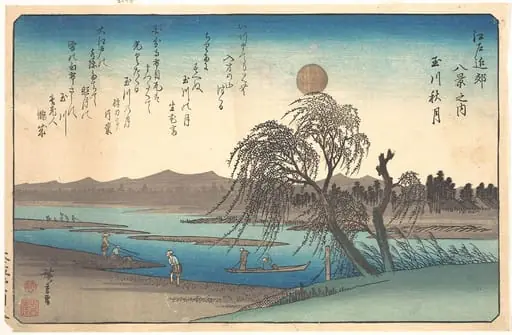 Tamagawa Shugetsu|江戸近郊八景之内 玉川秋月|Autumn Moon on the Tama River