Artwork
Zumihari Zuki|月二拾八景之内 弓張月|Bow Moon
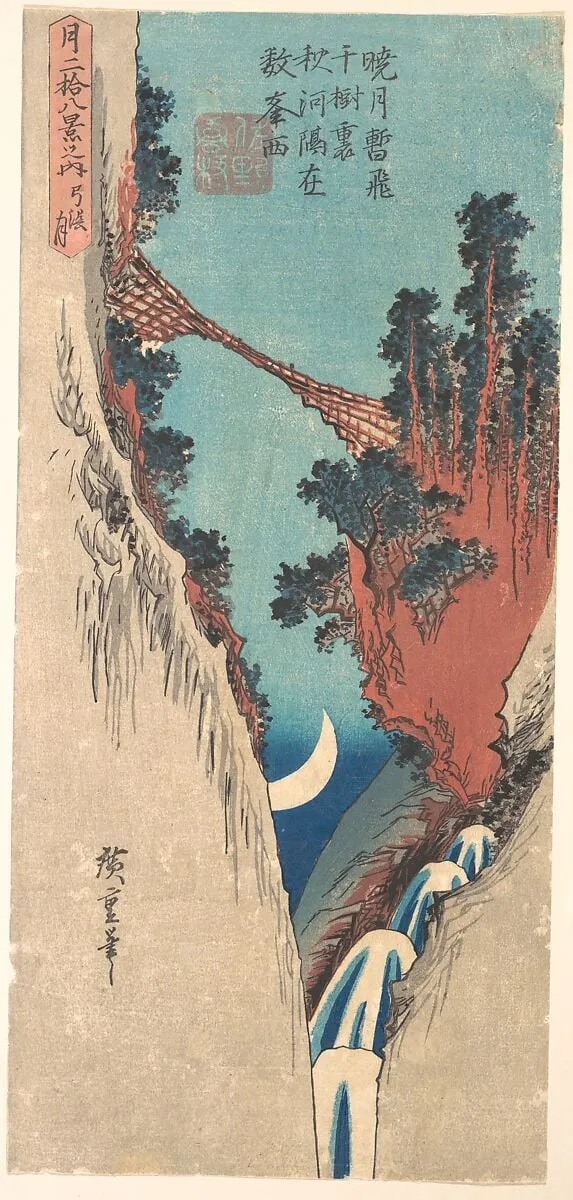
Zumihari Zuki|月二拾八景之内 弓張月|Bow Moon is an ink print by the Romanticist artist Utagawa Hiroshige. It dates from 1828 and is held in the collection of the Metropolitan Museum of Art.
About this work
Overview
Zumihari Zuki (Bow Moon) is a woodblock print created by Utagawa Hiroshige in 1828, part of a vertical-format landscape series. Executed in ink and color on paper, the work is housed in The Metropolitan Museum of Art's collection.
Subject & Meaning
The print depicts a serene, moonlit landscape featuring a curved bridge with foliage, a cascading waterfall on a rocky slope, and a bright crescent moon in the night sky. The composition conveys a sense of depth and tranquility.
Technique & Style
Hiroshige's use of color and composition in Zumihari Zuki exemplifies the romantic style, characterized by a dreamy, idealized portrayal of nature, typical of his distinctive approach to ukiyo-e landscapes.
History & Provenance
Created in 1828, Zumihari Zuki is a notable example of Hiroshige's contribution to the ukiyo-e tradition, diverging from the genre's common urban themes to focus on landscape. The Metropolitan Museum of Art holds the piece in its collection.
Context
As a ukiyo-e artist, Hiroshige's work, including Zumihari Zuki, reflects a broader interest in natural beauty, aligning with themes explored in the Romanticism movement, which emphasized the emotional and aesthetic appeal of the natural world.
Artist & collection
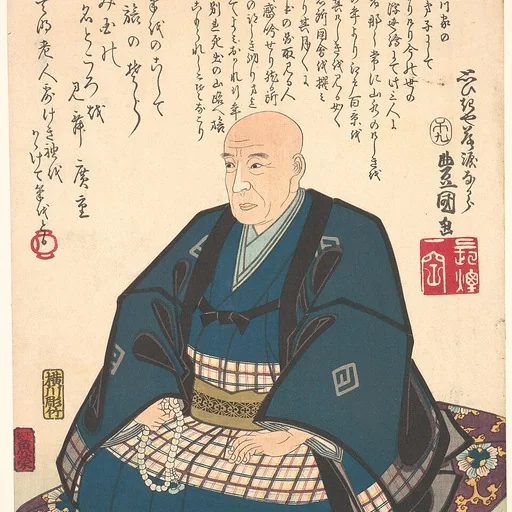
Artist
Utagawa Hiroshige (歌川 広重) or Andō Hiroshige (安藤 広重), born Andō Tokutarō (安藤 徳太郎; 1797 – 12 October 1858), was a Japanese ukiyo-e artist, considered the last great master of that tradition.

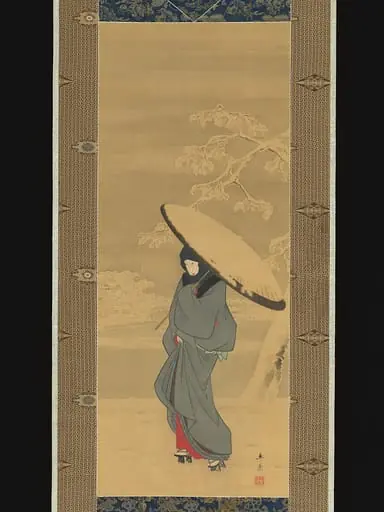
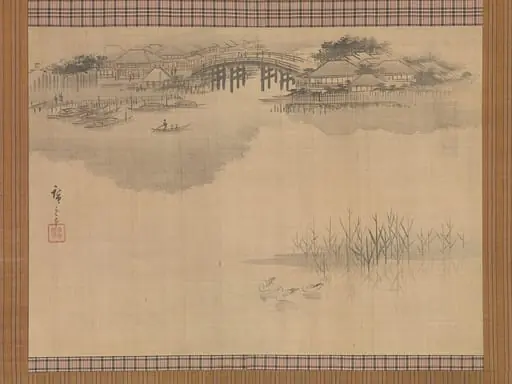
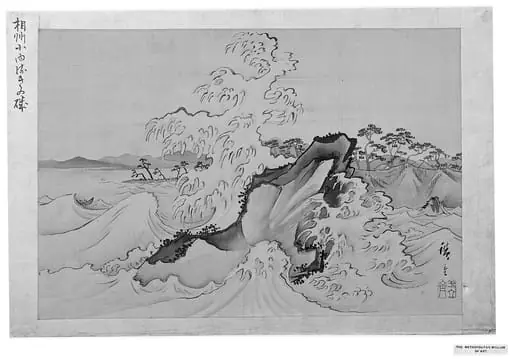
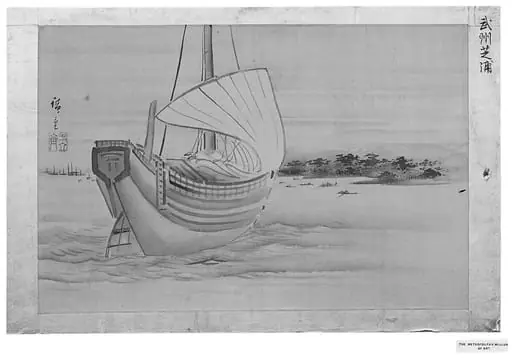
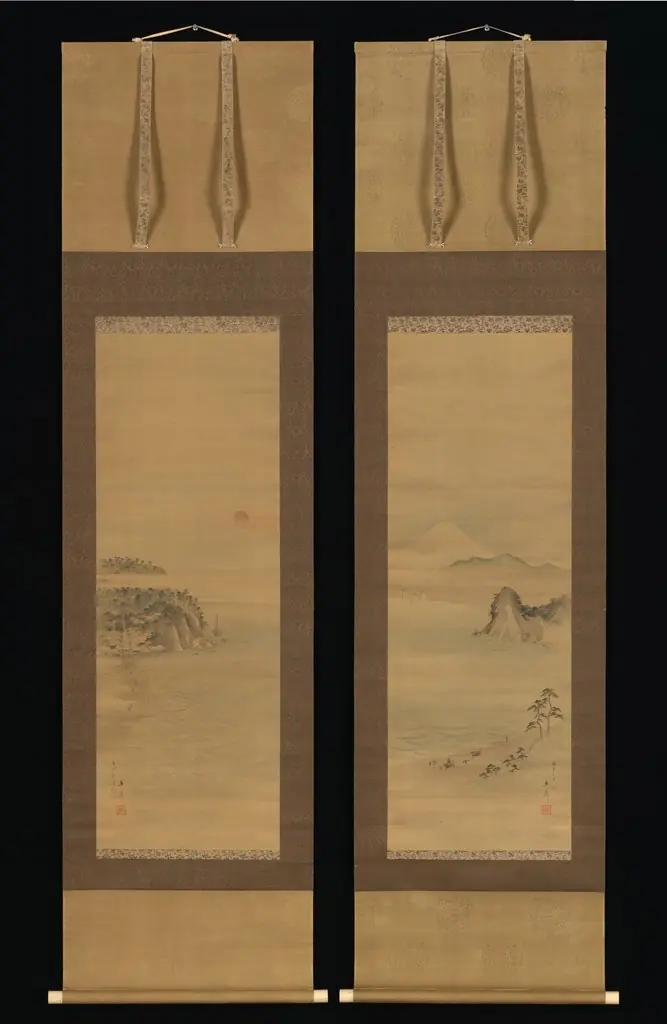
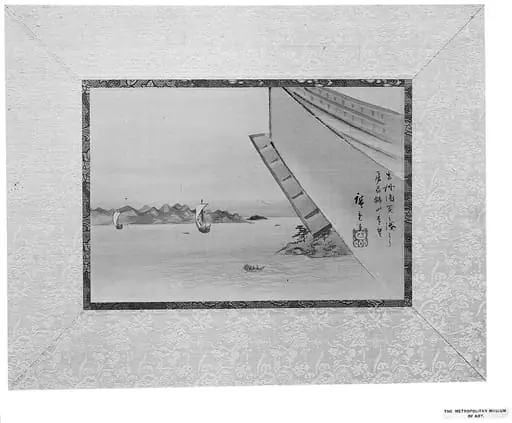
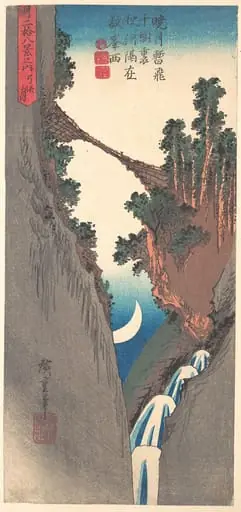 月二拾八景之内 弓張月|Bow Moon
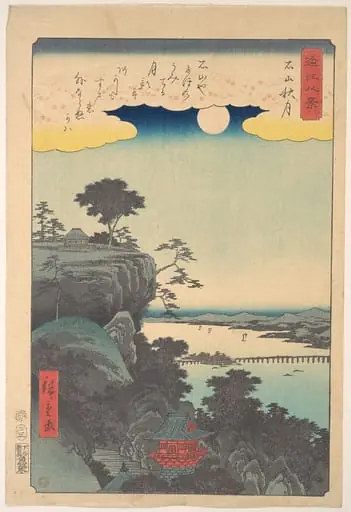 近江八景 石山秋月|The Autumn Moon on Ishiyama
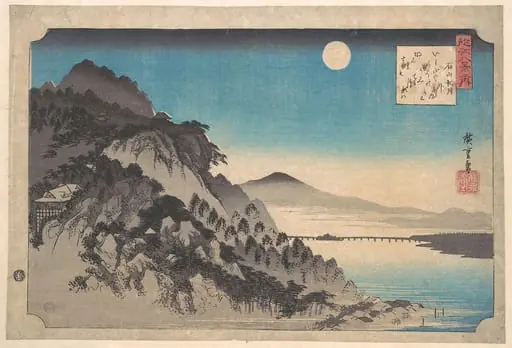 近江八景之内 石山秋月|The Autumn Moon at Ishiyama on Lake Biwa
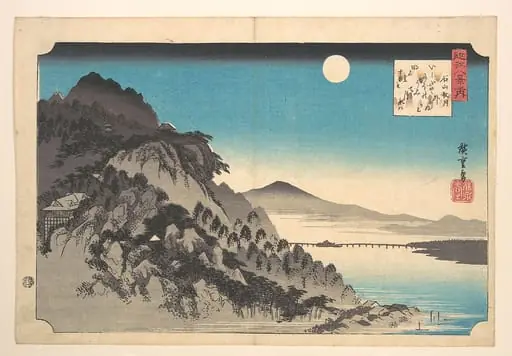 近江八景之内 石山秋月|The Autumn Full Moon at Ishiyama
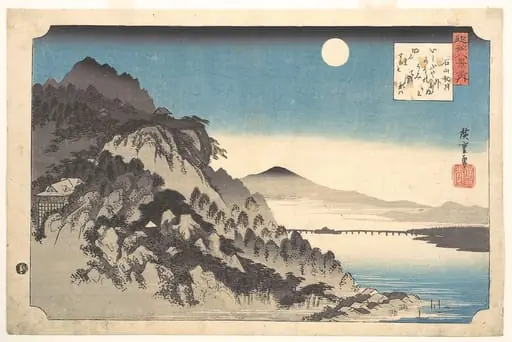 歌川広重画 近江八景之内 石山秋月|Autumn Full Moon at Ishiyama Temple (Ishiyama shūgetsu), from the series Eight Views of Ōmi Province (Ōmi hakkei)
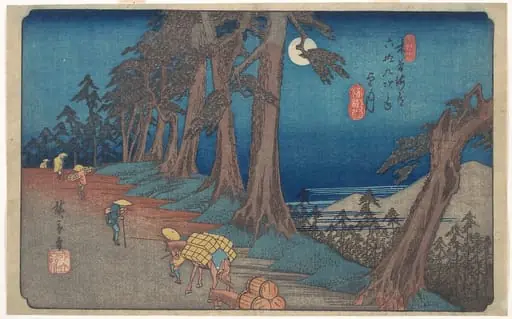 木曽海道六拾九次之内 望月|Mochizuki
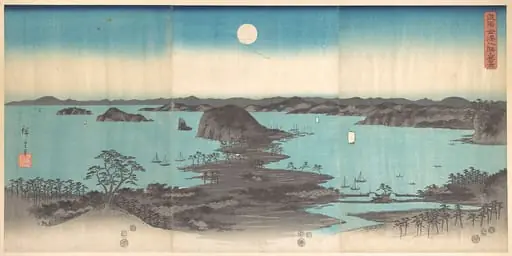 雪月花 武陽金沢八勝夜景|Panorama of the Eight Views of Kanasawa under a Full Moon
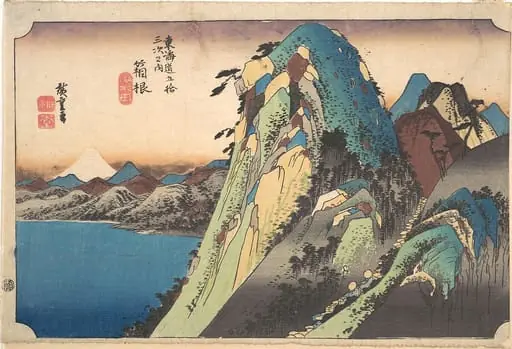 東海道五十三次之内 箱根 湖水図|Hakone; Kosui