Artwork
近江八景之内 粟津晴嵐|Clearing Weather at Awazu
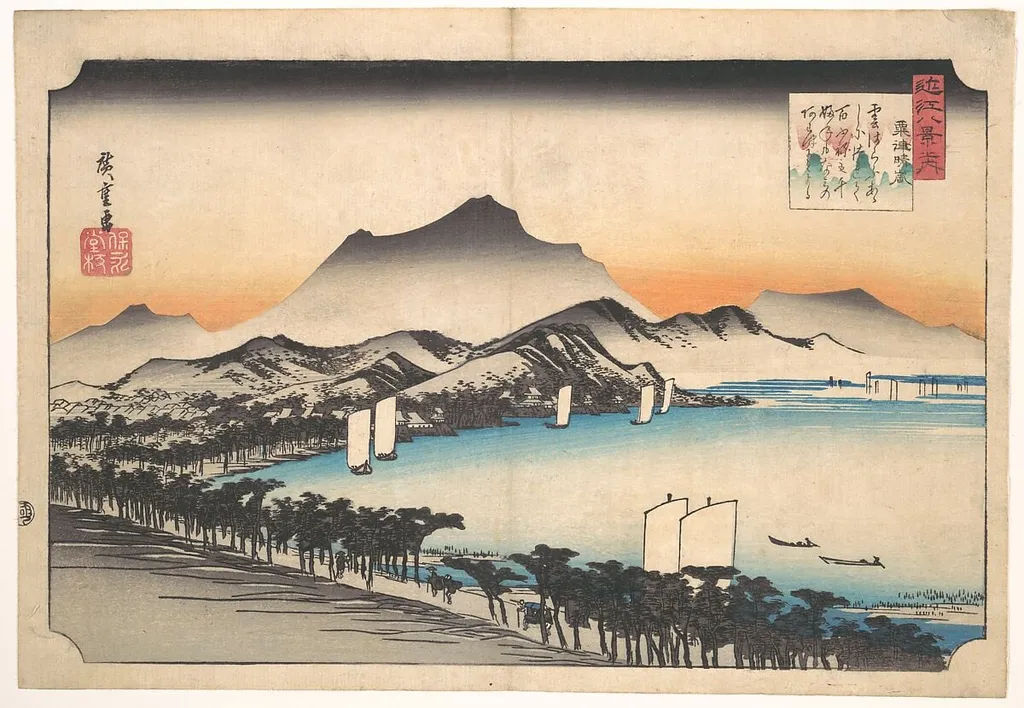
近江八景之内 粟津晴嵐|Clearing Weather at Awazu is an ink print by the Romanticist artist Utagawa Hiroshige. It dates from 1832 and is held in the collection of the Metropolitan Museum of Art.
About this work
Overview
Created around 1832 by Utagawa Hiroshige, this woodblock print is one of eight scenes from the series “Eight Views of Ōmi.
Created around 1832 by Utagawa Hiroshige, this woodblock print is one of eight scenes from the series “Eight Views of Ōmi.” Executed in ink and color on paper, it exemplifies the ukiyo-e tradition’s shift toward landscape themes. The horizontal format invites contemplative viewing, characteristic of Hiroshige’s approach to nature. The work is now part of The Metropolitan Museum of Art’s print collection.
Subject & Meaning
The scene depicts Awazu, a lakeside area in Ōmi Province, during a transition from rain to clear skies. Dark mountain ridges recede into the distance, while warm hues of orange and yellow suggest the sun breaking through. Sparse trees line the shore, and small boats drift on the water, evoking quiet solitude. The image reflects a poetic tradition of observing nature’s fleeting moods, central to Japanese aesthetics.
Technique & Style
Hiroshige employed layered woodblock printing to achieve subtle gradations of color and texture. Bold outlines define forms, while washes of pigment create atmospheric depth. The sky’s gradient tones and the muted blues of the water contrast with the dark silhouettes of hills, enhancing spatial recession. The composition avoids dramatic action, favoring stillness and tonal harmony over detail.
History & Provenance
The print was produced during Hiroshige’s most prolific period, when the “Eight Views of Ōmi” series gained popularity across Edo. It was widely distributed as affordable art, circulating among merchants and townspeople. The Metropolitan Museum of Art acquired it as part of its broader collection of Japanese prints, preserving its historical and artistic significance.
Context
Hiroshige’s landscapes responded to growing urban interest in travel and nature during the Edo period. While ukiyo-e had long focused on courtesans and actors, this series aligned with a broader cultural fascination with famous scenic spots. The “Eight Views” format drew from Chinese poetic traditions, adapted into Japanese visual culture through selective composition and seasonal allusion.
Legacy
Hiroshige’s atmospheric landscapes influenced later artists in Japan and Europe, including Impressionists who admired his use of light and composition. Though not overtly romantic in the Western sense, his work contributed to global appreciation of Japanese printmaking. “Clearing Weather at Awazu” remains a representative example of how everyday natural phenomena were elevated into enduring visual poetry.
Artist & collection
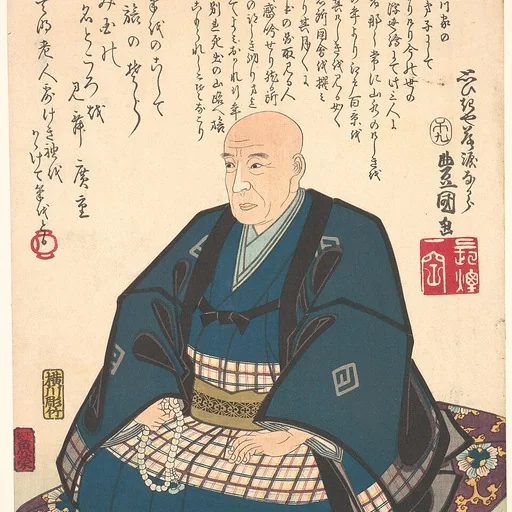
Artist
Utagawa Hiroshige (歌川 広重) or Andō Hiroshige (安藤 広重), born Andō Tokutarō (安藤 徳太郎; 1797 – 12 October 1858), was a Japanese ukiyo-e artist, considered the last great master of that tradition.

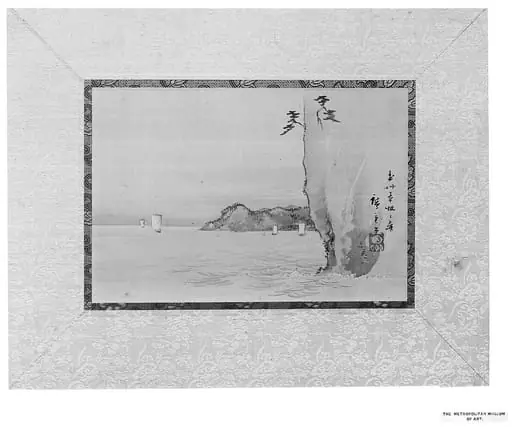
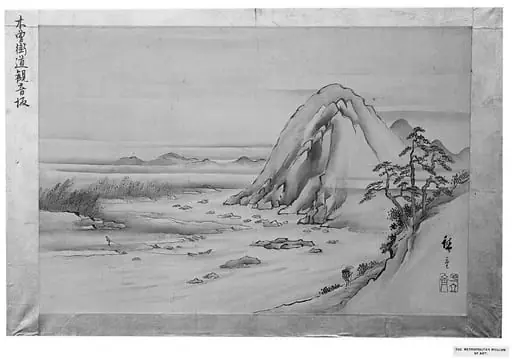
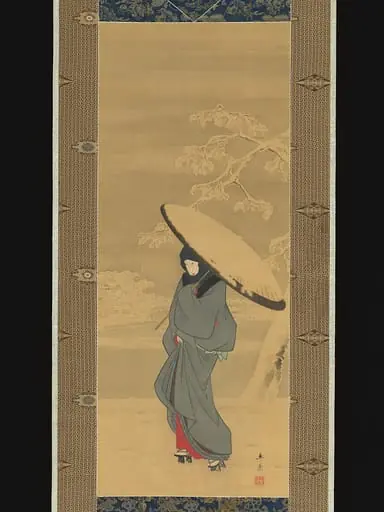
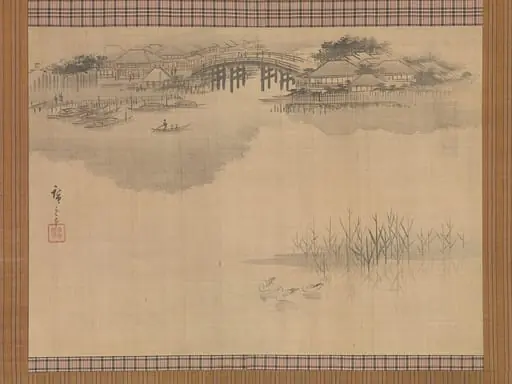
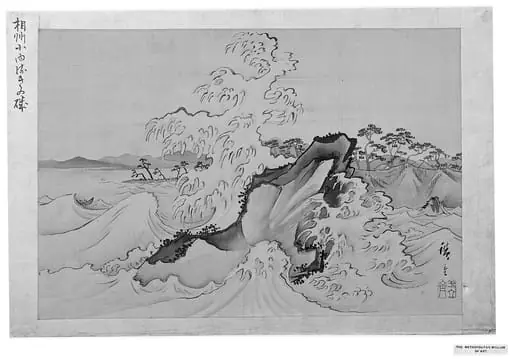
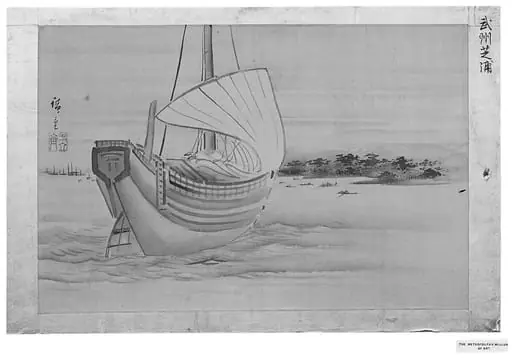
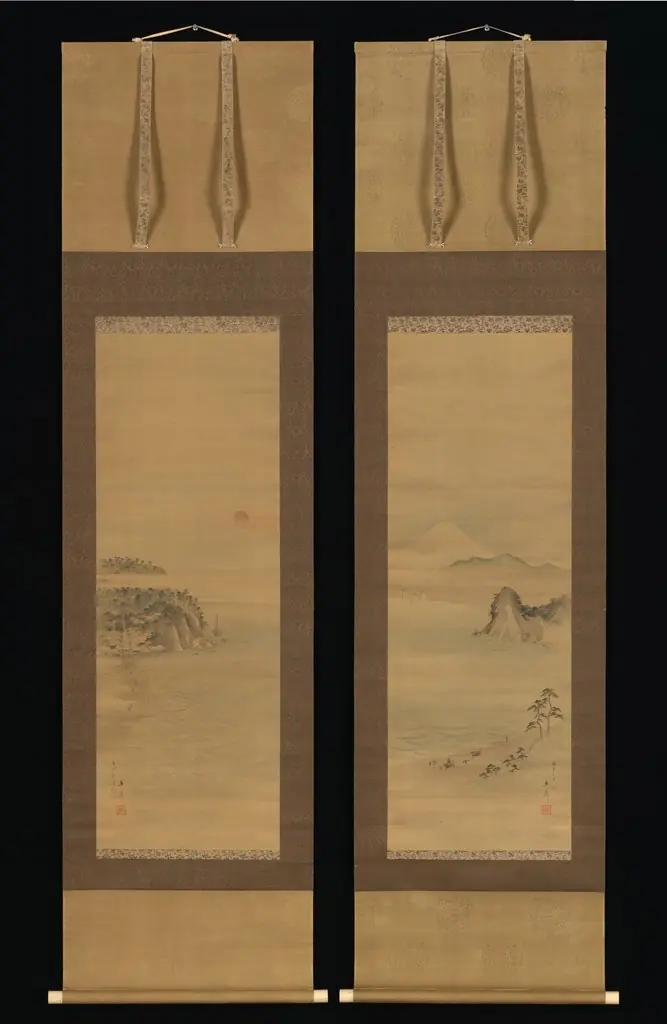
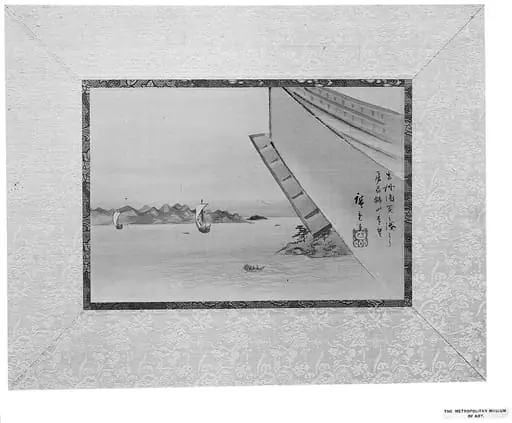
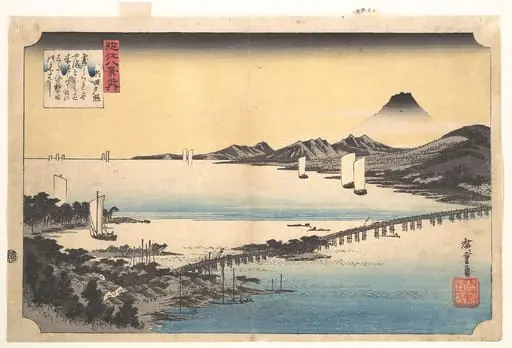 歌川広重画 近江八景の内 瀬田夕照|Sunset Glow at Seta (Seta sekishō), from the series Eight Views of Ōmi Province (Ōmi hakkei)
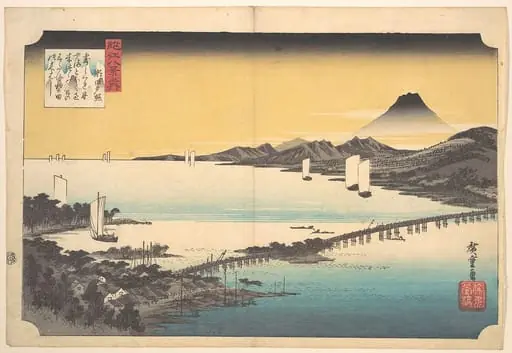 近江八景之内 瀬田夕照|Sunset at Seta
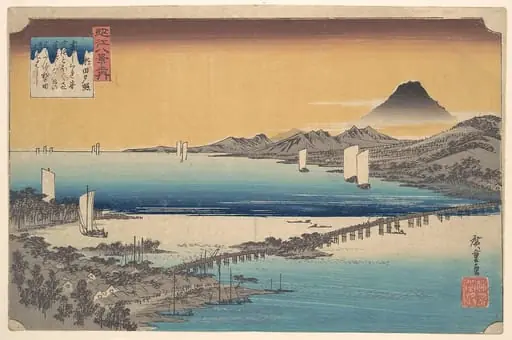 近江八景之内 瀬田夕照|Long Bridge of Seta
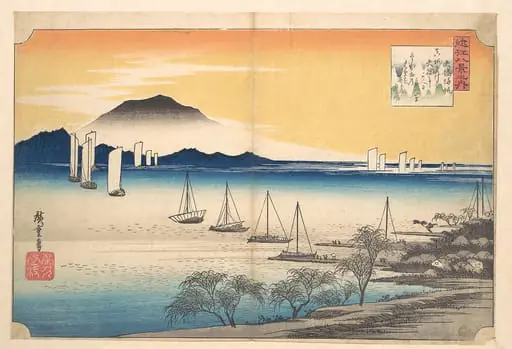 近江八景之内 矢橋帰帆|Sailing Boats Returning to Yabase, Lake Biwa
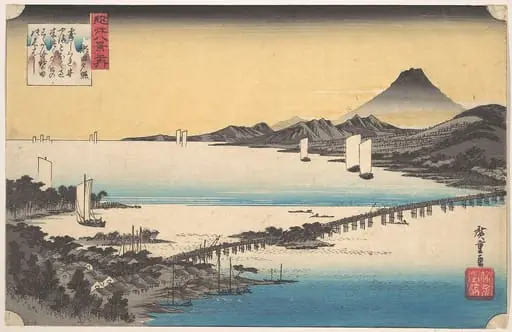 近江八景之内 瀬田夕照|Sunset at Seta
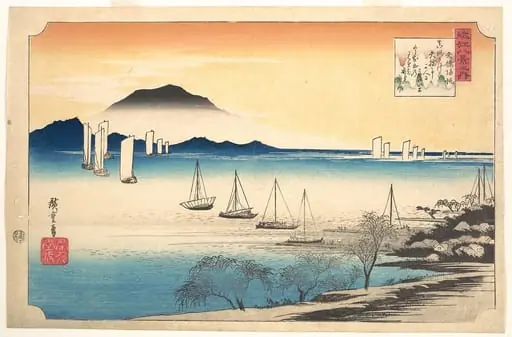 Yabase no Kihan|近江八景之内 矢橋帰帆|Fishing Boats Returning to Yabase
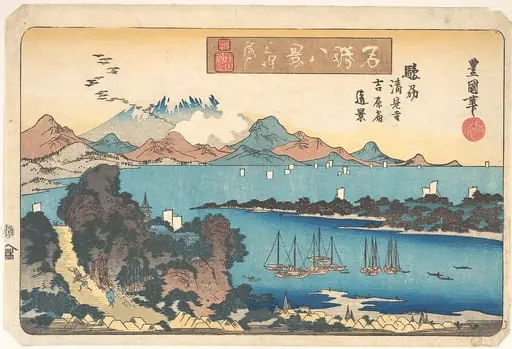 Untitled
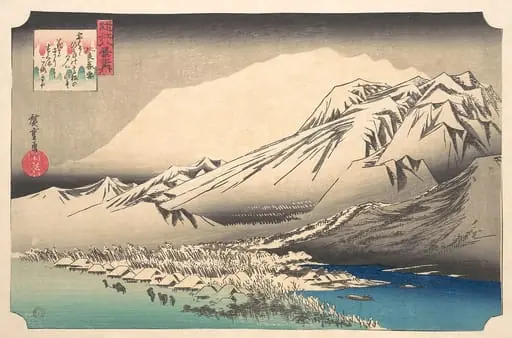 近江八景之内 比良暮雪|Evening Snow on Hira, Lake Biwa
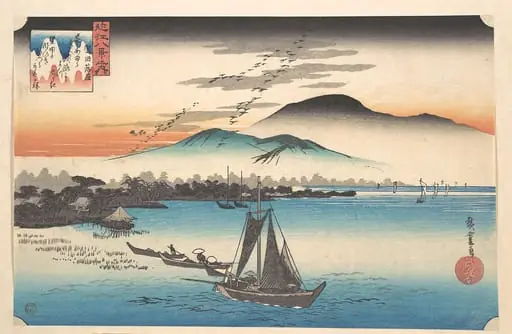 近江八景之内 堅田落雁|Geese Alighting at Katada, Lake Biwa