Artwork
波に丹頂鶴|Crane and Surf
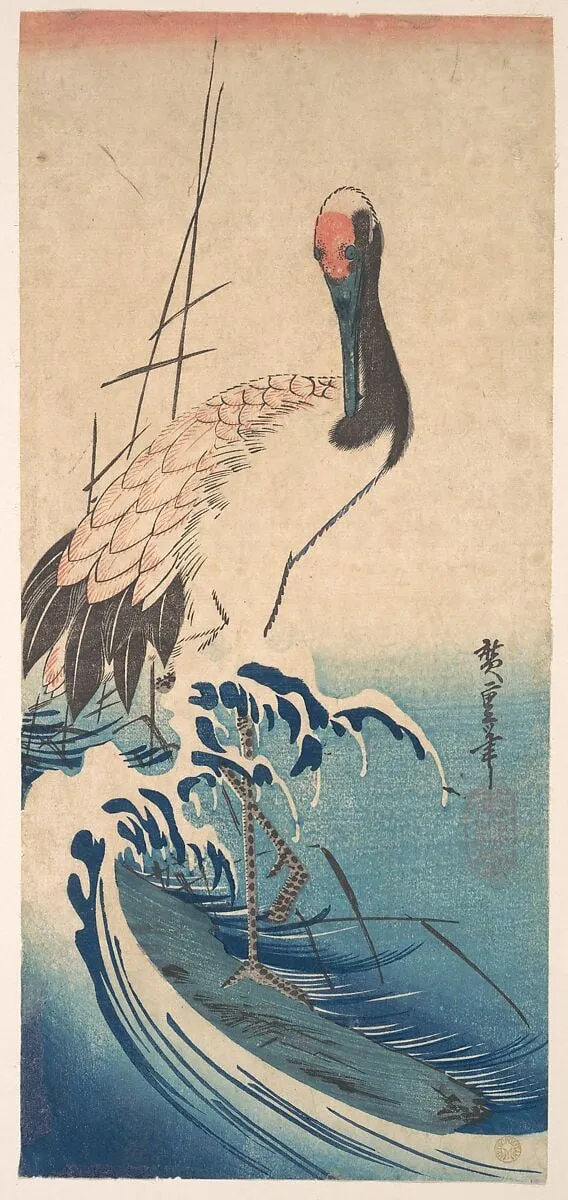
波に丹頂鶴|Crane and Surf is an ink print by the Romanticist artist Utagawa Hiroshige. It dates from 1833 and is held in the collection of the Metropolitan Museum of Art.
About this work
Overview
Created circa 1833 by Utagawa Hiroshige, this woodblock print portrays a solitary crane perched on a cresting wave. Executed with ink and color on paper, the image combines a stark black bird with a vivid red face against a turbulent sea rendered in sharp blue strokes. The work is part of the Metropolitan Museum of Art’s collection.
Subject & Meaning
The composition centers on a crane, a traditional symbol of longevity, standing calmly amid crashing surf. The juxtaposition of the bird’s poised stillness with the restless water suggests a harmony between endurance and the forces of nature, reflecting a contemplative view of the natural world rather than urban leisure scenes.
Technique & Style
Hiroshige employed the ukiyo‑e woodblock process, carving separate blocks for line work and each color. Fine, rapid brushstrokes define the crane’s feathers, while bold, angular cuts produce the wave’s frothy texture. The limited palette—black, red, and blue—enhances contrast and emphasizes atmospheric movement, characteristic of Hiroshige’s later, more lyrical period.
History & Provenance
The print originates from the late Edo period, a time when Hiroshige was shifting focus from bustling city views to seasonal and landscape subjects. After its production, the piece entered private collections before being acquired by the Metropolitan Museum of Art, where it remains on display as an example of early 19th‑century Japanese printmaking.
Context
During the 1830s, Japanese artists increasingly explored natural motifs beyond the genre’s conventional pleasure‑district imagery. Hiroshige’s choice of a crane on surf aligns with this trend, illustrating a broader interest in depicting the transient qualities of weather and water that would influence later Western Impressionists.
Artist & collection
Artist
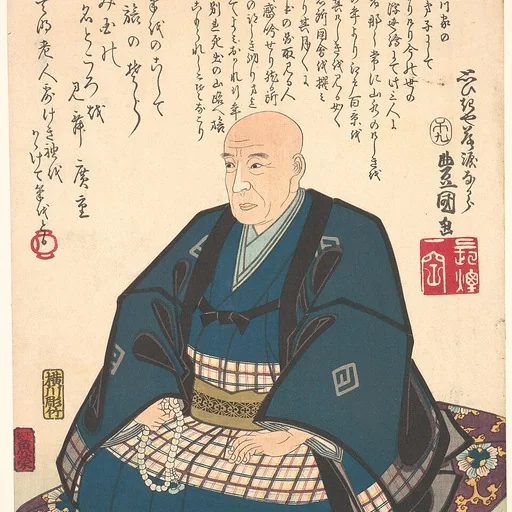
Utagawa Hiroshige (歌川 広重) or Andō Hiroshige (安藤 広重), born Andō Tokutarō (安藤 徳太郎; 1797 – 12 October 1858), was a Japanese ukiyo-e artist, considered the last great master of that tradition.

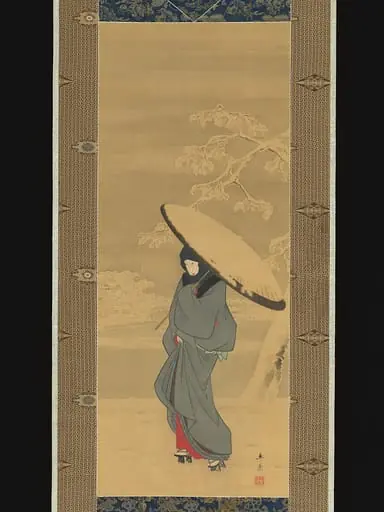
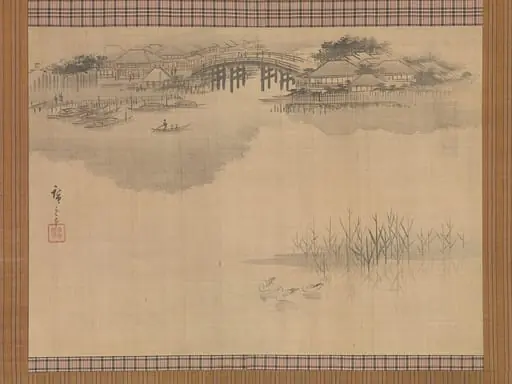
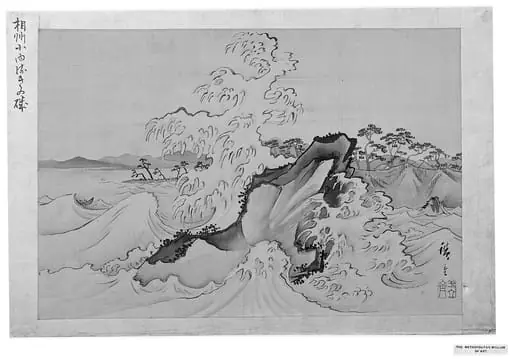
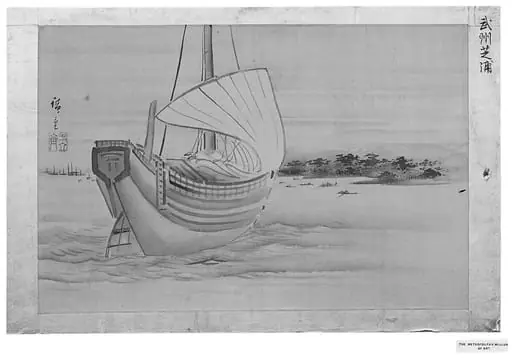

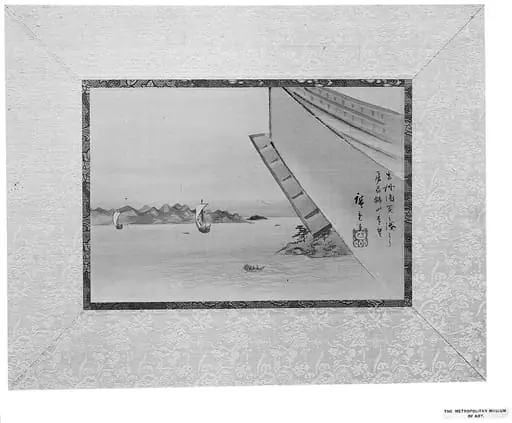
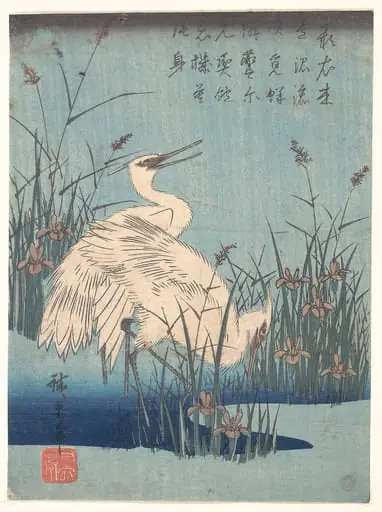 Untitled
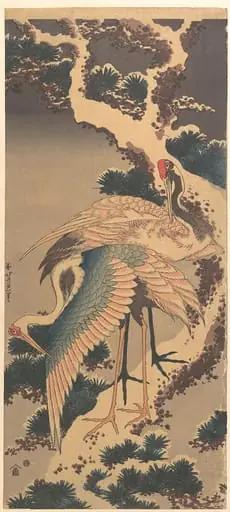 雪松に鶴|Cranes on Branch of Snow-covered Pine
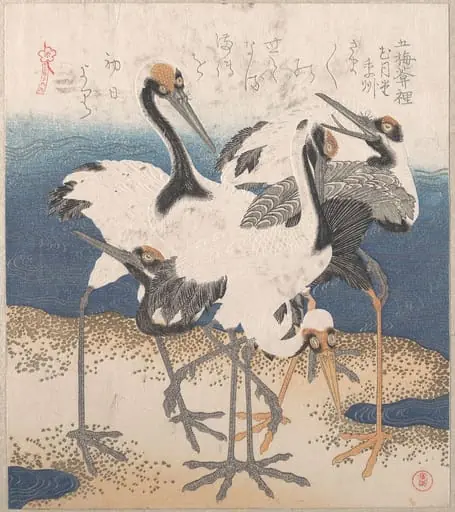 「三ひらの内」汀五羽の鶴|Five Cranes by the Water’s Edge, from the series Three Sheets (Mihira no uchi)
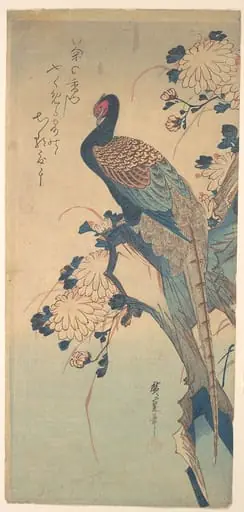 歌川広重画 菊に雉|Pheasant with Chrysanthemums
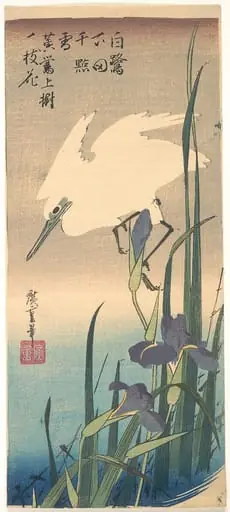 花菖蒲に白鷺|White Heron and Iris
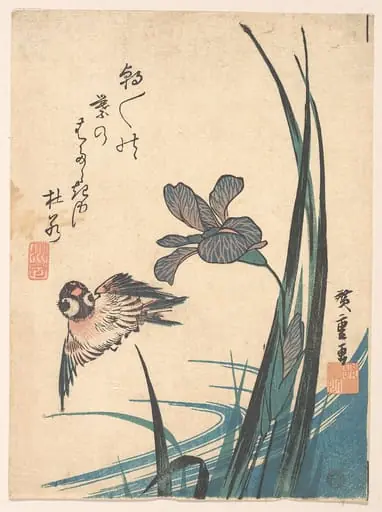 Untitled
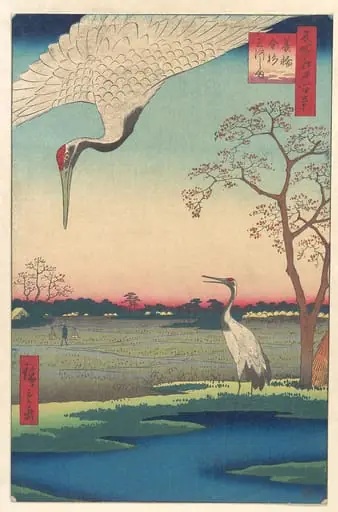 「名所江戸百景 蓑輪 金杉 三河しま」|“Minowa, Kanasugi at Mikawashima,” from the series One Hundred Famous Views of Edo (Meisho Edo hyakkei, Minowa Kanasugi, Mikawashima)
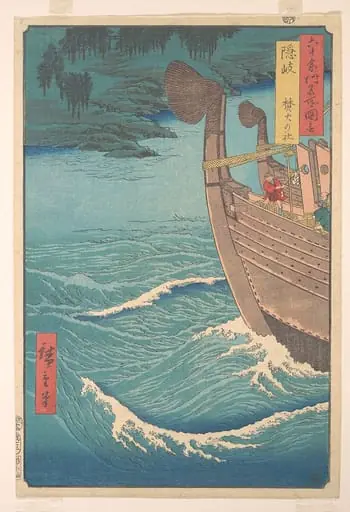 六十余州名所図会 隠岐 焚火の社|The Takihi Shrine, Oki Province, from the series Views of Famous Places in the Sixty-Odd Provinces
 Untitled