Artwork
名所江戸百景 神田紺屋町|Dye House at Konya-cho, Kanda
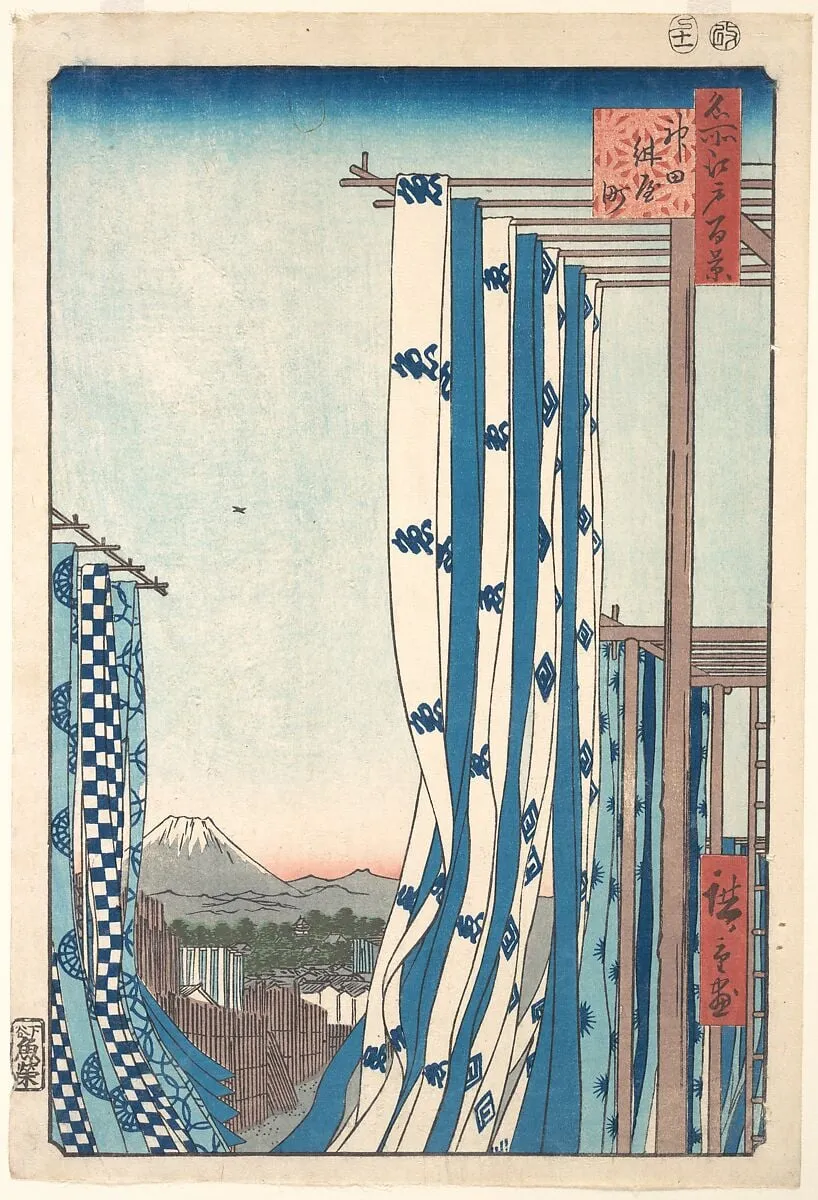
名所江戸百景 神田紺屋町|Dye House at Konya-cho, Kanda is an ink print by the Impressionist artist Utagawa Hiroshige. It dates from 1857 and is held in the collection of the Metropolitan Museum of Art.
About this work
Overview
Dye House at Konya-cho, Kanda is a woodblock print created by Utagawa Hiroshige in 1857, part of his seminal series One Hundred Famous Views of Edo. Executed in ink and color on paper, the work adopts a vertical format.
Subject & Meaning
The print depicts a mundane scene of a dye workshop in the Konya-cho district of Kanda, observed through a patterned white and blue curtain. The composition juxtaposes everyday urban life with a serene natural backdrop, highlighting Hiroshige's shift towards capturing landscapes and ordinary life in ukiyo-e.
Technique & Style
Characterized by Hiroshige's meticulous observation, the print features a distinctive visual layering: a foreground curtain with blue motifs, a red sign bearing Japanese script, and a distant mountainscape set against a gradated light blue and pink sky, evoking dawn or dusk.
History & Provenance
Produced in 1857, Dye House at Konya-cho, Kanda is now part of The Metropolitan Museum of Art's collection, testifying to its enduring appeal and the artist's influence.
Context
This work reflects Hiroshige's innovative contribution to late Edo period ukiyo-e, diverging from the genre's traditional focus on entertainment scenes to emphasize local landscapes and daily activities.
Legacy
As part of One Hundred Famous Views of Edo, Dye House at Konya-cho, Kanda contributes to Hiroshige's lasting impact on the representation of Edo's (Tokyo's) pre-modern identity, influencing both Japanese and Western artistic perceptions of the city.
Artist & collection
Artist
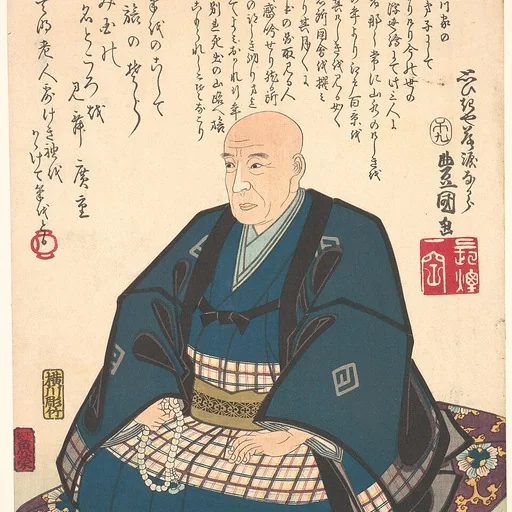
Utagawa Hiroshige (歌川 広重) or Andō Hiroshige (安藤 広重), born Andō Tokutarō (安藤 徳太郎; 1797 – 12 October 1858), was a Japanese ukiyo-e artist, considered the last great master of that tradition.


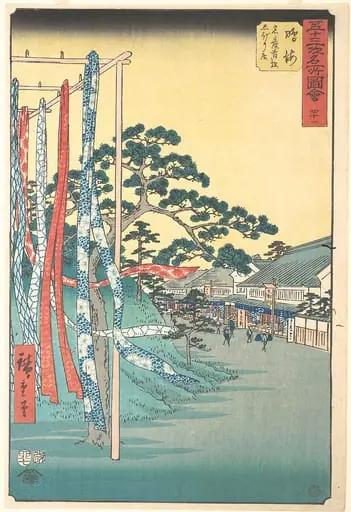 五十三次名所図会 鳴海 名產有松しぼり店|Narumi, Meisan Arimatsu Shibori Mise
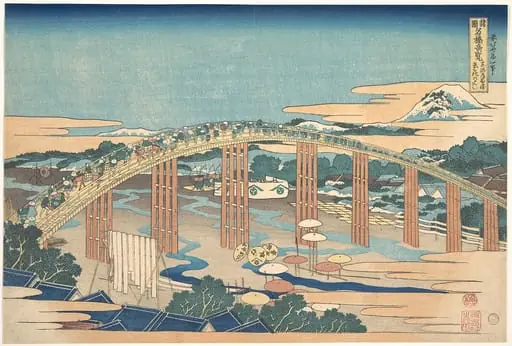 諸國名橋奇覧 東海道岡崎矢はぎのはし|Yahagi Bridge at Okazaki on the Tōkaidō (Tōkaidō Okazaki Yahagi no hashi), from the series Remarkable Views of Bridges in Various Provinces (Shokoku meikyō kiran)
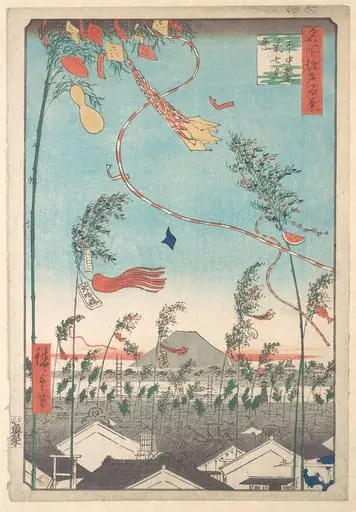 名所江戸百景 市中繁栄七夕祭|The Tanabata Festival, from the series One Hundred Famous Views of Edo
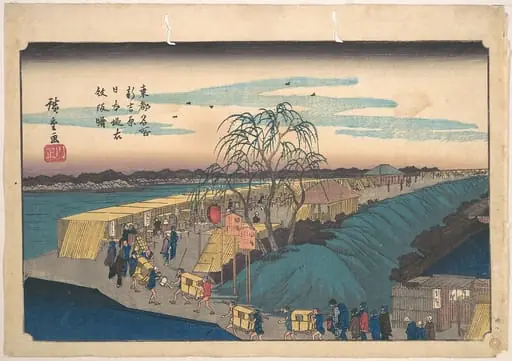 東都名所 新吉原日本堤衣紋坂曙|Shin Yoshiwara Nihon Tsutsumi Emonzaka Akatsuki
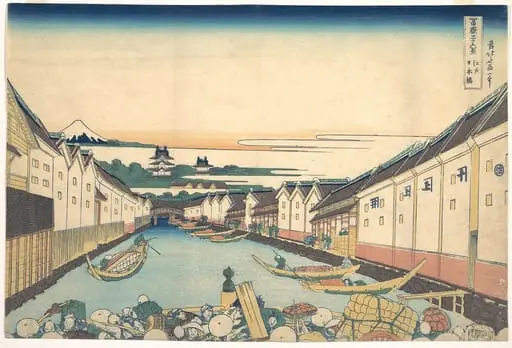 冨嶽三十六景 江戸日本橋|Nihonbashi in Edo (Edo Nihonbashi), from the series Thirty-six Views of Mount Fuji (Fugaku sanjūrokkei)
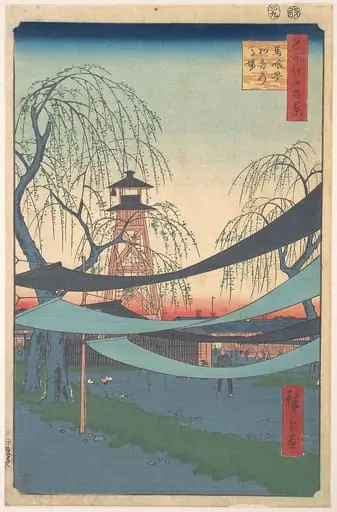 名所江戸百景 馬喰町初音の馬場|The First Race Course, Horse-Dealer's Street
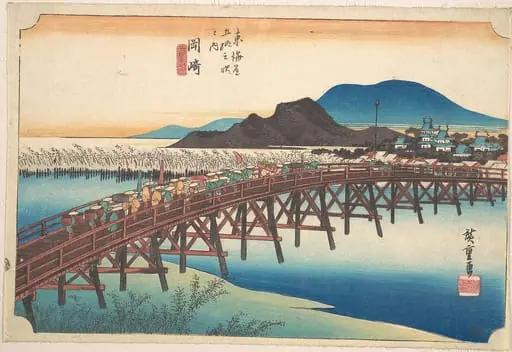 東海道五十三次之内 岡崎 矢矧の橋|Okazaki, Tenshin no Hashi