Artwork
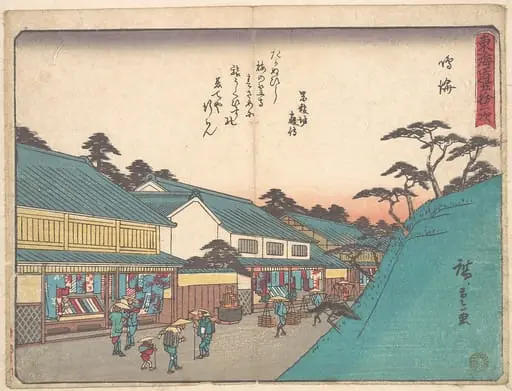
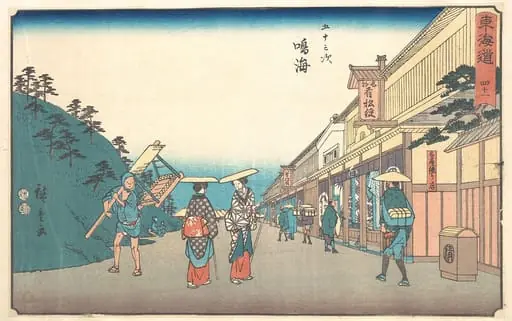
五十三次名所図会 鳴海 名產有松しぼり店|Narumi, Meisan Arimatsu Shibori Mise
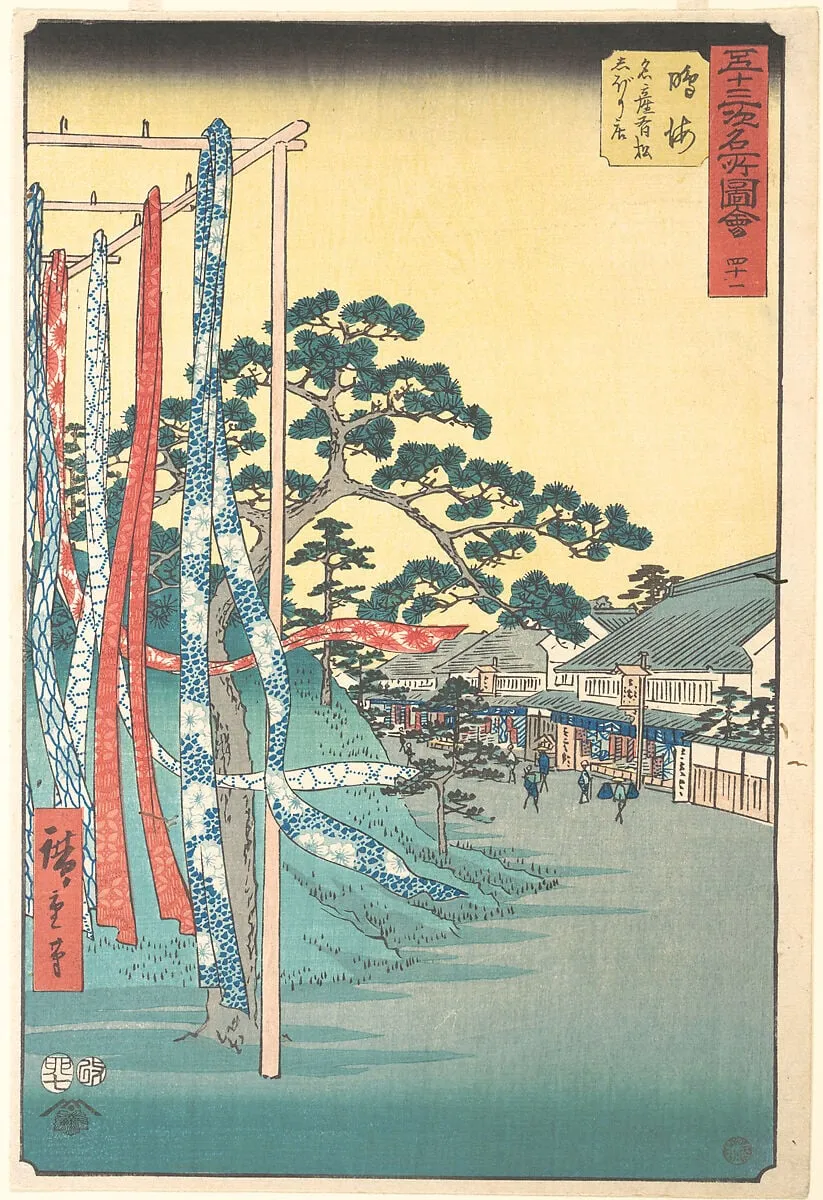
五十三次名所図会 鳴海 名產有松しぼり店|Narumi, Meisan Arimatsu Shibori Mise is an ink print by the Impressionist artist Utagawa Hiroshige. It dates from 7 and is held in the collection of the Metropolitan Museum of Art.
About this work
Overview
Narumi, Meisan Arimatsu Shibori Mise is a woodblock print by Utagawa Hiroshige, part of his *Fifty-three Stations of the Tōkaidō* series. It captures a serene scene in Narumi, showcasing a *shibori* textile shop and everyday life along the Tōkaidō road.
Subject & Meaning
The print highlights a *shibori* (tie-dye) shop, emphasizing local customs and regional specialties along the Tōkaidō. The depiction of daily life and traditional craft reflects Hiroshige's focus on rural landscapes and cultural practices.
Technique & Style
Executed in ink and color on paper, the print features Hiroshige's characteristic soft color palette and gentle composition. A prominent tree and hanging *shibori* fabrics create visual balance, while subtle human figures convey a sense of quiet activity.
History & Provenance
Created during the Edo period, this work is part of Hiroshige's renowned series exploring the Tōkaidō route. Specific provenance details are not provided.
Context
As an ukiyo-e artist, Hiroshige departed from the genre's typical urban themes by focusing on rural landscapes and local industries, as seen in this print's portrayal of Narumi's *shibori* tradition.
Legacy
This print contributes to Hiroshige's legacy of capturing Japan's pre-modern landscapes and customs. Its serene and detailed depiction of rural life has appealed to audiences seeking glimpses of traditional Japanese culture.
Artist & collection
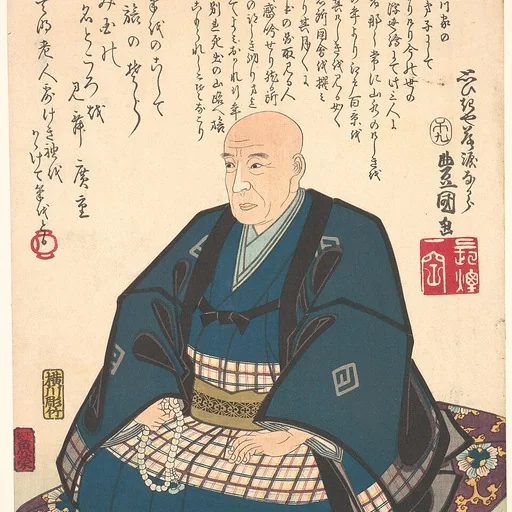
Artist
Utagawa Hiroshige (歌川 広重) or Andō Hiroshige (安藤 広重), born Andō Tokutarō (安藤 徳太郎; 1797 – 12 October 1858), was a Japanese ukiyo-e artist, considered the last great master of that tradition.