Artwork
京都名所之内 嶋原出口之柳|Gate of the Shimbara
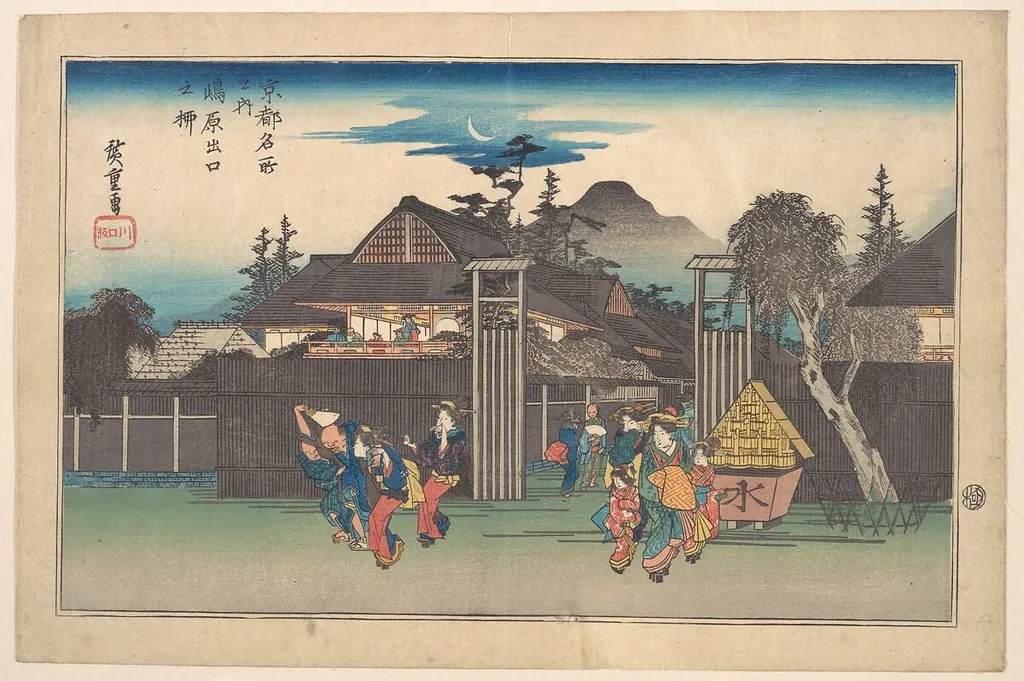
京都名所之内 嶋原出口之柳|Gate of the Shimbara is an ink print by the Romanticist artist Utagawa Hiroshige. It dates from 1828 and is held in the collection of the Metropolitan Museum of Art.
About this work
Overview
Utagawa Hiroshige’s woodblock print *Gate of the Shimbara* (1828) depicts the entrance to the historic Shimbara district of Kyoto. Executed in ink and color on paper, the image captures a bustling street framed by a wooden gate, with figures moving, conversing, and carrying parcels beneath a night sky illuminated by a faint moon.
Subject & Meaning
The composition centers on everyday activity at a city gate, highlighting the flow of pedestrians and the architecture of the surrounding area. By placing ordinary travelers against the backdrop of a tiled-roof building and trees, Hiroshige emphasizes the lived experience of Kyoto’s neighborhoods rather than theatrical entertainment scenes.
Technique & Style
Hiroshige employs the ukiyo‑e woodblock method, using bold, flat colors and simplified geometric forms to convey depth. The dark gate creates a framing device, while cross‑hatching and subtle tonal variations suggest shading. A muted moon emerging from cloud cover adds a quiet counterpoint to the lively street.
History & Provenance
Created as part of Hiroshige’s series of famous Kyoto locations, the print entered the collection of the Metropolitan Museum of Art, where it remains catalogued as an example of early 19th‑century Japanese landscape printmaking.
Artist & collection
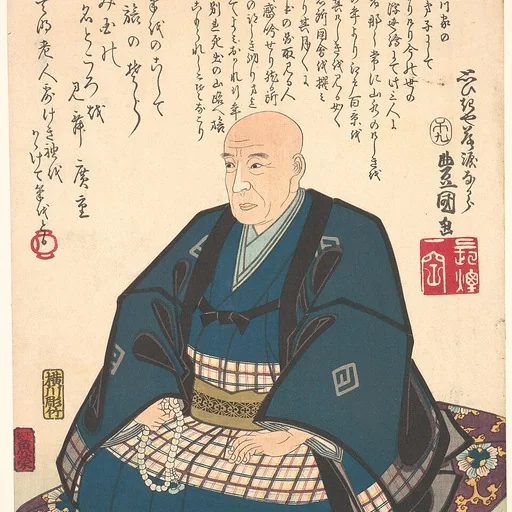
Artist
Utagawa Hiroshige (歌川 広重) or Andō Hiroshige (安藤 広重), born Andō Tokutarō (安藤 徳太郎; 1797 – 12 October 1858), was a Japanese ukiyo-e artist, considered the last great master of that tradition.

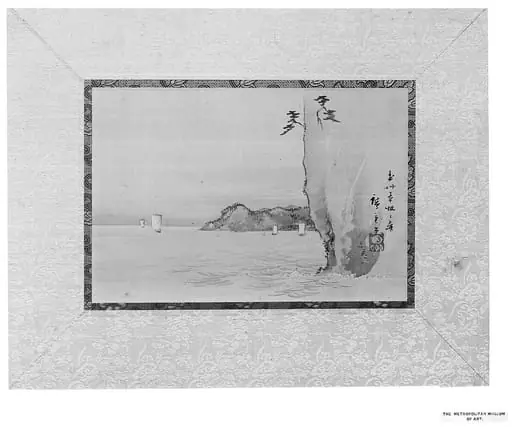
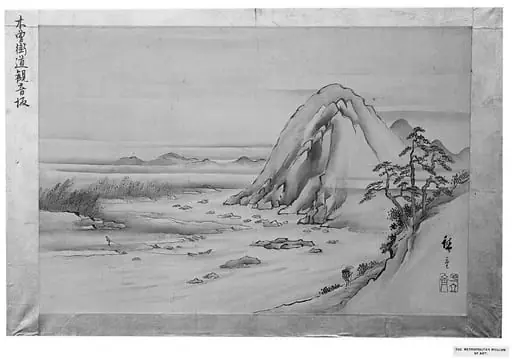

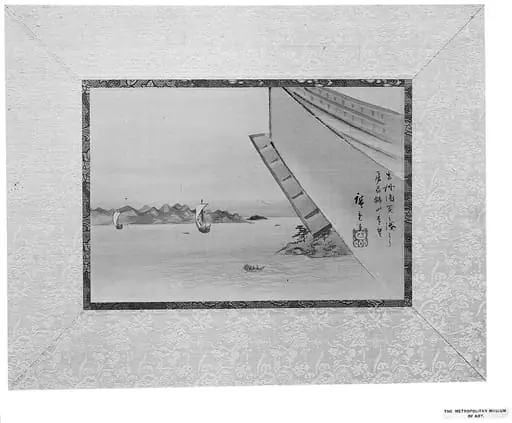
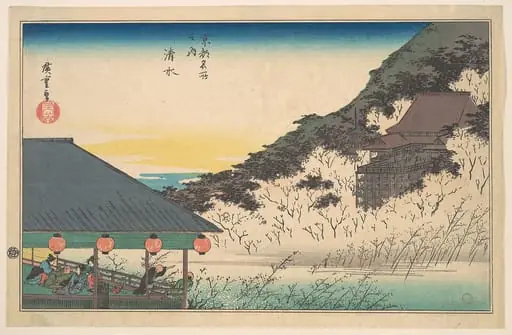 歌川広重画 「京都名所之内 清水」|Kiyomizu Temple (Kiyomizu), from the series Famous Views of Kyoto (Kyōto meisho no uchi)
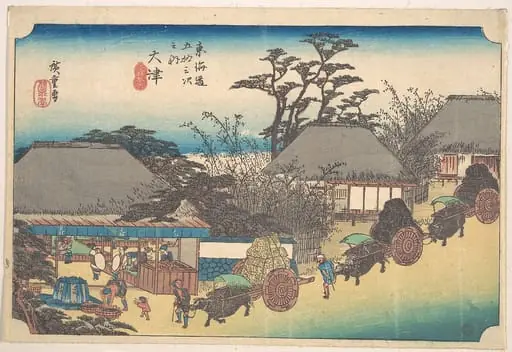 東海道五十三次之内 大津 走井茶屋|Otsu, Soii Chaya
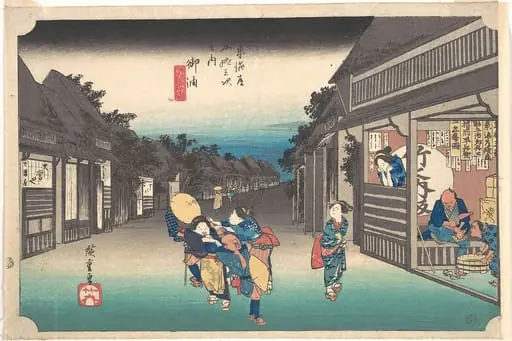 東海道五十三次之内 御油 旅人留女|Goyu, Tabibito Ryujo
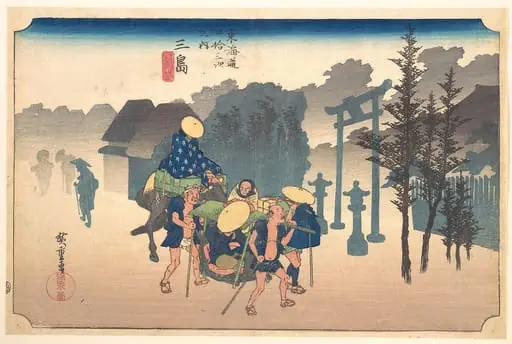 Mishima Asa-Giri|東海道五十三次之内 三島 朝霧|Morning Mist
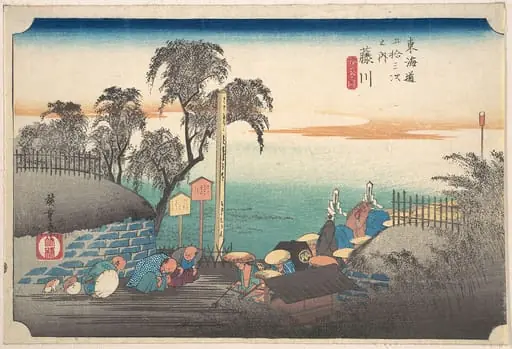 東海道五十三次之内 藤川 棒鼻の図|Fujikawa, Bo Bana
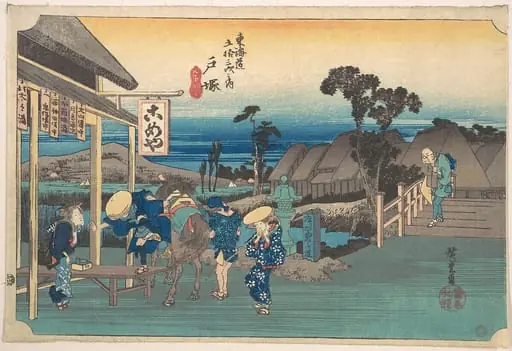 東海道五十三次之内 戸塚 元町別道|Totsuka; Moto Machi Betsudo
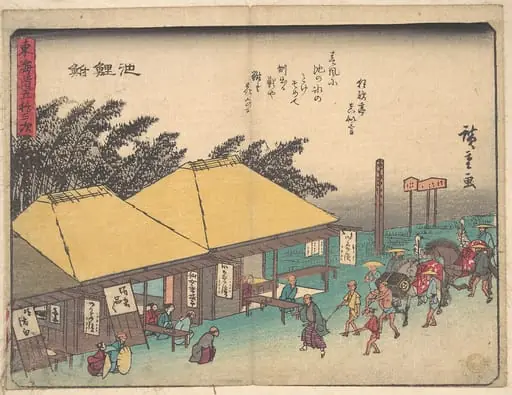 東海道五十三次 池鯉鮒|Chiryu
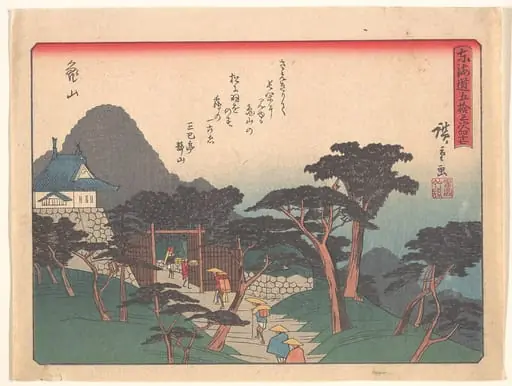 東海道五十三次 亀山|Kameyama, from the series The Fifty-three Stations of the Tōkaidō Road
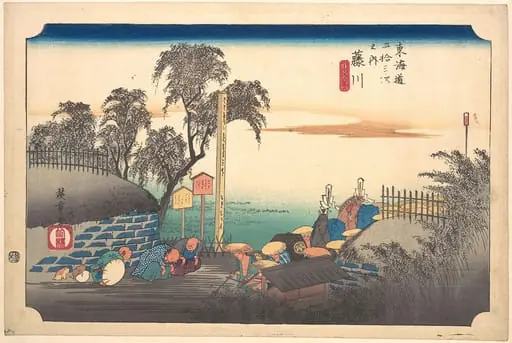 東海道五十三次之内 藤川 棒鼻の図|Station Thirty-Eight: Fujikawa, Scene at the Border, from the Fifty-Three Stations of the Tokaido