Artwork
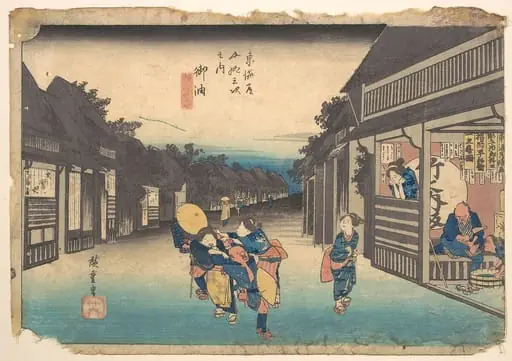
東海道五十三次之内 御油 旅人留女|Goyu, Tabibito Ryujo
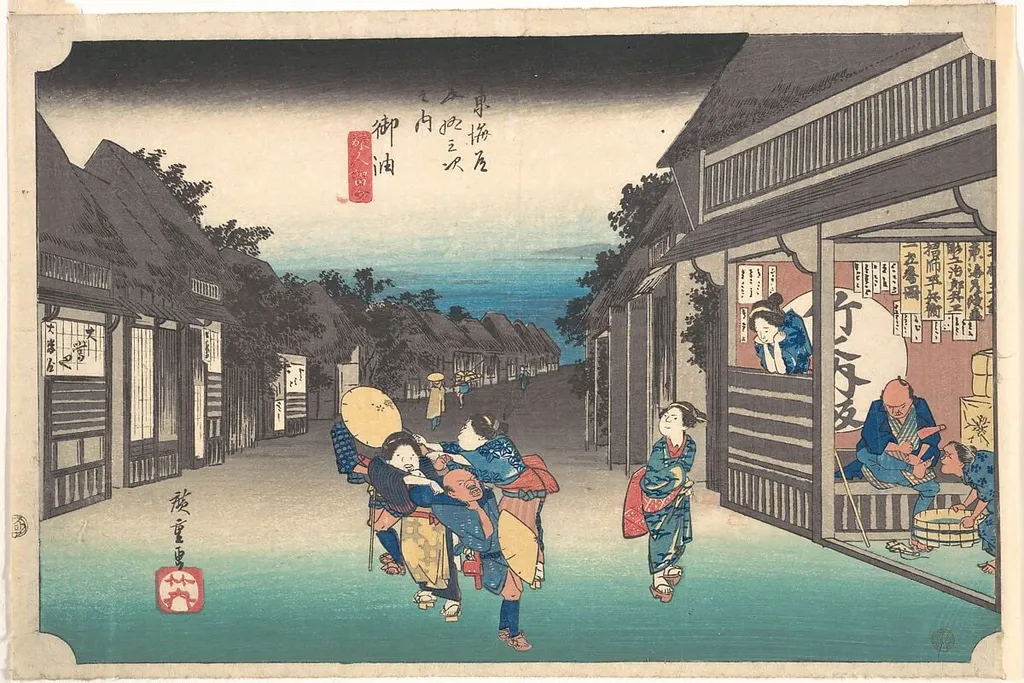
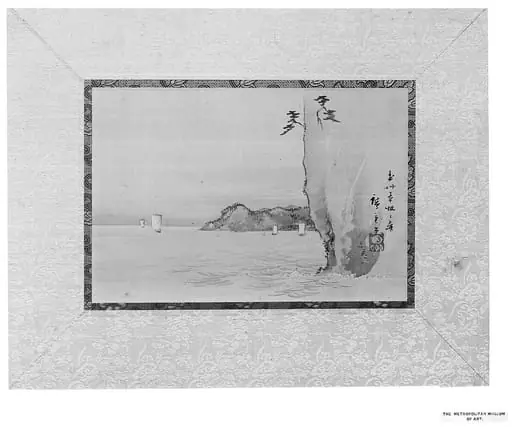
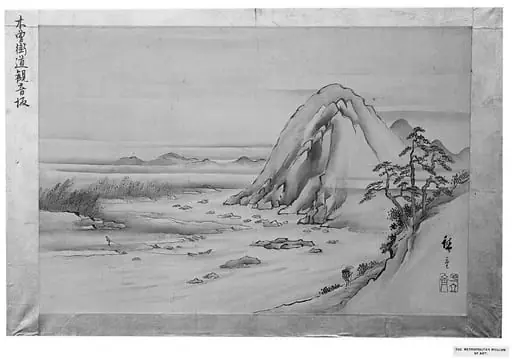
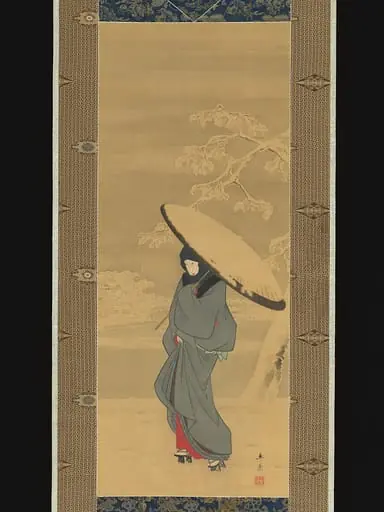
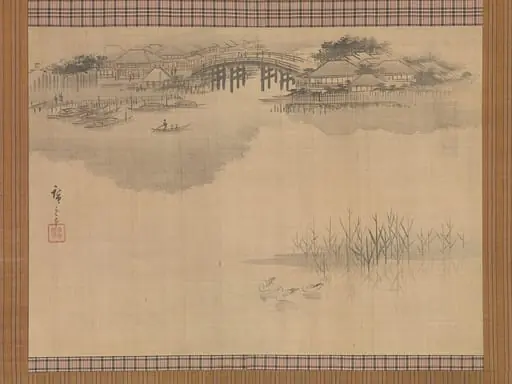
東海道五十三次之内 御油 旅人留女|Goyu, Tabibito Ryujo is an ink print by the Romanticist artist Utagawa Hiroshige. It dates from 1834 and is held in the collection of the Metropolitan Museum of Art.
About this work
Overview
Rendered in ink and color on paper, it reflects the refined aesthetic of ukiyo-e, balancing naturalism with stylized composition.
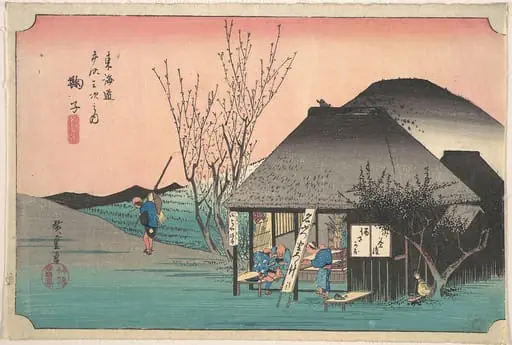
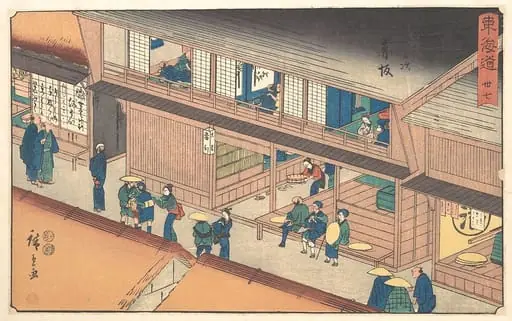
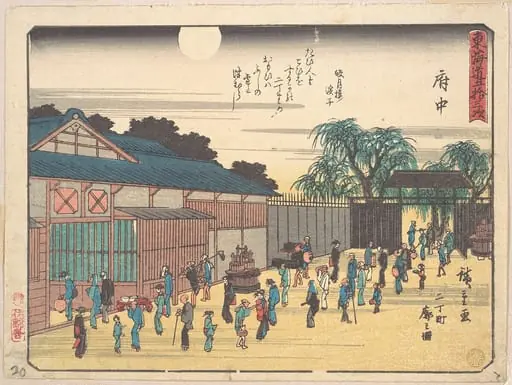
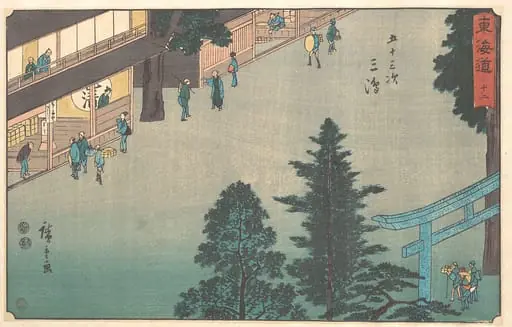
Created around 1834 by Utagawa Hiroshige, this woodblock print is part of the series *The Fifty-three Stations of the Tōkaidō*, which documents the journey along the major road linking Edo and Kyoto. The print captures a quiet moment at Goyu, a minor post station, focusing not on grandeur but on the everyday rhythms of travel. Rendered in ink and color on paper, it reflects the refined aesthetic of ukiyo-e, balancing naturalism with stylized composition.
Subject & Meaning
The scene portrays a group of travelers—a man and several women—paused in a rural setting, possibly resting or exchanging words. The woman, positioned centrally, appears to be observing or addressing the travelers, suggesting a moment of human connection amid transit. The image conveys the transient nature of journeying, a recurring theme in Hiroshige’s work, where landscapes and encounters reflect the passage of time and the solitude of the road.
Technique & Style
Hiroshige employed fine linework and layered washes of color to evoke atmosphere rather than detail. Soft blues and greens suggest distant skies and foliage, while muted earth tones ground the buildings and garments. The composition uses subtle perspective and selective focus to draw attention to the figures, avoiding dramatic action in favor of quiet observation. This restrained palette and delicate handling distinguish his approach from the bolder styles of contemporaries.
History & Provenance
The print was produced during Hiroshige’s most prolific period, when demand for travel-themed prints surged among urban audiences. Though originally mass-produced as affordable souvenirs, surviving impressions like this one are now held in major collections, including the Metropolitan Museum of Art. Its preservation reflects the growing recognition of ukiyo-e as a significant artistic tradition beyond its commercial origins.
Context
The Tōkaidō was a vital artery of Edo-period Japan, traveled by merchants, pilgrims, and samurai. Hiroshige’s series transformed these stations into poetic vignettes, appealing to those who could not travel themselves. Unlike earlier ukiyo-e focused on courtesans or actors, this work elevated landscape and daily life, aligning with a broader cultural interest in nature, movement, and the emotional resonance of place.
Legacy
Hiroshige’s *Tōkaidō* series influenced both Japanese and Western artists, contributing to the global appreciation of Japanese printmaking. His emphasis on mood, seasonal change, and ordinary moments helped redefine the potential of the medium. Later generations of artists, including Impressionists, studied his use of color and composition, cementing his role in the evolution of modern visual language.
Artist & collection
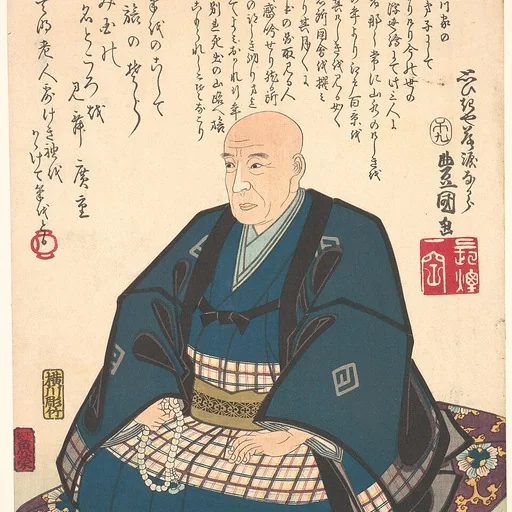
Artist
Utagawa Hiroshige (歌川 広重) or Andō Hiroshige (安藤 広重), born Andō Tokutarō (安藤 徳太郎; 1797 – 12 October 1858), was a Japanese ukiyo-e artist, considered the last great master of that tradition.