Artwork
東海道五十三次 府中|Fuchu
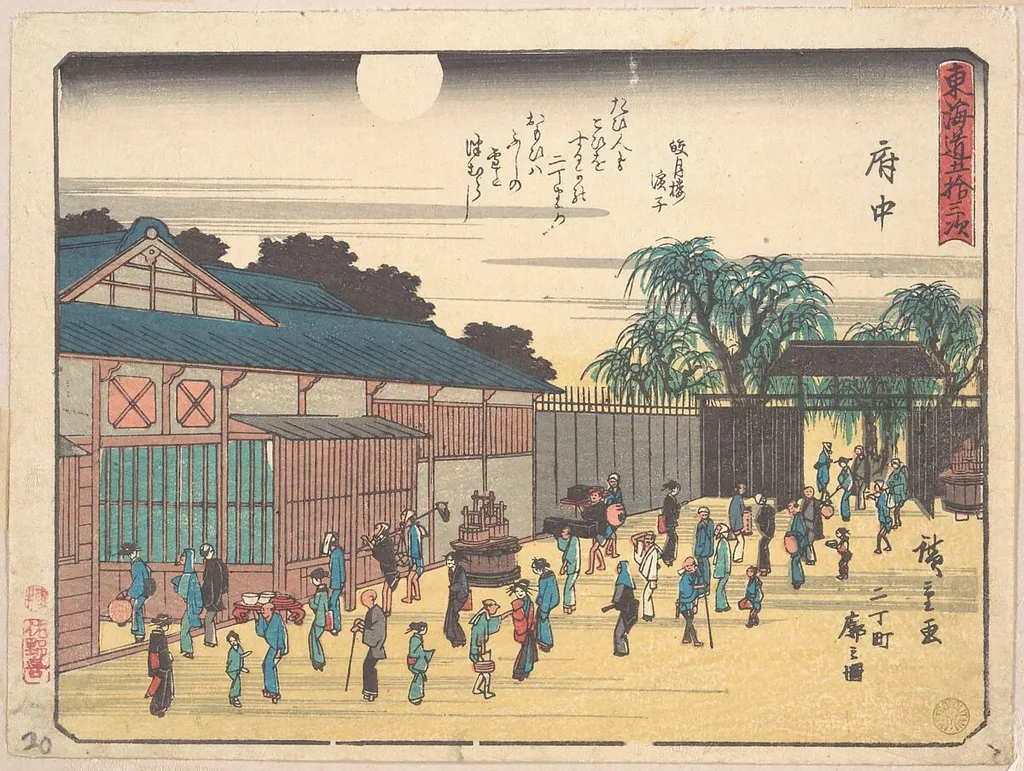
東海道五十三次 府中|Fuchu is an ink print by the Romanticist artist Utagawa Hiroshige. It dates from 1838 and is held in the collection of the Metropolitan Museum of Art.
About this work
Overview
Executed in ink and color on paper, the work exemplifies the ukiyo-e woodblock tradition.
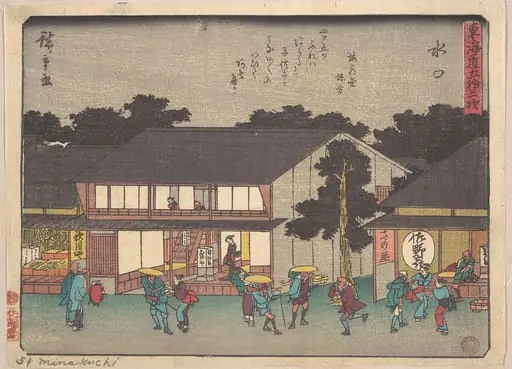
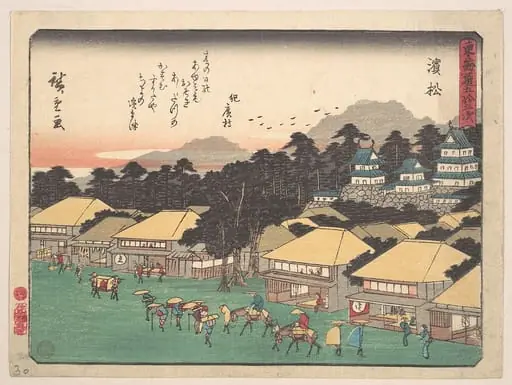
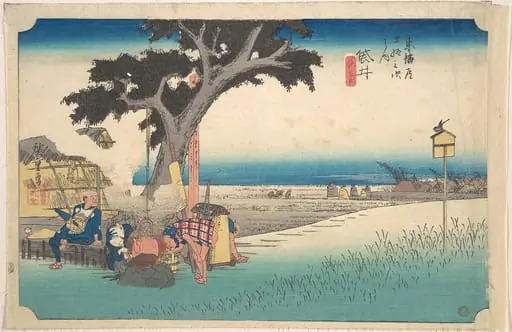
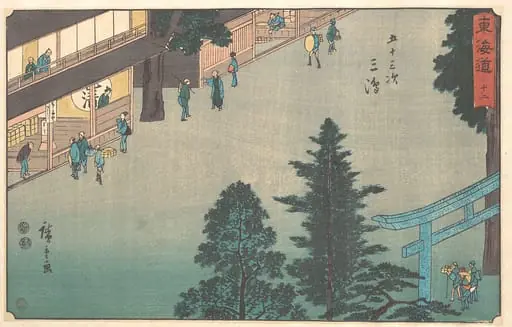
Created around 1838 by Utagawa Hiroshige, *Fuchu* is one of fifty-three prints in the series *The Fifty-three Stations of the Tōkaidō*, illustrating stops along the major road linking Edo and Kyoto. Executed in ink and color on paper, the work exemplifies the ukiyo-e woodblock tradition. Unlike many contemporaries who focused on actors and courtesans, Hiroshige concentrated on landscapes and travel scenes, capturing the quiet rhythms of everyday journeys.
Subject & Meaning
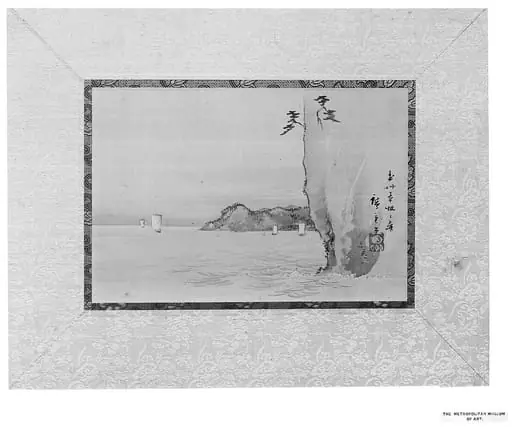
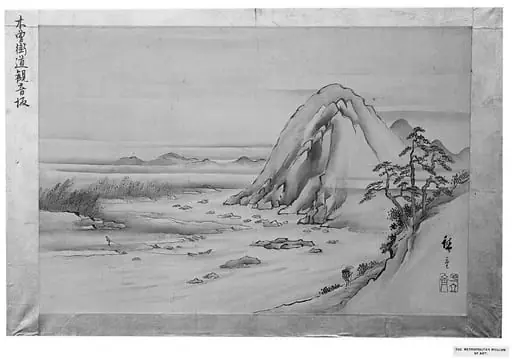
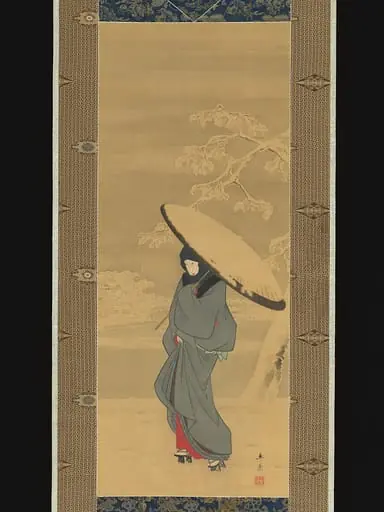
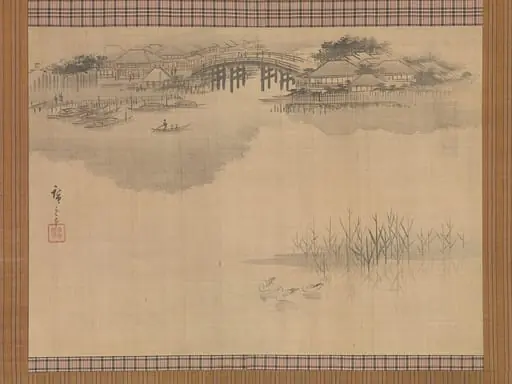
The scene depicts a busy stretch in Fuchu, a post town along the Tōkaidō, where travelers gather before a large building with a blue-tiled roof. Figures in traditional attire move through the space, suggesting the flow of commerce and transit. The composition emphasizes the ordinary yet vital nature of rest stops on long journeys, offering a glimpse into the social rhythm of Edo-period travel rather than grand spectacle.
Technique & Style
Hiroshige employed a horizontal format typical of the series, using layered woodblock printing to achieve subtle gradations of color and texture. Bold outlines define architectural forms and figures, while delicate washes of blue and green suggest foliage and shadow. The print balances precision with atmospheric suggestion, using minimal detail to imply depth and movement, characteristic of his poetic approach to landscape.
History & Provenance
The print was produced during Hiroshige’s most active period, shortly after the first edition of the Tōkaidō series was published. It entered the collection of The Metropolitan Museum of Art through documented acquisitions in the 20th century, part of a broader Western interest in Japanese prints following their introduction to Europe in the late 19th century.
Context
The Tōkaidō was a vital artery for travelers, merchants, and officials during the Edo period. Hiroshige’s series responded to growing public interest in travel and regional identity. While the prints served as souvenirs, they also reflected a cultural shift toward appreciating the natural and social landscapes of Japan beyond urban centers, aligning with broader trends in Edo-period visual culture.
Legacy
Hiroshige’s *Fuchu* and the broader Tōkaidō series influenced later Western artists, including the Impressionists, through their emphasis on everyday scenes and atmospheric perspective. Though rooted in Japanese printmaking traditions, the work’s quiet observation of nature and human activity contributed to a global redefinition of landscape as a subject worthy of artistic contemplation.
Artist & collection
Artist
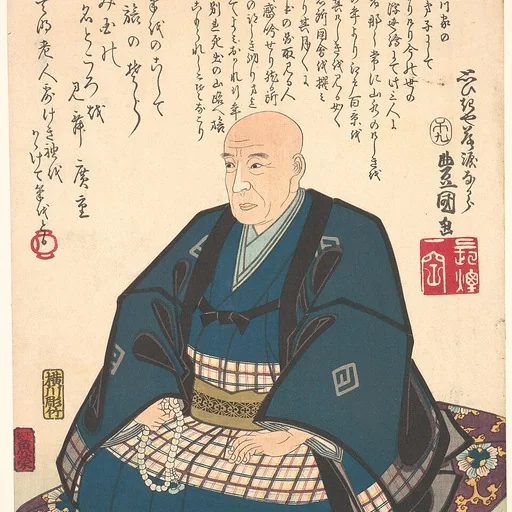
Utagawa Hiroshige (歌川 広重) or Andō Hiroshige (安藤 広重), born Andō Tokutarō (安藤 徳太郎; 1797 – 12 October 1858), was a Japanese ukiyo-e artist, considered the last great master of that tradition.