Artwork
Eight Views of Kanazawa at Night
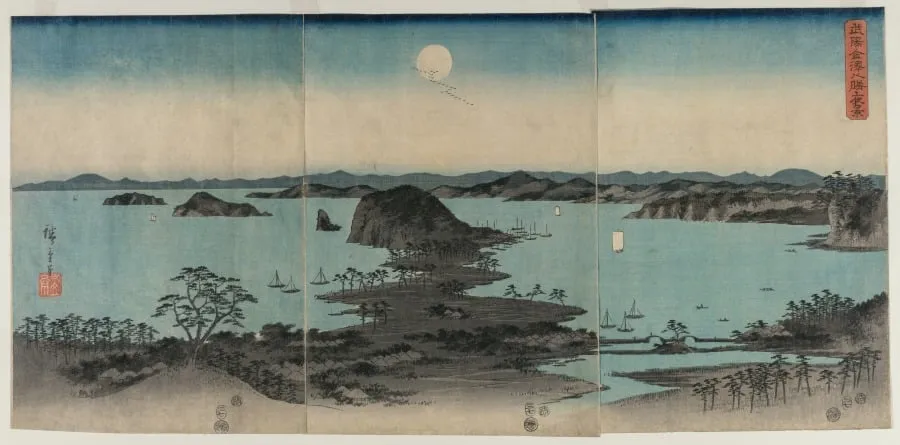
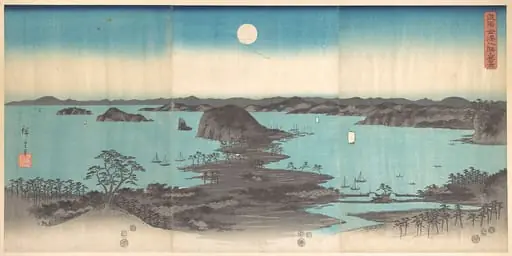
Eight Views of Kanazawa at Night is a print by the Impressionist artist Utagawa Hiroshige. It dates from 1857 and is held in the collection of the Cleveland Museum of Art.
About this work
” People in the 1850s would have known the coastline and the bridge—it was a real place, not just a pretty scene.
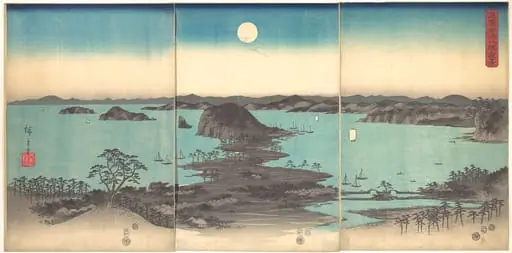
You see a long, narrow print of Kanazawa at night, lit by a pale autumn moon. Tiny boats dot the dark water, and a double-arched bridge glows at the bottom right.
Hiroshige made this late in life, part of a series called “snow, moon, and flowers.” People in the 1850s would have known the coastline and the bridge—it was a real place, not just a pretty scene.
Look up more prints in the subject: japan, edo period (1615–1868).
Overview
Created late in his career, this woodblock print is one of three triptychs by Hiroshige exploring the poetic trio of snow, moon, and flowers. It depicts Kanazawa under the pale light of an autumn moon, capturing a quiet, nocturnal landscape. Though often associated with Edo, the scene is set along the coast of what is now Ishikawa Prefecture, reflecting Hiroshige’s interest in regional scenery during his final years.
Subject & Meaning
The print presents a serene night scene centered on the autumn moon, one element of the traditional Japanese aesthetic theme setsugekka. Rather than idealizing nature, Hiroshige grounds the view in recognizable geography—fishing boats, scattered coastal hamlets, and a specific double-arched bridge. These details invite contemplation of place and season, aligning with the literati tradition of evoking mood through observed reality.
Technique & Style
Hiroshige employs subtle gradations of ink and muted color to suggest the moon’s diffuse glow over water and land. The composition stretches horizontally, guiding the eye across the expanse of sea and sky. Delicate linework defines the boats and bridge, while the absence of human figures enhances the stillness. His use of perspective and atmospheric tone reflects a mature command of ukiyo-e’s potential for lyrical expression.
History & Provenance
Produced around the 1850s, this print belongs to a series commissioned during Hiroshige’s later years, when he increasingly turned to nature-based themes. It was likely printed by established Edo workshops and distributed through commercial channels. The specific bridge and coastline were identifiable to contemporary viewers, lending the image both topographic accuracy and cultural resonance.
Context
In mid-19th century Japan, travel literature and illustrated guides popularized regional landscapes as subjects for art. Hiroshige’s series responded to this trend, blending poetic convention with local specificity. While other artists focused on famous pilgrimage routes, he turned to lesser-known coastal sites, offering intimate glimpses of daily life under changing seasons and lunar cycles.
Legacy
This work exemplifies Hiroshige’s shift from bustling urban scenes to contemplative natural vistas. Though less widely reproduced than his earlier series, these late triptychs influenced later Japanese printmakers and Western artists drawn to his tonal subtlety and compositional restraint. The series remains a quiet testament to his evolving vision in the final phase of his career.
Artist & collection
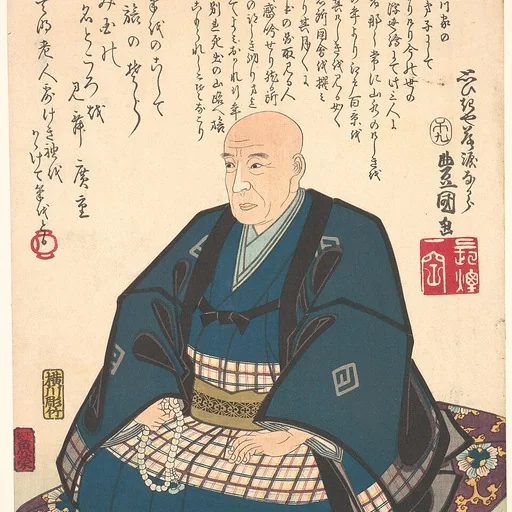
Artist
Utagawa Hiroshige (歌川 広重) or Andō Hiroshige (安藤 広重), born Andō Tokutarō (安藤 徳太郎; 1797 – 12 October 1858), was a Japanese ukiyo-e artist, considered the last great master of that tradition.

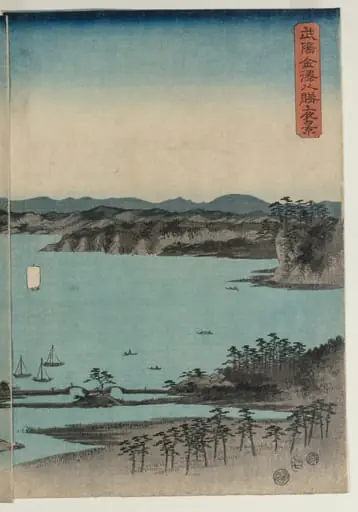 Full Moon on Kanazawa, Musashi
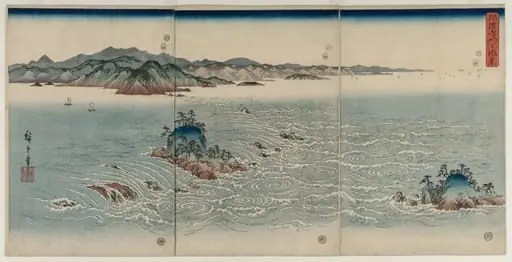 The Whirlpools of Awa
 雪月花 武陽金沢八勝夜景|Panorama of the Eight Views of Kanasawa under a Full Moon
 Buyō Kanazawa Hasshō Yakei|雪月花 武陽金沢八勝夜景|Full Moon at Kanazawa, Province of Musashi
 Evening View of the Eight Famous Places near Kanazawa Under Full Moon in Musashi Province
 歌川広重画 近江八景之内 石山秋月|Autumn Full Moon at Ishiyama Temple (Ishiyama shūgetsu), from the series Eight Views of Ōmi Province (Ōmi hakkei)
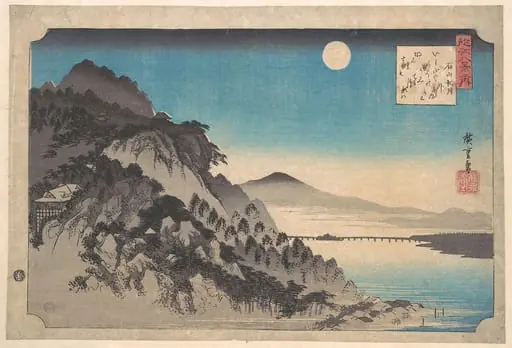 近江八景之内 石山秋月|The Autumn Moon at Ishiyama on Lake Biwa
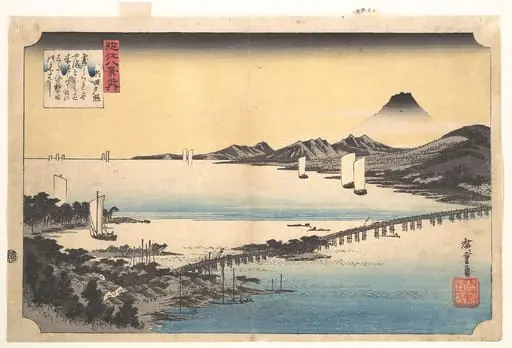 歌川広重画 近江八景の内 瀬田夕照|Sunset Glow at Seta (Seta sekishō), from the series Eight Views of Ōmi Province (Ōmi hakkei)
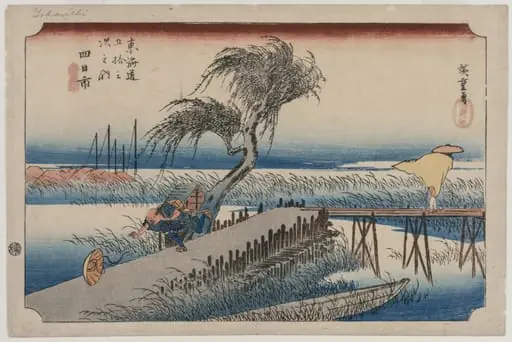 Yokkaichi: View of the Mie River, from the series The Fifty-Three Stations of the Tōkaidō