Artwork
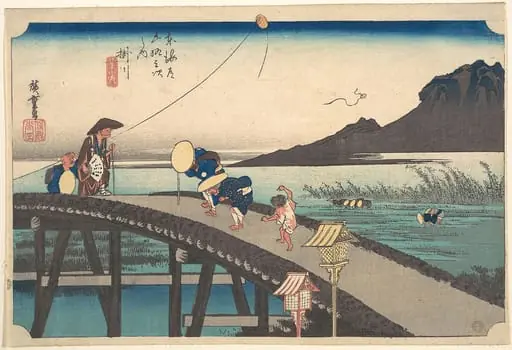
東海道五十三次 掛川|Kakegawa; Akiba-san Embo
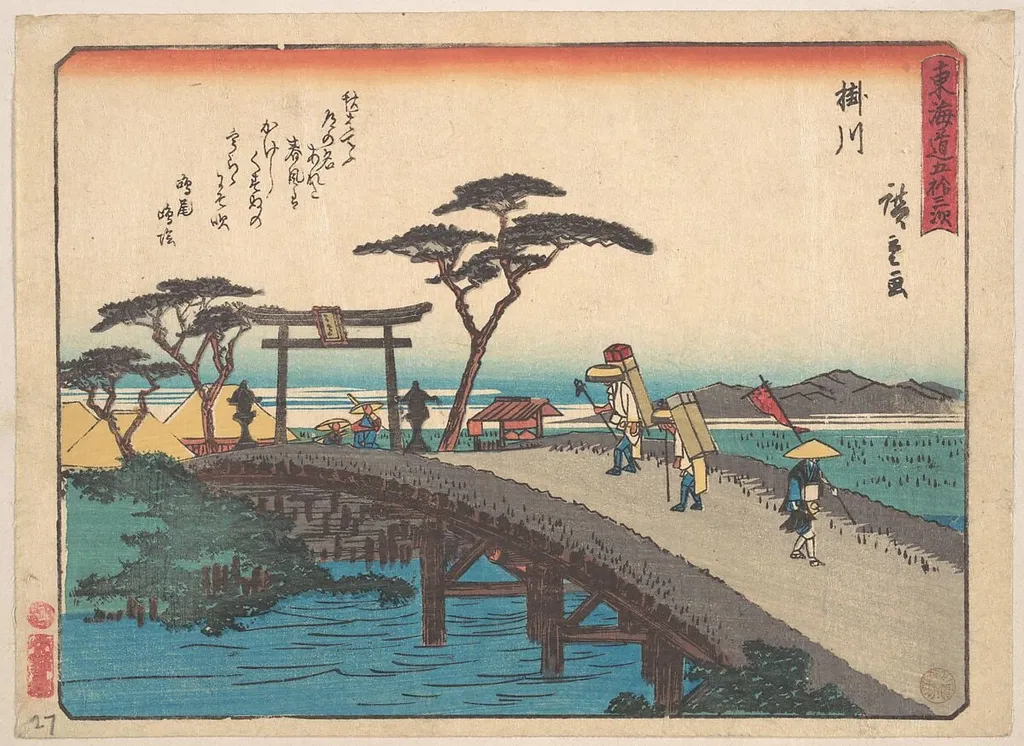
東海道五十三次 掛川|Kakegawa; Akiba-san Embo is an ink print by the Romanticist artist Utagawa Hiroshige. It dates from 1838 and is held in the collection of the Metropolitan Museum of Art.
About this work
Overview
Kakegawa; Akiba-san Embo is a woodblock print from Utagawa Hiroshige's *The Fifty-three Stations of the Tōkaidō* series, created circa 1838. Characteristic of Hiroshige's style, it emphasizes landscape over urban themes, utilizing ink and color on paper.
Subject & Meaning
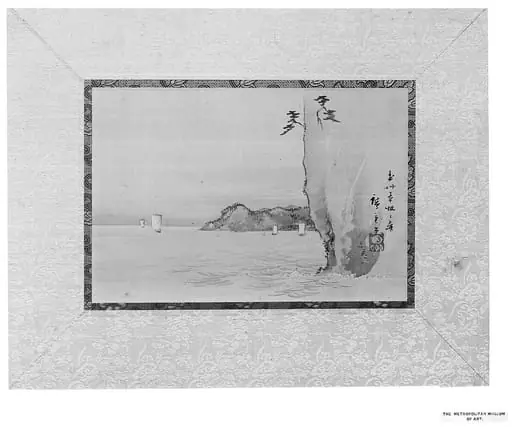
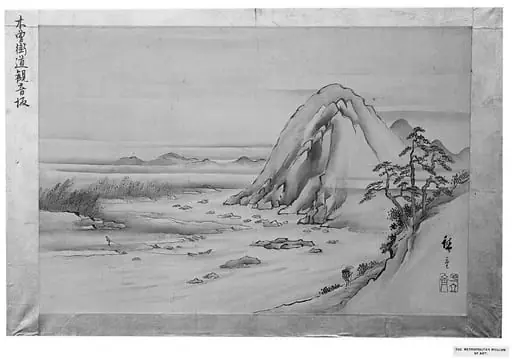
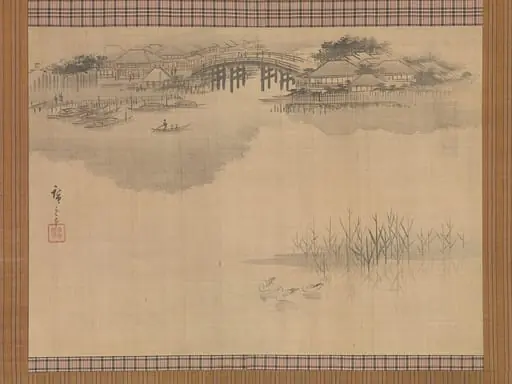
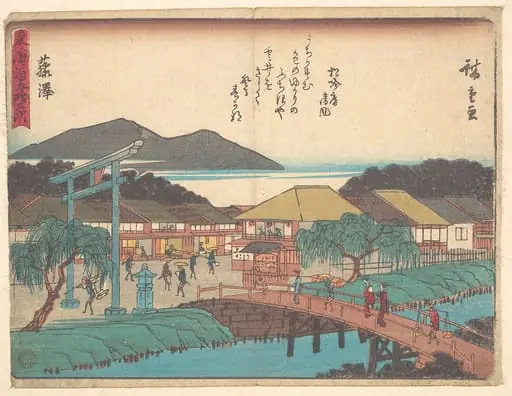
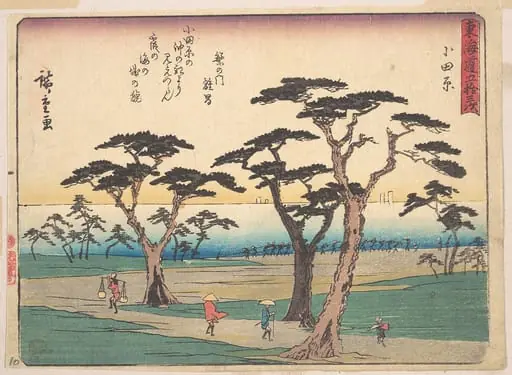
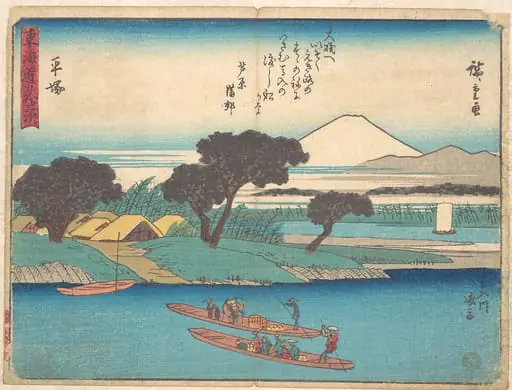
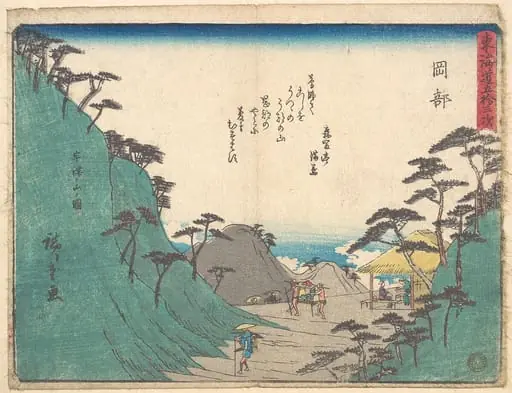
The print depicts a serene riverside scene in Kakegawa, featuring a wooden bridge, three travelers on a path, tall pine trees, a distant shrine, and a soft, pale sky contrasting with deep blue-green water. The composition conveys a sense of vastness.
Technique & Style
Hiroshige employed traditional woodblock printing techniques with a horizontal format. Simple shapes, bold outlines, and careful attention to atmospheric detail are notable, as is the use of scale to emphasize the environment's grandeur over human figures.
History & Provenance
Created around 1838 for *The Fifty-three Stations of the Tōkaidō*, a series highlighting stops along the Tōkaidō road. Part of the late Edo period's ukiyo-e movement, led by Hiroshige's innovative landscape focus.
Context
Reflects the late Edo period's appreciation for natural beauty and travel along the Tōkaidō. Hiroshige's work in this series contributed to the popularity of landscape ukiyo-e, diverging from the genre's typical urban and figure-centric themes.
Legacy
This print, like the series, has influenced the perception of Japanese landscapes globally. It remains a quintessential example of Hiroshige's contribution to ukiyo-e, encouraging further exploration of his oeuvre.
Artist & collection
Artist
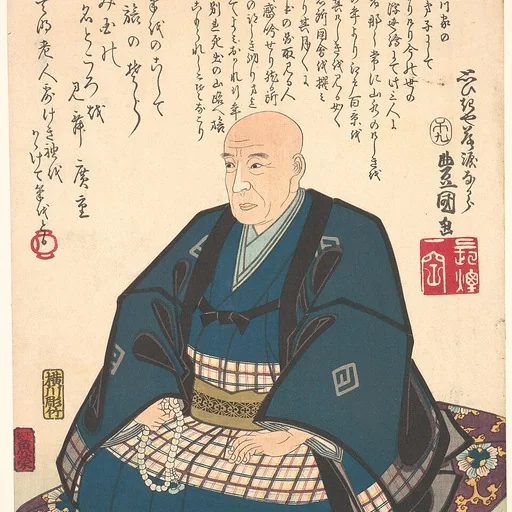
Utagawa Hiroshige (歌川 広重) or Andō Hiroshige (安藤 広重), born Andō Tokutarō (安藤 徳太郎; 1797 – 12 October 1858), was a Japanese ukiyo-e artist, considered the last great master of that tradition.