Artwork
東海道五十三次 岡部|Okabe
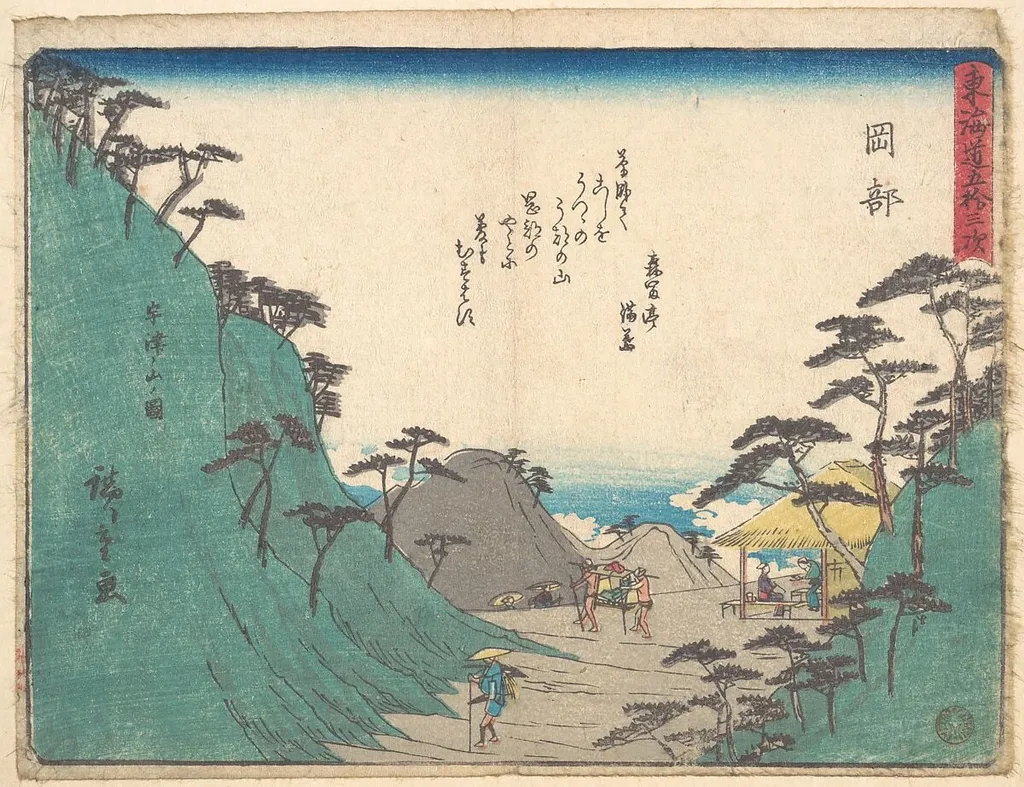
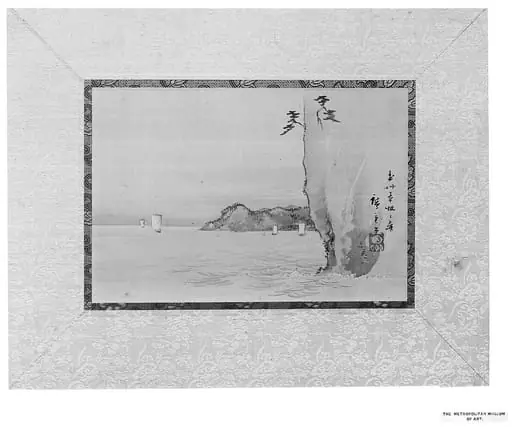
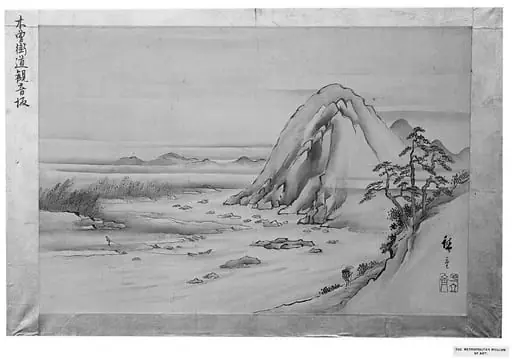
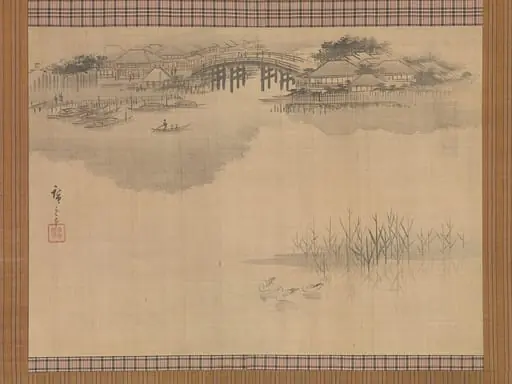
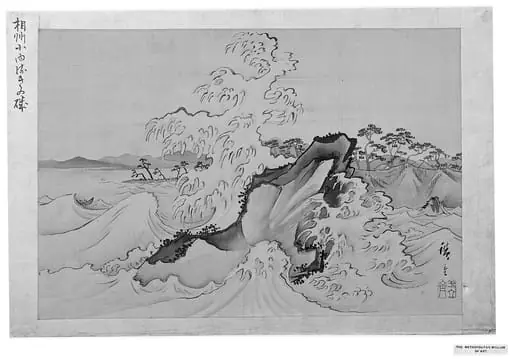
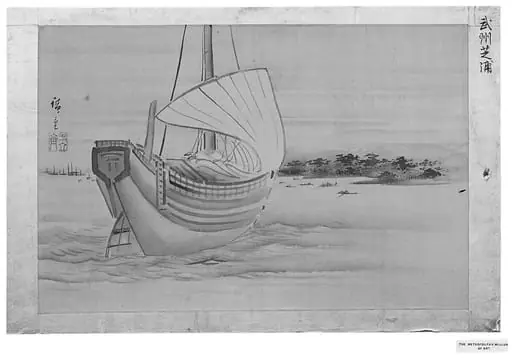
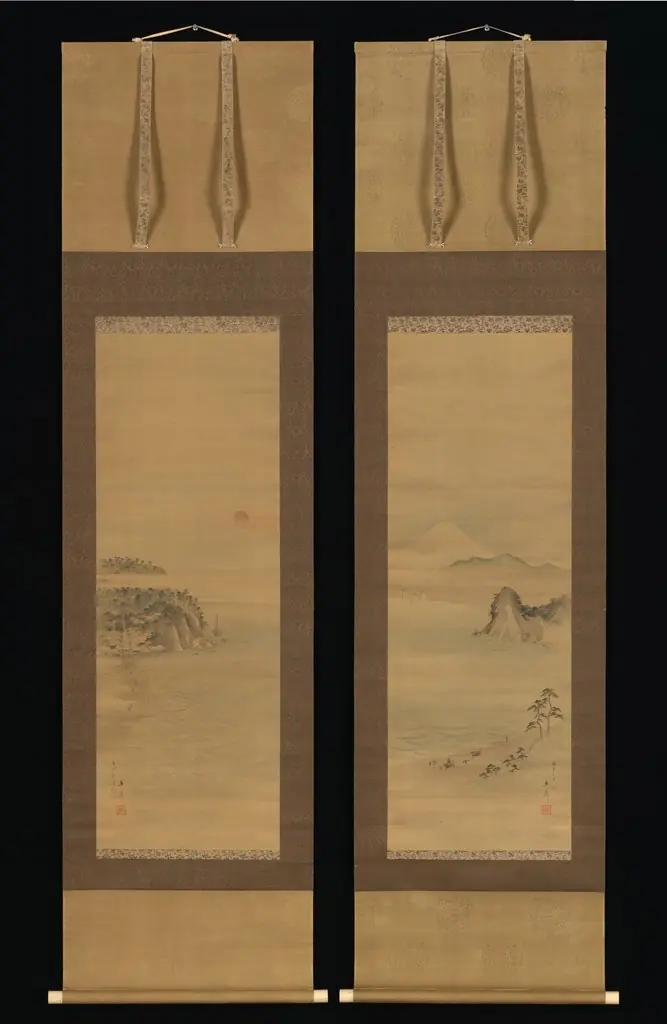
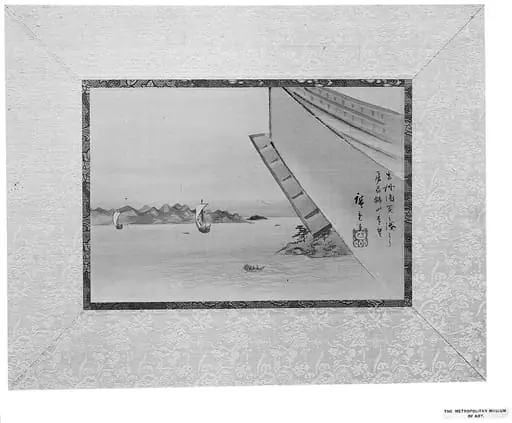
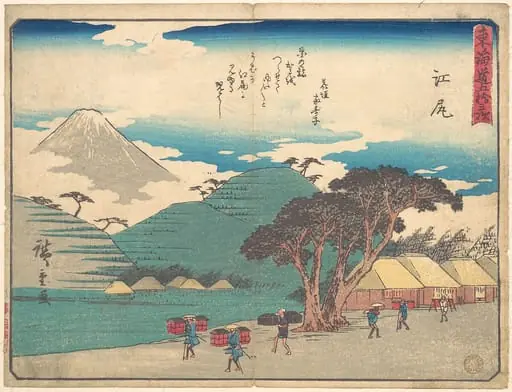
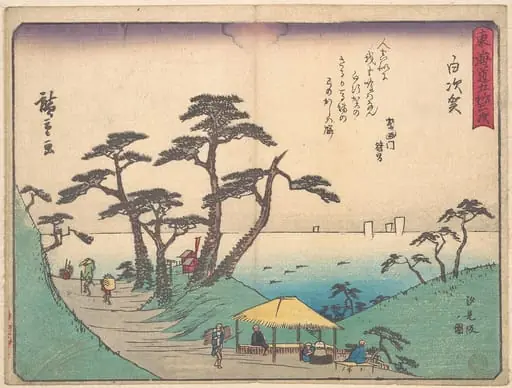
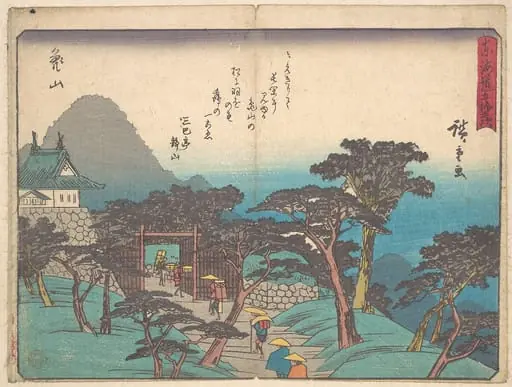
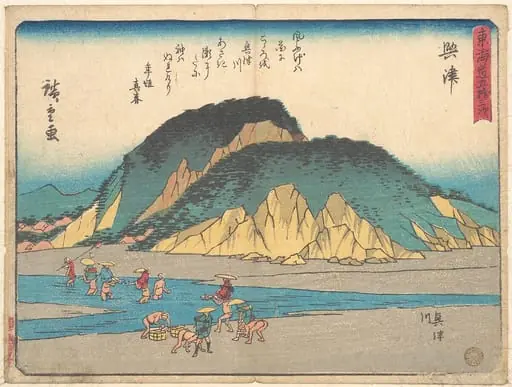
東海道五十三次 岡部|Okabe is an ink print by the Romanticist artist Utagawa Hiroshige. It dates from 1838 and is held in the collection of the Metropolitan Museum of Art.
About this work
Overview
Muted greens, blues and greys dominate, conveying a calm atmosphere that contrasts with the bustling urban subjects typical of earlier ukiyo‑e works.
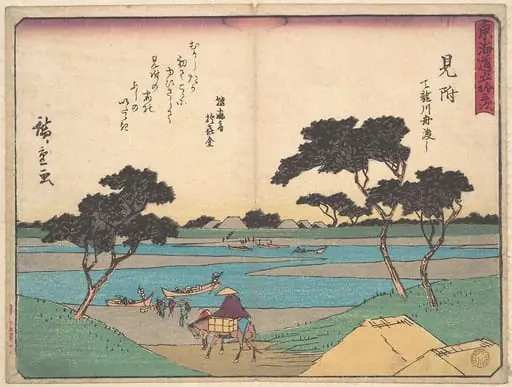
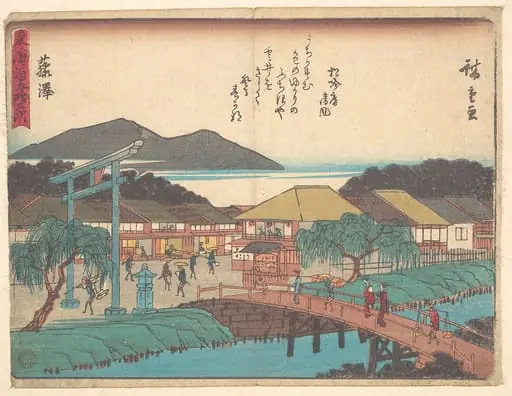
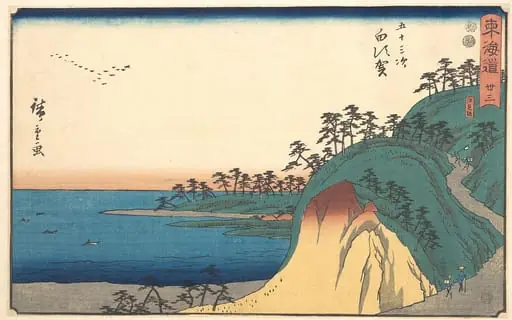
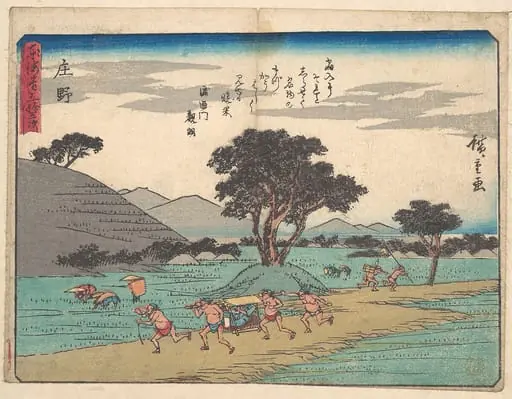
Created circa 1838, this woodblock print by Utagawa Hiroshige forms part of his extensive series illustrating the fifty-three post stations along the Tōkaidō highway. The image portrays the Okabe station, presenting a quiet riverside scene framed by distant mountains and a low‑lying sky. Muted greens, blues and greys dominate, conveying a calm atmosphere that contrasts with the bustling urban subjects typical of earlier ukiyo‑e works.
Subject & Meaning
The composition centers on a narrow path winding through trees, where a small group of travelers moves toward the water’s edge, suggesting the routine passage of wayfarers along the historic route. The expansive water and distant peaks emphasize the natural setting of the station, inviting contemplation of travel’s relationship to the surrounding landscape rather than focusing on commercial activity.
Technique & Style
Executed with traditional ukiyo‑e woodblock methods, the print combines precise line work in ink with layered color washes applied to paper. Hiroshige’s handling of atmospheric perspective—softening distant forms and using subtle tonal shifts—creates depth, while the restrained palette reinforces the scene’s serenity. The balance of detailed foreground figures against broader, impressionistic background reflects his mature approach to landscape rendering.
History & Provenance
The Okabe print was issued as a component of the Tōkaidō series, which circulated widely in Edo‑period Japan and contributed to Hiroshige’s reputation as a leading landscape artist. Original impressions were produced by multiple publishers and have since entered museum collections and private holdings worldwide, often cited as representative examples of mid‑19th‑century Japanese printmaking.
Context
During the late Edo era, the Tōkaidō road linked Edo (Tokyo) with Kyoto, and its stations became popular subjects for visual documentation. Hiroshige’s series diverged from earlier depictions that highlighted bustling towns, instead foregrounding the natural environment encountered by travelers. This shift mirrors a broader cultural interest in travel literature and the aesthetic appreciation of Japan’s varied scenery.
Legacy
Hiroshige’s treatment of light, weather, and perspective in the Okabe print influenced later Japanese and Western artists, informing the development of impressionist techniques abroad. The image remains a reference point for scholars studying the integration of topographical accuracy with poetic ambience in ukiyo‑e, illustrating the enduring appeal of his vision of the Tōkaidō corridor.
Artist & collection
Artist
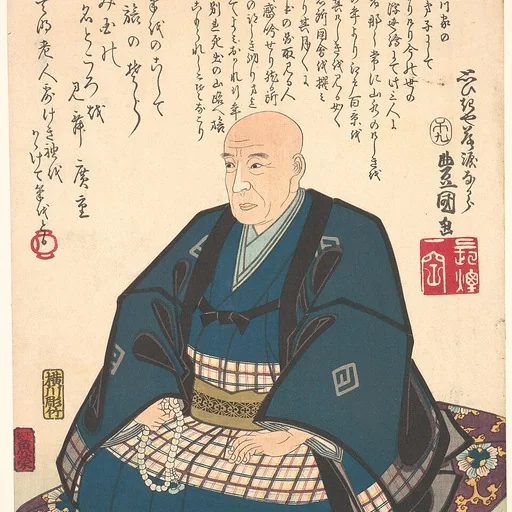
Utagawa Hiroshige (歌川 広重) or Andō Hiroshige (安藤 広重), born Andō Tokutarō (安藤 徳太郎; 1797 – 12 October 1858), was a Japanese ukiyo-e artist, considered the last great master of that tradition.