Artwork
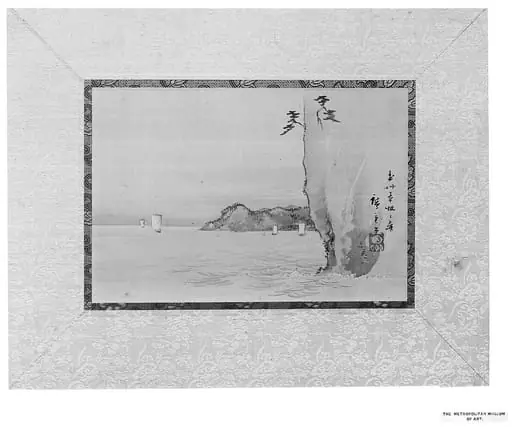
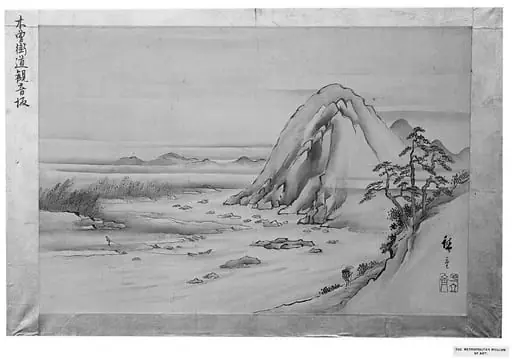
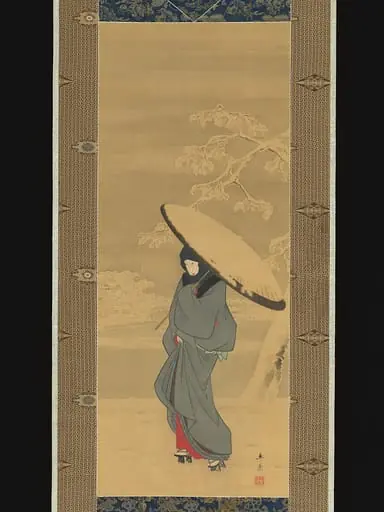
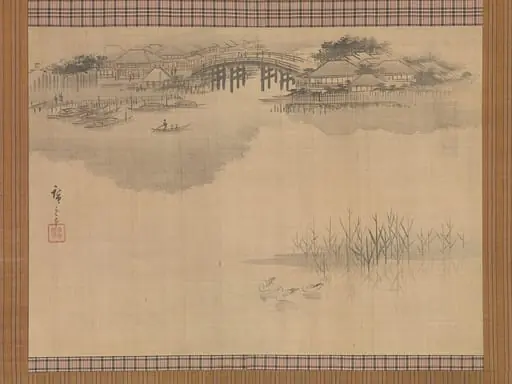
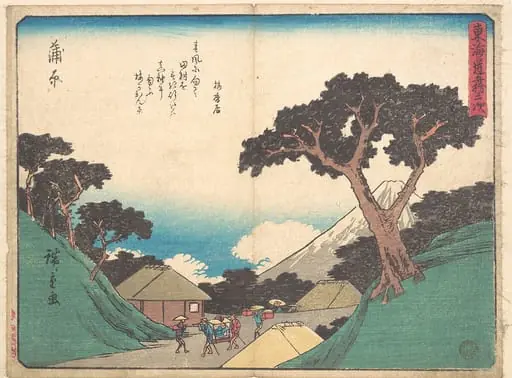
東海道五十三次之内 蒲原 岩淵よりふじ川を見る圖|Kambura Station
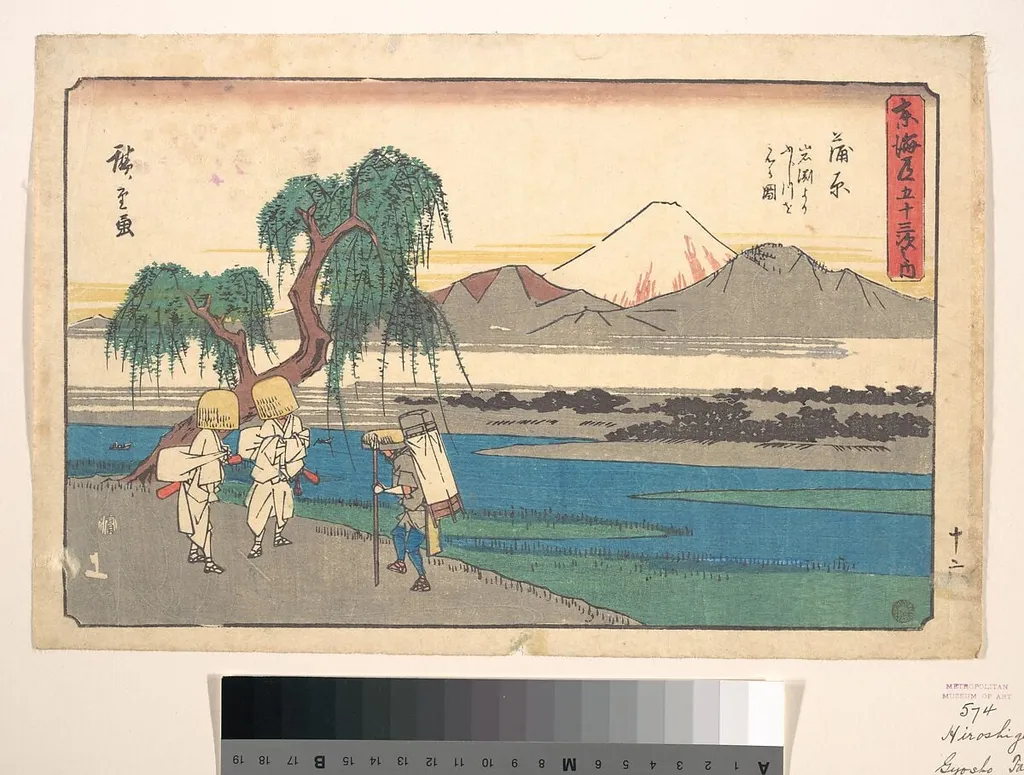
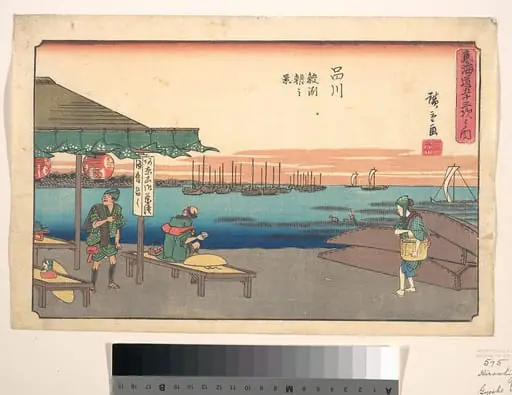
東海道五十三次之内 蒲原 岩淵よりふじ川を見る圖|Kambura Station is an ink print by the Romanticist artist Utagawa Hiroshige. It dates from 1842 and is held in the collection of the Metropolitan Museum of Art.
About this work
Overview
The print is rendered in ink and color on paper, reflecting Hiroshige’s signature approach to landscape as a subject worthy of artistic contemplation.
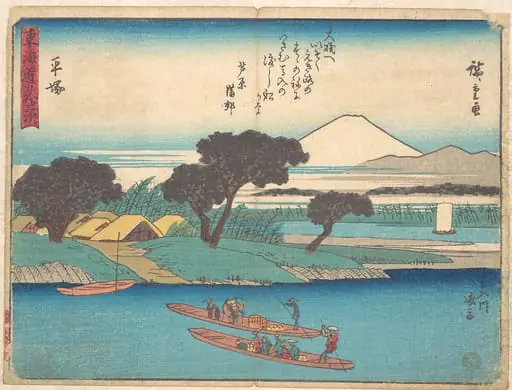
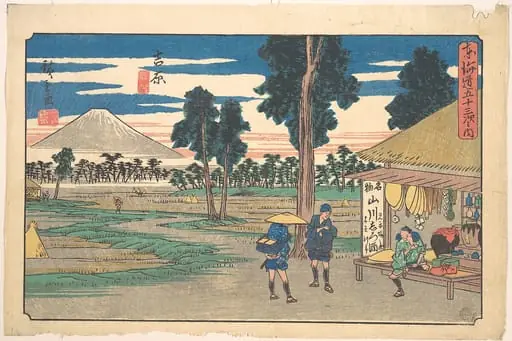
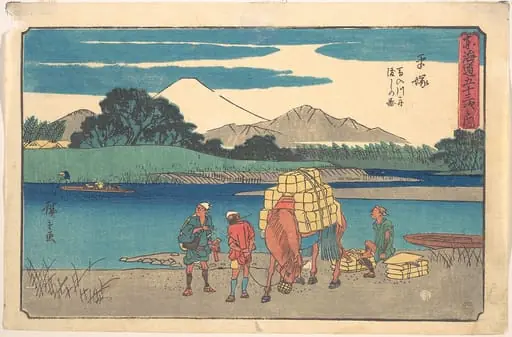
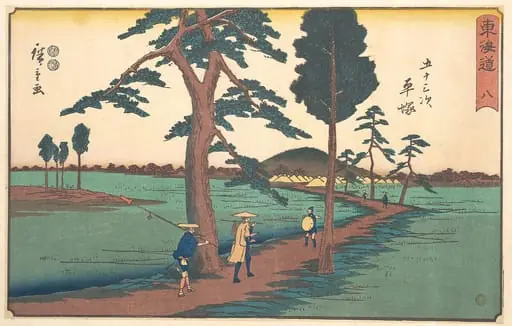
Created around 1842 by Utagawa Hiroshige, this woodblock print is one of fifty-three scenes in the series *The Fifty-three Stations of the Tōkaidō*. It captures a quiet moment along the historic road connecting Edo and Kyoto, emphasizing natural scenery over urban life. The print is rendered in ink and color on paper, reflecting Hiroshige’s signature approach to landscape as a subject worthy of artistic contemplation.
Subject & Meaning
The scene portrays three travelers moving along a riverside path, their small figures emphasizing the scale of the landscape. Mount Fuji appears faintly on the horizon, its peak glowing with a soft light. The composition suggests solitude and the passage of time, inviting reflection on the journey rather than its destination. The tree with drooping branches frames the view, reinforcing a sense of stillness and natural order.
Technique & Style
Hiroshige employed subtle gradations of blue, green, and muted yellow to evoke a tranquil atmosphere. The print’s delicate lines and layered washes create depth without sharp contrast, a hallmark of his lyrical style. By minimizing human presence and maximizing environmental space, he shifted focus from narrative to mood, distinguishing his work from the more dynamic figures common in ukiyo-e of the time.
History & Provenance
The print was produced during the peak of Hiroshige’s career, as demand for travel-themed prints grew among Edo’s middle class. It entered the collection of The Metropolitan Museum of Art through established acquisition channels, likely as part of a broader effort in the early 20th century to document Japanese print traditions. Its preservation reflects its significance in the history of Japanese printmaking.
Context
The Tōkaidō road was a vital artery for commerce and pilgrimage, and its stations were well-known landmarks. Hiroshige’s series responded to public interest in travel and regional identity, offering viewers a visual guide to the journey. Unlike earlier ukiyo-e that centered on courtesans or actors, this work elevated everyday landscapes, aligning with a broader cultural appreciation for nature and quiet contemplation.
Legacy
Hiroshige’s *Tōkaidō* series influenced both Japanese and Western artists, contributing to the global recognition of ukiyo-e as a serious art form. His emphasis on atmosphere, seasonal change, and spatial harmony prefigured later developments in landscape painting. This print remains a key example of how Japanese artists transformed commercial prints into enduring meditations on place and perception.
Artist & collection
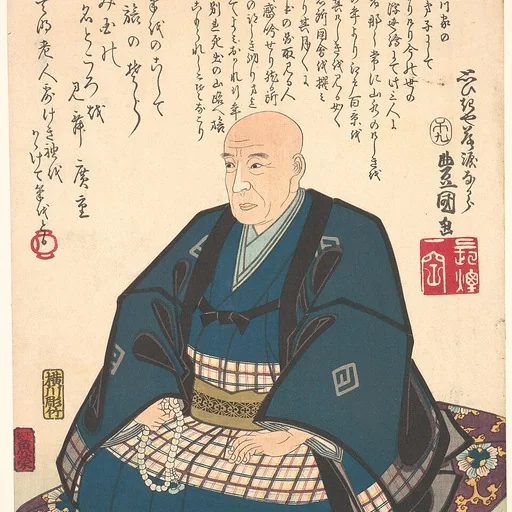
Artist
Utagawa Hiroshige (歌川 広重) or Andō Hiroshige (安藤 広重), born Andō Tokutarō (安藤 徳太郎; 1797 – 12 October 1858), was a Japanese ukiyo-e artist, considered the last great master of that tradition.