Artwork
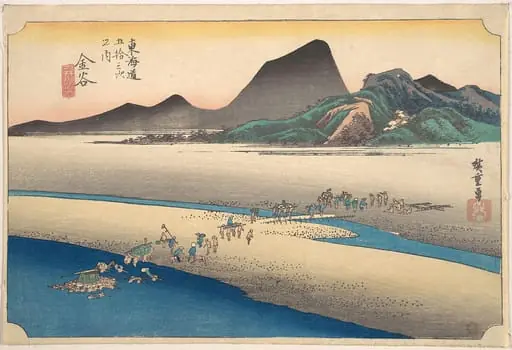
東海道五十三次 金谷 かなや駅 大井川|Kanaya
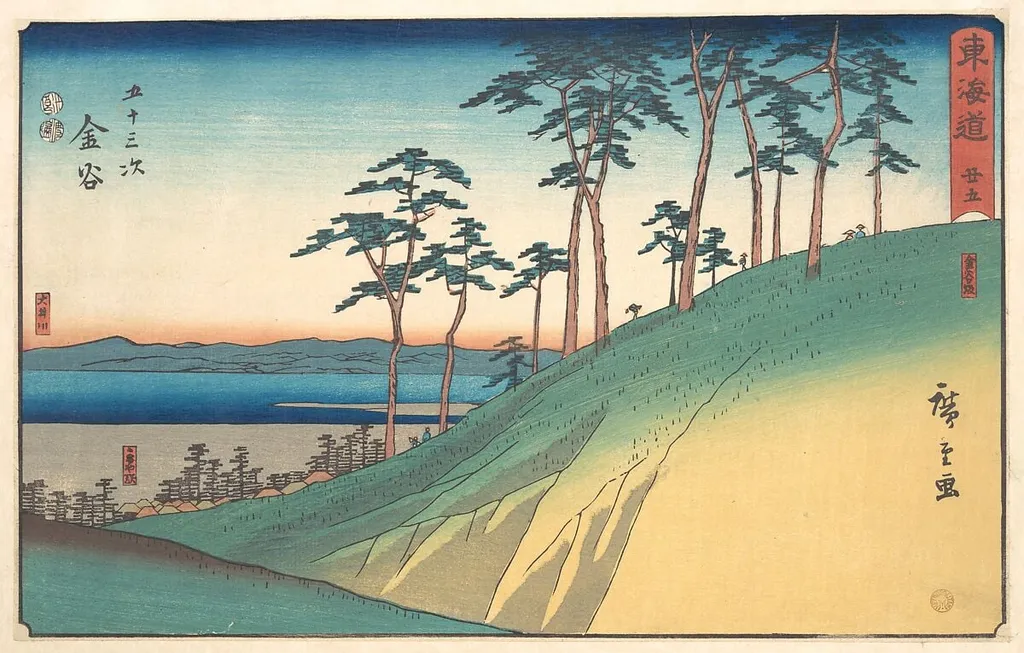
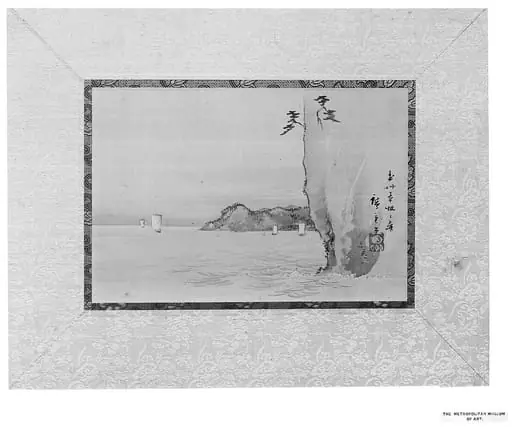
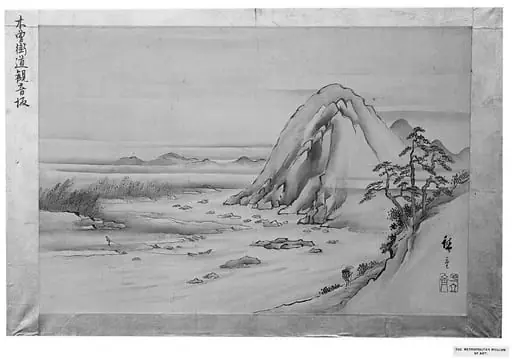
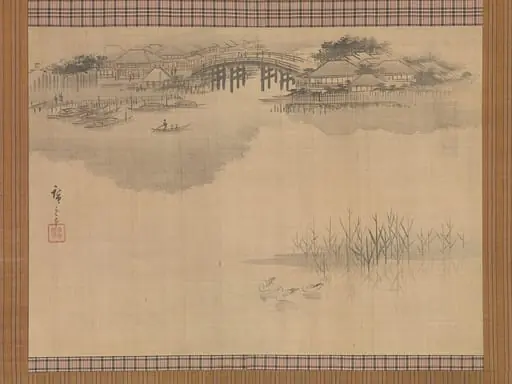
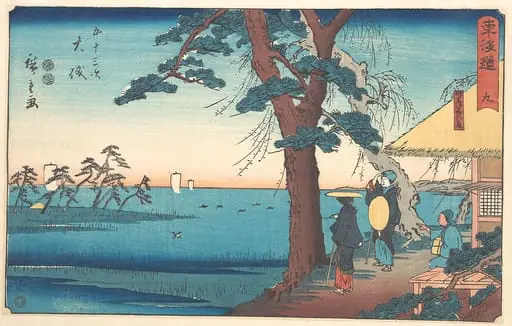
東海道五十三次 金谷 かなや駅 大井川|Kanaya is an ink print by the Romanticist artist Utagawa Hiroshige. It dates from 1840 and is held in the collection of the Metropolitan Museum of Art.
About this work
Overview
Created around 1840 by Utagawa Hiroshige, this woodblock print is one of fifty-three scenes in the series *The Fifty-three Stations of the Tōkaidō*.
Created around 1840 by Utagawa Hiroshige, this woodblock print is one of fifty-three scenes in the series *The Fifty-three Stations of the Tōkaidō*. It captures the post station of Kanaya along the major road connecting Edo and Kyoto. Unlike earlier ukiyo-e works focused on city life, Hiroshige turned his attention to the natural and architectural elements of travel routes, emphasizing atmosphere over human activity.
Subject & Meaning
The scene portrays a quiet hillside near the Ōi River, with a winding road ascending through grassy slopes lined with tall pines. A modest village huddles along the water’s edge, its buildings nestled into the terrain. The absence of travelers underscores solitude and contemplation, reflecting the meditative pace of journeying along the Tōkaidō. The landscape conveys a sense of stillness, inviting reflection on the rhythm of travel in pre-modern Japan.
Technique & Style
Hiroshige employed fine, deliberate lines to render texture—short strokes suggest grasses, while layered cross-hatching defines the pine needles and rocky outcrops. The palette is restrained, with pale blues and soft ochres evoking a hazy, early afternoon sky. The horizontal composition guides the eye along the road’s curve, reinforcing the sense of movement through space. Color blocks are applied with precision, typical of high-quality ukiyo-e printing.
History & Provenance
The print was produced during Hiroshige’s most prolific period, when the *Tōkaidō* series gained widespread popularity across Japan. Published by Hoeidō, it was part of a commercial venture that made landscape prints accessible to the middle class. Original impressions were widely distributed, and surviving examples remain among the most collected Japanese prints in global institutions.
Context
The Tōkaidō was the most traveled road in Edo-period Japan, used by merchants, pilgrims, and samurai. Post stations like Kanaya provided rest and lodging, but were often remote and sparsely populated. Hiroshige’s focus on such locations reflected a growing cultural interest in travel and the natural world, influenced by rising literacy and domestic tourism among townspeople.
Legacy
Hiroshige’s *Tōkaidō* series redefined Japanese printmaking by elevating landscape as a subject worthy of artistic attention. His atmospheric compositions influenced later Western artists, including the Impressionists, who admired his use of perspective and seasonal mood. The print continues to serve as a visual record of Edo-period travel and the quiet beauty of everyday places.
Artist & collection
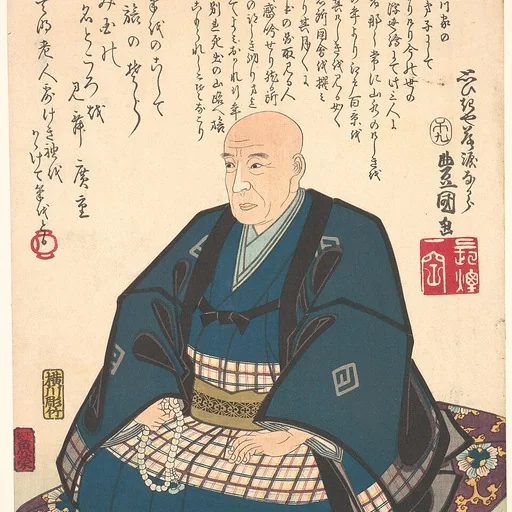
Artist
Utagawa Hiroshige (歌川 広重) or Andō Hiroshige (安藤 広重), born Andō Tokutarō (安藤 徳太郎; 1797 – 12 October 1858), was a Japanese ukiyo-e artist, considered the last great master of that tradition.