Artwork
東海道五十三次 京 三条大橋図|Kyoto: Sanju Ohashi no zu.
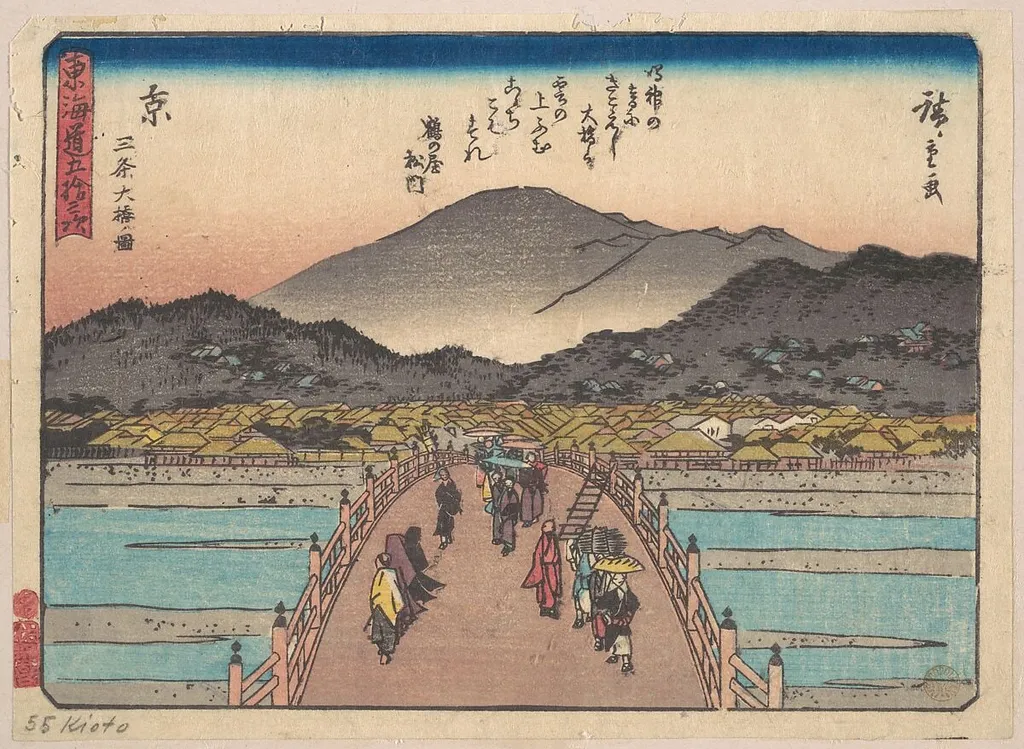
東海道五十三次 京 三条大橋図|Kyoto: Sanju Ohashi no zu. is an ink print by the Romanticist artist Utagawa Hiroshige. It dates from 1838 and is held in the collection of the Metropolitan Museum of Art.
About this work
Overview
Created circa 1838 by the ukiyo‑e master Utagawa Hiroshige, this woodblock print forms part of his celebrated series The Fifty‑three Stations of the Tōkaidō. The image records a view of Sanjū Ōhashi, a bridge spanning the Kamo River in Kyoto, rendered with ink and color on paper.
Subject & Meaning
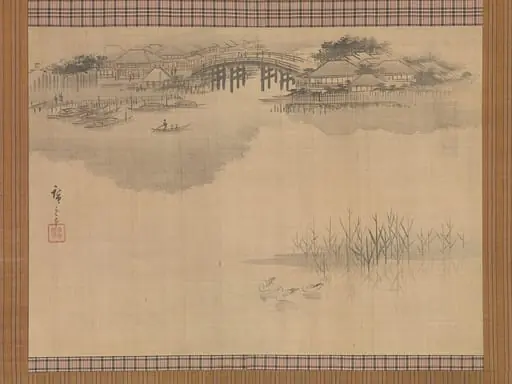
The composition presents a long, arched bridge crossing tranquil water, populated by travelers moving in opposite directions. On the riverbank a row of tiled‑roofed structures frames the scene, while a distant mountain rises behind a sky tinged with pale blue and pink, suggesting a serene moment along the historic route.
Technique & Style
Hiroshige employs the characteristic ukiyo‑e palette of flat, saturated hues and crisp line work. The figures are rendered in simple, colorful garments, some bearing umbrellas, their silhouettes balanced against the architectural and natural elements. The print’s clear delineation of space and atmospheric perspective exemplify the artist’s skill in conveying mood through minimal detail.
History & Provenance
The work was produced as one of the fifty‑three prints documenting each post station on the Tōkaidō road, a major artery linking Edo and Kyoto. As a component of this series, it circulated widely in the early‑mid nineteenth century, contributing to Hiroshige’s reputation for capturing everyday travel scenes.
Context
Unlike many ukiyo‑e prints that focus on theatrical or pleasure‑quarter subjects, Hiroshige’s Tōkaidō series emphasizes landscape and the quotidian experience of movement. Sanjū Ōhashi, a key crossing in Kyoto, illustrates the blend of urban architecture and natural surroundings that defined the city’s riverside environment during the Edo period.
Artist & collection
Artist
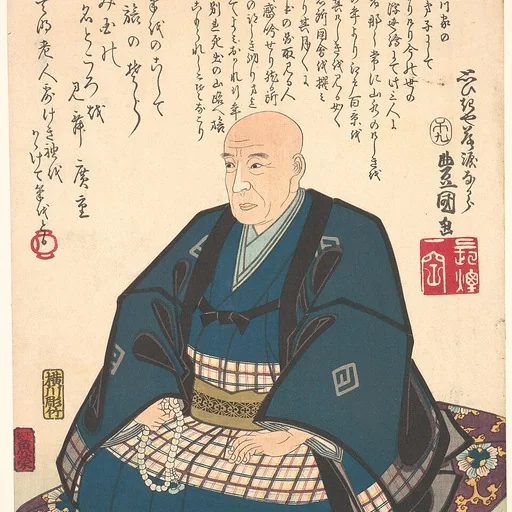
Utagawa Hiroshige (歌川 広重) or Andō Hiroshige (安藤 広重), born Andō Tokutarō (安藤 徳太郎; 1797 – 12 October 1858), was a Japanese ukiyo-e artist, considered the last great master of that tradition.

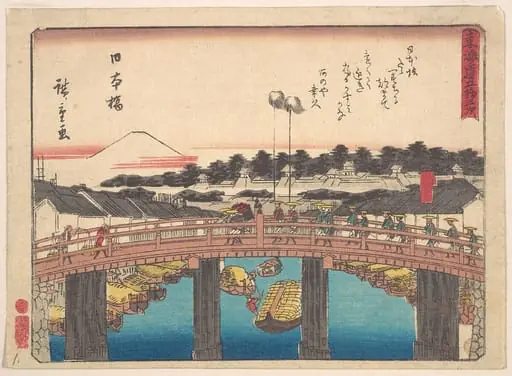 東海道五十三次 日本橋|Nihon Bashi
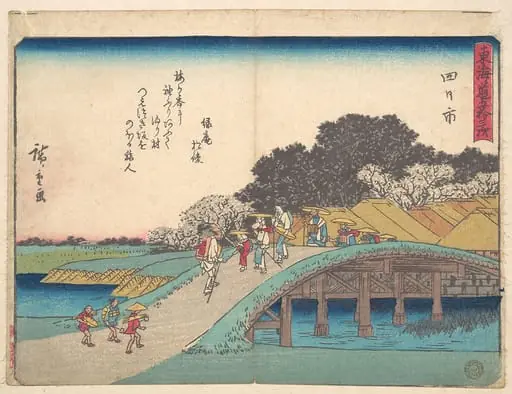 東海道五十三次 四日市|Yokkaichi
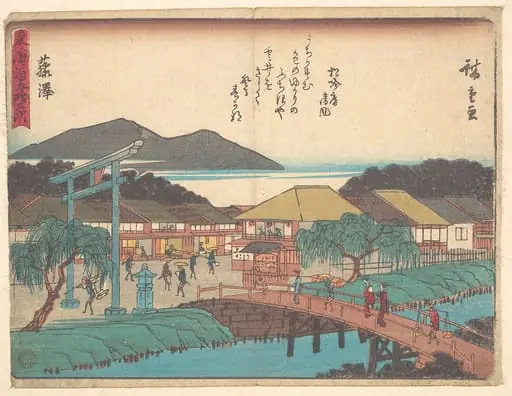 東海道五十三次 藤沢|Fujisawa
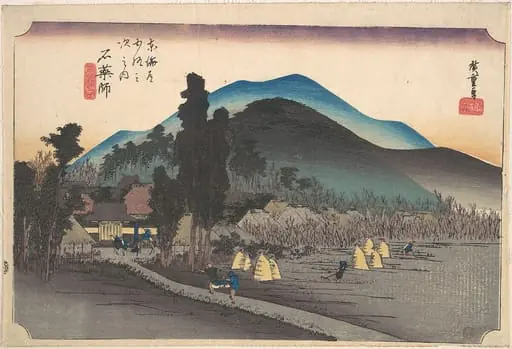 東海道五十三次之内 石薬師 石薬師寺|Ishiyakushi, Ishiyakushi Ji
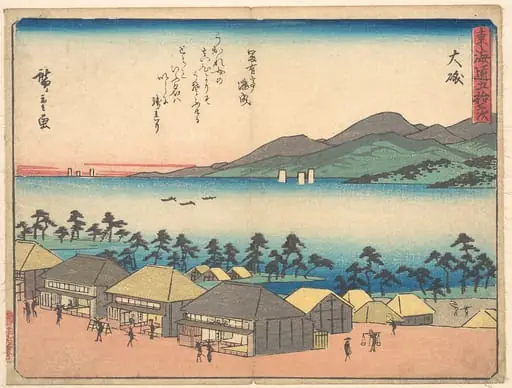 東海道五十三次 大磯|Ōiso
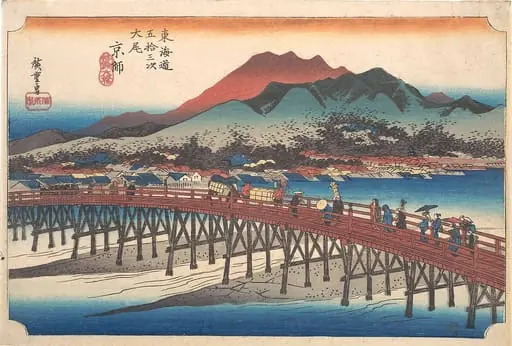 歌川広重画 「東海道五十三次 大尾 京師 三条大橋」|Kyoto: The Great Bridge at Sanjō (Taibi, Keishi, Sanjō Ōhashi), from the series Fifty-Three Stations of the Tōkaidō (Tōkaidō gojūsan tsugi)
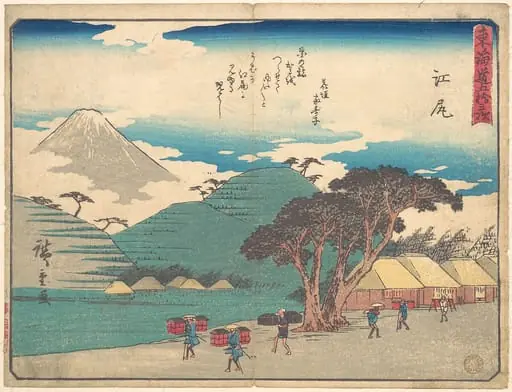 東海道五十三次 江尻|Ejiri
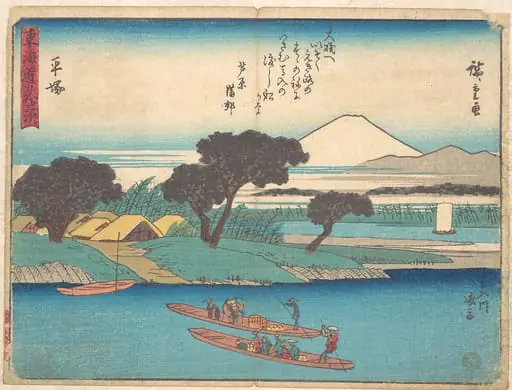 東海道五十三次 平塚|Hiratsuka
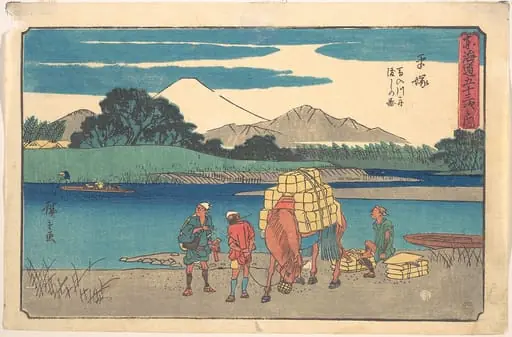 東海道五十三次之内 平塚 馬入川舟渡しの図|Hiratsuka; Banyugawa Funa Watashi no Zu