Artwork
東都名所 両国花火の図|Ryogoku Hanabi no Zu
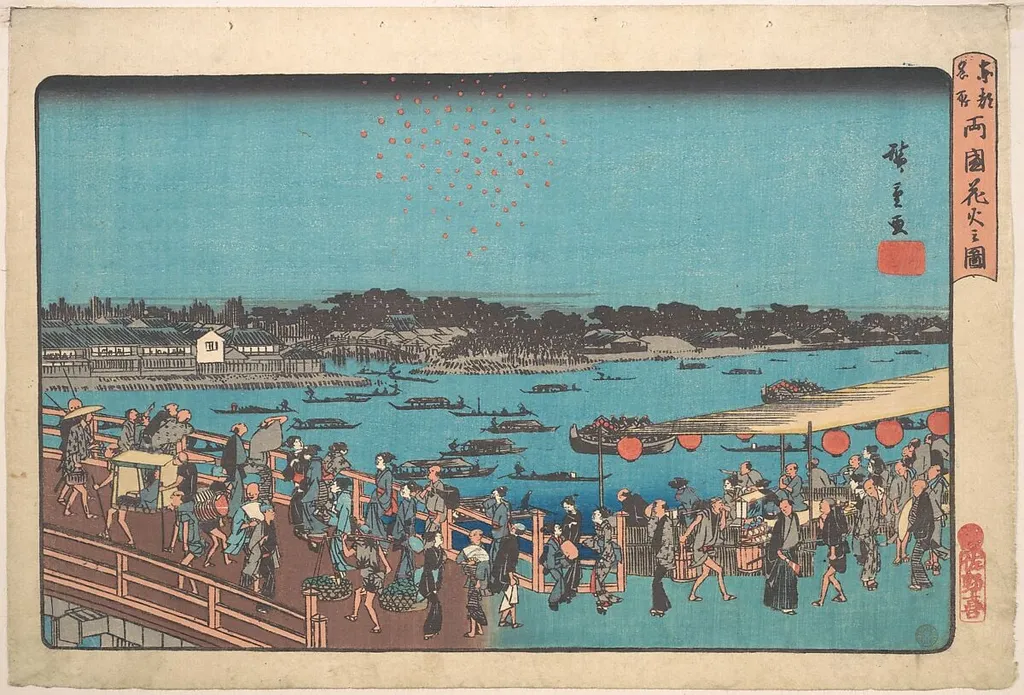
東都名所 両国花火の図|Ryogoku Hanabi no Zu is an ink print by the Romanticist artist Utagawa Hiroshige. It dates from 1841 and is held in the collection of the Metropolitan Museum of Art.
About this work
Overview
Created around 1841 by Utagawa Hiroshige, this woodblock print captures the annual fireworks display over the Ryogoku Bridge in Edo.
Created around 1841 by Utagawa Hiroshige, this woodblock print captures the annual fireworks display over the Ryogoku Bridge in Edo. Part of a series depicting famous locations in the city, it reflects the popularity of public festivals during the late Edo period. Unlike many ukiyo-e works centered on actors or courtesans, this piece focuses on a communal outdoor event, emphasizing atmosphere and crowd dynamics over individual figures.
Subject & Meaning
The scene portrays a summer night festival where people gather along the riverbank and on boats to witness fireworks. The event, tied to religious observances and seasonal rituals, symbolized fleeting beauty and collective celebration. Hiroshige’s composition frames the spectacle as both a natural phenomenon and a social ritual, highlighting the harmony between human activity and the ephemeral glow of the pyrotechnics.
Technique & Style
Hiroshige employed fine woodblock carving to render intricate details: each figure on the bridge and in the boats is individually posed, and the water’s surface suggests motion through subtle, flowing lines. The fireworks are arranged in deliberate, star-like patterns, contrasting with the deep indigo sky. Cross-hatching and graded ink tones create depth in shadows, while muted colors ground the luminous bursts of red and gold.
History & Provenance
The print was produced during Hiroshige’s early career, before his famous travel series. It was likely part of a commercial print run distributed to urban consumers in Edo. Surviving impressions are held in major museum collections, including the Museum of Fine Arts, Boston, and the British Museum, indicating its early recognition as a representative work of Edo-period urban life.
Context
Fireworks displays at Ryogoku were annual events, often held in summer to honor the dead or celebrate the season. The bridge, a key crossing over the Sumida River, became a social hub during these festivals. Hiroshige’s depiction aligns with a growing trend among ukiyo-e artists to document everyday public spectacles, shifting focus from elite subjects to the lived experiences of common townspeople.
Legacy
This print exemplifies Hiroshige’s ability to transform ordinary urban events into poetic compositions. Its emphasis on atmosphere, crowd behavior, and natural light influenced later landscape artists in Japan and abroad. Though not as widely known as his travel series, it remains a key example of how ukiyo-e captured the rhythm of Edo’s public life through careful observation and technical precision.
Artist & collection
Artist
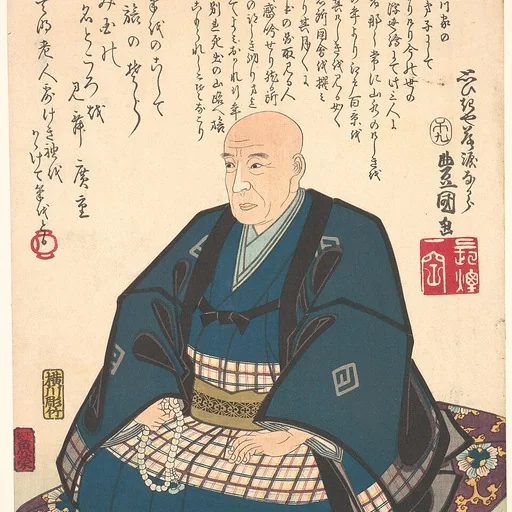
Utagawa Hiroshige (歌川 広重) or Andō Hiroshige (安藤 広重), born Andō Tokutarō (安藤 徳太郎; 1797 – 12 October 1858), was a Japanese ukiyo-e artist, considered the last great master of that tradition.