Artwork
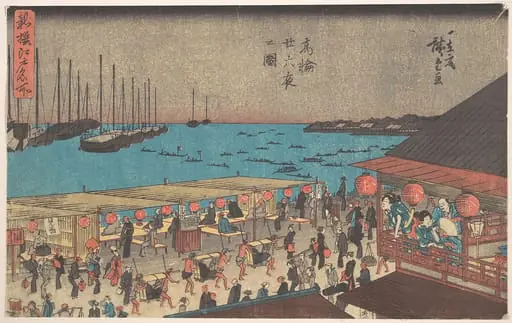
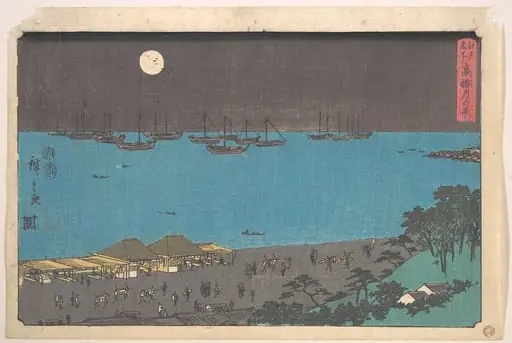
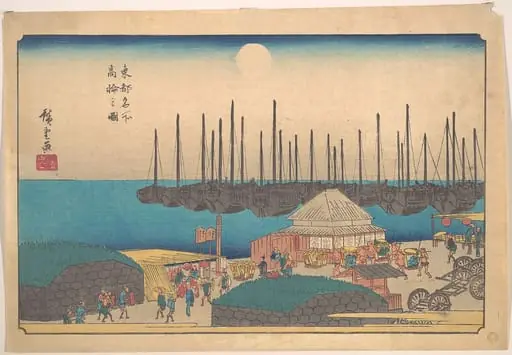
東都名所 高輪の夕景|Takanawa no Yukei
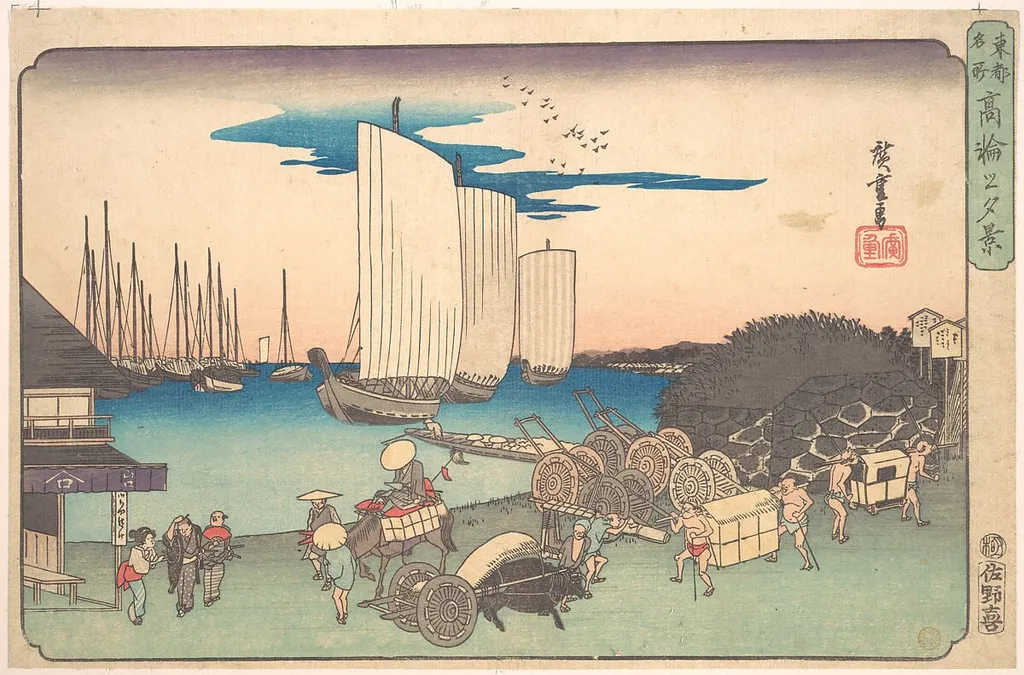
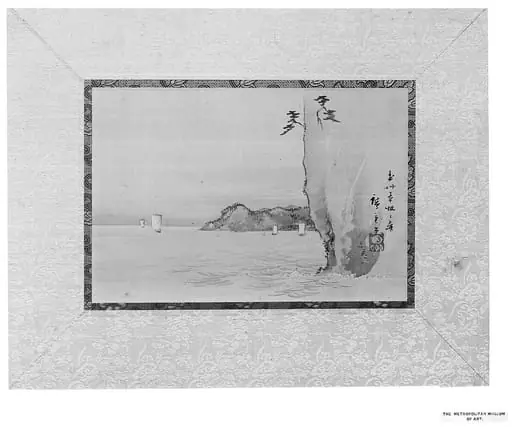
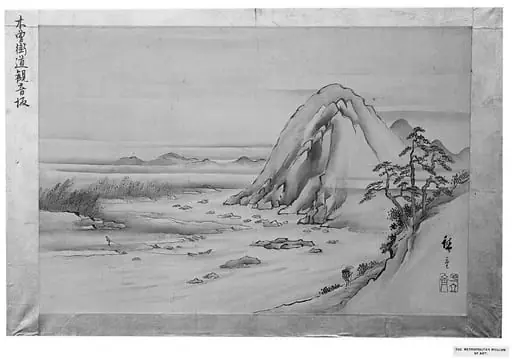
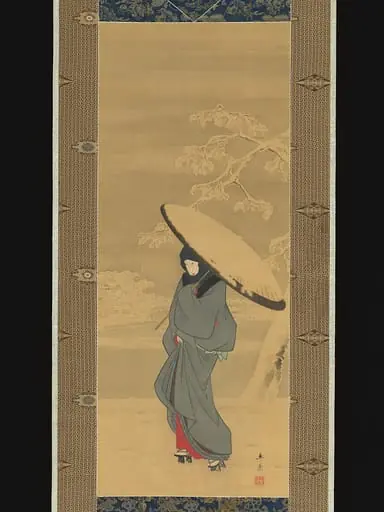
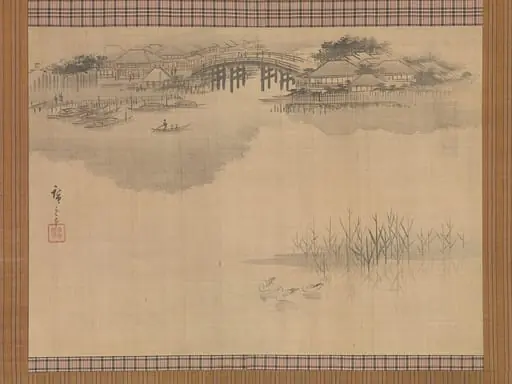
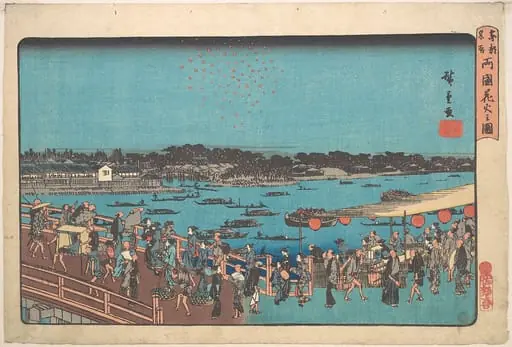
東都名所 高輪の夕景|Takanawa no Yukei is an ink print by the Romanticist artist Utagawa Hiroshige. It dates from 1833 and is held in the collection of the Metropolitan Museum of Art.
About this work
Overview
Created around 1833, *Takanawa no Yukei* is a woodblock print by Utagawa Hiroshige, rendered in ink and color on paper. It belongs to a series capturing scenes along the Tōkaidō road, a major travel route connecting Edo and Kyoto. Unlike many ukiyo-e works of the time that centered on actors or courtesans, Hiroshige focused on quiet, everyday landscapes, emphasizing atmosphere over narrative.
Subject & Meaning
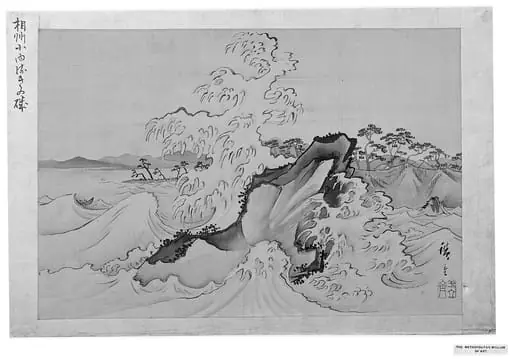
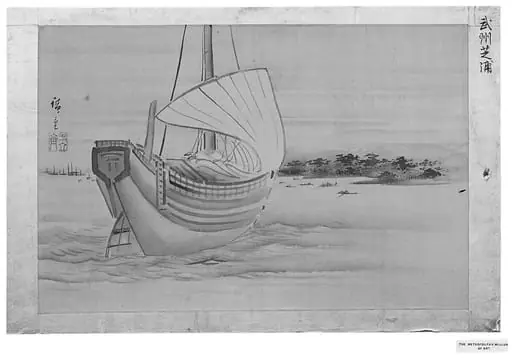
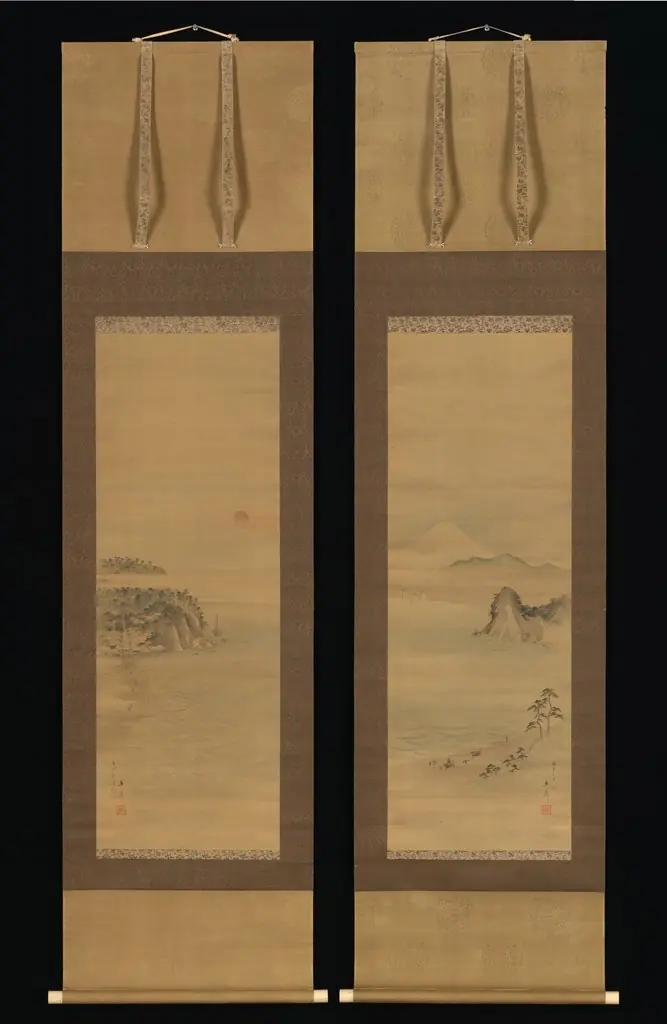
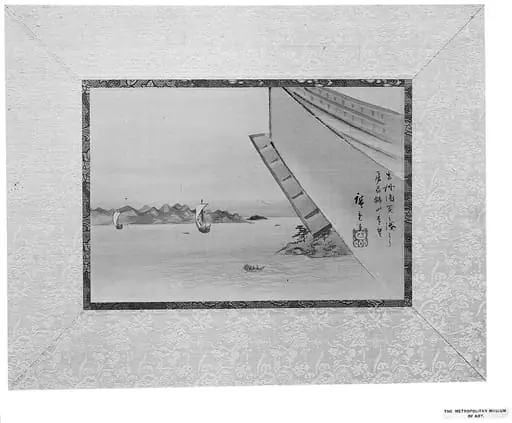
The scene portrays the coastal area of Takanawa at dusk, where the fading light softens the horizon. Boats with white sails drift on calm water, while figures and animals near the shore suggest quiet human activity. The tranquil composition reflects a contemplative mood, evoking the passage of day into night and the rhythm of travel along a well-trodden path.
Technique & Style
The composition balances horizontal bands of land, water, and sky, guiding the viewer’s eye gently across the scene.
Hiroshige employed fine, precise lines to define textures in the rocks, trees, and sails, while layered washes of color—soft pinks, purples, and blues—create a hazy, atmospheric depth. The sky’s gradient and the subtle gradation of water reflect his mastery of color printing techniques. The composition balances horizontal bands of land, water, and sky, guiding the viewer’s eye gently across the scene.
History & Provenance
The print was produced during Hiroshige’s early period of landscape-focused work, before his more famous series like *Fifty-Three Stations of the Tōkaidō*. It was likely printed in limited editions for a growing urban audience interested in travel imagery. The Metropolitan Museum of Art acquired it as part of its broader collection of Edo-period prints, preserving its historical and artistic context.
Context
In the 1830s, Japanese cities saw rising interest in domestic tourism and printed images of famous places. Hiroshige’s work tapped into this trend, offering viewers a visual journey along the Tōkaidō without physical travel. His depictions of weather, time of day, and seasonal change distinguished his prints from more static compositions of earlier ukiyo-e artists.
Legacy
Hiroshige’s approach to landscape influenced later generations of Japanese and Western artists, including Impressionists who admired his use of light and composition. *Takanawa no Yukei* exemplifies his quiet, observational style, contributing to the elevation of landscape as a serious subject in Japanese printmaking and expanding the genre’s emotional range.
Artist & collection
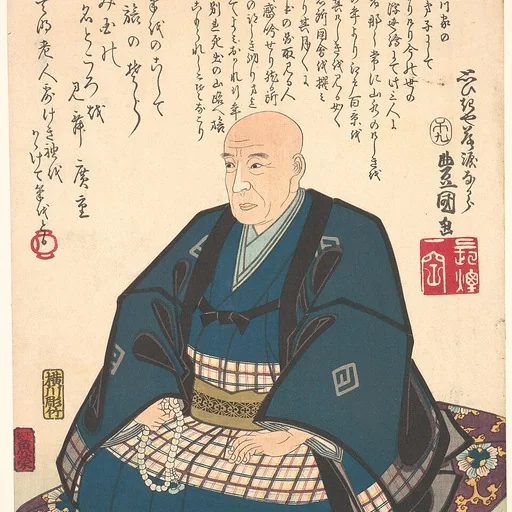
Artist
Utagawa Hiroshige (歌川 広重) or Andō Hiroshige (安藤 広重), born Andō Tokutarō (安藤 徳太郎; 1797 – 12 October 1858), was a Japanese ukiyo-e artist, considered the last great master of that tradition.