Artwork
東海道五十三次之内 嶋田 大井川駿岸|Shimada
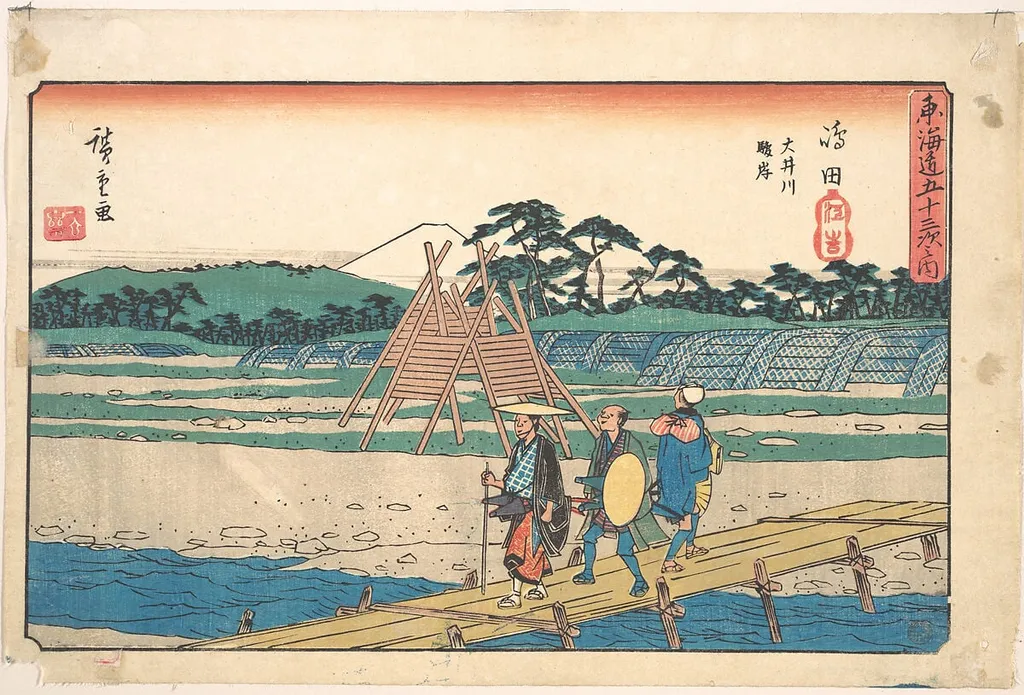
東海道五十三次之内 嶋田 大井川駿岸|Shimada is an ink print by the Romanticist artist Utagawa Hiroshige. It dates from 1842 and is held in the collection of the Metropolitan Museum of Art.
About this work
Overview
Created circa 1842, this woodblock print by Utagawa Hiroshige forms part of his celebrated series documenting the fifty-three stations along the Tōkaidō road. Executed with ink and color on paper, the image captures a moment at the post town of Shimada, illustrating the artist’s focus on landscape and travel rather than the bustling urban scenes typical of ukiyo-e.
Subject & Meaning
The composition centers on three wayfarers crossing a wooden bridge that spans a broad river. Beyond the bridge, a tall wooden scaffold rises from the riverbank, suggesting either fishing activity or riverbank repair work. The surrounding hills and pale sky frame the scene, evoking a tranquil yet purposeful journey through the countryside.
Technique & Style
Hiroshige employs the characteristic ukiyo-e method of carving separate blocks for each colour, resulting in bold outlines and flat, saturated areas of hue. The print’s limited palette—muted robes, deep‑blue water, and soft greens for the hills—highlights the contrast between human figures and the natural environment, a hallmark of his landscape approach.
History & Provenance
The work was produced during the late Edo period, a time when travel along the Tōkaidō was both a practical necessity and a popular subject for artists. As part of the larger series, it was likely distributed as a hand‑coloured print for a broad audience, contributing to Hiroshige’s reputation as a leading chronicler of Japanese travel routes.
Context
Shimada’s post station was a frequent stop for merchants and officials moving between Edo and Kyoto. By portraying the bridge and river, Hiroshige emphasizes the infrastructural elements that facilitated movement, while the inclusion of everyday travelers reflects the social reality of the route’s users.
Artist & collection
Artist
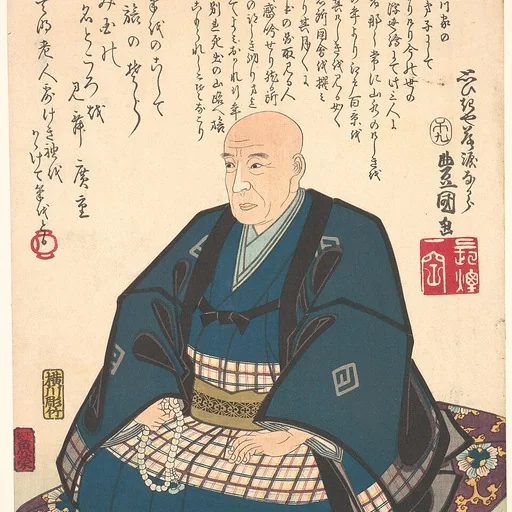
Utagawa Hiroshige (歌川 広重) or Andō Hiroshige (安藤 広重), born Andō Tokutarō (安藤 徳太郎; 1797 – 12 October 1858), was a Japanese ukiyo-e artist, considered the last great master of that tradition.