Artwork
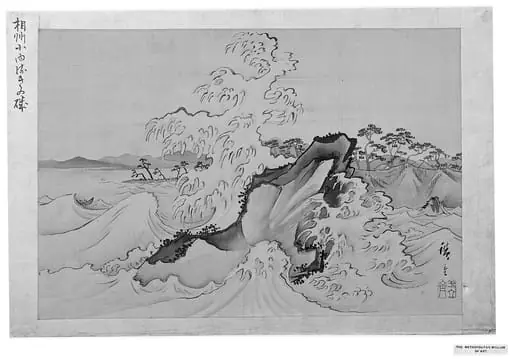
本朝名所 相州江ノ嶋岩屋之図|Soshu, Enoshima Iwaya no Zu
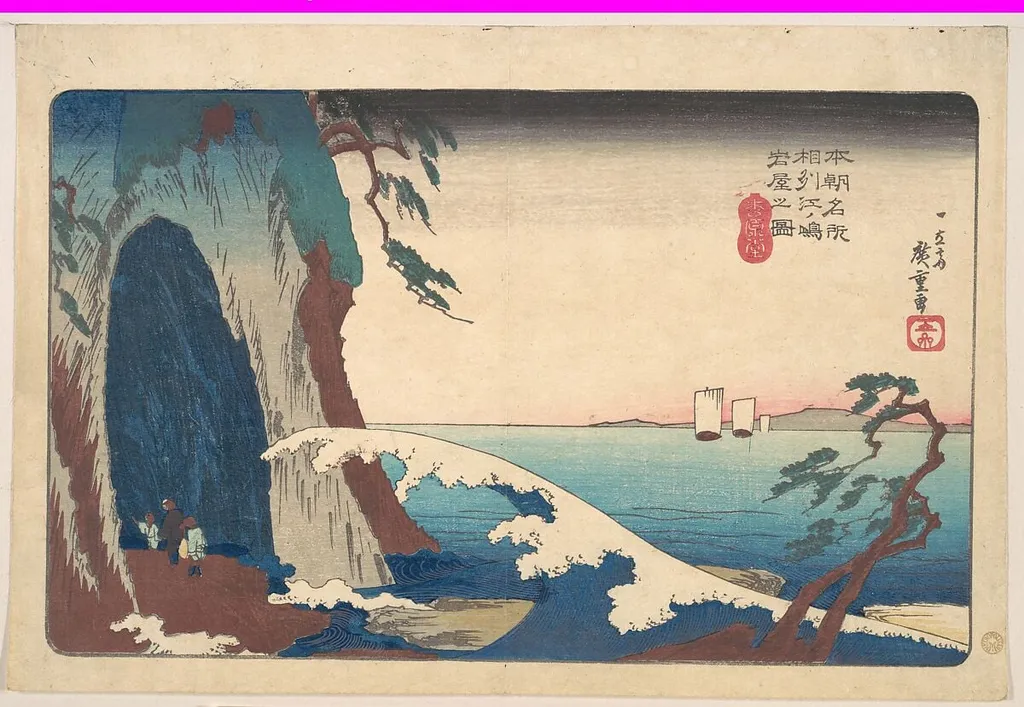
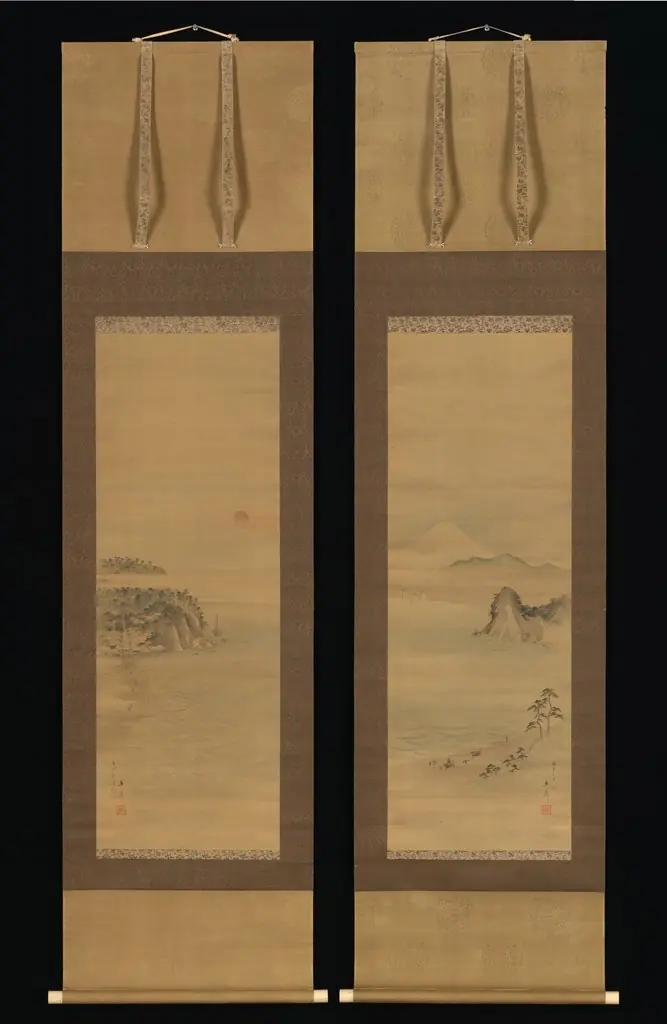
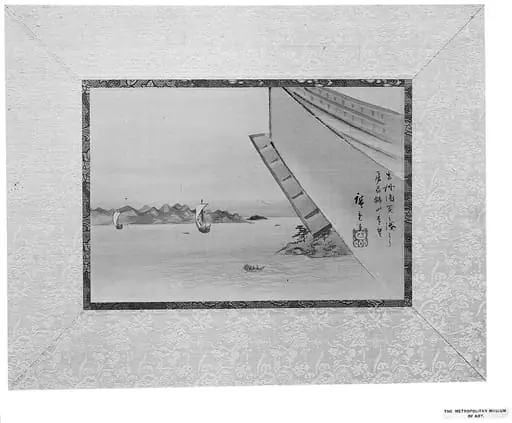
本朝名所 相州江ノ嶋岩屋之図|Soshu, Enoshima Iwaya no Zu is an ink print by the Romanticist artist Utagawa Hiroshige. It dates from 1830 and is held in the collection of the Metropolitan Museum of Art.
About this work
Overview
Created around 1830 by Utagawa Hiroshige, this woodblock print captures a dramatic coastal scene on Enoshima, a small island off the coast of Sagami Province.
Created around 1830 by Utagawa Hiroshige, this woodblock print captures a dramatic coastal scene on Enoshima, a small island off the coast of Sagami Province. Part of a series depicting famous places in Japan, it reflects Hiroshige’s focus on natural landscapes rather than the bustling urban life common in ukiyo-e. The composition emphasizes the power of nature through stark contrasts of rock, sea, and sky.
Subject & Meaning
The print centers on the rocky cave formations of Enoshima, a site long associated with spiritual and mythological significance in Japanese culture. Two small figures on a cliffside observe the turbulent sea, suggesting contemplation amid nature’s grandeur. The scale of the landscape dwarfs human presence, reinforcing a quiet reverence for the natural world rather than its conquest or decoration.
Technique & Style
Hiroshige employed traditional ukiyo-e woodblock methods, using layered ink and color to render texture and movement. Bold outlines define the jagged cliffs, while swirling blues and whites suggest crashing waves. The dark sky contrasts with the vibrant sea, heightening the sense of motion. A single tree on the right adds vertical tension, and distant buildings anchor the scene in a recognizable geography without dominating it.
History & Provenance
This print was produced during Hiroshige’s early career, before his famous series like 'The Fifty-Three Stations of the Tōkaidō.' It likely circulated as part of a commercial landscape series aimed at middle-class patrons interested in travel and local sights. While its exact early ownership is undocumented, it aligns with the broader ukiyo-e market that flourished in Edo-period Japan.
Context
During the 1830s, interest in pilgrimage sites and scenic locales grew among urban dwellers, fueling demand for landscape prints. Enoshima, a popular destination for both religious visits and leisure, was frequently depicted in art. Hiroshige’s version stands apart by emphasizing raw natural forces over human activity, reflecting a shift in ukiyo-e toward emotional resonance with place.
Legacy
Though less widely known than Hiroshige’s later works, this print exemplifies his early mastery of atmospheric perspective and emotional landscape. It contributed to the evolution of ukiyo-e from genre scenes to poetic depictions of nature, influencing later artists and Western impressionists who admired its compositional restraint and sensitivity to environment.
Artist & collection
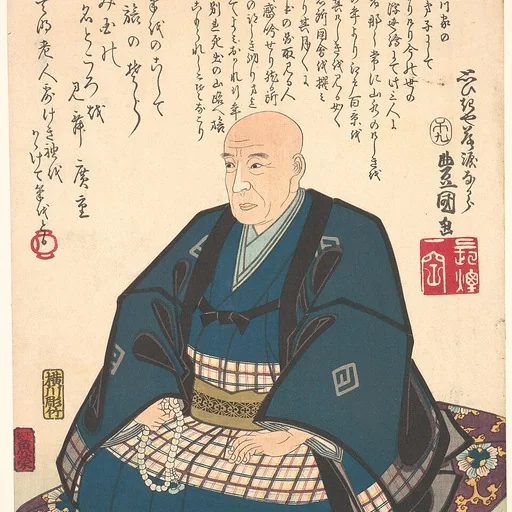
Artist
Utagawa Hiroshige (歌川 広重) or Andō Hiroshige (安藤 広重), born Andō Tokutarō (安藤 徳太郎; 1797 – 12 October 1858), was a Japanese ukiyo-e artist, considered the last great master of that tradition.

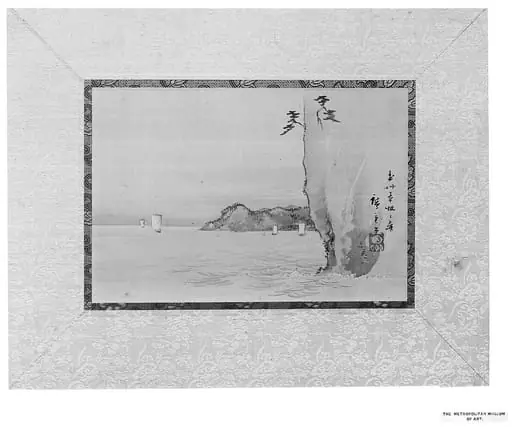
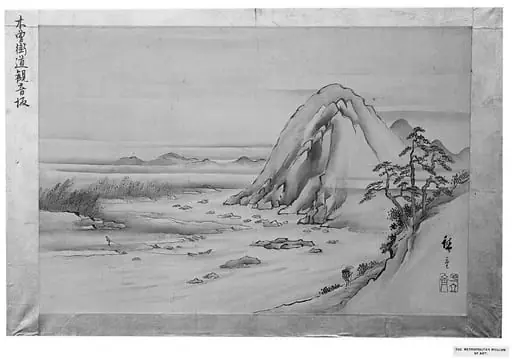
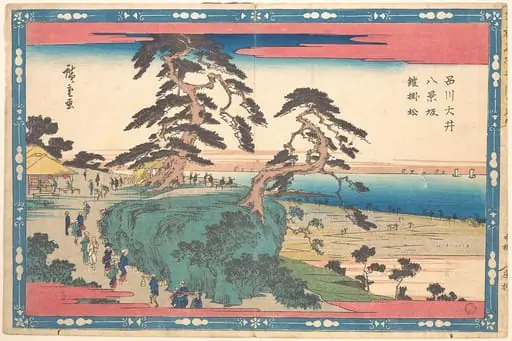 東都名所 品川大井 八景坂鎧掛松|Shinagawa Hakkei Zaka
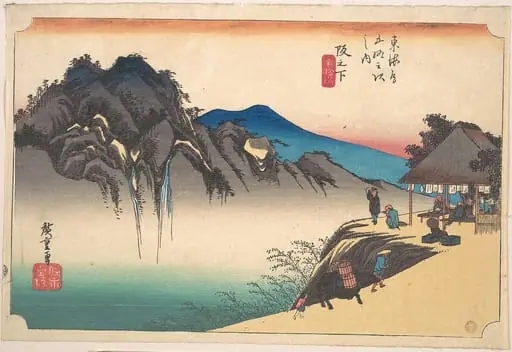 東海道五十三次之内 阪之下 筆捨嶺|Saka-no-shita, Fude-sute Mine
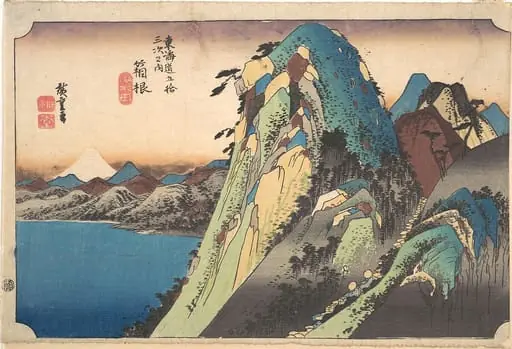 東海道五十三次之内 箱根 湖水図|Hakone; Kosui
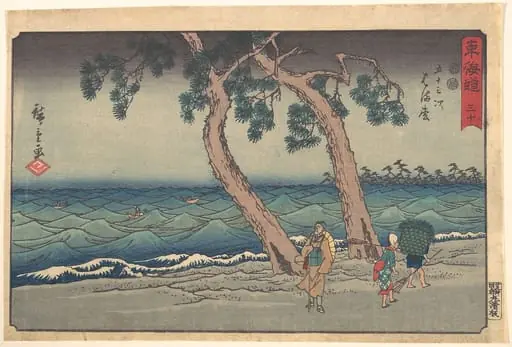 東海道五十三次 はま松|Hamamatsu
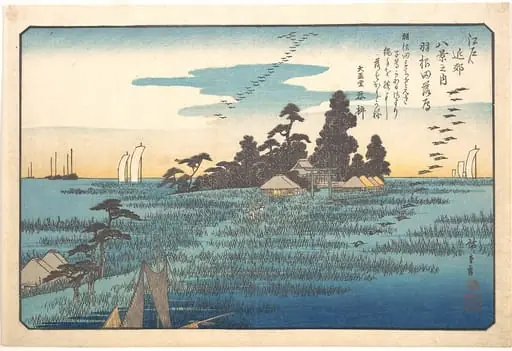 Haneda Rakugan|江戸近郊八景之内 羽根田落雁|Wild Geese at Haneda
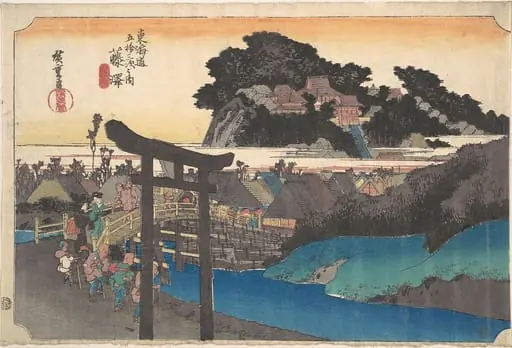 東海道五十三次之内 藤澤 遊行寺|Fujiwara; Yugyoji
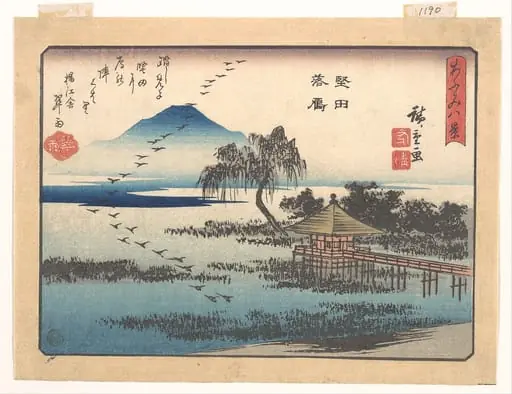 歌川広重画 「あふみ八景 堅田落雁」|Descending Geese at Katada, from the series Eight Views of Ōmi (Ōmi hakkei)
 Untitled