Artwork
東都名所 品川大井 八景坂鎧掛松|Shinagawa Hakkei Zaka
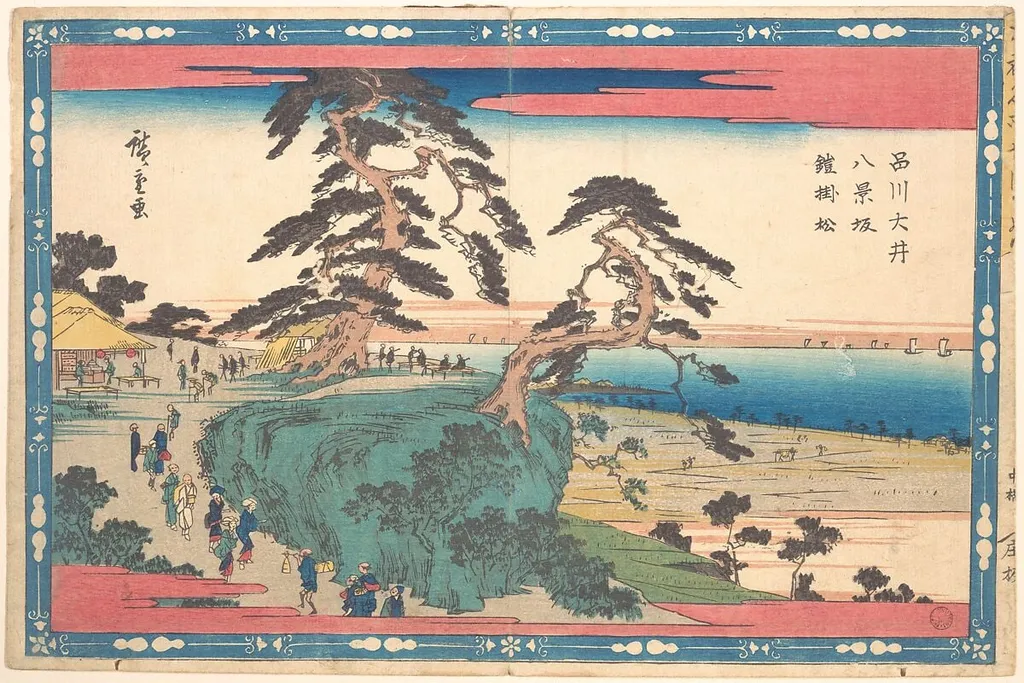
東都名所 品川大井 八景坂鎧掛松|Shinagawa Hakkei Zaka is an ink print by the Romanticist artist Utagawa Hiroshige. It dates from 1828 and is held in the collection of the Metropolitan Museum of Art.
About this work
Overview
This 1828 woodblock print, *Shinagawa Hakkei Zaka*, is a landscape work by Utagawa Hiroshige, a prominent ukiyo-e artist of the Edo period. Executed in ink and color on paper, it captures a serene riverside scene in Edo’s Shinagawa district.
Subject & Meaning
The print depicts a bustling yet calm riverside moment, framing a dirt path with two large pine trees. Figures in simple attire traverse the road, while a bridge and a yellow-roofed building near the water add depth. The scene conveys a snapshot of everyday life.
Technique & Style
Hiroshige employs simple shapes and flat colors to suggest depth, integrating trees, people, and architecture into a unified, tranquil atmosphere. Bold blue and red borders outline the composition, set against a softly rendered pink and blue sky.
History & Provenance
Created in 1828 as part of Hiroshige’s Edo views series, *Shinagawa Hakkei Zaka* is now part of The Metropolitan Museum of Art’s collection.
Context
Unlike typical ukiyo-e focuses on urban pleasures, Hiroshige’s work emphasizes landscape, reflecting his distinctive approach within the genre.
Artist & collection
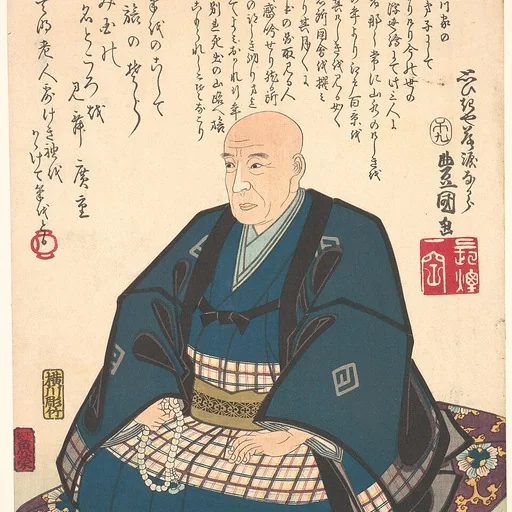
Artist
Utagawa Hiroshige (歌川 広重) or Andō Hiroshige (安藤 広重), born Andō Tokutarō (安藤 徳太郎; 1797 – 12 October 1858), was a Japanese ukiyo-e artist, considered the last great master of that tradition.


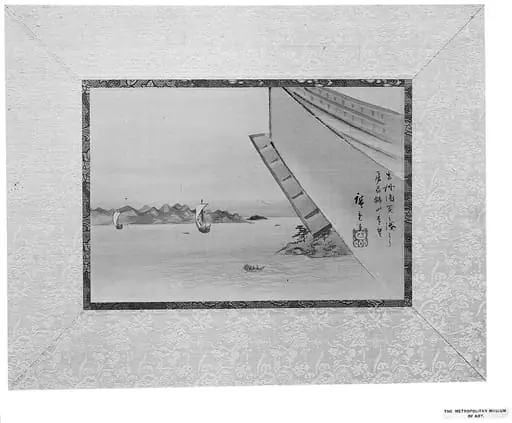
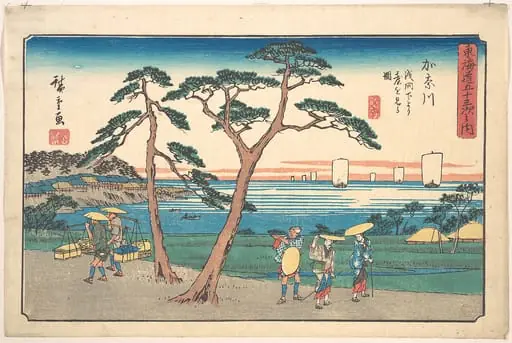 東海道五十三次之内 神奈川 浅間下より台を見る図|Kanazawa
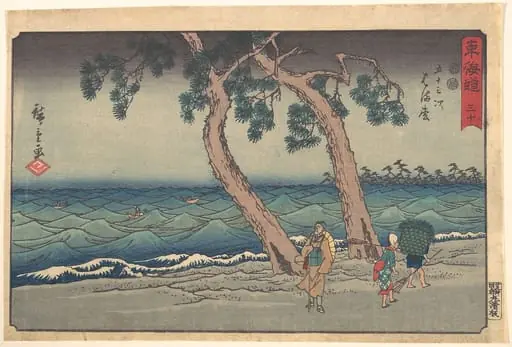 東海道五十三次 はま松|Hamamatsu
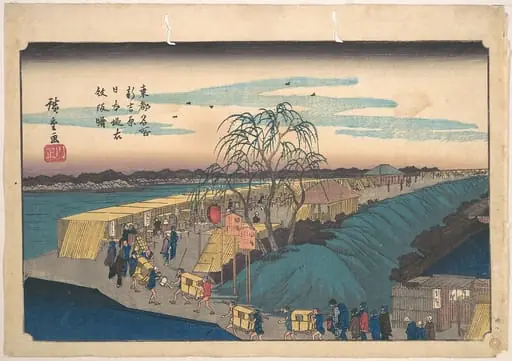 東都名所 新吉原日本堤衣紋坂曙|Shin Yoshiwara Nihon Tsutsumi Emonzaka Akatsuki
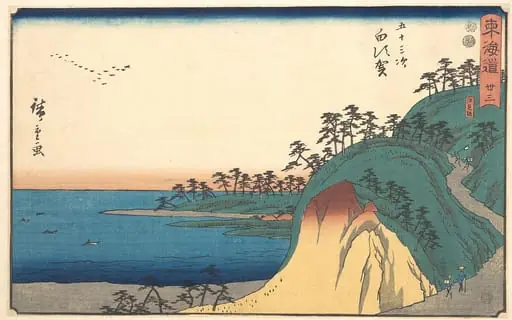 東海道五十三次 白須賀 汐見坂|Shirasuke
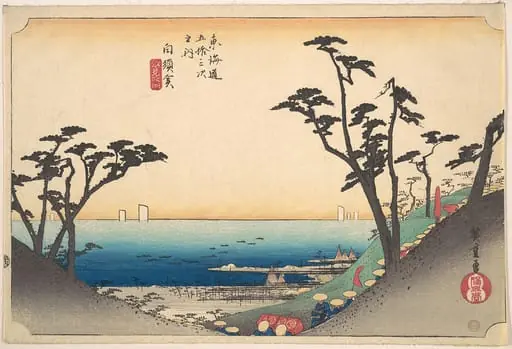 東海道五十三次之内 白須賀 汐見阪図|Shirasuka, Shio-mi Zaka
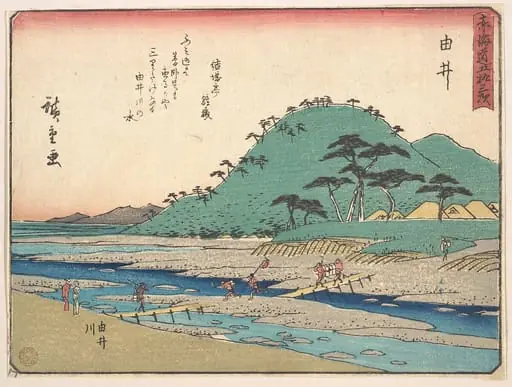 東海道五十三次 由井 由井川|Yui
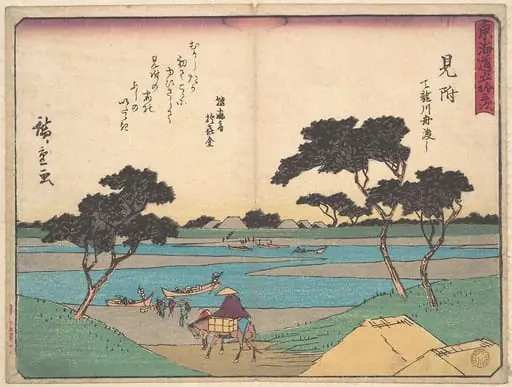 東海道五十三次 見附|Mitsuki
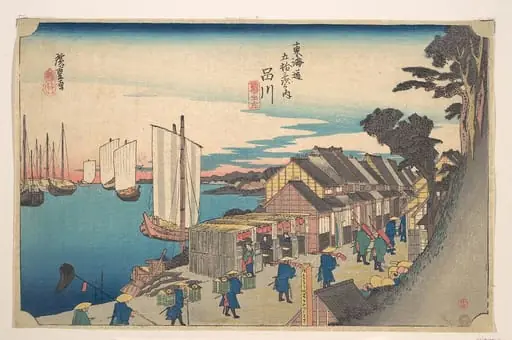 東海道五十三次之内 品川 諸侯出立|Shinagawa; Shoko Detachi
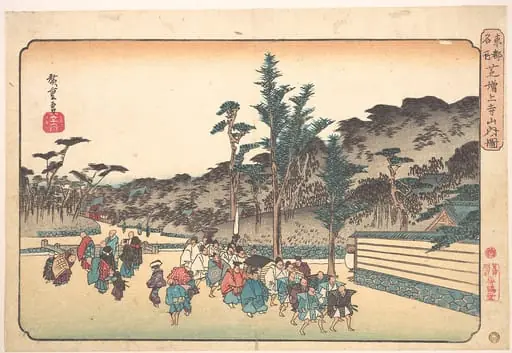 東都名所 芝増上寺山内の図|Shiba Zōjōji Sannai no Zu