Artwork
Untitled
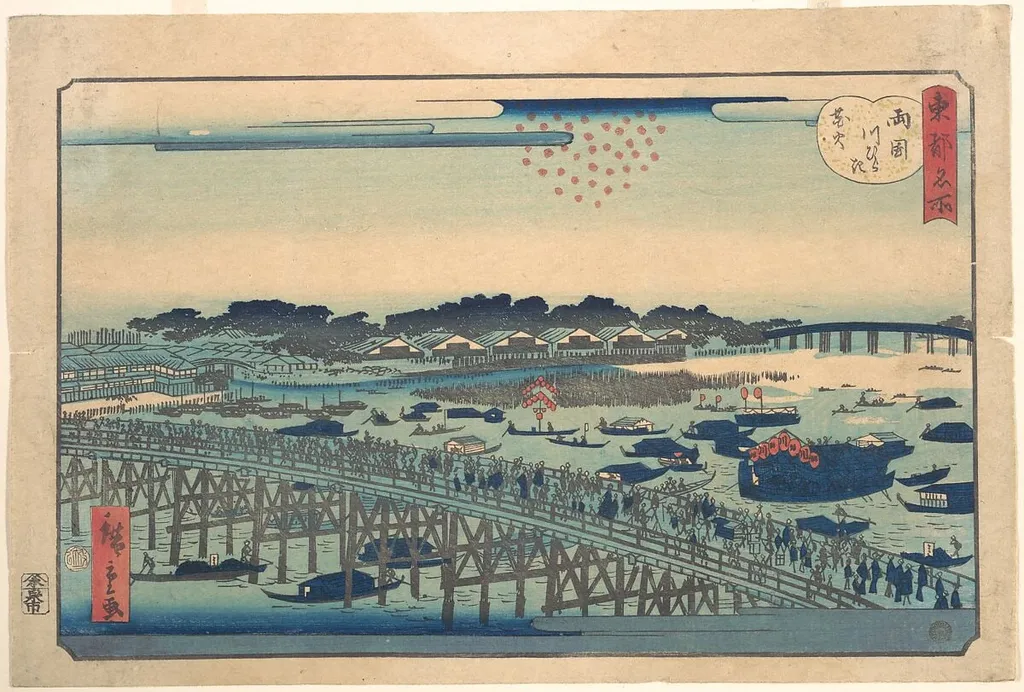
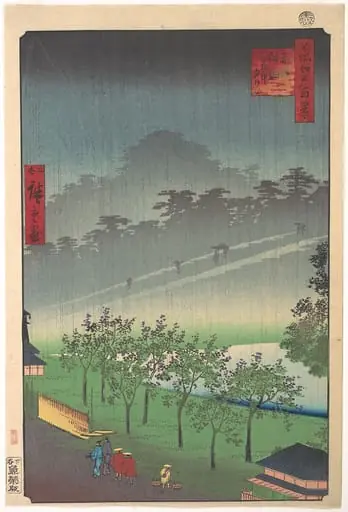
Untitled is an ink print by the Impressionist artist Utagawa Hiroshige II. It dates from 1862 and is held in the collection of the Metropolitan Museum of Art.
About this work
Overview
This woodblock print, dated 1862, is attributed to Utagawa Hiroshige II and belongs to The Metropolitan Museum of Art’s collection. Executed in ink and color on paper, it captures a bustling riverside scene in Edo-period Japan. The composition emphasizes movement and daily activity, with figures, boats, and architecture arranged along a central bridge that spans the waterway.
Subject & Meaning
The scene depicts a common urban riverside setting, likely along the Sumida River, where commerce and leisure intersected. Crowds traverse the bridge, while boats—some laden with passengers, others idle—suggest the rhythm of river transport. The faint red dots in the sky may indicate evening lanterns or seasonal fireworks, hinting at fleeting moments of communal celebration amid routine life.
Technique & Style
Hiroshige II employed traditional ukiyo-e woodblock methods, using flat planes of color and simplified forms to convey depth and motion.
Hiroshige II employed traditional ukiyo-e woodblock methods, using flat planes of color and simplified forms to convey depth and motion. Figures are scaled small relative to boats and structures, enhancing the sense of scale and spatial depth. The railing of the bridge is rendered as a repetitive linear pattern, contrasting with the organic shapes of trees and water, reinforcing the print’s decorative yet observational character.
History & Provenance
Created during the late Edo period, the print reflects the popularity of landscape and genre scenes among urban audiences. It entered The Metropolitan Museum of Art’s collection as part of a broader acquisition of Japanese prints in the early 20th century. Its attribution to Hiroshige II aligns with his known output during the 1860s, though his works are often confused with those of his more famous predecessor.
Context
In the 1860s, Edo’s population surged, and riverways became vital arteries for transport and recreation. Prints like this catered to a growing middle class seeking affordable art that mirrored their surroundings. While Hiroshige II worked in the tradition of his namesake, his style leaned toward more crowded, anecdotal compositions, reflecting the era’s increasing urban density and visual saturation.
Legacy
Though less celebrated than Utagawa Hiroshige I, Hiroshige II’s prints contributed to the continuity of ukiyo-e traditions into the Meiji era. This work exemplifies how artists documented everyday life with clarity and restraint, preserving visual records of a society in transition. Its presence in major Western collections underscores its role in shaping international appreciation of Japanese printmaking.
Artist & collection

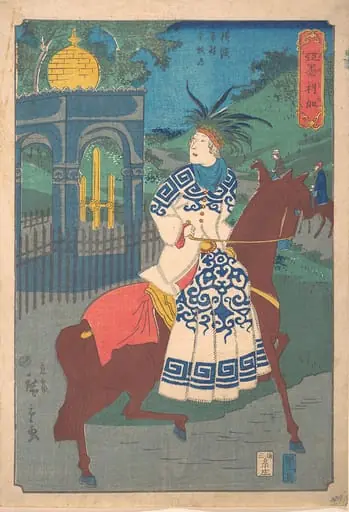 二代歌川広重画 『亜墨利加 横浜本村本牧道』|American Woman Riding Side-Saddle on the Road at Honmoku, Motomura, Yokohama (America Yokohama Motomura Honmoku michi)
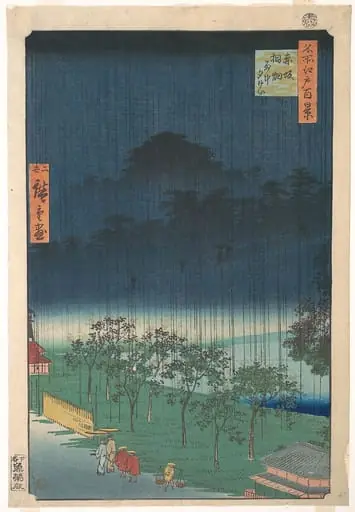 Untitled
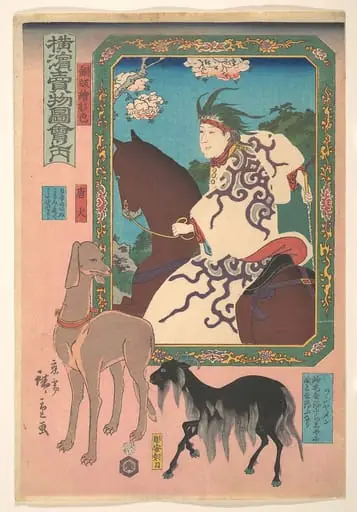 横浜賣物図会の内 唐犬|Copper Plate Engraving of a Woman Riding a Horse, a Goat and a Dog
 Untitled
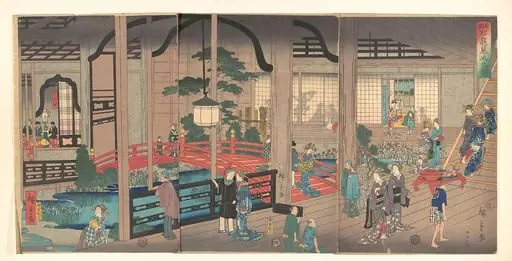 Yokohama Gankirō no zu|View of the Interior of the Gankirō Tea House in Yokohama
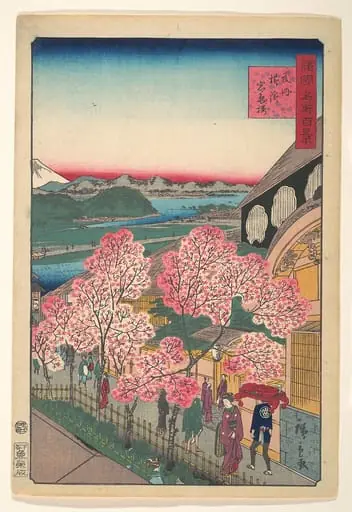 Bushu Yokohama Gankirō|諸国名所百景 武州横浜岩亀楼|Entrance to the Gankirō Tea House in the Miyozaki District, Yokohama, Bushu
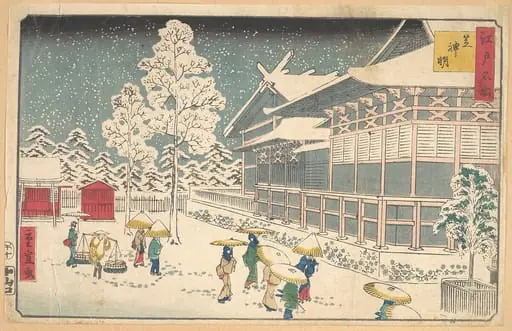 江戸名所 芝神明|Famous Places of Edo: Shiba Shinmei
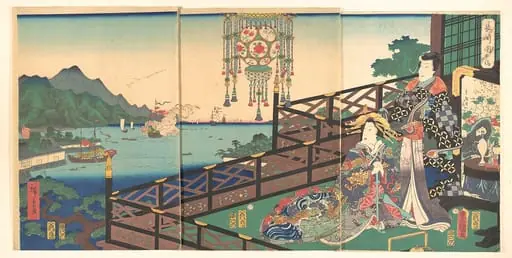 Untitled
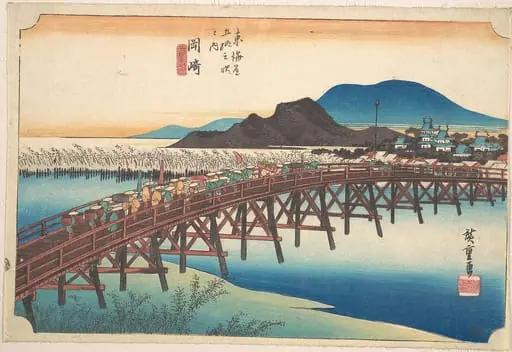 東海道五十三次之内 岡崎 矢矧の橋|Okazaki, Tenshin no Hashi
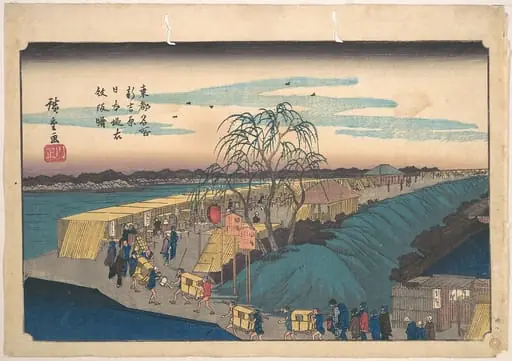 東都名所 新吉原日本堤衣紋坂曙|Shin Yoshiwara Nihon Tsutsumi Emonzaka Akatsuki
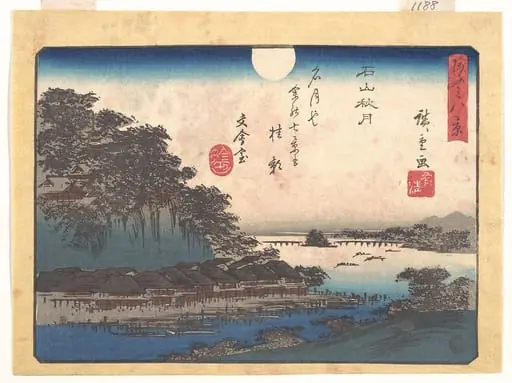 歌川広重画 「あふみ八景 石山秋月」|Autumn Moon at Ishiyama, from the series Eight Views of Ōmi (Ōmi hakkei)
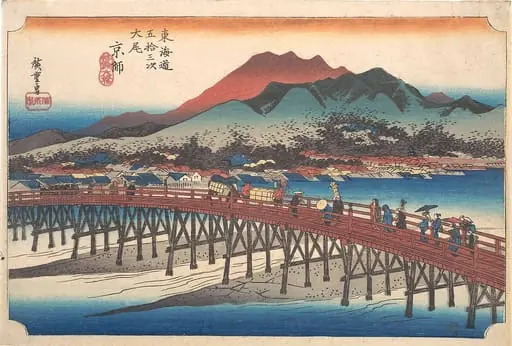 歌川広重画 「東海道五十三次 大尾 京師 三条大橋」|Kyoto: The Great Bridge at Sanjō (Taibi, Keishi, Sanjō Ōhashi), from the series Fifty-Three Stations of the Tōkaidō (Tōkaidō gojūsan tsugi)
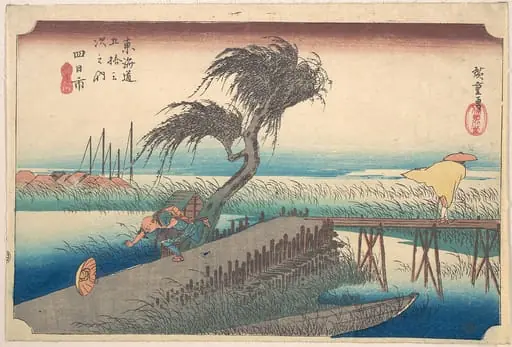 東海道五十三次之内 四日市 三重川|Yokkaichi, Sanchokawa
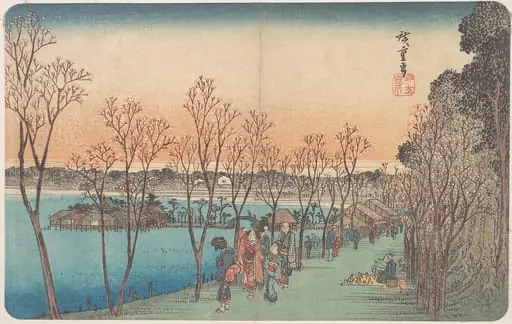 江戸名所 上野不忍の池|Ueno, Shinobazu no Ike
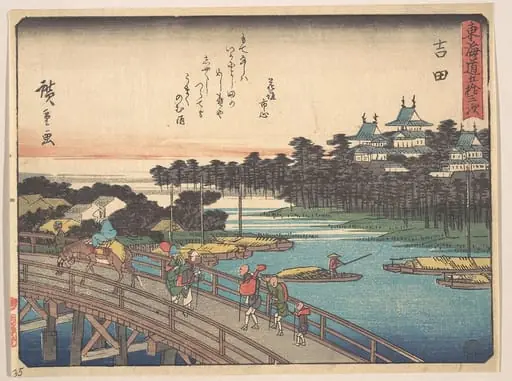 東海道五十三次 吉田|Yoshida; Toyokawa-Bashi, Toyokawa Bridge
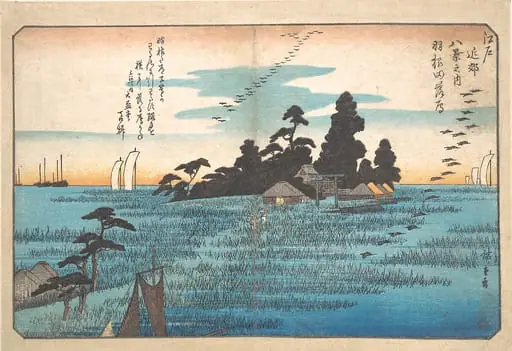 江戸近郊八景之内 羽根田落雁|Haneda Rakugan
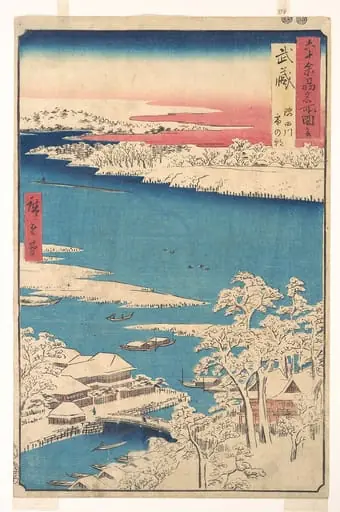 六十余州名所図会 武蔵 隅田川 雪の朝|Morning after a Snowfall, the Sumida River, Musashi Province, from the series Views of Famous Places in the Sixty-Odd Provinces
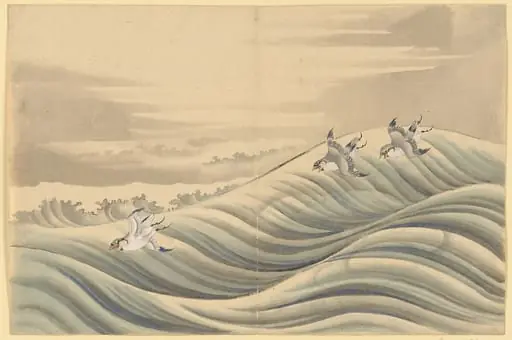 Untitled
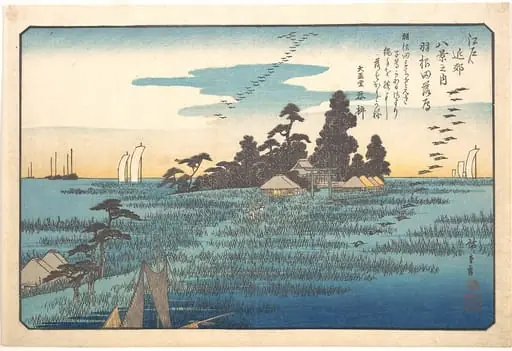 Haneda Rakugan|江戸近郊八景之内 羽根田落雁|Wild Geese at Haneda
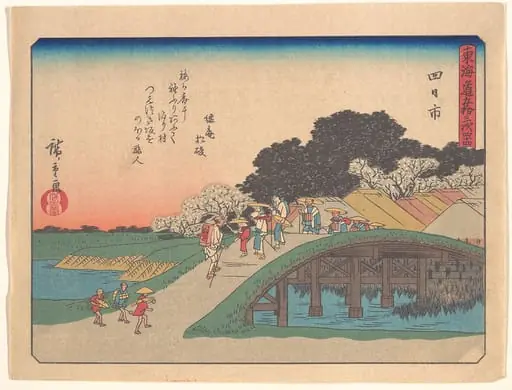 東海道五十三次 四日市|Yokkaichi, from the series The Fifty-three Stations of the Tōkaidō Road