Artwork
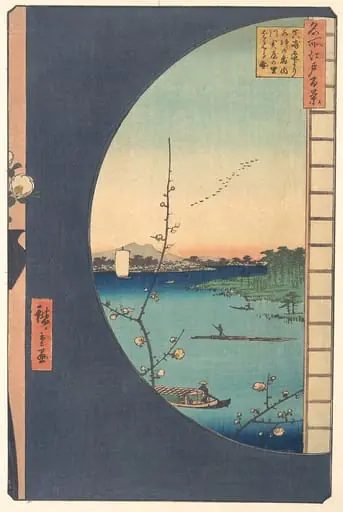
名所江戸百景 真崎辺より水神の森内川関屋の里を見る|The Suijin Temple Grove, Uchikawa, and the Village of Sekiya
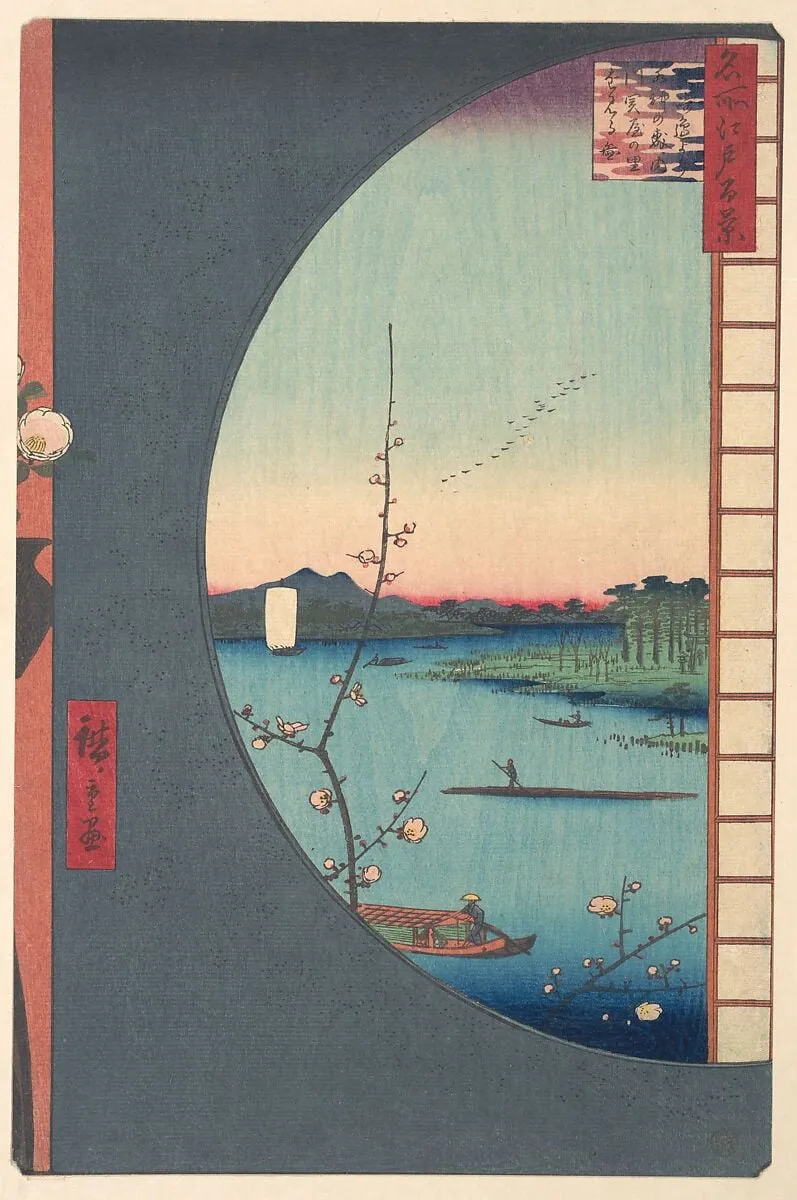
名所江戸百景 真崎辺より水神の森内川関屋の里を見る|The Suijin Temple Grove, Uchikawa, and the Village of Sekiya is an ink print by the Impressionist artist Utagawa Hiroshige. It dates from 8 and is held in the collection of the Metropolitan Museum of Art.
About this work
Overview
The print captures a tranquil riverside at dusk, rendered in ink and color on paper, with a vertical composition that enhances its sense of depth and stillness.
This woodblock print is one of 119 landscapes in Utagawa Hiroshige’s series *One Hundred Famous Views of Edo*, completed in the 1850s. Unlike many ukiyo-e works centered on theater or pleasure quarters, Hiroshige turned his focus to quiet, everyday scenes of the natural and built environment around Edo. The print captures a tranquil riverside at dusk, rendered in ink and color on paper, with a vertical composition that enhances its sense of depth and stillness.
Subject & Meaning
The scene depicts the Suijin Temple grove, the Uchikawa waterway, and the village of Sekiya, all located along the Sumida River. A single roofed boat drifts gently on the water, accompanied by a smaller vessel, suggesting quiet human activity amid nature. Cherry blossoms in the foreground and distant hills bathed in pink light evoke seasonal change and transience. The white structure on the rise may indicate a shrine or residence, grounding the view in a specific, recognizable locale.
Technique & Style
Hiroshige employed fine woodblock carving and layered color printing to achieve subtle gradations in the sky and water. The composition uses simplified forms and flat planes of color to convey atmosphere rather than detail. A dark, book-like border frames the scene, creating the illusion of viewing the landscape through a window or page. This framing device, combined with muted tones and delicate brushwork, reinforces the meditative tone of the image.
History & Provenance
Produced during the final years of the Edo period, the print was part of a commercially successful series commissioned by publisher Uoya Eikichi. It was widely distributed as a popular print, reflecting growing urban interest in travel and local scenery. Surviving impressions are held in major collections, including the Museum of Fine Arts, Boston, and the British Museum, indicating its early and enduring circulation beyond Japan.
Context
Hiroshige’s series emerged during a time of increasing domestic travel and print culture in Edo. As roads and river routes connected the city to surrounding villages, people sought visual records of these places. The depiction of modest, unglamorous sites—like temple groves and riverside hamlets—reflected a broader cultural shift toward appreciating quiet, local beauty over spectacle, aligning with emerging aesthetic ideals of *shibui* and *sabi*.
Legacy
This print, like others in the series, influenced Western artists such as Monet and Van Gogh, who admired its compositional clarity and emotional restraint. It helped redefine landscape as a subject worthy of artistic attention in Japanese printmaking. Today, it remains a key example of how ukiyo-e transformed everyday observation into enduring visual poetry, shaping global perceptions of Japanese art.
Artist & collection
Artist
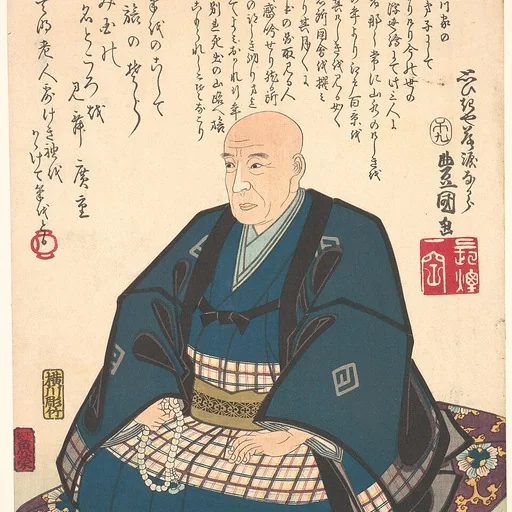
Utagawa Hiroshige (歌川 広重) or Andō Hiroshige (安藤 広重), born Andō Tokutarō (安藤 徳太郎; 1797 – 12 October 1858), was a Japanese ukiyo-e artist, considered the last great master of that tradition.

 名所江戸百景 真崎辺より水神の森内川関屋の里を見る|Susaki Hen-yori Suijin no Mori, Uchikawa
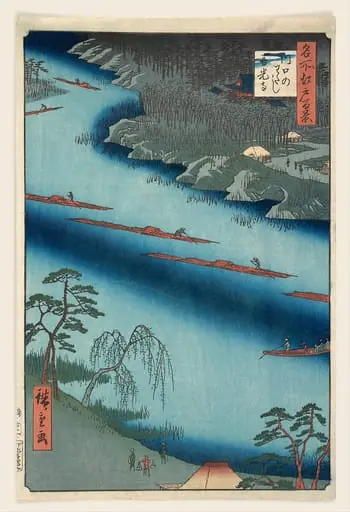 名所江戸百景 川口のわたし善光寺|Kawaguchi
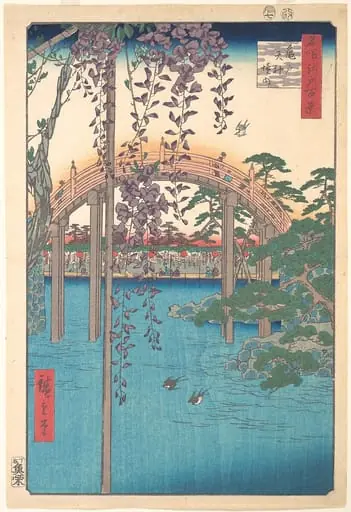 名所江戸百景 亀戸天神境内|In the Kameido Tenjin Shrine Compound
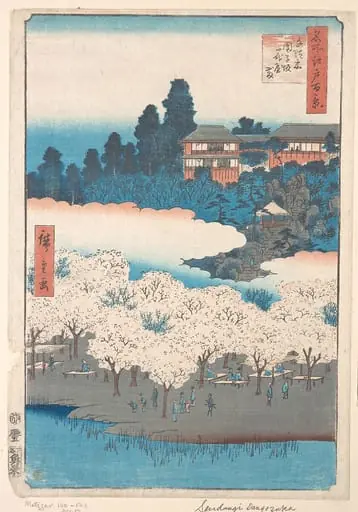 名所江戸百景 千駄木団子坂花屋敷|Sendagi Dangozaka
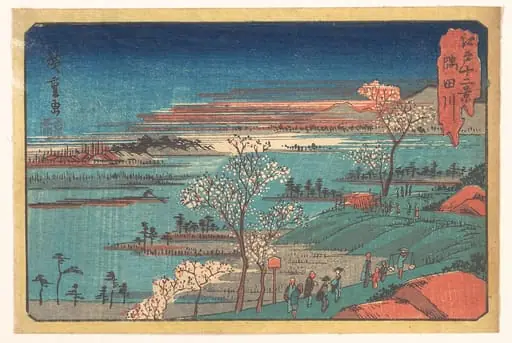 江戸十二景 隅田川|Gotenyama-no Hana
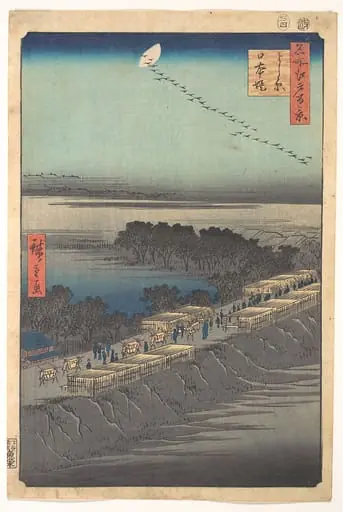 「名所江戸百景 よし原 日本堤」|“Nihon Embankment at Yoshiwara,” from the series One Hundred Famous Views of Edo (Meisho Edo hyakkei, Yoshiwara, Nihonzutsumi)
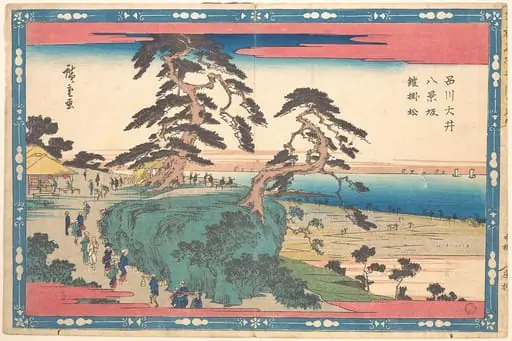 東都名所 品川大井 八景坂鎧掛松|Shinagawa Hakkei Zaka
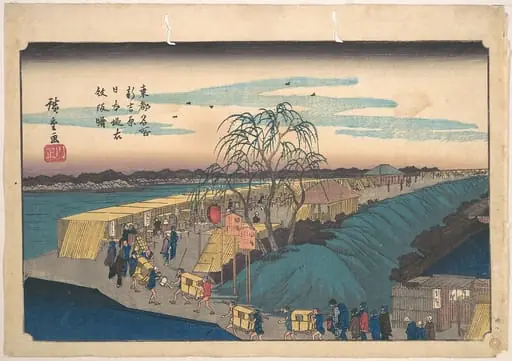 東都名所 新吉原日本堤衣紋坂曙|Shin Yoshiwara Nihon Tsutsumi Emonzaka Akatsuki