Artwork
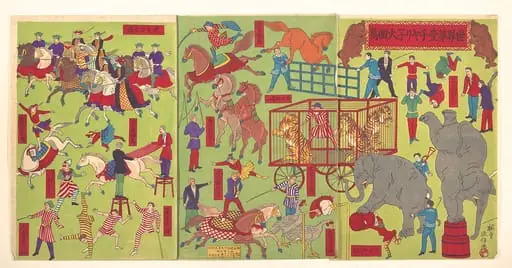
浅草観音境内ニ於イテ興行仕候 佛蘭西曲馬|French Equestrian Circus on the grounds of Asakusa Kannon temple (Asakusa kannon keidai ni oite kōgyō tsukawashi sōrō-Furansu kyokuba)
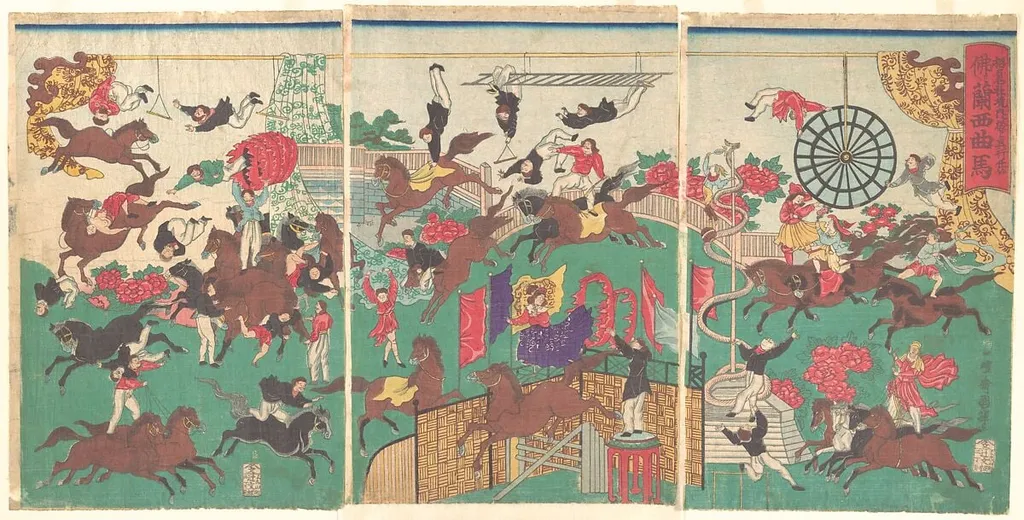
浅草観音境内ニ於イテ興行仕候 佛蘭西曲馬|French Equestrian Circus on the grounds of Asakusa Kannon temple (Asakusa kannon keidai ni oite kōgyō tsukawashi sōrō-Furansu kyokuba) is an ink print by the Impressionist artist Utagawa Kuniteru. It dates from 1871 and is held in the collection of the Metropolitan Museum of Art.
About this work
Overview
Utagawa Kuniteru’s woodblock print, dated 1871, captures a lively performance titled “French Equestrian Circus” staged on the grounds of Tokyo’s Asakusa Kannon temple. Executed in ink and color on paper, the image is part of the Metropolitan Museum of Art’s collection and exemplifies the bustling entertainment culture of early Meiji Japan.
Subject & Meaning
The scene depicts a chaotic circus act where riders on spirited horses execute daring jumps, while acrobats tumble through the air. A figure on the right manipulates a wheeled apparatus with ropes, suggesting a game or trick. The composition emphasizes spectacle and the novelty of Western-style performances introduced to Japanese audiences.
Technique & Style
Kuniteru employs the traditional uki‑ukiyo woodblock method, layering vivid pigments—predominantly reds, yellows, and blues—against a muted green backdrop. The dynamic lines and exaggerated postures convey motion, while the flat color fields and bold outlines reflect the commercial print aesthetics of the period.
History & Provenance
Created shortly after the Meiji Restoration, the print documents the influx of foreign entertainments into urban Japan. It entered the Metropolitan Museum of Art’s collection through a 20th‑century acquisition of Japanese prints, where it remains catalogued as an example of cross‑cultural visual culture.
Context
During the 1860s and 1870s, Western circus troupes toured Japanese cities, often performing at temple precincts that served as public gathering places. The Asakusa Kannon temple, a popular pilgrimage site, provided a spacious venue for such events, blending religious space with popular amusement.
Legacy
Kuniteru’s depiction contributes to the visual record of early Meiji entertainment, illustrating how Japanese printmakers incorporated foreign motifs while retaining ukiyo‑e conventions. The work continues to inform scholars of cultural exchange and the evolution of mass‑produced imagery in Japan.
Artist & collection


 Untitled
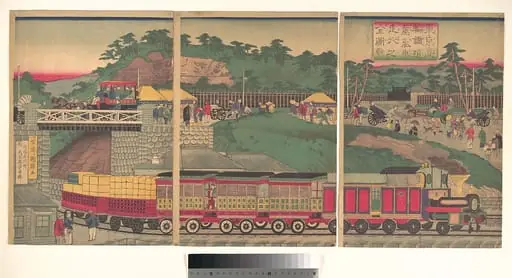 東京高輪鉄道蒸気車走行之全図|Tokyo /Takanawa Steam Railway
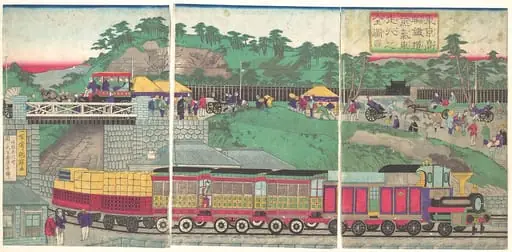 東京高輪鉄道蒸気車走行之図|Illustration of a Steam Locomotive Running on the Takanawa Railroad in Tokyo (Tōkyō takanawa tetsudō jōkisha sōkō no zu)
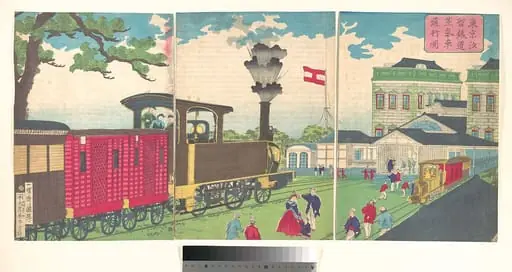 東京汐留鉄道蒸気車通行図|Illustration of a Steam Locomotive Passing Shiodome in Tokyo (Tōkyō Shiodome testudō jōkisha tsūkō zu)
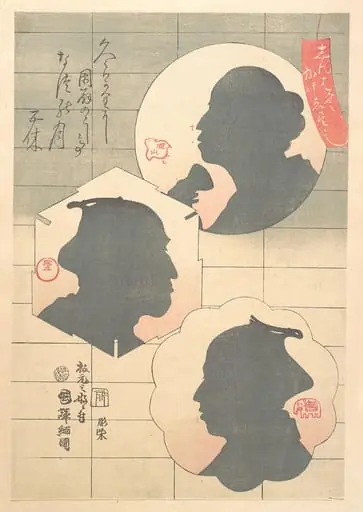 Untitled
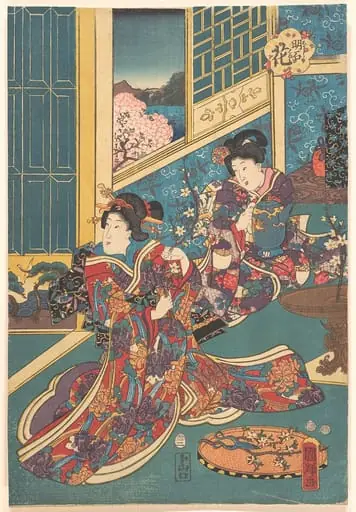 Untitled
 Untitled
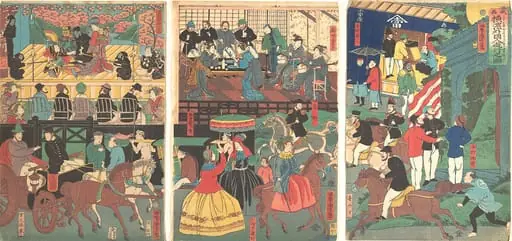 Bushu Yokohama gaikokujin yūkyō no zu|A View of the Amusements of the Foreigners in Yokohama, Bushu
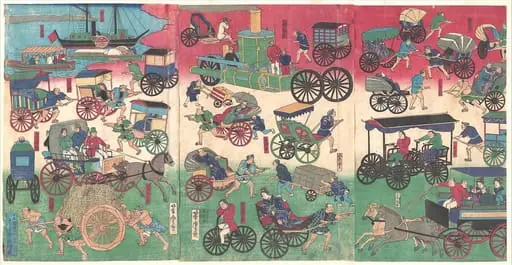 Untitled
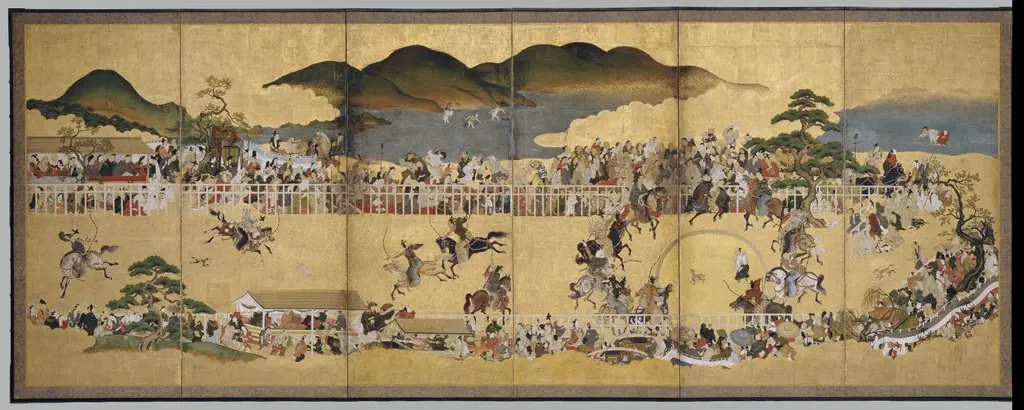 Dog Chasing Contest
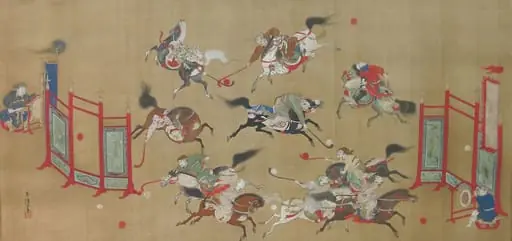 Untitled
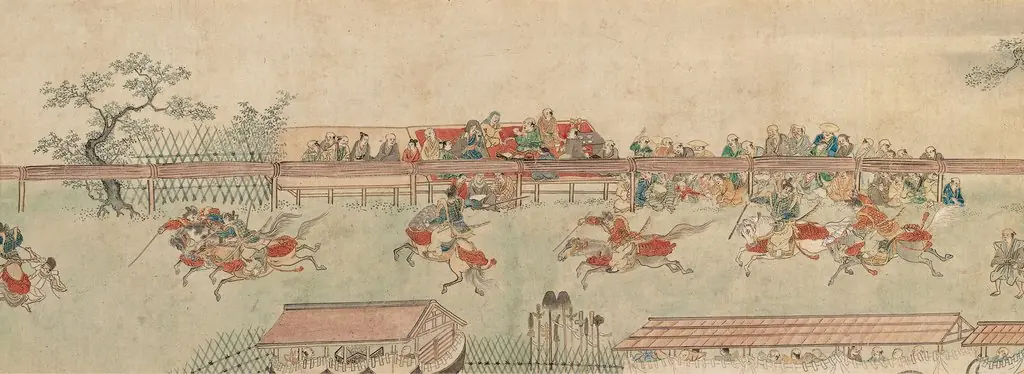 Horse Race at Kamo
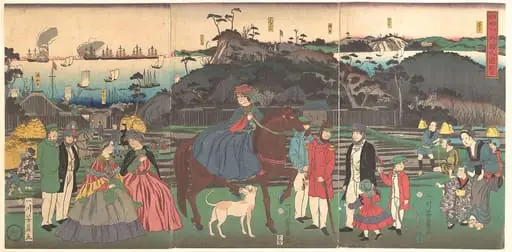 Kanagawa Gongenyama Gaikokujin yūran|Foreigners Visiting the Famous Site of Mt. Gongen in Kanagawa
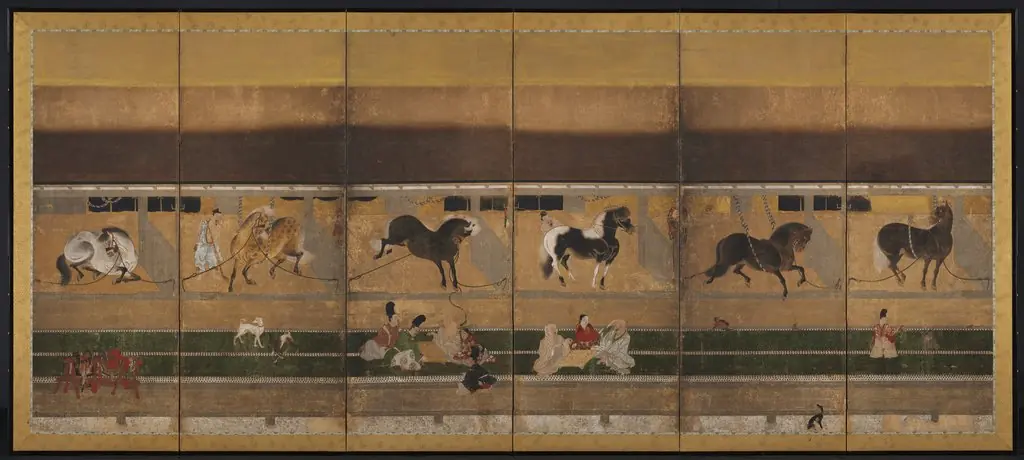 Horses and Grooms in the Stable
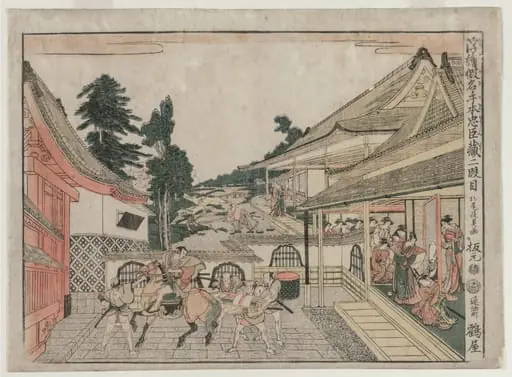 Chushingura: Act II (from the series Perspective Pictures for The Treasure House of Loyalty)