Artwork
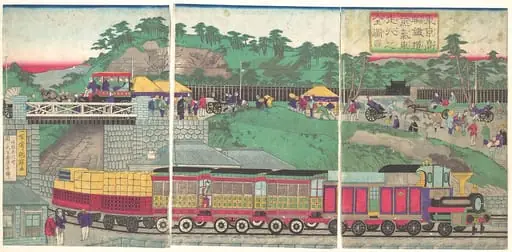
東京汐留鉄道蒸気車通行図|Illustration of a Steam Locomotive Passing Shiodome in Tokyo (Tōkyō Shiodome testudō jōkisha tsūkō zu)
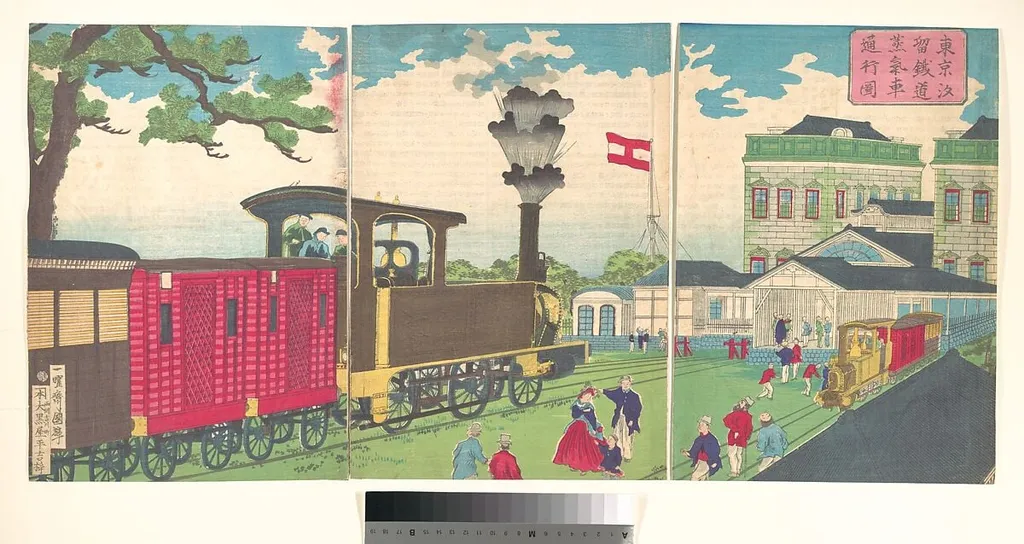
東京汐留鉄道蒸気車通行図|Illustration of a Steam Locomotive Passing Shiodome in Tokyo (Tōkyō Shiodome testudō jōkisha tsūkō zu) is an ink print by the Impressionist artist Utagawa Kuniteru. It dates from 1872 and is held in the collection of the Metropolitan Museum of Art.
About this work
Overview
Tōkyō Shiodome testudō jōkisha tsūkō zu is a triptych woodblock print created in 1872 by Utagawa Kuniteru, depicting a scene of modernity in Tokyo. The work is composed of ink and color on paper.
Subject & Meaning
The print illustrates a steam locomotive, brown with a red carriage, passing a prominent building in Shiodome, Tokyo, surrounded by onlookers. The juxtaposition of the locomotive with traditional elements (a large tree, people in possibly traditional attire) captures the dawn of Japan’s industrial era.
Technique & Style
Executed in a realistic style with meticulous detail, the print showcases vibrant colors, notably bright reds and blues. The artist employed cross-hatching to achieve nuanced shadows and textures, blending Western realism with traditional Japanese woodblock techniques.
History & Provenance
Created in 1872, the print is now part of The Metropolitan Museum of Art’s collection, highlighting its significance in documenting Japan’s Meiji Period modernization.
Context
Produced during the Meiji Period, this work reflects Japan’s rapid modernization and the introduction of Western technology, such as steam locomotives, into its urban landscape.
Legacy
As a document of transitional Japan, Tōkyō Shiodome testudō jōkisha tsūkō zu provides insight into the artistic response to modernity and the evolution of woodblock printing in the face of Western influences.
Artist & collection


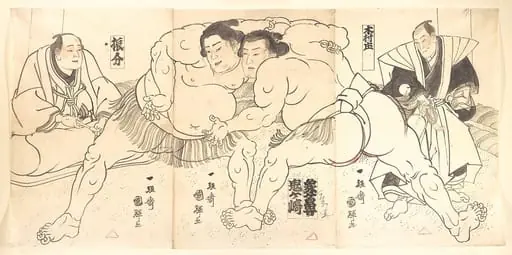 Untitled
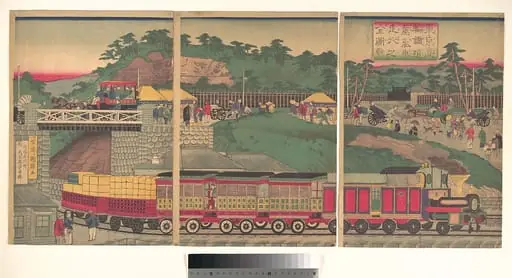 東京高輪鉄道蒸気車走行之全図|Tokyo /Takanawa Steam Railway
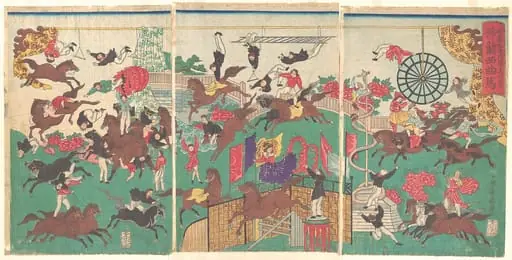 浅草観音境内ニ於イテ興行仕候 佛蘭西曲馬|French Equestrian Circus on the grounds of Asakusa Kannon temple (Asakusa kannon keidai ni oite kōgyō tsukawashi sōrō-Furansu kyokuba)
 東京高輪鉄道蒸気車走行之図|Illustration of a Steam Locomotive Running on the Takanawa Railroad in Tokyo (Tōkyō takanawa tetsudō jōkisha sōkō no zu)
 Untitled
 Untitled
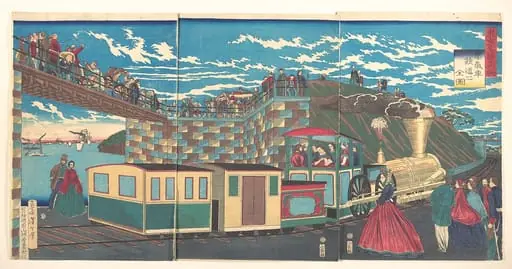 東京名勝高輪 蒸気車鉄道之全図|Illustration of Steam Locomotive Tracks at Takanawa, from the series Famous Places in Tokyo (Tōkyō meishō Takanawa-jōki kikansha no zen zu)
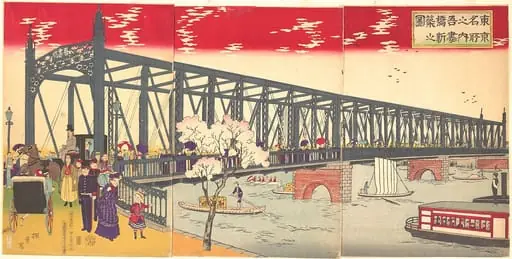 東京名所之内吾妻橋新築之図|Illustration of the Opening of Azuma Bridge in Tokyo (Tokyo meisho no uchi azuma bashi shinchiku no zu)
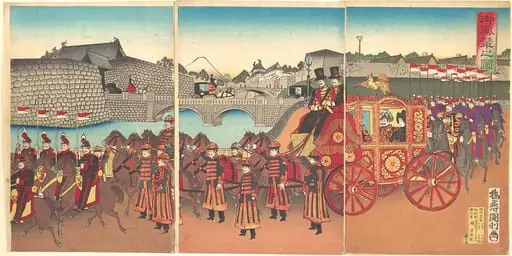 御鳳輦之図|Illustration of the Imperial Carriage (Gohōren no zu)
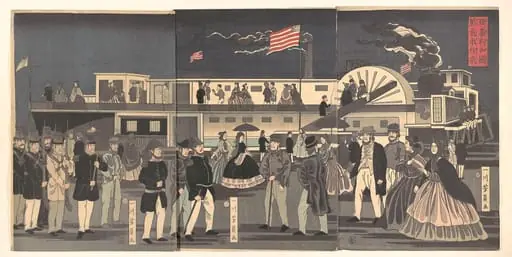 「亞墨利加國蒸氣車往来」|“America”: A Steamship in Transit
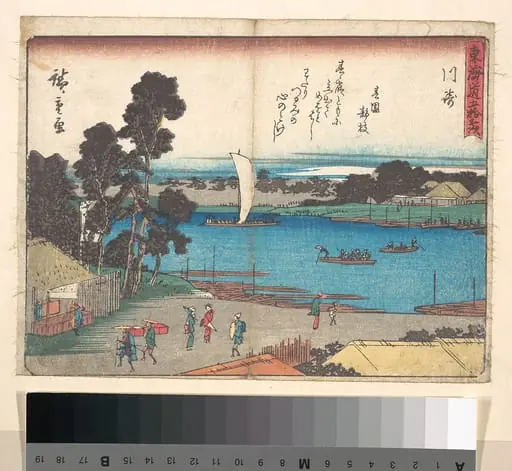 東海道五十三次 川崎|Kawasaki