Artwork
Untitled
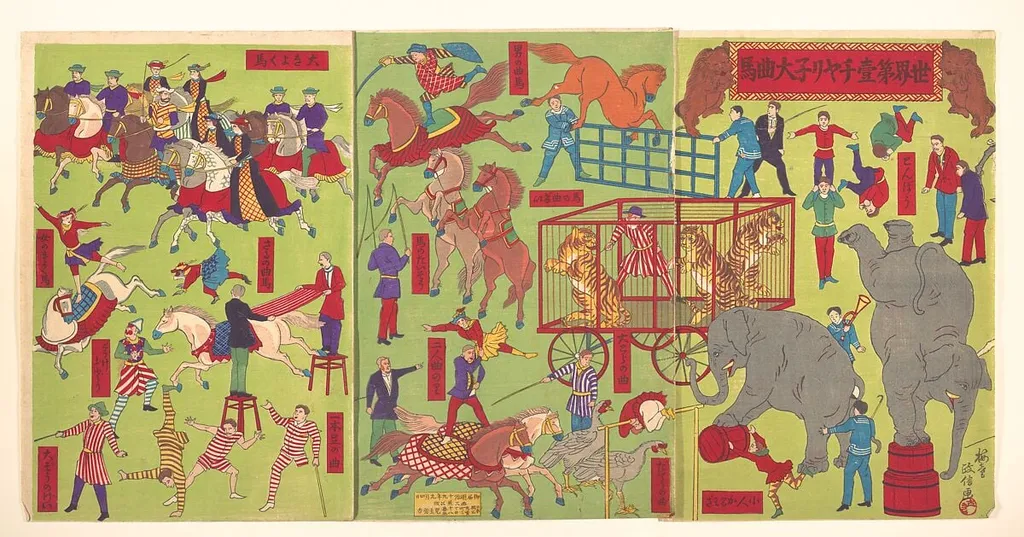
Untitled is an ink print by the Impressionist artist Utagawa Masanobu. It dates from 4 and is held in the collection of the Metropolitan Museum of Art.
About this work
Overview
This set of three woodblock prints by Utagawa Masanobu, dated to the early 18th century, depicts a lively outdoor spectacle.
This set of three woodblock prints by Utagawa Masanobu, dated to the early 18th century, depicts a lively outdoor spectacle. Executed in ink and color on paper, the works were likely produced as a series for public consumption. The Metropolitan Museum of Art holds the complete set, preserving their original vibrancy and dynamic composition. The prints capture a moment of communal entertainment, blending real and imagined elements in a single visual narrative.
Subject & Meaning
The scene portrays a traveling performance, possibly a circus or fair, featuring exotic animals, acrobats, and jesters. Horses rear, a tiger escapes its enclosure, and an elephant stands calmly amid chaos. Figures in colorful attire juggle or ride miniature ponies, suggesting theatrical performance. Onlookers line the edges, reinforcing the sense of public spectacle. The imagery reflects popular entertainment of the time, blending reality with fantasy to appeal to urban audiences.
Technique & Style
Masanobu employed bold, flat areas of color—vivid reds, blues, and greens—against minimal background detail to heighten visual energy. Forms are simplified, with strong outlines and minimal shading, typical of early ukiyo-e. The composition is crowded yet carefully balanced, guiding the eye across multiple actions. The use of woodblock printing allowed for multiple impressions, making such scenes accessible to a broader public beyond elite patrons.
History & Provenance
Created around 1720, the prints belong to the early Edo period, when ukiyo-e was emerging as a commercial art form. Masanobu, a pioneer in the genre, often depicted contemporary urban life and entertainment. The set remained in private Japanese collections before entering the Metropolitan Museum of Art’s holdings, where it has been preserved as a rare example of early narrative woodblock printing.
Context
During the early 18th century, Edo’s growing merchant class sought affordable art reflecting daily life and spectacle. Traveling shows featuring animals, acrobats, and clowns were common, and artists like Masanobu translated these events into prints for popular consumption. The prints reflect a society increasingly engaged with public entertainment, blending local traditions with imported exoticism from Asia and beyond.
Legacy
Masanobu’s work helped establish the visual language of ukiyo-e, influencing later artists like Hiroshige and Kuniyoshi. This series stands as an early example of narrative woodblock printing focused on secular, dynamic scenes rather than traditional subjects like beauties or warriors. Its preservation offers insight into how popular culture was documented and disseminated in pre-modern Japan.
Artist & collection

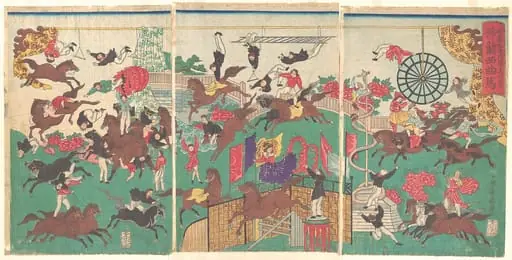 浅草観音境内ニ於イテ興行仕候 佛蘭西曲馬|French Equestrian Circus on the grounds of Asakusa Kannon temple (Asakusa kannon keidai ni oite kōgyō tsukawashi sōrō-Furansu kyokuba)
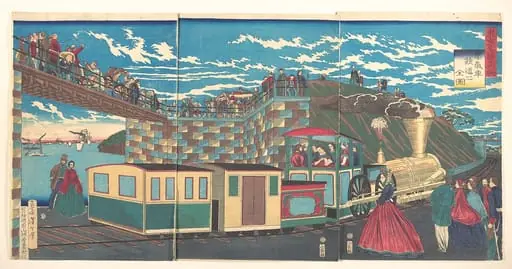 東京名勝高輪 蒸気車鉄道之全図|Illustration of Steam Locomotive Tracks at Takanawa, from the series Famous Places in Tokyo (Tōkyō meishō Takanawa-jōki kikansha no zen zu)
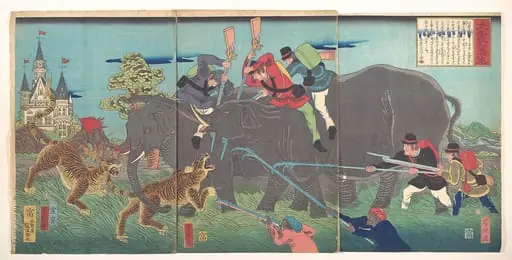 Daizō shasei|Big Elephants Being Attacked
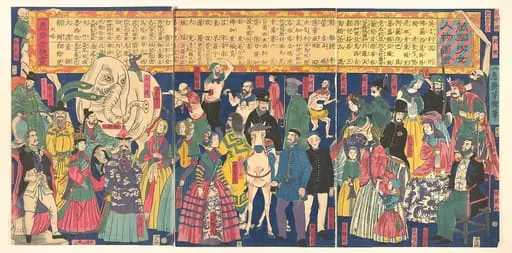 万国男女人物図絵|Picture of Men and Women from all Nations (Bankoku danjo jinbutsu zue)
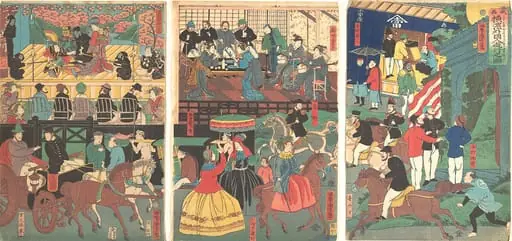 Bushu Yokohama gaikokujin yūkyō no zu|A View of the Amusements of the Foreigners in Yokohama, Bushu
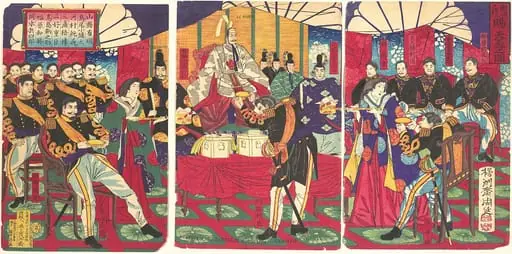 Untitled
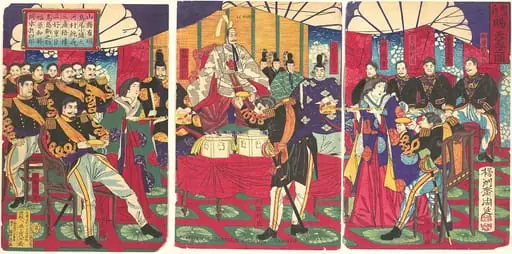 勲功之将天杯賜之図|Illustration of the Honored Commanders, Receiving the Emperor's Gift Cup (Kunkō no shō tenpai o tamau no zu)
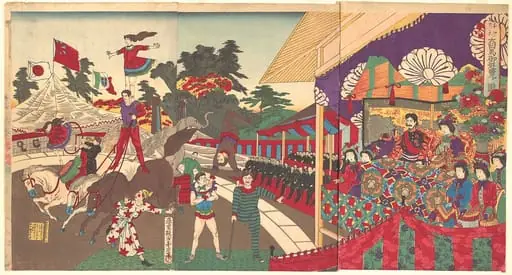 チャリネ大曲馬御遊覧ノ図|Illustration of the Imperial Excursion to see the Charini's Circus (Charine daikyokuba goyūran no zu)
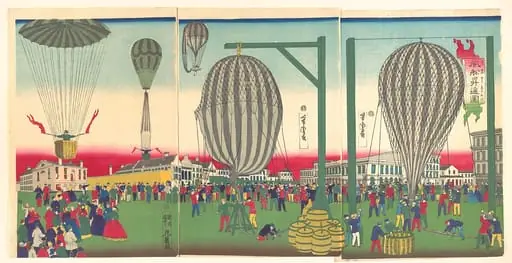 風船昇遥図|Illustration of a Balloon Ascending (Fūsen shōyō no zu)
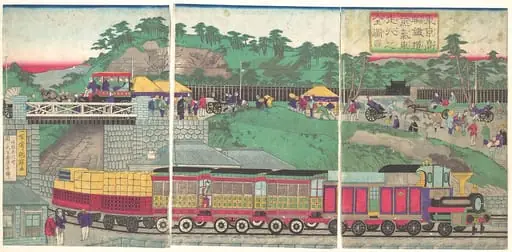 東京高輪鉄道蒸気車走行之図|Illustration of a Steam Locomotive Running on the Takanawa Railroad in Tokyo (Tōkyō takanawa tetsudō jōkisha sōkō no zu)
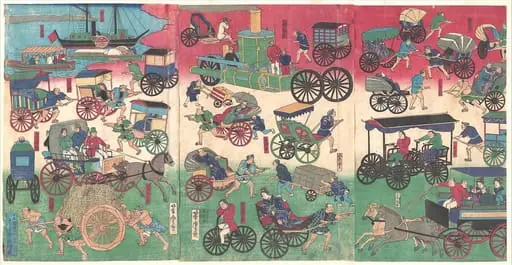 Untitled
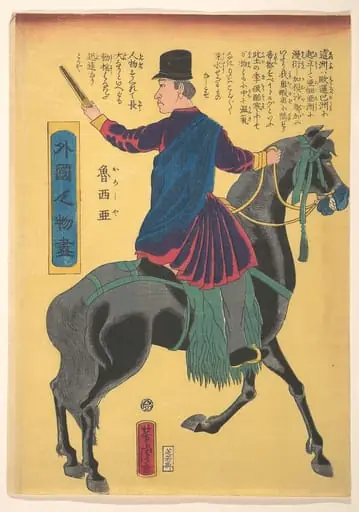 Orosia|Mounted Russian